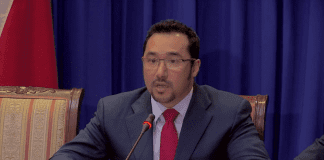
Haitian Prime Minister Alix Didier Fils-Aimé has called on citizens to support a stronger Constitution as the country grapples with ongoing security and political instability.

In a statement marking the 38th anniversary of Haiti’s 1987 Constitution, Fils-Aimé acknowledged its role in safeguarding democracy but stressed the need for reform.
“For the past 38 years, the 1987 Constitution has been the foundation of our democracy, guaranteeing our freedoms and rights,” Fils-Aimé said. “But in the face of repeated crises, our nation must evolve. It is time to write a new page in our history. Young people, women, citizens, let us commit to a stronger Constitution, better suited to the challenges of today and tomorrow.”

The 1987 Constitution was adopted following the fall of the Duvalier dictatorship and established a semi-presidential system with a dual executive, a bicameral legislature, and a judiciary designed to uphold democratic principles. One of its most significant provisions, Article 291, barred former supporters of the dictatorship from holding public office.
However, Haitian leaders have long argued that the country’s constitutional framework requires modernization. A constitutional referendum, scheduled for May 2025, aims to strengthen governance structures, enhance the separation of powers, and improve citizen representation.
Additionally, the organization of general elections in November 2025 is seen as a critical step in restoring democratic legitimacy and stabilizing the nation. But Belgium-based International Crisis Group (ICG) cautioned Haiti’s transitional government against rushing into elections.
Amid his constitutional appeal, Fils-Aimé also visited the National School of the Republic of Ecuador, which has been converted into a shelter for families displaced by gang violence. Accompanied by Social Affairs Minister Georges Wilbert Franck, Solidarity and Humanitarian Affairs Minister Herwil Gaspard, and Economic and Social Assistance Fund Director Serge Gabriel Colin, the prime minister met with victims of Haiti’s escalating security crisis.
During the visit, he listened to the concerns of displaced families, shook hands with survivors, and embraced children affected by the violence. Acknowledging their suffering, he affirmed that all Haitians deserve more than a makeshift shelter.
“Everyone deserves to return home, safe, with their heads held high—because a dignified people is a people who stand tall,” Fils-Aimé said.

As Haiti moves toward constitutional reform and elections, the challenge remains in balancing political restructuring with urgent security concerns.