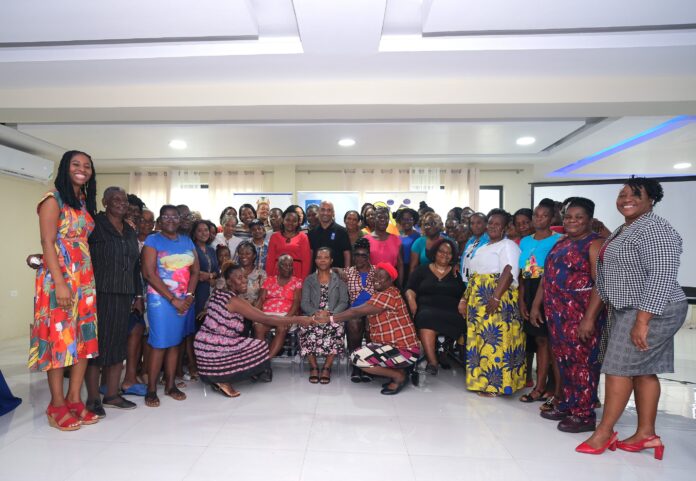
Fifty-four Jamaican female entrepreneurs across three of the island’s hardest-hit parishes are rebuilding their livelihoods with hurricane recovery grants and business inputs, months after Hurricane Beryl devastated their operations last year.
The beneficiaries, including women with disabilities, have also received specialized training in disaster resilience, financial literacy, and mental and physical well-being to help fortify their businesses against future shocks.
The initiative, part of the Government of Jamaica’s Hurricane Beryl recovery program, is funded by the United Nations Development Programme (UNDP) and implemented through the Bureau of Gender Affairs (BGA) in the Ministry of Culture, Gender, Entertainment and Sport (MCGES) in collaboration with the Jamaica Network of Rural Women Producers (JNRWP). The recipients—poultry and vegetable farmers, shop owners, and bar operators from Clarendon, Manchester, and St. Elizabeth—were among the most severely impacted by the storm.

Strengthening women’s economic resilience
At the closing ceremony on Friday, January 31, in Mandeville, UNDP Resident Representative Kishan Khoday emphasized the importance of supporting Micro, Small, and Medium-sized Enterprises (MSMEs), particularly those led by women and persons with disabilities. He noted that while women-owned businesses account for 58% of Jamaica’s MSMEs, financing gaps persist in addressing their unique challenges.
“The economic inclusion of women, especially those with disabilities, is essential to fostering long-term sustainability and disaster preparedness,” Khoday said. “By enhancing business skills, promoting financial literacy, and improving access to resources, we can strengthen the ability of women-led businesses to withstand future crises.”
Mitzie Moore Cooke, Acting Research Officer at the MCGES, echoed this sentiment, stating that the BGA has witnessed the “transformative power” of the initiative. “Women entrepreneurs have leveraged this support to rebuild, reimagine, and expand their businesses, demonstrating resilience, innovation, and sheer determination,” she said.
JNRWP President Tamisha Lee, in remarks delivered by board member Marva Allen-Simms, urged women entrepreneurs to continue advocating for long-term solutions to strengthen community resilience. “Whether it’s parametric insurance, better infrastructure, or stronger partnerships, let’s keep pushing for the tools we need to face whatever comes next,” she said.
Impact on women entrepreneurs
Among the beneficiaries, poultry farmer Maya Biggs of Clarendon received an 800-gallon water tank and construction materials to rebuild her chicken coop. “I’m back on my feet and ready to supply markets again,” she said. With 30 chickens ready for harvest in February, she plans to expand her stock to 200 birds.
Keisha Wint of Warwick district, Manchester, received 1,000 chicks, feed, and materials to expand her coop. “The chickens have more room now, and I can add more baby chicks to increase production,” she said.

In St. Elizabeth, strawberry farmer Trishawna Brown from Potsdam district received a 10,000-gallon drum and two acres of drip irrigation supplies. Her farm has expanded from 87 plants to 518, with an additional 235 suckers. “I aimed to reach 1,000 plants by June, but I might get there even sooner,” she said.