The Caribbean Catastrophe Risk Insurance Facility (CCRIF) announced on Wednesday that it will disburse US$44 million to Grenada to address the damage and destruction caused by Hurricane Beryl last Monday. This marks the single largest payout by CCRIF, a segregated portfolio company owned, operated, and registered in the Caribbean.

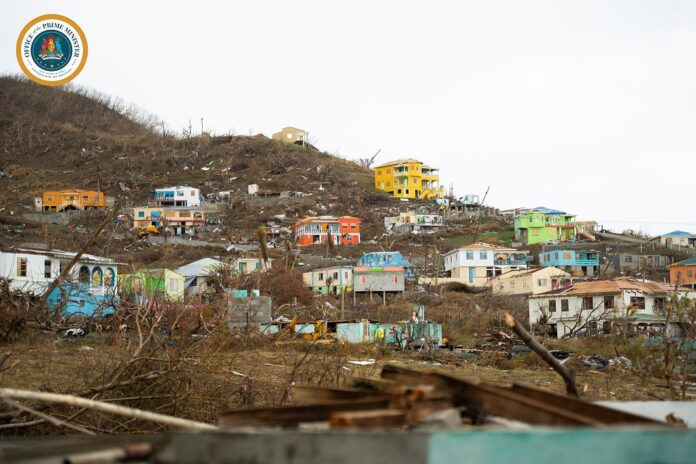
Hurricane Beryl, a Category 4 storm, wreaked havoc across the Windward Islands on July 1, severely impacting the Grenadian islands of Carriacou and Petite Martinique, as well as Union Island in St Vincent and the Grenadines.
CCRIF confirmed that the payout to Grenada will be made this week, noting that Hurricane Beryl devastated 90 percent of all buildings on Carriacou and Petite Martinique. Significant damage was also reported in the agriculture sector and natural environment, including mangrove ecosystems. The electric utilities, particularly transmission and distribution systems on both islands, suffered considerable damage.

Mainland Grenada’s northern regions were also affected by Hurricane Beryl, with damage reported to homes, the agriculture and forestry sectors, and the electric utility and water distribution systems.
In expressing its “deepest condolences” to the government and people of Grenada, CCRIF acknowledged the storm’s impact on other member countries in the region, including St Vincent and the Grenadines and Jamaica.
CCRIF explained that its parametric insurance policies provide payments based on the intensity of an event and the estimated loss calculated using a pre-agreed model. The payout to Grenada under its tropical cyclone (TC) policy is CCRIF’s largest to date. Previously, the largest payout was made to Haiti, which received just under US$40 million following the 2021 earthquake.
“These payouts represent Grenada’s first payouts from CCRIF. I commend the Government of Grenada, which has always maintained that despite not receiving a payout, it understood the importance of financially protecting the economy in case a disaster strikes, as it would never want to see a repeat of Hurricane Ivan,” said CCRIF’s chief executive officer, Isaac Anthony.
“Countries ought to treat parametric insurance for natural hazards like they treat health insurance. We buy health insurance because it is important to help safeguard our lives. However, we hope we do not need it but when we do, we have the peace of mind that it could help us deal with a more serious illness than a common cold.
“Similarly, we do not want to be negatively impacted by natural hazards and be faced with natural disasters. However, in the case of CCRIF’s parametric insurance, the moment we really need it, it is available within 14 days of a triggering event.”

Anthony emphasized that CCRIF’s parametric insurance is essential for helping countries rebuild better and stronger to withstand future natural hazards, especially in the context of climate change.
Hurricane Beryl similar to Hurricane Ivan
CCRIF said that Hurricane Beryl is reminiscent of Hurricane Ivan 20 years ago, which impacted nine Caribbean islands.
“Beryl impacted a similar number of countries, creating much destruction along its path. The impacts of Hurricane Ivan in 2004 brought into sharp focus among Caribbean governments, the need for quick liquidity following a natural disaster,” CCRIF said, adding that regional losses due to Ivan totaled over six billion US dollars.
“There are, however, several important differences today compared to 2004. Countries such as Grenada, St Vincent and the Grenadines, and Jamaica now all have access to liquidity from CCRIF within 14 days of the impacts of Beryl to begin the recovery efforts.”
It said parametric insurance is not debt relief and does not add to a country’s debt stock. CCRIF has demonstrated that catastrophe risk insurance can effectively provide a level of financial protection for countries vulnerable to natural disasters.
“Parametric insurance products are a key component in a country’s disaster risk financing (DRF) strategy and are designed to pre-finance short-term liquidity. CCRIF’s parametric insurance is helping to close the protection gap, reduce budget volatility, and allow countries to respond quickly to their most pressing needs, including providing support to the most vulnerable in their populations.”
Since its inception in 2007, and prior to Beryl, CCRIF said it made 65 payouts totaling US$274 million to 17 members and is expected to make 10 payouts under Beryl totaling over US$75 million in the next few days thereby taking payouts to approximately US$350 million.
It said that the government of St Vincent and the Grenadines will receive US$1.8 million, and the Trinidad and Tobago government will receive US$372,752 for the impacts of Beryl on Tobago.
Jamaica will also receive payouts, and these will be communicated later this week.
Read: Grenada calls for volunteers to aid in Hurricane Beryl relief efforts