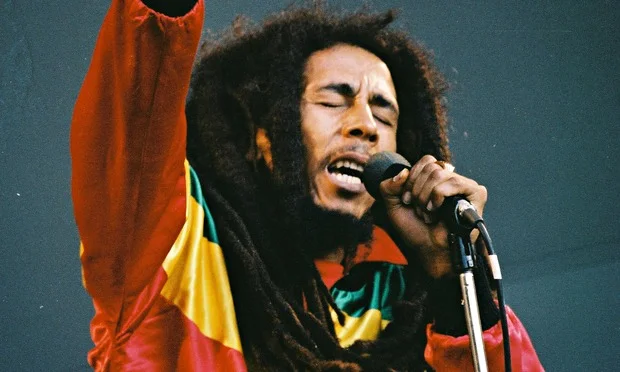
The premiere of the movie “One Love,” portraying the life and music of Jamaican reggae icon Bob Marley, left a lasting impression not only because of the presence of celebrities like Britain’s Prince Harry and Meghan but because it underscored that Marley is not just the epitome of Jamaican legends but also a true international music legend.

Born in St. Ann to a black Jamaican mother and abandoned by his white Irish father, Marley grew up in a Kingston ghetto, where he first discovered and honed his musical talents. Despite being frowned upon by Jamaica’s upper class, his legacy extends far beyond the shores of Jamaica. He stands shoulder to shoulder with iconic American musicians like Frank Sinatra, Elvis Presley, Michael Jackson, Ray Charles, and the British sensation, The Beatles.
It’s predictable that for years to come, Bob Marley’s name will be celebrated as people worldwide continue to listen to his music. As they do, not only will his legend resonate, but so will the genre of reggae music and the Jamaican nation.

The choice of launching the movie on February 14, amidst Reggae Month and a few days after the 79th anniversary of Marley’s birth on February 6, is fitting.
While there are many musicians and entertainers who have gained more recognition after their passing, few compare to Bob Marley. Over 33 years since the music legend’s passing, his music has never been more widespread, popular, and respected worldwide.
Marley wasn’t the sole reggae musician of his time, but alongside his band, The Wailers, he catapulted the reggae genre onto the global stage, embodying its spirit and spreading it globally with a string of hit songs and albums.
Marley’s contributions to reggae are indisputable, and his impact on the music industry is astounding, with many contemporary artists acknowledging him as a major source of inspiration. Moreover, his lyrics often convey a message of social upliftment, often referred to as “positive vibrations.” In fact, many of his song lyrics have taken on a prophetic status.
Beyond music, Marley’s influence extended to political and social causes. Through his music, he championed the struggle against apartheid in South Africa, notably in his song “War,” which featured a speech by Haile Selassie, the Ethiopian Emperor and spiritual leader of the Rastafarian faith, to which Marley belonged. The song calls for equality regardless of race or class, a message that remains relevant as the world grapples with ongoing conflicts.
Marley used his music to advocate for social and political change and was critical of political ideologies and what he referred to as the “scisms” of politicians. His efforts earned him adoration, especially in Africa, where he was considered a heroic figure. In 1980, he received the United Nations Medal of Peace for his courageous appeals for global justice and peace during times of political unrest, not just in Jamaica but worldwide.

Marley achieved numerous accolades during his lifetime, including induction into the Rock and Roll Hall of Fame in 1994 and the sale of over 22 million records, making him the first international superstar from a third-world country. He was also honored with Jamaica’s Order of Merit shortly before succumbing to cancer on May 11, 1981.
Even after his passing, Marley’s commitment to fighting oppression continues through The Bob Marley Foundation, established in his memory by his family. The Foundation is dedicated to aiding people and organizations in developing nations in addressing the causes Marley passionately articulated through his music.
However, many Jamaicans believe that Marley deserves more than the Order of Merit. They are increasingly urging the government to bestow upon him the nation’s highest honor, National Hero of Jamaica.
Currently, Jamaica has seven National Heroes, but no Jamaican has received this honor since 1982. A 2022 survey in Jamaica revealed that approximately 40 percent of Jamaicans support designating Marley as a National Hero, alongside popular folklorist Louise “Miss Lou” Bennett.
The current government has established a committee to define the criteria for national hero status and consider recommendations, including Bob Marley, for this esteemed recognition.
Jamaicans both at home and abroad are growing impatient. It’s arguable that no Jamaican has brought as much positive recognition to one of Jamaica’s most cherished assets, reggae music, and to Jamaica itself as Robert Nesta Marley.
What more criteria is needed to designate him a National Hero? He is a Jamaican legend whose legacy will endure through the ages.