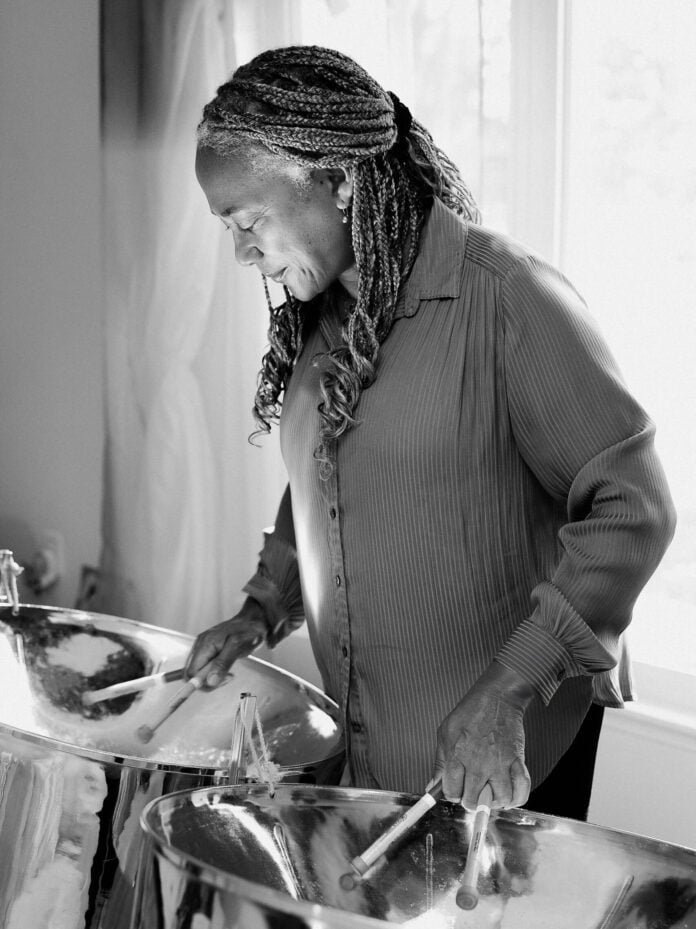
From its origins in community yards to its presence in concert halls, universities, and global classrooms, the steelpan has long been both an instrument of resistance and a symbol of Caribbean ingenuity. Few educators have done more to elevate its academic and cultural standing than Trinidad and Tobago native Dr. Dawn K. Batson, a scholar, composer, and arts administrator whose career spans more than four decades.

As the steelpan continues to gain recognition within formal arts education, Dr. Batson’s work underscores the importance of honoring cultural memory while preparing the next generation to expand the instrument’s possibilities. In this conversation, she reflects on stewardship, advocacy, education, and the future of Caribbean-rooted music on the world stage.
Five questions with Dr. Dawn Batson
The steelpan has traveled from community yards to concert halls and universities. What responsibilities come with being a steward of an art form that carries such deep cultural memory?

One of the main responsibilities of a steward is to remain true to the history and memory of those who created the art form. This is done by always paying homage to the people and country that created the steel pan. One must always work to ensure that all those who come into contact with the instrument know its history and understand the forces that came into play in its creation. It is also important, as far as possible, to ensure that the instruments and the music are always highlighted with respect and at the highest level.
You’ve navigated spaces where Caribbean music was once considered “nontraditional.” What strategies helped you advocate for the steelpan as a serious academic and artistic discipline?
The main strategy that has helped me and that I have employed extensively is to pursue excellence. I have tried to do this by approaching Caribbean music and the instruments of the steelband in the same way I would approach so-called “traditional” music. I have approached it with respect, with intentionality, with the goal of presenting the music with care, preparation, and the hard work needed to achieve distinction.
How do you balance honoring tradition while encouraging experimentation and new musical directions among your students?
I start by ensuring that my students have the necessary foundation. That foundation is knowledge of the history, traditions, practitioners, and creators who brought the instruments and music to us. Once they have the historical and technical knowledge, I encourage them to experiment and be free, as the creators were, to use the tools at their disposal to create something different and forge a new direction.
In your experience, what role does music play in helping young people understand identity, discipline, and collective responsibility?

Anyone who has been involved in music as a soloist or as part of a musical group, band, or orchestra understands the opportunity for growth that music offers. The discipline needed to push the physical to attain control over musical complexities; the responsibility to hold up your end for your group or your personal principles; and the importance of being true to yourself and the musical impact one wants to leave. Music also gives young people an opportunity to forge social bonds through interaction with their peers.
Looking ahead, what do you believe is the next critical chapter in steelpan and Caribbean-rooted music in global arts education?
I believe the next critical chapter for steelpan and Caribbean-rooted music in global arts education is establishing global curricula that set specific achievement levels worldwide. Hand in hand with that is the institution of economic models to ensure that the instrument and the music serve as tools for economic development.
A career rooted in education and cultural advocacy
Dr. Dawn K. Batson, Ph.D., is a seasoned professional in multicultural education and arts administration, specializing in the steelpan as a medium for cross-cultural outreach. She brings more than forty years of experience to the field and currently serves as Executive Director of Keep Your Joy and Rise, LLC, where she conducts global training sessions in personal empowerment, team building, and creative aging.
She holds a B.Sc. in Music Education from Hofstra University, an M.M. in Music Business, and a Ph.D. combining Music, Business, and International Affairs from the University of Miami. Dr. Batson has taught at all educational levels and established the first steelband programs at both the University of Miami and Florida Memorial University. A former tenured Professor of Music and Chair of Visual and Performing Arts at Florida Memorial University, she has received numerous honors, including a Lifetime Achievement Award for Outstanding Contribution to the International Steelband Movement.
Her compositions, blending traditional and contemporary elements, are performed internationally, and her work continues to push the boundaries of the steelband movement while nurturing future musicians, scholars, and cultural leaders.
Honored at the 29th Annual Melton Mustafa Jazz Festival Weekend
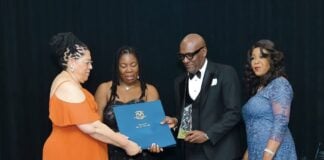
Dr. Batson’s impact on South Florida’s cultural and educational landscape will be formally recognized during the 29th Annual Melton Mustafa Jazz Festival Weekend, returning February 26 through March 1, 2026, in Miami Gardens, Florida.
Founded in 1996 by internationally acclaimed jazz trumpet legend Melton Mustafa Sr., the festival has grown into a cultural cornerstone, celebrating jazz as both a living art form and a powerful tool for mentorship and community uplift. This year’s festival also honors the memory of Esaa Mustafa and Zakiyyah Mustafa, as well as the enduring legacy of Melton Mustafa Sr.
Festival Director Melton Mustafa Jr. described the event as “about legacy, education, and nurturing future talent,” noting that Dr. Batson’s recognition reflects her long-standing commitment to youth empowerment and steelpan arts.
The four-day festival features performances, workshops, masterclasses, and community events across multiple venues, with headlining artists including Grammy Award–winning producer and steelpanist Leon “Foster” Thomas, Jesse Jones Jr., Doug Carter, Nicole Yarling, George Tandy Sr., Kirk Green, and Melton Mustafa Jr. The legendary 18-piece Melton Mustafa Orchestra will also take center stage.
A portion of festival proceeds supports MSM Arts United Inc., the festival’s nonprofit arm dedicated to expanding access to music education in underserved communities and establishing scholarships for at-risk youth pursuing the arts.
Together, Dr. Batson’s work and the Melton Mustafa Jazz Festival highlight a shared mission: preserving cultural legacy while creating sustainable pathways for Caribbean and African-diasporic music to thrive in education and beyond.