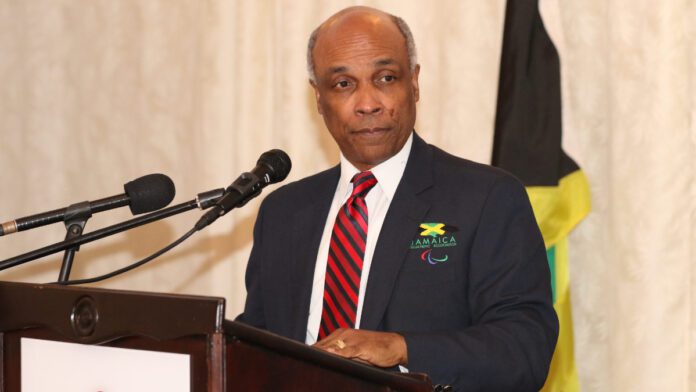
In a bold address at the inaugural Paralympic Forum for the Americas and Caribbean, Christopher Samuda, Executive Board Director of the Americas Paralympic Committee (AmPC) and President of the Jamaica Paralympic Association (JPA), proposed a revolutionary approach to developing para sports in the Caribbean and the Americas.

Speaking at the forum, which was initiated by the AmPC and held recently in Paris, Samuda emphasized the need for a strategic business relationship among sport, tourism, and entertainment, presenting this triad as a powerful tool for boosting para sports across the region. He highlighted that, with the formation of the Caribbean Paralympic Association, it is time for National Paralympic Committees (NPCs) to explore commercial strategies that leverage these sectors to create sustainable growth for para sports.
“We must now pursue commercial strategies in monetising talent, tourism and entertainment as a tri-partite vehicle for optimal development of para sports,” Samuda remarked, stressing the potential for long-term benefits through collaboration.

Ensuring that investment models are attractive and secure
The forum, supported by organizations such as the German Development Corporation, Uber International, and the Chilean Embassy in France, also welcomed high-profile officials, including Colombian Minister of Sport Luz Christina López and Chilean Deputy Secretary for Sport Antonia Illanes. Together, they engaged in comprehensive discussions with regional leaders on key topics like policy-making, athlete development, sponsorship, and broadcasting rights, along with the development of infrastructure and legacy creation.
Samuda’s call to action centered around ensuring that investment models are attractive and secure, stating, “capital prefers a safe haven and therefore the product has to inspire confidence, be relevant, and give bang for the buck.”
The AmPC reaffirmed its commitment to continue hosting similar fora, aimed at fostering collective solutions to the challenges facing the Paralympic movement in the Americas and Caribbean. Samuda echoed this vision, expressing hope for concrete outcomes that would transform the regional para sports landscape.
“Encouraging collective approaches in finding solutions to challenges and common ground on regional development,” Samuda concluded, is the key to unlocking the true potential of para sports in the Caribbean and beyond.