Trinidad and Tobago to provide ferry for CARICOM cargo transport pilot
Key Points(5)
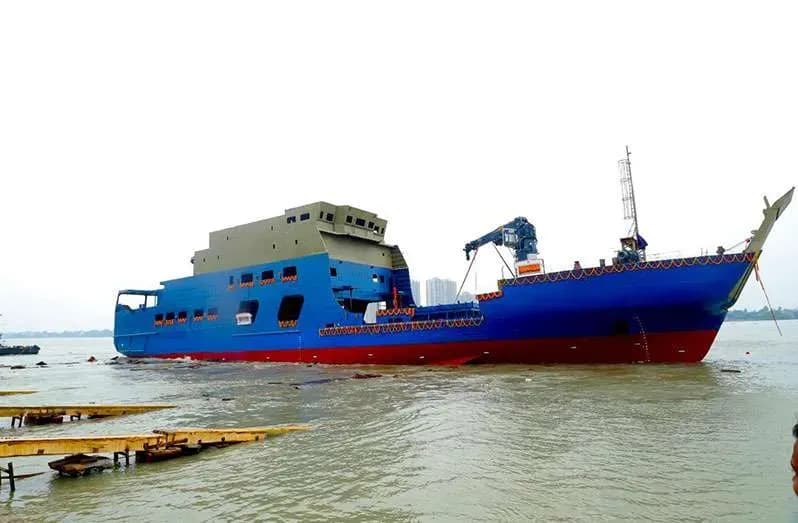
- Trinidad and Tobago will provide a ferry temporarily to transport mainly cargo among Caribbean Community (CARICOM) member states as the region advances plans to establish an affordable intra-regional ferry service.
- The initiative was among the key issues discussed during CARICOM’s Fifty-First Regular Meeting in Saint Lucia, where leaders agreed to accelerate efforts to improve connectivity, trade and food security across the region.
- Saint Lucia Prime Minister Philip J.
- Pierre, who chaired the 15-member regional bloc, said the proposed ferry service would help strengthen movement within the Caribbean.
- “We also accelerated work towards establishing an affordable intra-regional ferry service that will improve travel, facilitate trade, strengthen food security, and make our community more connected,” Pierre said during a news conference following the summit.
Trinidad and Tobago will provide a ferry temporarily to transport mainly cargo among Caribbean Community (CARICOM) member states as the region advances plans to establish an affordable intra-regional ferry service.
The initiative was among the key issues discussed during CARICOM’s Fifty-First Regular Meeting in Saint Lucia, where leaders agreed to accelerate efforts to improve connectivity, trade and food security across the region.
Saint Lucia Prime Minister Philip J. Pierre, who chaired the 15-member regional bloc, said the proposed ferry service would help strengthen movement within the Caribbean.
“We also accelerated work towards establishing an affordable intra-regional ferry service that will improve travel, facilitate trade, strengthen food security, and make our community more connected,” Pierre said during a news conference following the summit.
He added that CARICOM had also made further progress toward expanding participation in the free movement of nationals under the CARICOM Single Market and Economy (CSME), which allows for the movement of goods, skills, labour and services among participating member states.
Barbados Prime Minister Mia Mottley said Trinidad and Tobago had offered one of its ferries as a temporary solution while the private sector works to acquire a dedicated vessel.
She said the move comes as regional governments seek ways to reduce the cost of living, particularly amid fluctuating oil prices and global economic pressures.
“This is a work in progress,” Mottley said, explaining that the initial phase would focus on ports in the southern and eastern Caribbean as authorities assess infrastructure needs, including port facilities and possible ramp systems.
Mottley, who has responsibility for CSME matters within CARICOM’s quasi-cabinet, said Trinidad and Tobago Prime Minister Kamla Persad-Bissessar offered one of the country’s five ferries for the pilot phase while private sector operators work toward securing their own vessel within the next year.
She said she would hold discussions with Persad-Bissessar and Saint Vincent and the Grenadines Prime Minister Godwin Friday to determine how best to use the Trinidad and Tobago vessel as a “proof of concept.”
The Barbados leader also said CARICOM governments would work on treaty arrangements to allow for mutual recognition of licences and insurance requirements, enabling cargo vehicles to move more easily between member states.
She expressed hope that the necessary regulations could be established within three months.
Meanwhile, Dr. Patrick Antoine, chief executive officer and technical director of the CARICOM Private Sector Organisation (CPSO) Secretariat, said discussions with private sector stakeholders indicate that the ferry project is moving forward.
Speaking to the Caribbean Media Corporation (CMC), Antoine said the initiative was not “a pie in the sky” and that several companies had already prepared proposals, with some identifying potential financing options.
He said the project requires the creation of a framework to allow the smooth movement of people, goods and vehicles across the region, including agreements on regulatory and operational requirements.
Antoine said three firms are currently positioned to play a major role in introducing the service, adding that the CPSO is supporting the process through research, analysis and engagement with private sector partners.
He noted that Barbados and Jamaica are expected to be heavily involved in advancing the initiative over the next three months as CARICOM works toward making regional maritime transport a reality.