South Florida Jamaican renews plea for national burn unit
Key Points(5)
- “It has happened again,” lamented Jamaican-born South Florida resident Samantha James.
- Those four words capture the frustration and heartbreak James feels every time another Jamaican suffers severe burns and must rely on overseas treatment to survive.
- The incident claimed one life and left three people suffering severe burns.
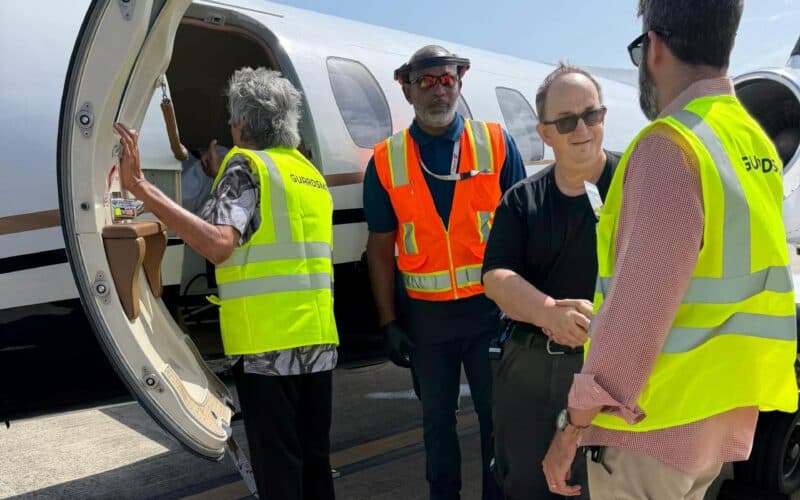
- While medical personnel at Kingston Public Hospital were praised for their rapid response and emergency care, efforts reportedly began almost immediately to medically evacuate the injured victims to specialized burn facilities in the United States.
- “For many Jamaicans, that option simply does not exist,” James explained.
“It has happened again,” lamented Jamaican-born South Florida resident Samantha James.
Those four words capture the frustration and heartbreak James feels every time another Jamaican suffers severe burns and must rely on overseas treatment to survive.
“This is another unfortunate yet glaring example of why it is imperative that Jamaica establishes its own burn center,” James said, speaking to Caribbean National Weekly as she reflected on last week’s deadly explosion and fire at a garage facility adjacent to the Beryllium compound on South Camp Road in Kingston.
The incident claimed one life and left three people suffering severe burns. While medical personnel at Kingston Public Hospital were praised for their rapid response and emergency care, efforts reportedly began almost immediately to medically evacuate the injured victims to specialized burn facilities in the United States.
“For many Jamaicans, that option simply does not exist,” James explained. “Most families do not have the resources, the connections, or a corporate sponsor who can underwrite the enormous costs associated with emergency medical evacuation and specialized burn treatment overseas.” For James, the tragedy is not an isolated event.
“It was only three months ago that another high-profile incident underscored our lack of resources for burn victims,” she noted. She pointed to the case of Dacia Forrester, who suffered burns to more than 70 per cent of her body after being set ablaze during an altercation in Westmoreland.
“Her family and friends were forced to turn to public fundraising in a desperate effort to save her life,” James shared. “They needed US$55,000 just to give her a chance. The money wasn’t raised, and sadly she died. We have to ask ourselves how many more families will face that same nightmare?”
According to James, Jamaica’s inability to provide specialized treatment for severe burns leaves many victims and their families in an impossible position.
“Jamaica is a developing nation, and there are many resources that the island lacks,” she said. “The government has made improved housing and infrastructure a priority; they are allocating unspent Hurricane Melissa funds, and rightly so. But at the same time, we cannot overlook the urgent medical needs of our people.”
While advocating for improved burn care services, James acknowledges that the challenge facing Jamaica is not unique.
“Most Caribbean islands do not have a burn center,” she remarked. “Comprehensive burn centers are incredibly expensive to build and maintain, so reliance is often placed on regional facilities.”
However, she argues that acknowledging the challenge should not mean accepting the status quo.
“Most Jamaicans will not have a corporate sponsor to underwrite the costs associated with urgent medical evacuation and specialized care,” James said. “When tragedy strikes, ordinary families are often left scrambling to raise tens of thousands of dollars while their loved one fights for survival.”
The recent South Camp Road explosion, she said, highlighted the disparity between those who can access overseas treatment and those who cannot.
“Thankfully, arrangements were made to transfer the injured victims abroad, but what happens to the average Jamaican who doesn’t have access to those resources?” she asked. “What happens to the mother, the child, the farmer, the construction worker or the market vendor who suffers severe burns and has nowhere else to turn?”
Rather than demanding the immediate construction of a world-class burn center, James believes Jamaica should begin by exploring more attainable options.
“So what are our options?” she asked. “Could a burn care unit be established at one of our teaching hospitals?”
She believes a specialized burn care unit, supported by partnerships with established overseas burn centers, could significantly improve outcomes for patients while reducing dependence on costly emergency evacuations.
“This is not about placing blame,” James said. “This is about finding solutions. Even if we cannot build a comprehensive burn center tomorrow, we should be having serious discussions about what can be done today.”
For James, every severe burn case serves as a reminder that the issue cannot remain on the back burner.
“We should not wait for another tragedy before we act,” she reiterated. “Every Jamaican deserves the opportunity to receive the best possible care, regardless of their financial circumstances.”
Her proposal echoes concerns raised previously by healthcare advocates and policymakers. In comments reported by the Jamaica Observer in 2023, Health and Wellness Minister Dr. Christopher Tufton disclosed that plans had already been developed for a specialized burn unit at the University Hospital of the West Indies. The question is: what has happened to those plans?
According to the newspaper, approximately J$200 million would be required to establish the facility and another J$60 million to J$70 million annually for maintenance. While discussions have continued, James believes the time has come for action.
“I am making an appeal not only to the government, but to corporate Jamaica, philanthropists, foundations and wealthy Jamaicans at home and abroad — whoever can assist,” she said.
“This should not be a political issue. This is a human issue,” she continued.
“One severe burn injury can change a family’s life forever. The emotional trauma, the physical suffering and the financial burden are overwhelming.”
For James, every new burn tragedy serves as a painful reminder of unfinished business.
“We have demonstrated time and time again that Jamaicans are generous people,” she said. “When disaster strikes, we come together. Imagine what could be accomplished if government, business leaders and private citizens united around a common goal to establish a burn care facility in Jamaica.”
Her message is simple but urgent.
“We should not wait until another child, another mother, another father or another worker suffers catastrophic burns before we act,” James said. “Every day we delay, we are gambling with lives.”
And for families facing the unimaginable pain of watching a loved one fight for survival after a severe burn injury, that is a gamble Jamaica can no longer afford.