Rising prices, falling growth put Jamaica’s economy under pressure
Key Points(5)
- For many Jamaicans, the state of the economy is no longer something measured only in quarterly government forecasts.
- It is being measured at the gas pump, in supermarket aisles and in the decisions people make about what they can afford to buy and what they now have to do without.
- The Jamaican dollar remains relatively stable against the United States dollar, with the Bank of Jamaica recording a weighted average selling rate of about $159.46 to US$1 on September 25.
- But exchange-rate stability has offered limited relief as the domestic price environment has deteriorated.
- The Statistical Institute of Jamaica reported that consumer prices rose 7.9 per cent year-on-year in August, well above the Bank of Jamaica’s 4 to 6 per cent inflation target.
For many Jamaicans, the state of the economy is no longer something measured only in quarterly government forecasts. It is being measured at the gas pump, in supermarket aisles and in the decisions people make about what they can afford to buy and what they now have to do without.
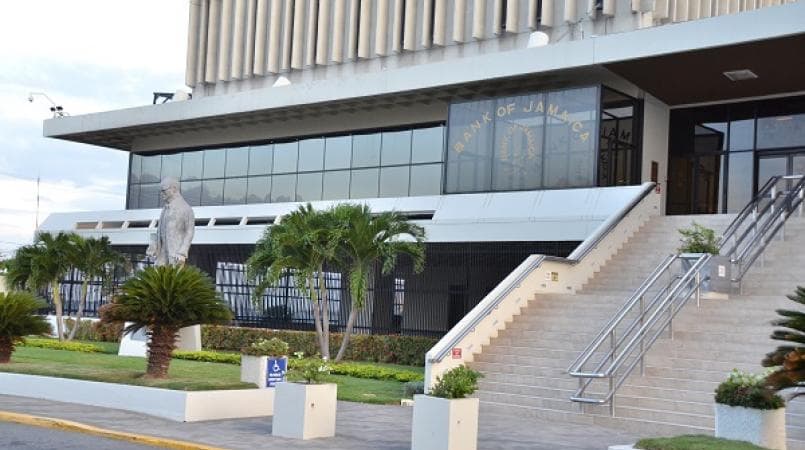
The Jamaican dollar remains relatively stable against the United States dollar, with the Bank of Jamaica recording a weighted average selling rate of about $159.46 to US$1 on September 25. But exchange-rate stability has offered limited relief as the domestic price environment has deteriorated.
The Statistical Institute of Jamaica reported that consumer prices rose 7.9 per cent year-on-year in August, well above the Bank of Jamaica’s 4 to 6 per cent inflation target. August also marked the third consecutive month in which inflation exceeded the upper limit of the target range.
The pressure is particularly significant when viewed against purchasing power, providing another indication of the gap between local prices and what incomes can command.
That squeeze is becoming increasingly visible in everyday decisions.
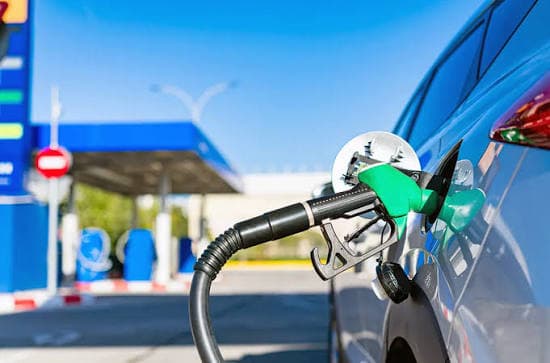
At a Corporate Area gas station, one motorist summed up the dilemma facing many drivers.
“Well I just do what I can, if is 5 gran then is 5, if is less is less but gas essential to my daily operations. I can’t just stop buying it.”
Fuel has become an increasingly expensive necessity.
The latest Petrojam ex-refinery prices, effective September 24, put 87-octane gasoline at $212.68 per litre, 90-octane at $220.38 and automotive diesel at $249.38. Retailers and marketing companies add their own markups, meaning motorists ultimately pay more at the pump.
The escalation has been substantial. At the beginning of 2026, Petrojam’s billing price for 87-octane gasoline was $149.20 per litre; by July, it had reached $204.40, a 37 per cent increase.
For an economy heavily dependent on road transportation, higher fuel prices do not stop at the pump. They feed into the cost of transporting people and goods, operating businesses, producing food and delivering services. The Bank of Jamaica has warned that elevated international fuel prices are likely to put upward pressure on electricity and gas prices.
An economy still struggling to recover
The fuel shock arrives at a particularly difficult moment for Jamaica.
The economy began contracting in the aftermath of Hurricane Melissa, which struck the island in October 2025 and caused extensive damage, particularly across western and southern communities.
The Planning Institute of Jamaica estimates that real economic activity contracted by 4.1 per cent in the January-to-March 2026 quarter, while its latest estimate shows a further 2.9 per cent contraction in April to June, compared with the corresponding quarter of 2025.
The second-quarter contraction reflected continued weakness across several industries as the country grappled with the lingering effects of Melissa. The effects are especially apparent outside the major commercial centres, where some communities are still rebuilding infrastructure, restoring businesses and attempting to recover lost income.
At the Melrose Yam Park in Manchester, a vendor described the economic battle.
“Well the business continue, some days are better than others. We are fighting against something invisible because the competition is not another vendor that you can look and see what they are doing. The competition is the money which is getting less and less.”
The comment captures one of the less visible consequences of economic contraction: people do not necessarily stop spending altogether. Instead, they spend differently.
They postpone purchases. They trade down. They buy smaller quantities. They reduce the frequency of services, and businesses that depend on discretionary spending begin to feel the effect.
Against this backdrop, the Bank of Jamaica has found itself facing a difficult balancing act: supporting economic stability while preventing inflation from becoming entrenched.
On September 28, the central bank raised its policy interest rate by 50 basis points, from 5.50 per cent to 6.0 per cent, effective September 29. The decision reflects growing concern over inflation. According to the Bank, headline inflation reached 7.9 per cent in August, while businesses’ 12-month inflation expectations rose to 7.3 per cent in July from 6.7 per cent in June.
Global shock reaches the Jamaican household
The Bank of Jamaica has explicitly identified the Middle East conflict as a risk to Jamaica’s inflation and growth outlook, warning that higher international commodity prices can feed into domestic energy, transportation and other costs.
For small businesses, the result is often a narrowing margin rather than an immediate collapse. A nail technician described how customers are still coming, but changing how they spend.
“Ladies will still come to fix up but they are getting cheaper sets. Some will still do the nails but skip the pedicure and just ask for toe polish. Or if they still come, it’s less frequent so instead of every 2-3 weeks, I now have some clients I only see once a month if so much. It has been hard and I have noticed the difference.”
An economy can be technically recovering while individual households and businesses continue to feel poorer. Likewise, inflation can fall without prices actually returning to where they were before. When the rate of increase slows, the price level remains elevated.
For the motorist, the answer is to keep buying fuel because work still has to be done.
For the vendor, the challenge is finding customers with money left to spend.
For the small business owner, it is learning how to survive when customers are spending less.
Those individual calculations may ultimately tell the most important story about Jamaica’s economy: not simply whether it grows, but whether ordinary Jamaicans can afford to participate in that growth.