Opinion: Meaningful partnership between Jamaica and its diaspora is possible
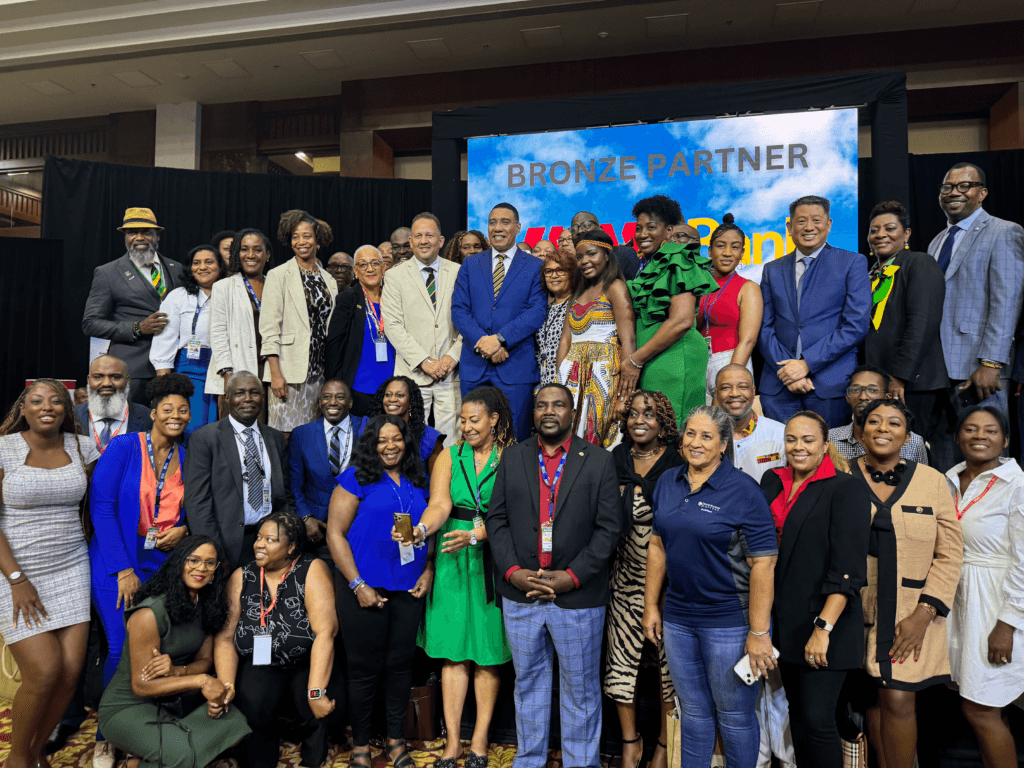
Diaspora conference 2024
Key Points(5)
- Matters involving a formal relationship between Jamaica and its diaspora always seem to be steeped in controversy.
- A relationship that should attract consensus is instead fraught with political division.
- This relentless controversy was evident at the recently concluded annual Jamaica Diaspora Conference held in Montego Bay, Jamaica.
- Ironically, attempts were made by the organizers of the conference to take a bipartisan approach, with the nation’s Leader of the Opposition being invited to address the opening session of the conference.
- This suggestion sparked immediate pushback, with critics arguing that such a plan would be unfeasible.
Matters involving a formal relationship between Jamaica and its diaspora always seem to be steeped in controversy. A relationship that should attract consensus is instead fraught with political division.
This relentless controversy was evident at the recently concluded annual Jamaica Diaspora Conference held in Montego Bay, Jamaica. Ironically, attempts were made by the organizers of the conference to take a bipartisan approach, with the nation’s Leader of the Opposition being invited to address the opening session of the conference.
In his address, the incumbent Leader of the Opposition and President of the People’s National Party, Mark Golding—who, since assuming the role of Opposition Leader in 2020, has made efforts to strengthen the relationship between Jamaica and its diaspora—suggested that plans should be implemented for members of the diaspora to serve on public boards in Jamaica. This suggestion sparked immediate pushback, with critics arguing that such a plan would be unfeasible. Some have even openly stated that the real role of the diaspora is essentially to support Jamaica through financial remittances and other contributions.
Since attempts were initiated in 2004 to formalize a structured relationship between Jamaica and its diaspora, there has been no clear definition of what the nature of that relationship should be. Some members of the diaspora want to vote in Jamaican general elections; others want diaspora representation in the Jamaican Senate; while others, like Golding, support the idea of diaspora members serving on public boards. What is clear is that most members of the diaspora want to serve and be more involved in Jamaica’s development, but this is proving much easier said than done.
There is no doubt that diaspora involvement can be both feasible and beneficial, but it should be structured carefully. The Jamaican diaspora is estimated to be over three million people, larger than the population living on the island. Many diaspora members send remittances, invest in businesses, support schools and churches, and contribute expertise in fields such as medicine, finance, technology, education, and law. Their knowledge and resources can be, and are, valuable to Jamaica’s development.
However, there is an important balance to strike. Diaspora members often have specialized skills and international experience that can help national development, and many maintain strong emotional, cultural, and family ties to Jamaica. They contribute billions of dollars in remittances and investments and are a significant component of the Jamaican economy.
The diaspora plays a major role in building international business, tourism, and trade connections, and it is quite possible—and potentially a great asset to Jamaica—that advisory roles, government boards, and commissions could benefit from the expertise that exists within the diaspora.
On the other hand, there are concerns and limitations to diaspora participation in the governance of Jamaica. People living in Jamaica experience the daily consequences of government decisions, while many diaspora members do not. Many residents believe Jamaicans who have migrated should not have equal influence over policies affecting those who remain.
The argument that diaspora members may be less familiar with current local realities—especially if they have lived abroad for decades—is also a valid one. There is a risk of creating tension between local citizens and overseas Jamaicans if the diaspora is perceived as having disproportionate influence.
As in most cases, a practical middle ground may offer a better solution. While the possibility of diaspora voting in Jamaican general elections appears extremely complicated, it is more feasible to consider diaspora representation on advisory councils and government boards. In fact, many countries already involve their diasporas in governance through advisory bodies, overseas representation, or legislative seats, including France, Italy, and Ireland.
Another idea that seems less complicated and worthy of serious consideration is the appointment of qualified diaspora members to the Jamaican Senate when their expertise is relevant. Persons from the diaspora appointed to the Senate should remain Jamaican citizens and possess expertise useful to the country. Their appointment should be based strictly on merit rather than political favoritism, and they should be required to maintain meaningful engagement with Jamaica.
There could also be more formal consultation mechanisms between the government and diaspora organizations, along with the encouragement of diaspora investment and mentorship programs.
Understandably, there will always be lingering resistance within parts of the diaspora if it is viewed primarily as a source of revenue without a voice in national affairs.
The underlying issue is that the diaspora does not want to be governed by laws and regulations formulated in Jamaica, while Jamaica does not want to be influenced by diaspora members who are sometimes perceived as having turned their backs on the country. The most feasible solution seems not to be one in which either side has control, but rather a partnership between the two—allowing talented overseas Jamaicans to contribute expertise and advice while ensuring that ultimate political accountability remains with those who live in Jamaica.
For such a partnership to work, however, there must be consensus between Jamaica’s political parties. There is little sense in changing policy every time the government changes.




.jpg&w=3840&q=75)