Opinion: June’s here, so is hurricane season
Key Points(5)
- June’s here, so is hurricane season June is here, and most people are happy that summer — and the long-awaited summer holidays — have arrived.
- But for those living in regions of the United States and the Caribbean vulnerable to hurricanes, June also brings serious concern, as June 1 signals the beginning of the annual hurricane season, which lasts through Nov.
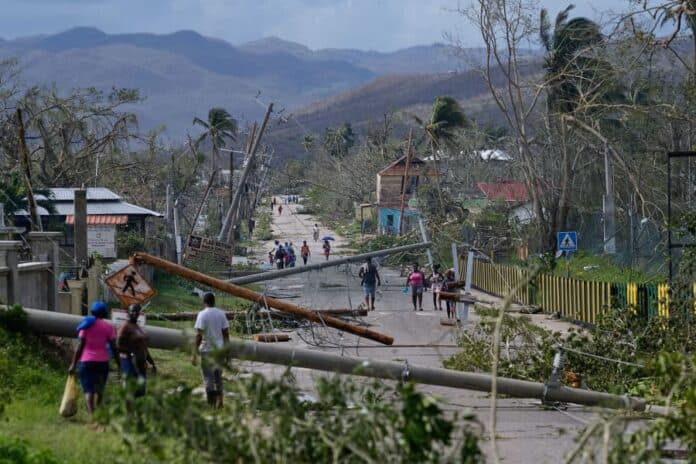
- For Jamaicans, the mention of hurricanes is particularly daunting, as it evokes memories of the massive Category 5 Hurricane Melissa that devastated half the country last year.
- Although predictions call for a less active hurricane season, it only takes one major hurricane to cause severe property damage and loss of life, particularly as climate change has increased hurricanes' ferocity, even if it has not necessarily increased the total number of storms each year.
- Warmer oceans and rising sea levels are the main reasons.
June is here, and most people are happy that summer — and the long-awaited summer holidays — have arrived. But for those living in regions of the United States and the Caribbean vulnerable to hurricanes, June also brings serious concern, as June 1 signals the beginning of the annual hurricane season, which lasts through Nov. 30.
For Jamaicans, the mention of hurricanes is particularly daunting, as it evokes memories of the massive Category 5 Hurricane Melissa that devastated half the country last year. Although predictions call for a less active hurricane season, it only takes one major hurricane to cause severe property damage and loss of life, particularly as climate change has increased hurricanes' ferocity, even if it has not necessarily increased the total number of storms each year.
Warmer oceans and rising sea levels are the main reasons.
Hurricanes are essentially giant heat engines, drawing energy from warm ocean water. As ocean temperatures rise, storms gather more fuel, making them stronger and allowing them to intensify more rapidly.
A warmer atmosphere holds more water vapor, so when a hurricane comes ashore, that extra moisture produces much heavier rainfall, increasing flood risks.
Even if a hurricane's wind speed remains unchanged, higher sea levels mean storm surges are stronger, allowing seawater to penetrate farther inland and cause greater coastal flooding. Many climate models project that a larger percentage of hurricanes will reach the strongest categories.
NOAA currently forecasts a below-normal 2026 Atlantic season because a developing El Niño is expected to suppress storm formation. Hurricane experts say the greatest threat is not necessarily more storms, but stronger storms producing heavier rainfall, higher storm surges and faster intensification near land, leaving people less time to prepare.
As evidenced by Hurricane Melissa and other past hurricanes in Florida and the Caribbean, protection against these potentially powerful storms requires hurricane-resistant roofs, windows and doors; improved enforcement of building codes; and the retrofitting of older homes and public buildings. Florida's tougher building codes after Hurricane Andrew in 1992 are often cited as a success story.
Alongside improving buildings, other protective measures include restoring and preserving mangroves and natural coastal barriers. Mangroves are particularly valuable in the Caribbean because they can significantly reduce storm-surge damage.
Many hurricane deaths and much property damage now result from flooding rather than wind. This requires public authorities to upgrade storm drains, keep gullies and canals clear, and improve flood-control infrastructure.
One of the biggest problems in Jamaica after the passage of Hurricane Melissa was the loss of electronic communication.
It is therefore important to bury critical power lines where practical, strengthen cell towers and communication networks, and improve backup power systems for hospitals, police stations and water facilities.
There is an urgent need for more shelters across the Caribbean designed to withstand major hurricanes, along with better evacuation planning.
It is not too early for families to begin compiling household emergency supplies for at least seven to 14 days and preparing backup plans for medications and medical treatments.
Globally, attention must be paid to reducing greenhouse gas emissions. This action will not stop hurricanes, but it can help limit future ocean warming and sea-level rise, reducing long-term risks.
A major challenge facing Caribbean nations in providing adequate hurricane protection is the high cost involved. There is a strong argument that wealthier countries should help Caribbean nations adapt to climate change. Many governments, international organizations and climate experts already advocate for this.
Caribbean nations contribute only a fraction of global greenhouse gas emissions. Most of these emissions come from developed countries. Yet the Caribbean is among the regions most exposed to hurricanes, coastal flooding, sea-level rise and coral reef loss.
One major hurricane, like Melissa, can cause damage equivalent to a large percentage of a country's entire annual economy. Moreover, small island states often carry high debt burdens, making it difficult to fund major climate-resilience projects.
For these reasons, Caribbean leaders such as Mia Mottley of Barbados have argued internationally that developed countries have a responsibility to provide greater financial assistance.
There have already been some international results. The Green Climate Fund finances adaptation and resilience projects. The World Bank and the Inter-American Development Bank provide loans and grants. The international Loss and Damage Fund, agreed upon at the United Nations Climate Change Conference (COP28), was created to help vulnerable countries recover from climate-related disasters.
The debate is not so much whether assistance should exist, but whether current levels of assistance are sufficient and whether funds are reaching countries quickly enough.
Strengthening Caribbean resilience is a high international priority because lives are at stake and economic losses can set countries back for years.
However, some governments in developed countries argue that they face their own climate-related costs from wildfires, floods, droughts and tornadoes and have limited budgets. Others argue that assistance should be tied to accountability and effective project management to ensure funds are used efficiently.
Notwithstanding these arguments, there is still a strong case for greater support from developed countries. Assistance can come in the form of grants rather than loans for climate adaptation, faster disaster-recovery financing, investment in resilient housing, roads, ports, hospitals and power systems, support for mangrove restoration, reef protection and flood-control projects, and expanded insurance and risk-sharing mechanisms for Caribbean nations.
Given the increasing costs of severe hurricanes and rising sea levels, delaying climate-adaptation investments by developed countries will likely result in greater and more expensive losses for Caribbean nations in the future.