Opinion: Drought creating crisis in the Caribbean
Key Points(5)
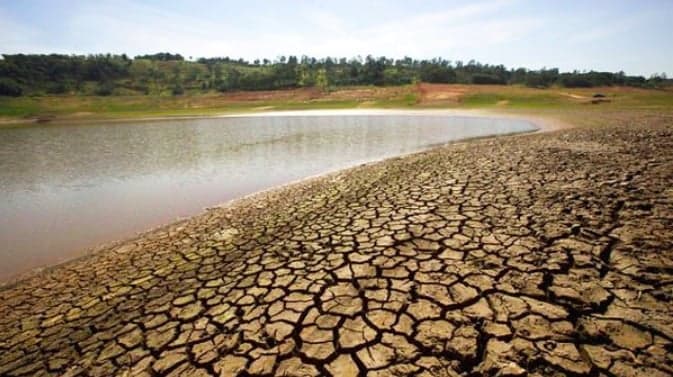
- The Caribbean is experiencing severe drought, spawning a crisis in many countries.
- Last week, Puerto Rico began indefinite 48-hour rotating water rationing in parts of the country.
- Authorities cannot say exactly when it will end, as that depends heavily on rainfall.
- Jamaica is also experiencing severe drought, unusual heat and water shortages, with the National Water Commission (NWC) recently announcing rotating water lock-offs and strict restrictions on water usage.
- The drought affecting the region is caused primarily by the meteorological phenomenon El Niño, which has strengthened in the Pacific Ocean and is currently impacting the Caribbean, suppressing the rising air and thunderstorms that normally produce rainfall.
The Caribbean is experiencing severe drought, spawning a crisis in many countries. Last week, Puerto Rico began indefinite 48-hour rotating water rationing in parts of the country. Authorities cannot say exactly when it will end, as that depends heavily on rainfall.
Jamaica is also experiencing severe drought, unusual heat and water shortages, with the National Water Commission (NWC) recently announcing rotating water lock-offs and strict restrictions on water usage.
The drought affecting the region is caused primarily by the meteorological phenomenon El Niño, which has strengthened in the Pacific Ocean and is currently impacting the Caribbean, suppressing the rising air and thunderstorms that normally produce rainfall.
NOAA’s latest assessment says El Niño is producing a strong suppression of rainfall in Puerto Rico, Jamaica and other Caribbean countries. It is expected to keep drought and hot weather in place.
Heat makes drought considerably worse. When temperatures are very high, water evaporates more rapidly from reservoirs, rivers and streams, soil and vegetation.
In recent months, several Caribbean countries have recorded near-record heat and drought. Rainfall has been more than 60% below normal in some areas.
The severity of drought and water-supply shortages differs from country to country. The Caribbean Climate Outlook Forum (CariCOF) warns of recurrent heat waves and drought conditions across the region. Apart from Jamaica and Puerto Rico, other countries and territories experiencing drought and water shortages include the U.S. Virgin Islands, St. Lucia, St. Kitts and Nevis, Martinique, Barbados, Trinidad and Tobago, Cuba and The Bahamas.
The regional climate center specifically identifies St. Lucia, Martinique and St. Kitts and Nevis as countries where longer-term drought can persist, while Jamaica, Cuba and The Bahamas are among the countries expecting particularly unusual heat.
Barbados is not currently experiencing a water crisis on the scale of Puerto Rico and Jamaica, but it is watching the situation carefully. The Barbados Water Authority warns that continued below-normal rainfall could produce drought and water-supply stress later in 2026. However, Barbados has invested considerably in groundwater management and water conservation, and its water system is relatively accustomed to dealing with limited resources.
Trinidad’s meteorological service forecasts drought conditions in northeastern Trinidad by the end of August, with rainfall deficits, high temperatures and increased evaporation contributing to the problem.
Jamaica’s and Puerto Rico’s water systems have limited resilience because of aging infrastructure, leakage and dependence on reservoirs and groundwater. Reservoir levels are falling, groundwater is not adequately recharging, and streams are running at exceptionally low levels. Consequently, there is heavy dependence on frequent rainfall.
Unfortunately, NOAA’s current forecast is not encouraging, with 70% below-normal rainfall and above-normal temperatures projected for August through October in Puerto Rico, Jamaica and the U.S. Virgin Islands. El Niño is expected to suppress tropical-wave and hurricane activity, restricting one of the Caribbean’s usual sources of rainfall.
The Caribbean needs to become less dependent on rainfall. Countries such as Jamaica and Puerto Rico could substantially improve water security by repairing and replacing leaking water mains; expanding and modernizing reservoirs; increasing groundwater recharge; reusing treated wastewater; installing additional rainwater-capture systems and cisterns; improving agricultural irrigation efficiency; and developing emergency water-storage capacity.
These measures would make droughts less devastating.
Climate change is also a factor. Heat increases water evaporation, and with less rainfall, reservoirs dry out faster.
Droughts cannot be prevented, but water crises caused by drought can be. Jamaica and Puerto Rico have experienced previous droughts, so they should be prepared. Although both have drought-response plans and infrastructure projects underway, these have not yet made their water systems drought-resilient.
Jamaica’s NWC has known for years that prolonged droughts cause supply restrictions and has identified drought as a major cause of water interruptions.
Jamaica’s government is attempting to address the underlying problem. The Western Water Resilience project involves 65 kilometers of new transmission pipelines between the Martha Brae, Montego Bay, Lucea and Negril systems. The NWC is also trying to reduce water leakage by repairing pipes. This increases the available water supply without requiring new water sources.
Historically, drought in the Caribbean was treated as an occasional emergency rather than a long-term planning problem. Governments planned around hurricanes, floods and earthquakes. Drought received less attention because the Caribbean is perceived as a wet region.
Then came climate change.
More water infrastructure is needed, but building it is extremely expensive. Governments must choose between strengthening water systems and addressing other urgent needs. Politically, a new reservoir needed five years from now can be harder to justify than building a hospital or school.
Building new reservoirs also means creating treatment plants, pumping stations, electricity infrastructure, transmission pipelines, local distribution networks and storage tanks.
It is important that authorities in Caribbean countries facing severe water shortages significantly reduce water leakage and build more community water-storage facilities to carry communities through prolonged dry periods.
There cannot be a reliance on a single reservoir to supply entire metropolitan areas. Governments must find ways to capture more water when it rains rather than allowing rainwater to flow into the sea. They must also diversify water sources, including through desalination, rather than depending almost entirely on rainfall-fed surface water.
With the impacts of climate change and El Niño, governments must seriously plan for drought before water supplies diminish.
Caribbean countries are not running out of water permanently, but they are vulnerable to large swings between abundance and scarcity. Droughts cannot be prevented, but greater water resilience can be secured through sound planning so that, when drought strikes, people barely notice it in their pipes.