Antigua and Barbuda changed UN vote on Cuba following US visa warning
Key Points(5)
- Speaking on his weekly radio program, Browne said his government had initially planned to support Cuba but reconsidered after receiving a call from the U.S.
- “In fact, I’ll make this public.
- We had decided to support Cuba on a resolution recently and changed our position because we had a call from the State Department advising us that they’re making progress in the negotiations and if we supported Cuba, that it would undermine the negotiations, so we changed our position,” Browne said.
- He explained that Antigua and Barbuda's ambassador to the United Nations had been instructed to abstain from the vote, although the country was ultimately recorded as absent.
- “Our instructions to the ambassador in New York was to abstain.
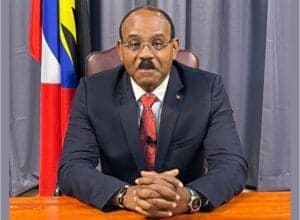
Prime Minister Gaston Browne has revealed that Antigua and Barbuda changed its intended position on a United Nations resolution calling for an end to the United States embargo against Cuba after Washington warned that supporting the measure could jeopardize ongoing negotiations over visa restrictions affecting Antiguan and Barbudan nationals.
Speaking on his weekly radio program, Browne said his government had initially planned to support Cuba but reconsidered after receiving a call from the U.S. State Department.
“In fact, I’ll make this public. We had decided to support Cuba on a resolution recently and changed our position because we had a call from the State Department advising us that they’re making progress in the negotiations and if we supported Cuba, that it would undermine the negotiations, so we changed our position,” Browne said.
He explained that Antigua and Barbuda's ambassador to the United Nations had been instructed to abstain from the vote, although the country was ultimately recorded as absent.
“Our instructions to the ambassador in New York was to abstain. I noticed he did not show up, I don’t know what happened, but we changed our position because of certain things that were said and we’re still trying, but it’s not something we have any control over,” he added.
The revelation comes amid continued diplomatic efforts by the Antigua and Barbuda government to address U.S. visa restrictions that have affected nationals seeking to travel to the United States.
During the October 28 UN vote on the resolution calling for an end to the decades-old U.S. economic, commercial and financial embargo against Cuba, Caribbean Community (CARICOM) countries took differing positions.
Jamaica, Haiti and Guyana abstained, while Trinidad and Tobago voted against the resolution. The Bahamas, Belize, Barbados, Grenada, St. Vincent and the Grenadines, St. Kitts and Nevis, and Suriname voted in favor.
Antigua and Barbuda, Dominica and St. Lucia were recorded as absent.
Trinidad and Tobago Prime Minister Kamla Persad-Bissessar has since defended her government's position, saying the country could not ignore what she described as oppression in Cuba.
“We cannot want to live in light at home and remain silent when others live in the shadows of oppression and exploitation,” she said.
Browne's comments came in response to a female caller who said she was unable to travel to the United States to visit her ailing mother because her visa had expired and obtaining a new one remained difficult.
The prime minister expressed frustration over the restrictions, arguing that Antigua and Barbuda had maintained strong diplomatic relations with Washington and had done nothing to warrant such measures.
“I have said time and time again that there is no justification for it because, you know, we have had very good relations with the United States. We have never done anything to offend them, so up to this day, we’re not quite sure,” he said.
Browne suggested that the restrictions could be linked to the country's Citizenship by Investment Programme (CBI), which allows foreign investors to obtain citizenship in exchange for qualifying investments in the country's socioeconomic development.
He said the government had already agreed to suspend the program and had communicated that decision to the European Union, while requesting an additional three and a half years to phase it out.
“If it is that it’s a CBI that they have spoken about, well, we have just agreed to suspend and we wrote to the European Union, we told them that we’re ready to suspend, but we asked them to give us an additional three and a half years, we’re waiting to hear from them,” Browne explained.
He said the government intended to formally communicate the suspension following November 12, while continuing discussions with international partners.
“So after the official suspension, which obviously is a phase-out over three and a half years, but an agreement to suspend from now, literally from November 12th, we will write to them again and let them know that we have formally suspended our programme because that’s the reason that they use,” he said.
However, Browne acknowledged that his administration remained uncertain whether the citizenship program was the only factor influencing Washington's decision.
“We have suspected it could be some other reason, what? We don’t know, and they’re not saying. They say that it’s our programme, unless they got misinformation and they acted on the misinformation, but you know, too big to accept that it made an error, I don’t know what it is,” he said.
The prime minister stressed that his government continued to pursue a diplomatic resolution, although he acknowledged that the matter was complicated by the level at which the U.S. decision had been made.
“But we’re still working through the diplomatic lines to have this issue addressed,” Browne said, describing the visa situation as a difficult challenge for his administration.
He suggested that the decision originated at the White House rather than solely within the State Department, making it more difficult to reverse.
“It’s someone in the White House who has made a determination. I don’t know necessarily whether President Trump signed the order, that is necessarily he who is driving it himself. So that is what makes it so difficult,” Browne said.
“We have members within the State Department who are working feverishly,” he added.
Despite the uncertainty, Browne maintained that his administration would continue engaging U.S. officials in an effort to resolve the restrictions and restore easier travel access for Antigua and Barbuda nationals.