One in 13 young children in Haiti suffering from acute malnutrition, UNICEF says
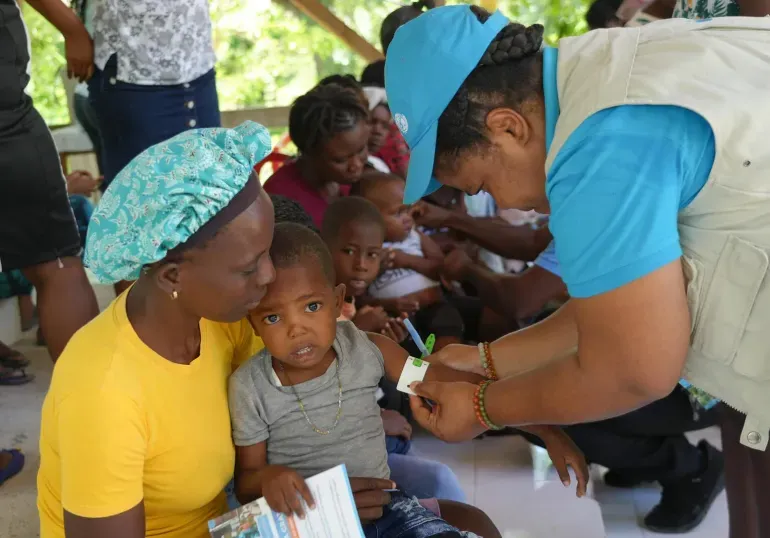
FILE PHOTO: A child gets screened for malnutrition with a MUAC in a UNICEF-supported mobile clinic in Boucan Carré, Haiti, 2025
Key Points(5)
- Approximately one in 13 children under age five in Haiti is suffering from acute malnutrition as worsening insecurity and economic hardship continue to limit families’ access to nutritious food and healthcare, according to new findings released by UNICEF.
- Preliminary results from Haiti’s 2026 National Nutrition SMART Survey show that 7.4% of children between 6 months and 5 years old are experiencing global acute malnutrition, up from 5.1% in 2023.
- Global acute malnutrition includes moderate or severe wasting and nutritional swelling and can become life-threatening without timely treatment.
- “The findings emerge against a backdrop of prolonged insecurity, economic hardship and humanitarian needs that continue to constrain families’ access to sufficient nutritious food, health care and nutrition services,” UNICEF Deputy Representative in Haiti Yannig Dussart said.
- “Preventing and treating malnutrition in Haiti requires urgent action and attention by stakeholders and actors to ensure children can access the lifesaving services they need.” Acute malnutrition can occur when children do not receive enough nutritious food or suffer from repeated illnesses.
Approximately one in 13 children under age five in Haiti is suffering from acute malnutrition as worsening insecurity and economic hardship continue to limit families’ access to nutritious food and healthcare, according to new findings released by UNICEF.
Preliminary results from Haiti’s 2026 National Nutrition SMART Survey show that 7.4% of children between 6 months and 5 years old are experiencing global acute malnutrition, up from 5.1% in 2023.
Global acute malnutrition includes moderate or severe wasting and nutritional swelling and can become life-threatening without timely treatment.
“The findings emerge against a backdrop of prolonged insecurity, economic hardship and humanitarian needs that continue to constrain families’ access to sufficient nutritious food, health care and nutrition services,” UNICEF Deputy Representative in Haiti Yannig Dussart said.
“Preventing and treating malnutrition in Haiti requires urgent action and attention by stakeholders and actors to ensure children can access the lifesaving services they need.”
Acute malnutrition can occur when children do not receive enough nutritious food or suffer from repeated illnesses. Children experiencing severe acute malnutrition face a heightened risk of death, particularly when illness is combined with limited access to medical care.
The worsening nutrition crisis comes as children face increasing threats from Haiti's widespread violence.
According to UNICEF, grave violations against children tripled between 2023 and 2025. Those violations include denial of access to humanitarian assistance and attacks on schools and hospitals where children receive nutrition services.
Despite the rise in acute malnutrition, the survey found improvements in several other indicators of children's health and nutrition.
The prevalence of chronic malnutrition, or stunting, among children under five declined from 22.8% in 2023 to 17.3% this year.
The proportion of children benefiting from early initiation of breastfeeding also increased from 48% to 68%, while exclusive breastfeeding nearly doubled from 17.5% in 2023 to 33% in 2026.
UNICEF and its partners are working with Haiti's Ministry of Public Health and Population to expand screening and treatment for malnourished children.
Those efforts include deploying community health workers and mobile teams to reach children living in hard-to-access and insecure areas.
A more comprehensive analysis of the survey findings, together with an Integrated Food Security Phase Classification for Acute Malnutrition assessment, is expected in the coming month. UNICEF said the findings will help guide humanitarian and development responses.
However, the UN agency warned that its efforts face a significant funding shortage as humanitarian needs across Haiti continue to grow.
UNICEF said there is a funding gap of more than 64% for nutrition interventions under its 2026 Humanitarian Action for Children appeal.
The agency is calling for increased international support to maintain supplies of ready-to-use therapeutic foods and expand access to nutrition services for vulnerable children and women.
UNICEF warned that sustained funding will be critical to preventing, detecting and treating acute malnutrition and reaching children most at risk as Haiti's humanitarian crisis continues.