Trinidad and Tobago plans phased restart of Petrotrin refinery
Key Points(5)
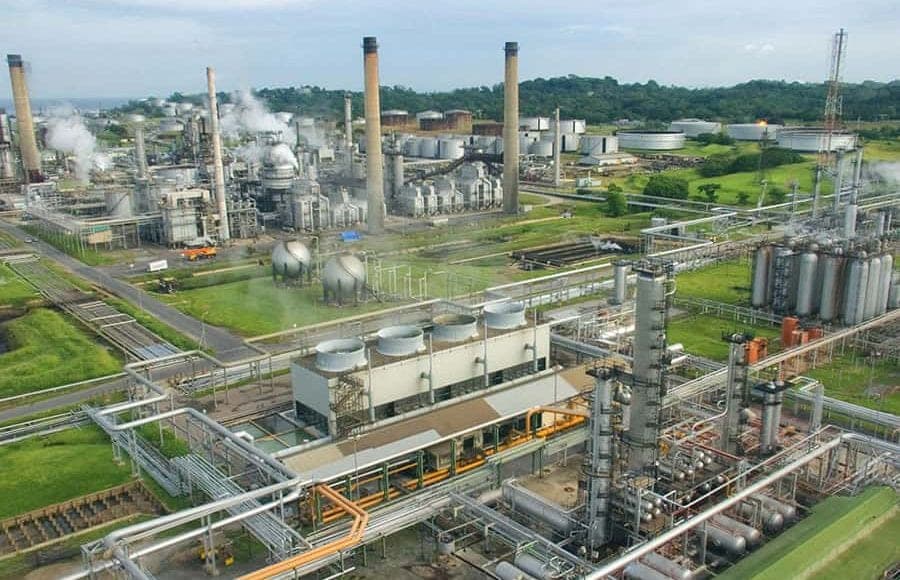
- The Trinidad and Tobago Government plans to restart the Petrotrin oil refinery at Pointe-a-Pierre, which was shut down in November 2018 amid mounting debt and operational losses.
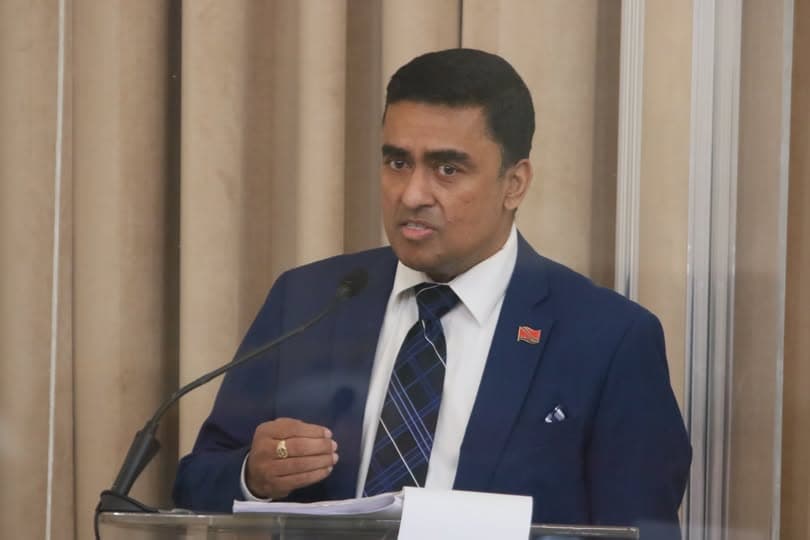
- Finance Minister Davendranath Tancoo announced the plans on Monday as he presented the TT$63.3 billion national budget to Parliament, saying the Government was evaluating proposals from local and international investors to facilitate the refinery’s phased restart.
- “We will restart the refinery.
- We are advancing the phased restart of the Guaracara Refinery at Pointe-a-Pierre,” Tancoo said.
- He said the Government had received a comprehensive report from the Refinery Restart Committee and was assessing proposals from a shortlist of potential investors.
The Trinidad and Tobago Government plans to restart the Petrotrin oil refinery at Pointe-a-Pierre, which was shut down in November 2018 amid mounting debt and operational losses.
Finance Minister Davendranath Tancoo announced the plans on Monday as he presented the TT$63.3 billion national budget to Parliament, saying the Government was evaluating proposals from local and international investors to facilitate the refinery’s phased restart.
“We will restart the refinery. We are advancing the phased restart of the Guaracara Refinery at Pointe-a-Pierre,” Tancoo said.
He said the Government had received a comprehensive report from the Refinery Restart Committee and was assessing proposals from a shortlist of potential investors.
“Let me be clear, we will approach the restart of this national asset with fiscal discipline. Our objective is to secure a credible, commercially viable and fully financed arrangement that protects the national interest while creating the conditions for renewed economic activity,” he said.
The refinery, which had operated for more than a century, was closed by the administration of former prime minister Keith Rowley on November 30, 2018. The previous government said Petrotrin had accumulated an estimated TT$12 billion in debt and recorded losses of approximately TT$8 billion over five years.
Tancoo said the closure had affected thousands of people in communities stretching from Couva to Cedros, including contractors and small businesses that depended on the refinery for their livelihoods.
“This is about reinstating the very lifeline to communities, downstream contractors, micro-enterprises, doubles vendors, roti shops, etc. Thousands of residents in communities from Couva to Cedros were suddenly left traumatised by a loss of income to meet the needs of their family since 2018,” he said.
He added that the closure had also changed the country’s position in the refined petroleum market.
“When the refinery was shut down, the country moved from being a net exporter of refined products to having to import every single litre of diesel, of gasoline, of pitch oil and of engine oil used in this country,” Tancoo said.
The finance minister identified energy as the foundation of Trinidad and Tobago’s economy, noting that more than 70 per cent of the country’s foreign exchange earnings come from energy commodity exports.
He said the Government was also working to address declining natural gas production, which has affected liquefied natural gas (LNG) and petrochemical output.
Tancoo blamed the previous administration for relying heavily on the proposed Dragon gas field in Venezuelan waters while failing to reverse declining gas production.
He said natural gas supply stood at 2.4 billion cubic feet per day, representing a 45 per cent decline in output that had contributed to the permanent closure of Atlantic LNG Train 1 and several petrochemical plants.
“Today the Point Lisas Estate is almost a ghost town and even those plants still operating are producing significantly below capacity. They have devastated our energy security, but we are fixing it,” he said.
Tancoo said restoring natural gas supplies was the Government’s first priority. To accelerate investment, the administration has established an Energy Accelerator Hub within the Ministry of Energy and Energy Industries to streamline regulatory and administrative approvals for major projects.
The hub brings together 33 separate approvals across eight ministries and agencies, a move the Government expects to reduce delays and speed up production.
Tancoo highlighted several projects expected to boost natural gas supplies over the coming years, including developments by bpTT and EOG Resources. He said EOG’s Mento development had achieved first gas and reached peak production of 281.58 million standard cubic feet per day in June 2026.
Other projects expected to contribute new supplies include bpTT’s Ginger development, Mahogany A Extended Field, Juniper Phase II, Coconut, Aphrodite and Manatee Plus, with several targeting first gas in 2027.
The Government is also pursuing additional exploration and development opportunities, including cross-border and deepwater gas resources. Tancoo said bpTT had secured an exploration and production licence for Loran Phase II, which could help the country monetise more than four trillion cubic feet of natural gas from regional and cross-border fields.
He also cited bpTT’s proposed acquisition of Woodside’s 70 per cent stake in the Calypso gas field, which is expected to close by the end of 2026.
Beyond natural gas, Tancoo said the Government was pursuing investment in oil exploration and production, including a potential US$21 billion investment involving ExxonMobil.
He said ExxonMobil had completed a three-dimensional seismic acquisition programme in an ultradeepwater block, with analysis underway to identify potential drilling targets. Other international companies, including Chevron and Occidental Petroleum, have also expressed interest in Trinidad and Tobago’s energy sector, he added.
Upstream capital expenditure is estimated to exceed US$2 billion in 2026, with investments projected to rise to US$2.3 billion in 2027 and US$2.6 billion in 2028 before reaching US$1.4 billion in 2029, according to Tancoo.
The Government is also encouraging smaller local and foreign operators to develop marginal oil reserves while state-owned Heritage Petroleum Company Limited continues drilling and workover programmes in producing fields, including East Soldado and South West Soldado.
Tancoo said the investments were intended to strengthen the country’s energy sector, improve production and restore economic activity in communities affected by the downturn.
Debate on the national budget is scheduled to begin on Friday.