New York City steps up security as thousands celebrate West Indian Day Parade
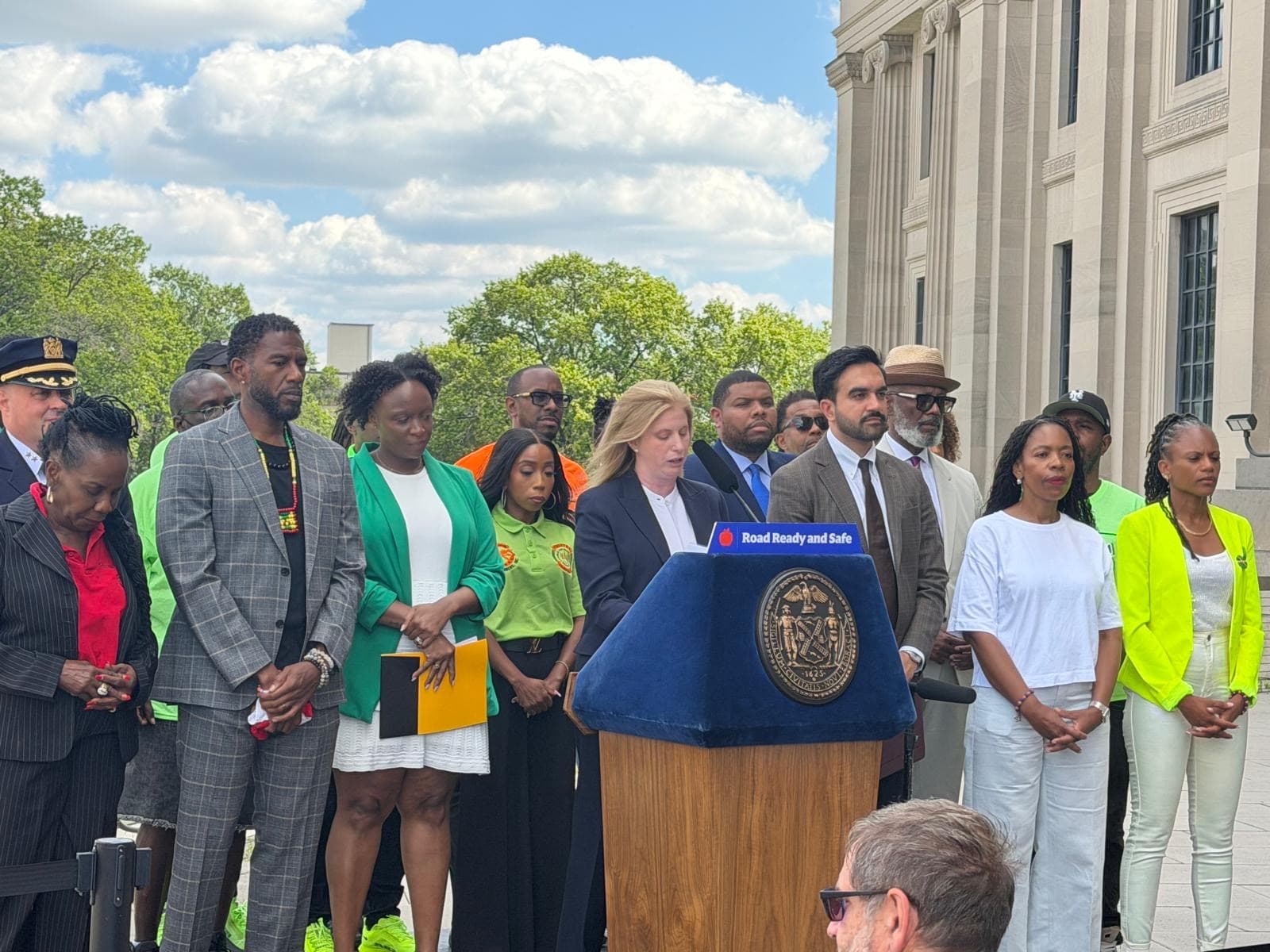
New York City Mayor Zohran Kwame Mamdani speaks during a press conference with city officials, including Police Commissioner Jessica Tisch, about security for the West Indian American Day Carnival Parade in Brooklyn.
Key Points(5)
- As thousands of revelers fill Brooklyn for New York City’s annual West Indian American Day Carnival Parade, city officials said additional security measures and community-based violence prevention efforts are in place to help ensure the Labor Day celebration is both safe and joyful.
- New York City Mayor Zohran Kwame Mamdani said the city has built on security measures implemented during last year’s festivities while adding more barricades and police officers along the parade route.
- But Mamdani emphasized that public safety cannot come at the expense of the Caribbean community’s ability to celebrate.
- “It has to be a balance between delivering safety and making sure this is a joyful weekend,” Mamdani said.
- The parade, one of the largest Caribbean cultural celebrations in the United States, draws thousands of spectators and masqueraders to Eastern Parkway in Brooklyn each Labor Day.
As thousands of revelers fill Brooklyn for New York City’s annual West Indian American Day Carnival Parade, city officials said additional security measures and community-based violence prevention efforts are in place to help ensure the Labor Day celebration is both safe and joyful.
New York City Mayor Zohran Kwame Mamdani said the city has built on security measures implemented during last year’s festivities while adding more barricades and police officers along the parade route.
But Mamdani emphasized that public safety cannot come at the expense of the Caribbean community’s ability to celebrate.
“It has to be a balance between delivering safety and making sure this is a joyful weekend,” Mamdani said.
The parade, one of the largest Caribbean cultural celebrations in the United States, draws thousands of spectators and masqueraders to Eastern Parkway in Brooklyn each Labor Day. The festivities extend beyond the parade itself, with J'ouvert and other events bringing Caribbean music, food, costumes and traditions to the streets throughout the weekend.
Mamdani said preparations began earlier this year with community partners involved in the city’s crisis management system. The goal, he said, is to ensure that residents and visitors know where to turn if tensions arise, whether the situation requires community intervention or police assistance.
“We want to make sure that people are coordinated, people are prepared,” Mamdani said.
The mayor said the city will continue strategies that have contributed to a safer J'ouvert celebration, including changes to the timing of events and designated areas where participants can gather.
Officials are also focused on keeping the parade on schedule, with Mamdani saying the city wants the procession to start and end on time.
He noted that past incidents of violence have often occurred toward the end of the parade, making an orderly conclusion an important component of the city’s safety strategy.
“If we can actually end it on time, then it can be a major part of this,” Mamdani said.
The increased police presence is expected to be accompanied by community-based violence intervention workers and crisis management partners. Mamdani said those “credible messengers” can play a critical role in defusing conflicts before they escalate.
The approach is intended to provide another layer of protection without making the Caribbean community feel unnecessarily targeted or over-policed during a celebration that is deeply rooted in New York City’s cultural identity.
“I would say that we are taking every single precaution we can to make sure that this is a safe parade and still a joyful parade,” Mamdani said.
His remarks came as the city prepared for a weekend expected to showcase the enormous cultural contributions of Caribbean New Yorkers.
Deputy Mayor for Community Safety Renita Francois, who also spoke about the city’s preparations, emphasized the importance of keeping the community at the center of the planning process. She said city agencies and community organizations are working together to ensure that residents, businesses and people who live and work along the parade route are prepared and that the systems supporting the celebration are functioning effectively.

Deputy Mayor for Community Safety Renita Francois discusses the city’s community-centered approach to keeping the West Indian American Day Carnival Parade safe.
That includes coordination with crisis management teams and community partners who can respond to concerns before they become larger problems.
She added that the administration wants the focus to remain on what West Indian and Caribbean communities contribute to New York City rather than allowing isolated incidents or past negative experiences to overshadow the celebration.
For generations, Caribbean immigrants and their descendants have helped shape New York through their businesses, music, food, art, civic engagement and cultural traditions. The annual parade has become a signature expression of that influence.
This year’s preparations reflect an effort to protect that legacy while addressing legitimate public safety concerns.
As colorful costumes, steelpan music, soca, calypso and flags from across the Caribbean prepare to take over Brooklyn, city officials say the goal is straightforward: allow New Yorkers and visitors to celebrate while ensuring that safety remains a shared responsibility.
For Mamdani, that means combining traditional law enforcement with community intervention and early coordination.