New push to help Jamaica’s returning deportees reintegrate into society
Key Points(5)
- Jamaica is strengthening its support systems for involuntarily returned migrants (IRMs), as hundreds of deportees continue to arrive annually and reintegration challenges remain a persistent social and economic concern.
- The Ministry of National Security and Peace has partnered with the Open Arms Development Centre to provide transitional housing, rehabilitation and support services for returnees who often arrive with limited resources, disrupted family ties, or difficulties securing employment.
- The collaboration is part of a wider multi-agency approach aimed at helping returning nationals rebuild their lives, according to government officials.
- The issue remains significant in scale.
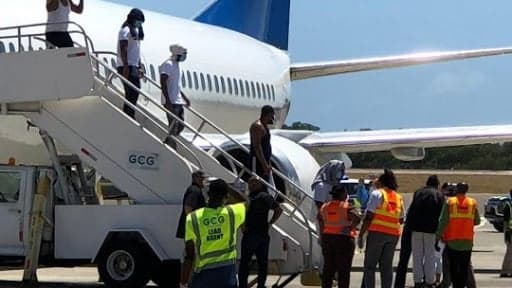
- According to Jamaica’s Economic and Social Survey, 547 Jamaicans were forcibly returned in 2024 alone, while 2,843 were deported over the five-year period from 2020 to 2024.
Jamaica is strengthening its support systems for involuntarily returned migrants (IRMs), as hundreds of deportees continue to arrive annually and reintegration challenges remain a persistent social and economic concern.
The Ministry of National Security and Peace has partnered with the Open Arms Development Centre, a temporary shelter, food and clothing to the homelessto provide transitional housing, rehabilitation and support services for returnees who often arrive with limited resources, disrupted family ties, or difficulties securing employment.
The collaboration is part of a wider multi-agency approach aimed at helping returning nationals rebuild their lives, according to government officials.
While Jamaica does not publicly operate a single consolidated reintegration programme for deportees, authorities say coordination across ministries — including Labour and Social Security, Health and Wellness, and Local Government — is intended to close gaps in housing, counselling and job placement support.
The issue remains significant in scale. According to Jamaica’s Economic and Social Survey, 547 Jamaicans were forcibly returned in 2024 alone, while 2,843 were deported over the five-year period from 2020 to 2024.
Longer-term research on migration patterns suggests the cumulative impact is far greater. Between 2000 and 2013, more than 41,000 Jamaicans were deported from countries including the United States, United Kingdom and Canada, with the United States accounting for the largest share.
Officials and researchers have long noted that many returnees face immediate reintegration hurdles, particularly around housing, stigma, and employment. In Kingston, facilities such as Open Arms Development Centre have become key points of support, offering temporary accommodation and structured rehabilitation programmes for those with limited family networks or no immediate place to stay.
Chief Technical Director in the ministry, Shauna Trowers, said partnerships with organisations like Open Arms are essential for stabilising returnees in the critical early stages after arrival.
She said the centre provides “transitional support where there’s limited family support and limited accommodation,” allowing time for agencies to coordinate longer-term assistance.
Located on Windward Road in Kingston, Open Arms has operated since 2012, offering residential care and reintegration services for vulnerable returnees and other at-risk groups.
Beyond immediate support, officials say the broader challenge is ensuring sustainable reintegration into communities, particularly for individuals returning after years abroad.
Human rights and migration researchers have previously noted that a significant share of deportees struggle with access to stable housing and employment upon return, while some also face stigma linked to their migration status or time spent overseas.
The government maintains that its approach is focused on coordination rather than centralisation, working through multiple agencies and community-based partners to support reintegration outcomes.
As deportation flows continue at steady levels, officials say strengthening these networks remains central to managing the social impact of involuntary return migration in Jamaica.