

Miami woman shares endometrial cancer survival story after Broward Health treatment
Key Points(5)
- Lizbeth Muller had not had a menstrual period in years when she began experiencing slight spotting and vaginal discharge in early 2023.
- The 60-year-old Miami Shores resident knew something was unusual and consulted her OB-GYN.
- Tests revealed that she had stage 1 endometrial cancer, a cancer that develops in the lining of the uterus.
- "It was an aggressive form," Muller said.
- "It scared the living daylights out of me." Muller was referred to Scott Jordan, M.D., a gynecologic oncologist with the Broward Health Physician Group.
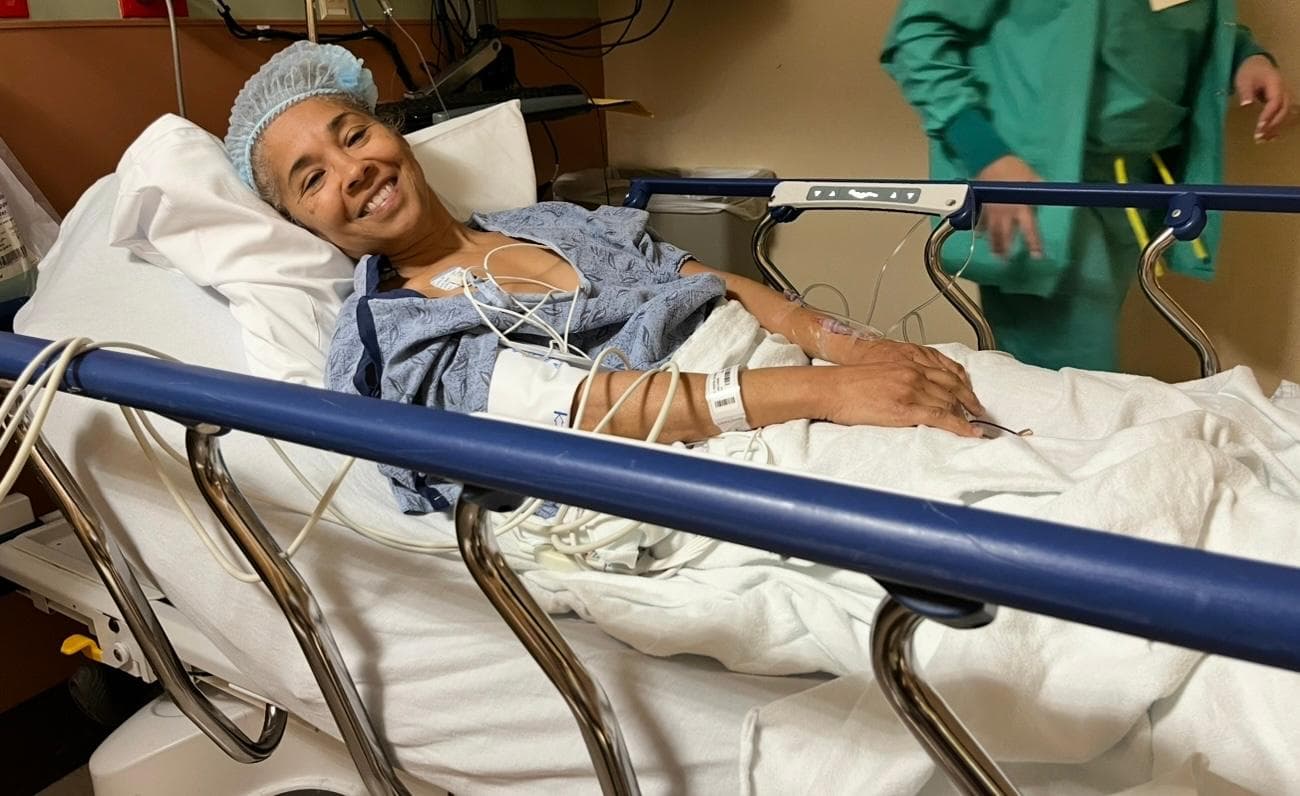
Lizbeth Muller had not had a menstrual period in years when she began experiencing slight spotting and vaginal discharge in early 2023.
The 60-year-old Miami Shores resident knew something was unusual and consulted her OB-GYN. Tests revealed that she had stage 1 endometrial cancer, a cancer that develops in the lining of the uterus.
"It was an aggressive form," Muller said. "It scared the living daylights out of me."
Muller was referred to Scott Jordan, M.D., a gynecologic oncologist with the Broward Health Physician Group. She underwent robotic-assisted surgery at Broward Health Medical Center, where Jordan removed her cervix, uterus, ovaries, fallopian tubes and some nearby lymph nodes.
She later completed several weeks of radiation therapy in the fall of 2023.
Now cancer-free, Muller continues to see Jordan and says she is focused on enjoying life.
"I want women to be aware of their bodies," she said. "If you see or feel something that isn't quite right, even if you're healthy and take care of yourself, see your doctor."
Endometrial cancer on the rise
Endometrial cancer is the most common gynecologic cancer in the United States. According to the American Cancer Society, new cases have increased for more than a decade, while the death rate has also been rising.
Treatment depends on the stage and characteristics of the cancer and can include surgery, radiation, chemotherapy, immunotherapy or a combination of treatments.
"In endometrial cancer, we started combining immunotherapy and chemotherapy for patients with advanced disease about three years ago," Jordan said. "We're seeing massive improvements in patients' outcomes as a result."
Robotic-assisted surgery is also increasingly used in gynecologic cancer treatment. Such minimally invasive procedures can reduce recovery time for some patients, potentially allowing them to begin additional treatment sooner when needed.
Jordan described Muller’s outcome as "fantastic."
Know the symptoms
Symptoms of gynecologic cancers vary depending on the type of cancer. Possible warning signs include:
- Abdominal or back pain
- Constipation
- Feeling full quickly after eating
- Frequent urination
- Pelvic pain
- Unusual vaginal bleeding or discharge
- Vulvar pain, itching, burning or skin changes
For endometrial cancer specifically, abnormal vaginal bleeding — including bleeding after menopause — is an important warning sign that should be evaluated by a health care provider.
Risk factors and prevention
Obesity is a major risk factor for endometrial cancer, and maintaining a healthy weight may reduce the risk.
Risk factors differ among gynecologic cancers. Smoking and a weakened immune system are among the risk factors for cervical cancer, while inherited genetic mutations and a family history of hereditary breast and ovarian cancer syndromes can increase the risk of ovarian cancer, according to Jordan.
Regular visits with an OB-GYN can help with prevention and early detection of some gynecologic cancers. Pap tests and human papillomavirus (HPV) tests are used to screen for cervical cancer and identify precancerous changes. HPV causes most cervical cancers.
Clinical trials can also provide eligible cancer patients with access to treatments being studied. Broward Health says it offers a large portfolio of gynecologic cancer clinical trials in South Florida.





.jpg&w=3840&q=75)