Jamaica to petition King Charles as reparations campaign moves to next legal phase

Key Points(5)
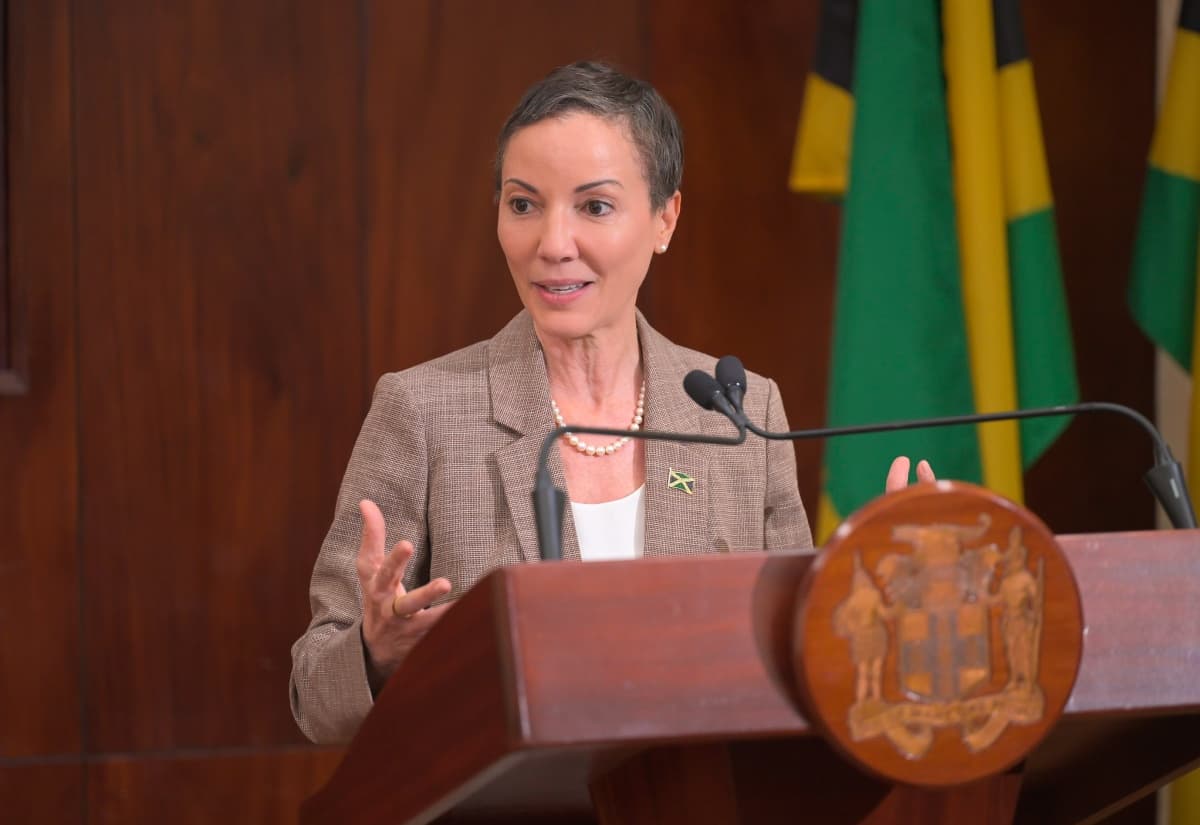
- Jamaica is preparing to take its reparations campaign to the next legal stage by petitioning His Majesty King Charles to refer a series of legal questions to the Privy Council, Minister of Culture, Gender, Entertainment and Sport Olivia Grange has announced.
- Grange said the move represents a significant step in Jamaica’s long-running effort to seek reparatory justice for the atrocities committed during the transatlantic slave trade and the period of enslavement.
- “After years of discussion and planning, we are moving ahead with our demand for reparations in the name of our ancestors,” Grange said.
- “We are under no illusion that this will not be easy or quick,” she said.
- “Like the ancestors’ fight for freedom, we anticipate challenges, but like the ancestors, we are in this for the long haul.
Jamaica is preparing to take its reparations campaign to the next legal stage by petitioning His Majesty King Charles to refer a series of legal questions to the Privy Council, Minister of Culture, Gender, Entertainment and Sport Olivia Grange has announced.
Grange said the move represents a significant step in Jamaica’s long-running effort to seek reparatory justice for the atrocities committed during the transatlantic slave trade and the period of enslavement.
“After years of discussion and planning, we are moving ahead with our demand for reparations in the name of our ancestors,” Grange said. “The next step in the long journey for reparations is a legal step in which we will petition His Majesty King Charles to put a series of very, very important legal questions to his Privy Council.”
She said the legal action is expected to begin within the coming months as Jamaica advances its pursuit of reparations.
Grange was speaking at the annual Seville Emancipation Jubilee, held at Seville Heritage Park from July 31 to Emancipation Day on August 1, under the theme “Unite in Celebrating Resilience.”
The minister acknowledged that the process will likely be challenging and lengthy but said Jamaica remains committed to the cause.
“We are under no illusion that this will not be easy or quick,” she said. “Like the ancestors’ fight for freedom, we anticipate challenges, but like the ancestors, we are in this for the long haul. We won’t give up.”
She also called on Jamaicans to continue supporting the reparations movement, describing it as a way to honour the sacrifices and struggles of enslaved Africans.
“Let us recommit our full support to the fight for reparations in honour of the ancestors. Justice demands it,” Grange said.
Grange noted the historical importance of Seville Heritage Park, where the legacies of the Taino, Spanish, British and African peoples intersect. The site also reflects the experiences of enslaved Africans who endured generations of hardship while contributing to the foundation of modern Jamaica.
Chairman of the Jamaica National Heritage Trust Orville Hall said the Emancipation Jubilee serves as a reminder of the resilience inherited from Jamaica’s ancestors.
Referencing Jamaica’s recovery following Hurricane Melissa, Hall said the nation’s ability to rebuild after major challenges is rooted in the strength and perseverance of previous generations.
“Our capacity to recover quickly is not accidental. It is rooted in the strength of our ancestors, enslaved Africans who endured unimaginable hardships, yet preserved their humanity, their culture, and their hope,” he said.
Hall said the resilience passed down through generations continues to shape how Jamaicans respond to adversity, while emphasizing the JNHT’s commitment to preserving historic sites and cultural heritage.
Meanwhile, Mayor of St. Ann’s Bay Councillor Michael Belnavis encouraged Jamaicans to honour their ancestors by strengthening communities, supporting young people and protecting the country’s cultural legacy.
He said emancipation was not only the end of slavery but part of an ongoing pursuit of justice, equality and dignity.
“True emancipation is a continual pursuit of justice, equality, dignity, and the opportunity for every citizen,” Belnavis said. “It challenges us to confront the barriers that still divide us, and to work together in building a Jamaica where every individual can thrive.”
The Seville Emancipation Jubilee is Jamaica’s national observance commemorating the abolition of slavery. The annual event features cultural performances, historical reflections and the symbolic midnight reading of the Emancipation Proclamation.