Jamaica considers U.S. proposal to accept non-Jamaican deportees
Key Points(5)
- The proposal, first raised by a senior Jamaican government official, could reportedly involve the transfer of up to 10,000 third-country nationals over time, under a system that would allow the U.S.
- to propose removals and Jamaica to accept or reject cases on an individual basis.
- Under the draft memorandum of understanding, Jamaica would receive up to 25 individuals every two weeks, subject to case-by-case approval.
- The arrangement is described as non-binding and operationally flexible, with either country able to withdraw with 90 days’ notice through diplomatic channels.
- The document outlines exclusions for unaccompanied minors, Jamaican nationals, and individuals with serious criminal convictions, though eligibility would depend on available U.S.
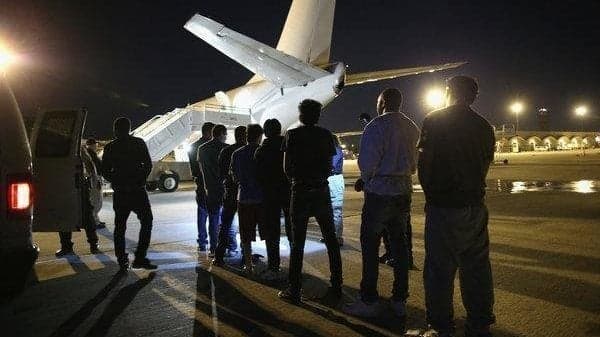
Jamaica and the United States are expected to begin formal discussions on a proposed arrangement initiated by Washington that could see the island accepting non-Jamaican nationals deported from the U.S., according to a draft framework reviewed by The Gleaner. The proposal remains at an early, exploratory stage and has not been agreed or implemented, but it places Jamaica within a growing network of countries being approached by the U.S. on third-country migration arrangements.
The proposal is understood to originate from a U.S. policy initiative and could involve the transfer of thousands of third-country nationals over time. Under the draft structure, the United States would propose individuals for removal, while Jamaica would retain full discretion to accept or reject each case on an individual basis.
Under the proposed memorandum of understanding, Jamaica would receive up to 25 individuals every two weeks, subject to case-by-case approval by Jamaican authorities. The arrangement is described as non-binding and operational in nature, with either country able to withdraw at any time with 90 days’ notice through diplomatic channels.
The draft outlines exclusions for unaccompanied minors, Jamaican nationals, and individuals with serious criminal convictions, although eligibility would depend on the completeness and accuracy of documentation provided by U.S. authorities at the time of transfer. It also proposes that Jamaican officials receive biographical, medical, and criminal background information prior to any arrival.
The framework further states that individuals not accepted by Jamaica would be returned to U.S. custody, and that the U.S. could pause transfers if certain thresholds are reached, including if a set number of transferred individuals remain in Jamaica beyond 30 days.
The proposal is part of broader U.S. efforts to pursue third-country migration agreements across Latin America, Africa and the Caribbean as Washington seeks to manage asylum pressures and deportation backlogs.
Regional trend of third-country migration deals
Several Caribbean governments have already confirmed participation in similar arrangements or discussions with Washington, reflecting a wider shift in migration diplomacy across the region.
Countries including Dominica, Antigua and Barbuda, St. Kitts and Nevis, and St. Lucia have acknowledged agreements or memoranda of understanding with the United States to receive third-country nationals or deportees under varying conditions. In most cases, governments have emphasized that the arrangements are limited in scope and subject to security screening and national discretion.
In St. Kitts and Nevis, officials have publicly stated that only non-violent individuals would be considered, while St. Lucia has described its agreement as non-binding. Belize has also signed a separate “safe third country”-style agreement with the United States involving asylum processing cooperation.
The expanding network of agreements has drawn scrutiny from legal observers and civil society groups, who warn that small island states could face logistical and security pressures if arrangements scale up.
Jamaica’s balancing act on migration, returnees and capacity concerns
Jamaica’s consideration of a possible U.S. third-country deportee arrangement comes at a time when the government has also been actively encouraging Jamaicans abroad to return home, raising broader questions about institutional capacity and how the country would manage both returning nationals and non-Jamaican deportees under any future agreement.
Prime Minister Andrew Holness has in recent years framed Jamaica as open to the return of nationals affected by shifting immigration policies overseas, particularly in the United States.
In a 2025 public address, Holness acknowledged the uncertainty facing Jamaicans abroad, saying:
“We understand that the shifting immigration policies in the United States have placed many Jamaicans in difficult and uncertain circumstances. Let me be clear: Jamaica is your homeland. You are not homeless, and you are not stateless. This is your country, and we welcome you home.”
At the same time, he has drawn a clear line regarding criminal conduct among returnees, warning:
“If your intent is criminal, expect to be dealt with firmly. Do not come back here to destroy your homeland or dismantle what we have been working very hard to create.”
Against this backdrop, any potential arrangement involving the reception of non-Jamaican deportees from the United States could add another layer of complexity, particularly around processing capacity, security screening, and reintegration systems already used for returning nationals.
The issue of third-country deportations has also drawn regional attention. In 2025, a Jamaican man deported from the United States to Eswatini was later returned to Jamaica following diplomatic intervention, after concerns emerged about the handling of individuals sent to countries with no prior connection to them.
That case intensified debate across the Caribbean over the legal and practical implications of third-country transfers, including questions of transparency, due process, and the responsibilities of receiving states.
According to The Gleaner, the draft Jamaica–U.S. framework also includes provisions for coordinated public messaging and indicates that Washington may explore foreign assistance funding to support implementation, including payments to international organizations involved in processing or monitoring deportees.
The proposal does not create legally binding obligations under international or domestic law.