Holness: ‘We should not look down’ on children learning closer to nature
Key Points(5)
- Editorial Why not the JDF?
- September 9, 2026 He said significant progress had been made despite the challenges associated with procurement, contracting and weather, and described the reopening of the school year as successful.
- However, the prime minister said the current discussion about children learning outside should also take account of the conditions inside some school buildings, where excessive heat can make classrooms uncomfortable for both students and teachers.
- PriceSmart takes over former Nestlé Ferry hub Business PriceSmart takes over former Nestlé Ferry hub September 9, 2026 “When I was going to school, that was my favourite time because the classrooms were so hot.
- And I’m not excusing the lack of resources in some schools but the truth is that sometimes… I visited the classrooms a few times… [and] the classrooms are unbearably hot, many of them.
Prime Minister Dr Andrew Holness says outdoor learning can sometimes provide a cooler and more supportive environment for students than Jamaica’s “unbearably hot” classrooms, as some children continue to attend classes in tents and under trees at hurricane-damaged schools.
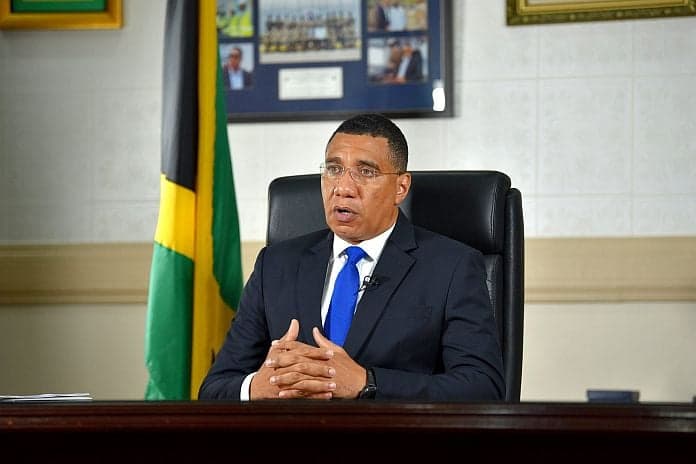
Holness made the comments Tuesday during the official launch of the Jamaica Reconstruction and Resilience Oversight Committee (JAMRROC) at Jamaica House in Kingston, amid growing public concern about conditions at schools still awaiting repairs nearly a year after Category Five Hurricane Melissa.
“Granted, this morning [Tuesday], I was reading the newspapers where they highlighted children learning outside the classroom under trees. When I was going to school, that was my favourite time because the classrooms were so hot. You know, I'm not excusing the lack of resources in some schools, but the truth is that sometimes, you know, I've visited the classrooms a few times, granted I've visited them in my jacket and tie and so I may be a little bit hotter than those in the classroom, but classrooms are unbearably hot, many of them.”
Holness was commenting on the broader recovery of Jamaica’s education system and was not responding specifically to conditions at any one school.
His remarks come as students at some hurricane-damaged institutions, particularly in western Jamaica, continue to learn in temporary spaces because classrooms remain unusable.
At Holland Primary School in St Elizabeth, for example, students in grades two and three were moved outdoors after a tent being used as temporary classroom space became too hot.
Grade three students have been taking classes under a mango tree, while grade two students are using a bamboo structure. The school, which has 215 students, is currently using four tents and needs five classrooms to adequately accommodate its population.
The conditions at Holland Primary and other schools in St Elizabeth and Westmoreland have fueled public criticism over the pace of repairs following Hurricane Melissa.
Holness, however, argued that the debate over outdoor classes should also consider the physical conditions inside some Jamaican classrooms, particularly excessive heat.
He stressed that his comments should not be interpreted as an attempt to excuse shortcomings in the education system.
He added: “And so, we should not look down on having our children learn closer to nature, in cooler environments, and in a setting that is more supportive of learning. Now, our responsibility is not to explain away failures and shortcomings. Our responsibility is to fix them, to remove the bottlenecks, and to accelerate delivery.”
More than 300 schools remain on the Government’s roster for repairs, according to Holness, who said significant progress has been made despite difficulties involving procurement, contracting, weather and other factors.
The prime minister said the Government has also sought to use the post-hurricane reconstruction process to reconsider how some of the country’s education infrastructure is configured, including consolidating some schools and rebuilding others rather than simply repairing damaged structures.
“Again, we have used this as an opportunity to consolidate some schools, to rebuild others, not just to repair, but to rebuild. And that is going fairly well. I believe we have over 300 schools on our roster for repairs and we have advanced quite significantly, given all the challenges with procurement, contracting, weather, and all other challenges.”
Holness said the Government remains committed to ensuring that students receive an education and have access to the best possible opportunities, even as reconstruction continues.
The reopening of schools following Hurricane Melissa has presented a significant challenge for the Government, with some institutions still dealing with damaged classrooms and inadequate facilities.
The prime minister has acknowledged that some schools continue to face problems, including excessive classroom heat and other resource needs, while maintaining that the Government's responsibility is to address those shortcomings and accelerate the delivery of repairs.
JAMRROC, which was launched Tuesday, is expected to provide independent oversight of the National Reconstruction and Resilience Authority (NaRRA), the agency responsible for coordinating post-disaster reconstruction and advancing Jamaica’s longer-term resilience-building efforts.