Health City Cayman Islands launches medical education series for Caribbean doctors
Key Points(5)
- Health City Cayman Islands (HCCI) has launched its first continuing medical education (CME) online series, providing physicians across the Caribbean with access to the latest developments in the diagnosis and treatment of dementia and atrial fibrillation.
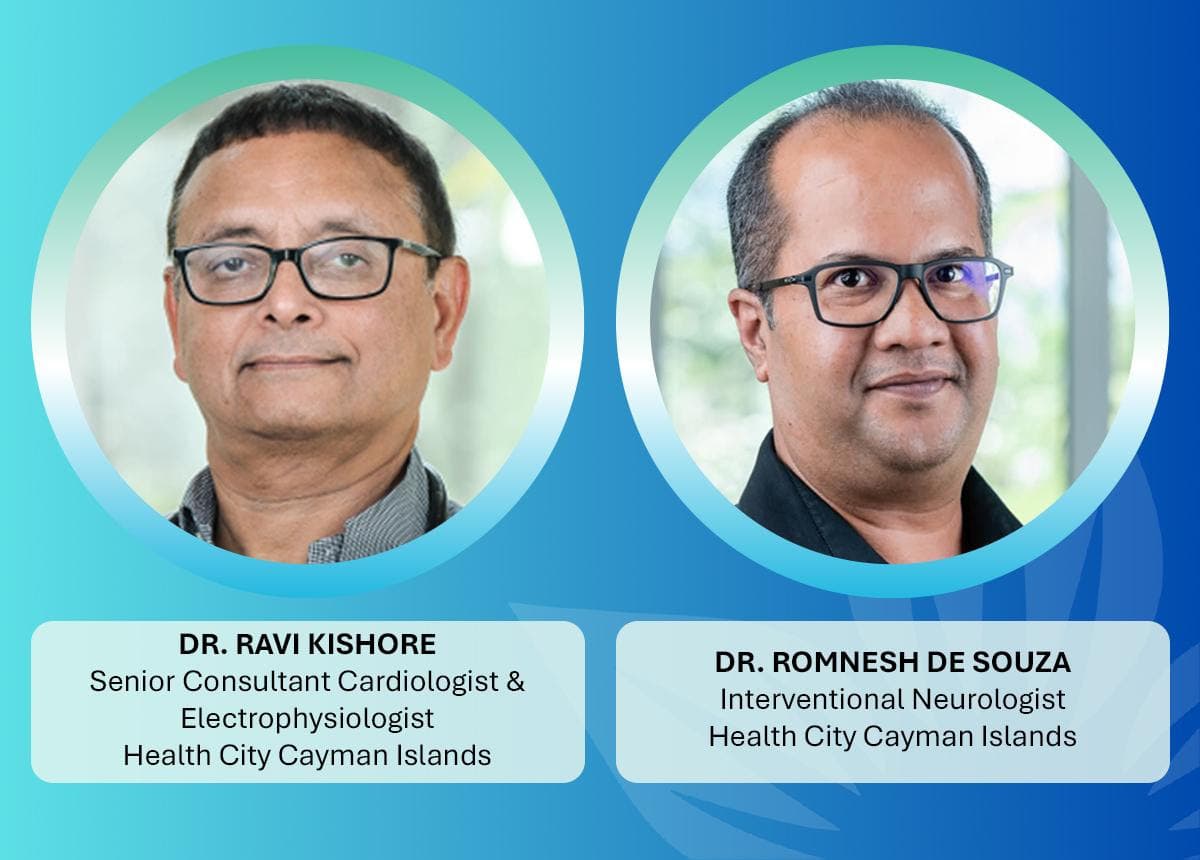
- The inaugural one-hour session, titled From Mind to Heart: Advances in Dementia and Atrial Fibrillation Treatment , focused on practical advances aimed at improving patient outcomes and was led by two Health City specialists: consultant interventional neurologist Dr.
- Romnesh De Souza and chief interventional cardiologist and electrophysiologist Dr.
- Participating physicians from across the region earned CME credits.
- During the session, Dr.
Health City Cayman Islands (HCCI) has launched its first continuing medical education (CME) online series, providing physicians across the Caribbean with access to the latest developments in the diagnosis and treatment of dementia and atrial fibrillation.
The inaugural one-hour session, titled From Mind to Heart: Advances in Dementia and Atrial Fibrillation Treatment, focused on practical advances aimed at improving patient outcomes and was led by two Health City specialists: consultant interventional neurologist Dr. Romnesh De Souza and chief interventional cardiologist and electrophysiologist Dr. Ravi Kishore. Participating physicians from across the region earned CME credits.
During the session, Dr. De Souza outlined emerging developments in dementia care, noting that an estimated 55 million to 57 million people worldwide are living with dementia, with approximately 10 million new cases diagnosed annually. He said projections indicate the number could rise to 78 million by 2030 and surpass 139 million by 2050, with more than 60 percent of patients residing in low- and middle-income countries.
He emphasized that as many as 40 percent of dementia cases may be preventable through the management of risk factors such as hypertension, diabetes, physical inactivity, poor diet, hearing loss, social isolation and depression.
Dr. De Souza also highlighted advances in early detection, including blood biomarkers that can identify Alzheimer's-related changes before more invasive testing is required. He noted that artificial intelligence is increasingly being used to analyze brain imaging, helping physicians monitor disease progression and improve treatment safety.
New medications are also offering hope to patients and families, he said, with some therapies shown to slow cognitive decline by between 25 and 35 percent in individuals with early-stage Alzheimer's disease.
“We can detect memory disorders much earlier than before, giving patients the greatest opportunity to benefit from treatment,” Dr. De Souza said. “Simple blood tests and more sophisticated imaging techniques now help us identify problems sooner and guide safer, more effective care for our patients.”
The second presentation focused on atrial fibrillation, the most common type of irregular heartbeat. Dr. Kishore explained that the condition significantly increases the risk of stroke, heart failure and cognitive impairment, while also contributing to hospitalizations and premature death.
He discussed several lifestyle measures that can reduce risk, including weight management, regular moderate exercise, avoiding alcohol, treating sleep apnea with continuous positive airway pressure (CPAP) therapy, and maintaining healthy blood pressure and blood sugar levels.
The presentation also covered medications used to lower stroke risk and advanced treatment options such as catheter ablation procedures designed to restore normal heart rhythm. Dr. Kishore highlighted electroporation, a newer technique that uses electrical pulses rather than heat or cold to treat irregular heart rhythms while minimizing damage to surrounding tissue.
“A newer type of heart procedure is changing how we treat irregular heartbeats,” Dr. Kishore said. “It uses quick electrical pulses instead of heat or cold, works well for most patients, and typically requires less procedure time with fewer risks. Many patients feel better and return to normal life more quickly.”
According to Health City, the new clinical exchange series is intended to share specialist expertise and practical advances in patient care with healthcare professionals throughout the Caribbean. Future sessions will cover additional medical specialties and will continue to be offered virtually to encourage wider participation.
“By making these learning opportunities available across the Caribbean, we're helping raise the standard of care for patients throughout the region,” Dr. Kishore said. “Knowledge sharing like this ultimately leads to better outcomes for families dealing with serious health conditions.”
Health City Cayman Islands is a tertiary-care hospital with facilities in East End and George Town, Grand Cayman.