

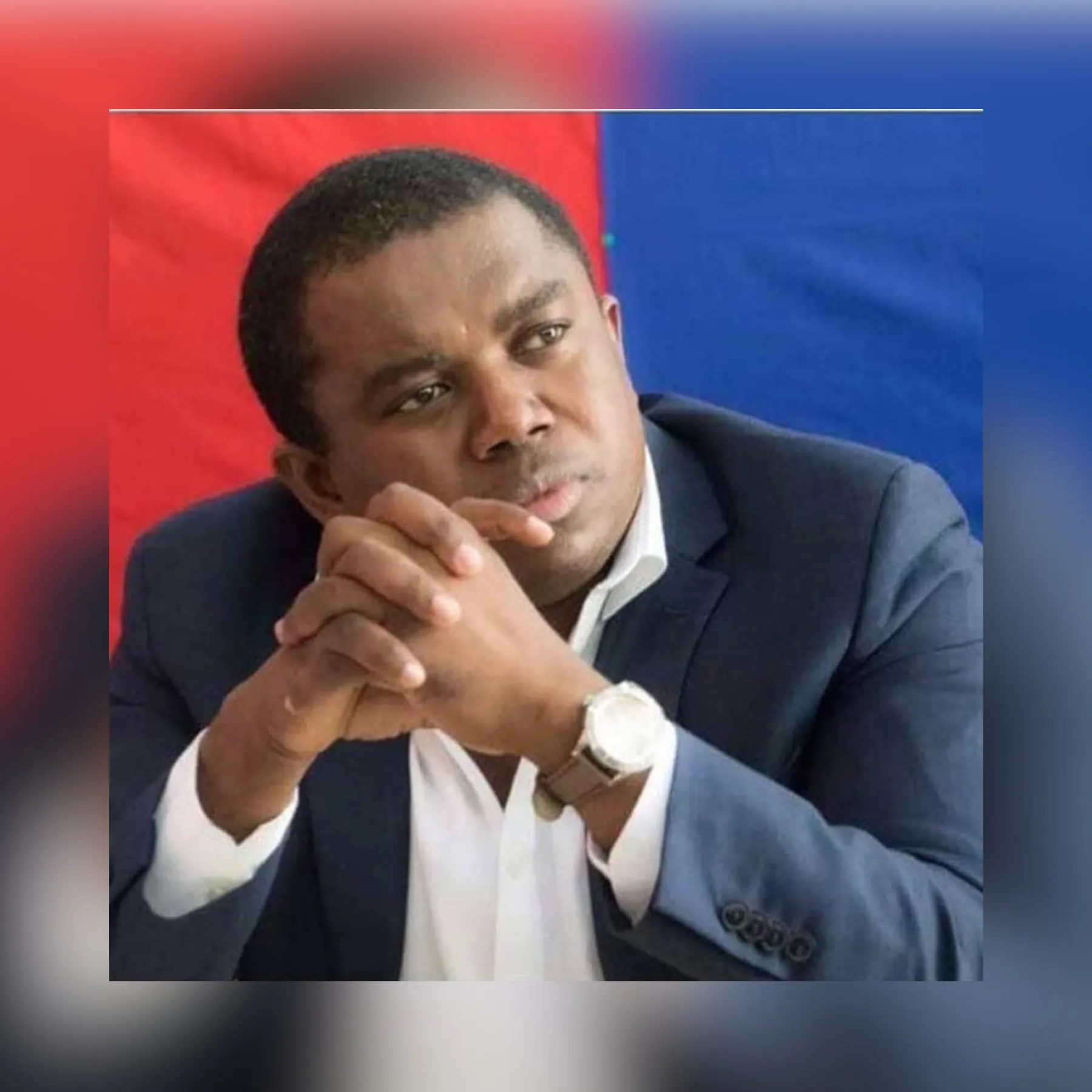
Haitian politician André Michel calls for security before elections
Key Points(5)
- Haitian politician and lawyer André Michel is calling for a minimum level of security to be restored in Haiti before elections are held, warning that armed gangs could otherwise seize the opportunity to gain greater political influence.
- Michel, who has previously announced his intention to contest the presidency, made the comments ahead of the arrival of a high-level Organization of American States (OAS) delegation that includes Caribbean Community (Caricom) Secretary-General Dr.
- In a statement, Michel said Haiti should use the presence of the OAS and Caricom delegation to reinforce the need for improved security ahead of the long-awaited elections.
- He said “that without a minimum level of security, armed gangs will win the elections”.
- Michel said restoring access to Haiti’s national highways should be a priority before voters go to the polls.
Haitian politician and lawyer André Michel is calling for a minimum level of security to be restored in Haiti before elections are held, warning that armed gangs could otherwise seize the opportunity to gain greater political influence.
Michel, who has previously announced his intention to contest the presidency, made the comments ahead of the arrival of a high-level Organization of American States (OAS) delegation that includes Caribbean Community (Caricom) Secretary-General Dr. Carla Barnett.
In a statement, Michel said Haiti should use the presence of the OAS and Caricom delegation to reinforce the need for improved security ahead of the long-awaited elections.
He said “that without a minimum level of security, armed gangs will win the elections”.
Michel said restoring access to Haiti’s national highways should be a priority before voters go to the polls.
“Unblocking the national highways remains the fundamental condition for holding the elections,” he said, adding “we cannot hold elections only to hand power back to armed gangs and their political allies.”
“The international community and the government must assume their responsibilities. I will register to vote in Port-au-Prince this week,” he said, urging his supporters and sympathizers to do the same.
“Security is essential for a successful electoral process. The transition has gone on for too long. It must end,” said Michel.
Elections scheduled for December
Prime Minister Alix Didier Fils-Aimé said last week that “the elections will take place this year, no matter what,” as Haiti’s Provisional Electoral Council (CEP) announced the publication of the final list of approved political groups.
The CEP has scheduled the first round of presidential and legislative elections, along with a constitutional referendum, for Dec. 13. The vote would mark the first time Haitians have participated in national elections since 2016, when Jovenel Moïse was elected president.
Moïse was assassinated on July 7, 2021, plunging the country into a prolonged political and security crisis.
OAS, Caricom delegation visits Haiti
OAS Secretary-General Albert R. Ramdin on Sunday led a three-day visit to Haiti by a high-level delegation of regional and international partners.
Ramdin said the delegation’s presence was not simply intended to demonstrate solidarity but to strengthen coordination and help deliver results in security, elections, institutional strengthening, humanitarian assistance and long-term development.
The visit comes as international efforts continue to strengthen Haiti’s security forces and suppress armed gangs that control large areas of the country.
Germany offers support to Gang Suppression Force
Meanwhile, media reports in Haiti say Germany is prepared to support the United Nations-backed Gang Suppression Force (GSF), including by making air transport capacity available in the short term.
The reports said Germany could transport equipment and supplies for troops operating in Haiti in the coming weeks.
The GSF is expected to include military personnel from Chad, Sri Lanka, Mongolia, Bangladesh, Guatemala and Côte d’Ivoire.
Under the deployment schedule, authorities hope to reach an interim strength of between 2,000 and 2,500 soldiers and police officers in Haiti during August. That would include the arrival of the second half of the Chadian contingent, building on a promised 1,500 personnel and the first specialized units from Sri Lanka.
A larger deployment is expected in September, with forces from Latin America and Asia expected to expand operations beyond Port-au-Prince. Contingents are expected from Guatemala, El Salvador and Côte d’Ivoire.
The tactical priority is expected to include intelligence-led operations in the Artibonite department and strengthening the protection of humanitarian corridors.
Authorities are hoping to reach full deployment of the planned 5,500 military and police personnel, along with 50 civilian advisers, by October. The deployment is expected to include the main contingent from Bangladesh as well as police forces from The Bahamas and Jamaica.

.jpg&w=3840&q=75)