Haiti launches national strategy to boost women's participation in elections
Key Points(5)
- The initiative, launched Monday, November 9, at the Karibe Hotel in Pétion-Ville, is being spearheaded by Haiti's Provisional Electoral Council (CEP), in collaboration with the Ministry of Women's Affairs and Women's Rights, UN Women and the United Nations Integrated Office in Haiti (BINUH).
- Under the slogan "Pa gen demokrasi san fanm" (No Democracy Without Women), the strategy seeks to address structural, social and institutional barriers that have historically limited Haitian women's participation in political and electoral processes.
- According to data from the Haitian Institute of Statistics and Informatics, women account for 50.4% of Haiti's population and 50.1% of its voting-age population.
- However, their representation among candidates for elected office remains disproportionately low.
- Figures released by the CEP as of November 7 show that no women had registered as presidential candidates, while women represented just 13.4% of Senate candidates and 6.9% of candidates for the Chamber of Deputies.
Haiti has launched a national strategy aimed at increasing women's participation in elections and political leadership, as new figures reveal that no women have registered as presidential candidates and female representation in legislative races remains significantly below the country's constitutional target.
The initiative, launched Monday, November 9, at the Karibe Hotel in Pétion-Ville, is being spearheaded by Haiti's Provisional Electoral Council (CEP), in collaboration with the Ministry of Women's Affairs and Women's Rights, UN Women and the United Nations Integrated Office in Haiti (BINUH).
Under the slogan "Pa gen demokrasi san fanm" (No Democracy Without Women), the strategy seeks to address structural, social and institutional barriers that have historically limited Haitian women's participation in political and electoral processes.
According to data from the Haitian Institute of Statistics and Informatics, women account for 50.4% of Haiti's population and 50.1% of its voting-age population. However, their representation among candidates for elected office remains disproportionately low.
Figures released by the CEP as of November 7 show that no women had registered as presidential candidates, while women represented just 13.4% of Senate candidates and 6.9% of candidates for the Chamber of Deputies.
The figures highlight the gap between women's political participation and Haiti's constitutional principle requiring at least 30% female representation at all levels of national life.
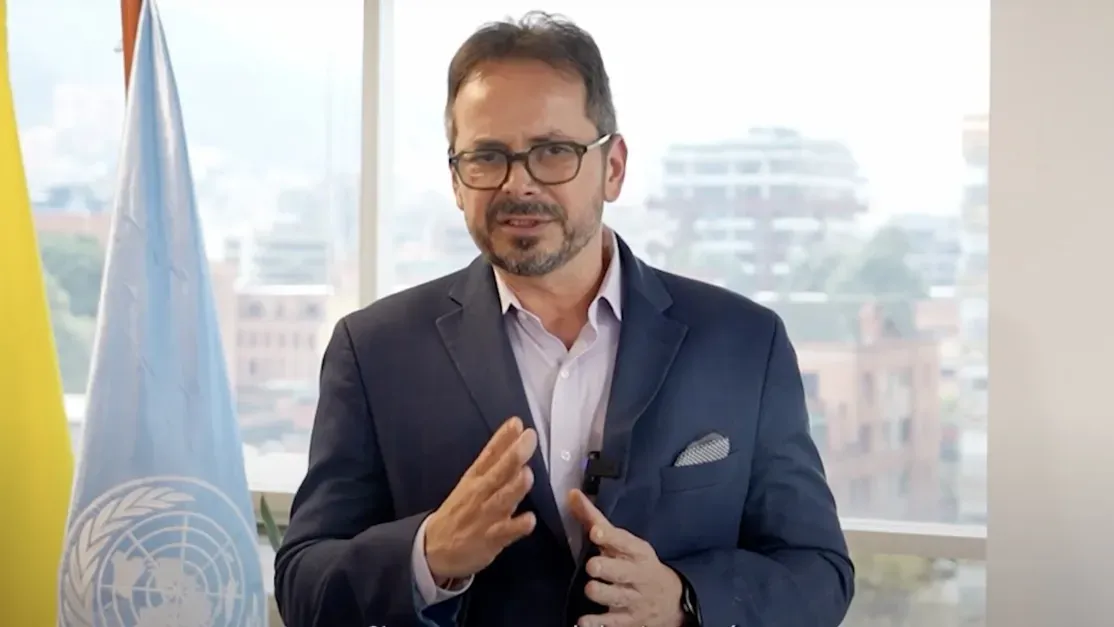
Carlos Ruiz Massieu, special representative of the United Nations secretary-general in Haiti and head of BINUH, emphasized that women's involvement is critical to ensuring credible and representative elections.
“Women’s participation is essential to the credibility and inclusiveness of the electoral process. Haitian women must be able to fully exercise their rights, not only as voters but also as candidates and future leaders,” he said.
The new strategy focuses on three main areas: expanding access to inclusive and gender-responsive electoral information, strengthening community mobilization to encourage women's involvement, and providing training and support to help women participate effectively in elections.
Organizers say the initiative will also seek to create a safer political environment by addressing discrimination, gender-based violence and other obstacles that discourage women from seeking elected office.
UN Women Representative in Haiti Marie Goretti Nduwayo said women's involvement in political decision-making must be treated as a fundamental requirement for democratic governance rather than simply a matter of representation.
“Women’s participation in electoral governance cannot be regarded merely as a requirement for representation; it is a democratic imperative and an essential condition for the legitimacy of institutions,” she said.
“While progress recorded in some departments reflects encouraging developments, persistent disparities remind us that equality cannot be satisfied with partial progress.”
Nduwayo called for stronger measures to ensure that commitments to women's political participation translate into meaningful opportunities for leadership.
“It is now essential to translate commitments to women’s political participation into concrete measures so that no woman is excluded from the spaces where Haiti’s democratic future is being shaped,” she added.
The launch brought together representatives of Haitian government institutions, diplomatic missions, international development partners, women's and youth organizations, and stakeholders involved in the electoral process.
Participants discussed priorities for implementing the strategy, opportunities for collaboration and mechanisms to coordinate efforts across government agencies and civil society organizations.
The initiative is supported financially by the Spanish Agency for International Development Cooperation and Sweden, in partnership with the United Nations Peacebuilding Fund.
The CEP and its partners say the strategy forms part of broader efforts to promote an inclusive electoral process in which women can participate freely and safely as voters, candidates and political leaders.
They emphasized that sustained cooperation among public institutions, civil society and international partners will be necessary to address the longstanding barriers to women's political participation and strengthen democratic institutions in Haiti.