St. Lucia responds to EU demands to end citizenship by investment program
Key Points(5)
- Lucia government has submitted a formal response to the European Union over concerns surrounding its Citizenship by Investment (CBI) program, as Caribbean countries face mounting pressure to end their programs or risk losing visa-free access to Europe.
- Prime Minister Philip J.
- Pierre confirmed Monday that his administration had written to the EU but would not disclose the contents of the correspondence until European officials had received and acknowledged it.
- The EU has given member states of the Organization of Eastern Caribbean States (OECS) operating CBI programs until June 1, 2028, to terminate them or potentially lose visa-free access to the Schengen area.
- Pierre emphasized that the issue affects all Caribbean countries operating such programs and is not specific to St.
The St. Lucia government has submitted a formal response to the European Union over concerns surrounding its Citizenship by Investment (CBI) program, as Caribbean countries face mounting pressure to end their programs or risk losing visa-free access to Europe.
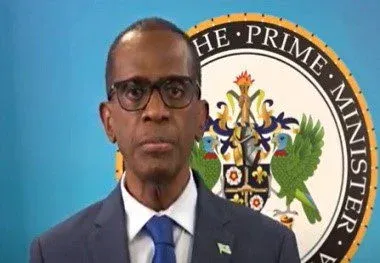
Prime Minister Philip J. Pierre confirmed Monday that his administration had written to the EU but would not disclose the contents of the correspondence until European officials had received and acknowledged it.
The EU has given member states of the Organization of Eastern Caribbean States (OECS) operating CBI programs until June 1, 2028, to terminate them or potentially lose visa-free access to the Schengen area.
Pierre emphasized that the issue affects all Caribbean countries operating such programs and is not specific to St. Lucia.
“That issue affects all the countries that have CBI programmes. It’s not a St Lucia problem. Nobody has identified St Lucia … because that is not true. It’s not a St Lucia problem,” he told reporters.
The prime minister said the EU had initially given affected countries until October 31 to declare whether they intended to continue their CBI programs. However, following discussions, the deadline was extended to November 12.
Deputy Prime Minister Ernest Hilaire led an OECS delegation to Brussels for discussions with European officials.
“We have written a letter to the EU. I don’t think we should make a letter to the EU public. These discussions have to be held at the level of confidentiality, diplomacy, and trust,” Pierre said.
He added that St. Lucia would continue engaging European authorities while protecting its national interests.
“St Lucia will continue the path of dialogue. But as I always said to you, all countries see about their own self-interest,” he said.
Pierre acknowledged that European governments have concerns about migration and that CBI programs have become part of the broader debate.
The development comes as Antigua and Barbuda has indicated its willingness to terminate its own citizenship by investment program, provided it receives an extended transition period until 2030.
In an October 30 letter to EU Commissioner for Internal Affairs and Migration Magnus Brunner, Antigua and Barbuda Prime Minister Gaston Browne said his government had selected an option allowing it to close the program over a longer period, subject to certain conditions.
Five OECS countries — Antigua and Barbuda, Dominica, Grenada, St. Kitts and Nevis, and St. Lucia — currently operate CBI programs, which grant citizenship to qualifying foreign investors in exchange for substantial financial contributions.
Pierre maintained that St. Lucia relies less heavily on CBI revenue than other countries operating similar programs, although he acknowledged its importance to national development.
“You must understand, St Lucia depends the least on CBI revenue. That’s a fact. We want the revenue, but St Lucia was chosen to lead the delegation as far as discussions are concerned,” he said.
The prime minister disclosed that St. Lucia received approximately EC$65 million (US$24 million) from its CBI program last year, with much of the funding directed toward national security and healthcare.
He said the government intends to provide a detailed accounting of how the funds were spent during its next budget presentation.
“We are going to list every cent we spent on national security from the excess cash of the CBI programme. Every cent on national security and health,” Pierre said.
He also defended his administration's management of CBI revenue, rejecting allegations of financial mismanagement and accusing political opponents of misrepresenting the government's spending.
Despite the uncertainty surrounding the program's future, Pierre assured citizens that his administration would continue negotiations with the EU while prioritizing St. Lucia's economic interests.
“We know that they are trying times, but I’m telling you, your government will work with you to ensure that St Lucia continues to survive,” he said.