Guyana removes spending caps on former presidents’ lifetime benefits
Key Points(5)
- Guyana’s National Assembly has passed legislation removing several financial limits on state-funded benefits for former presidents, restoring a framework established in 2009 and reversing restrictions introduced in 2015.
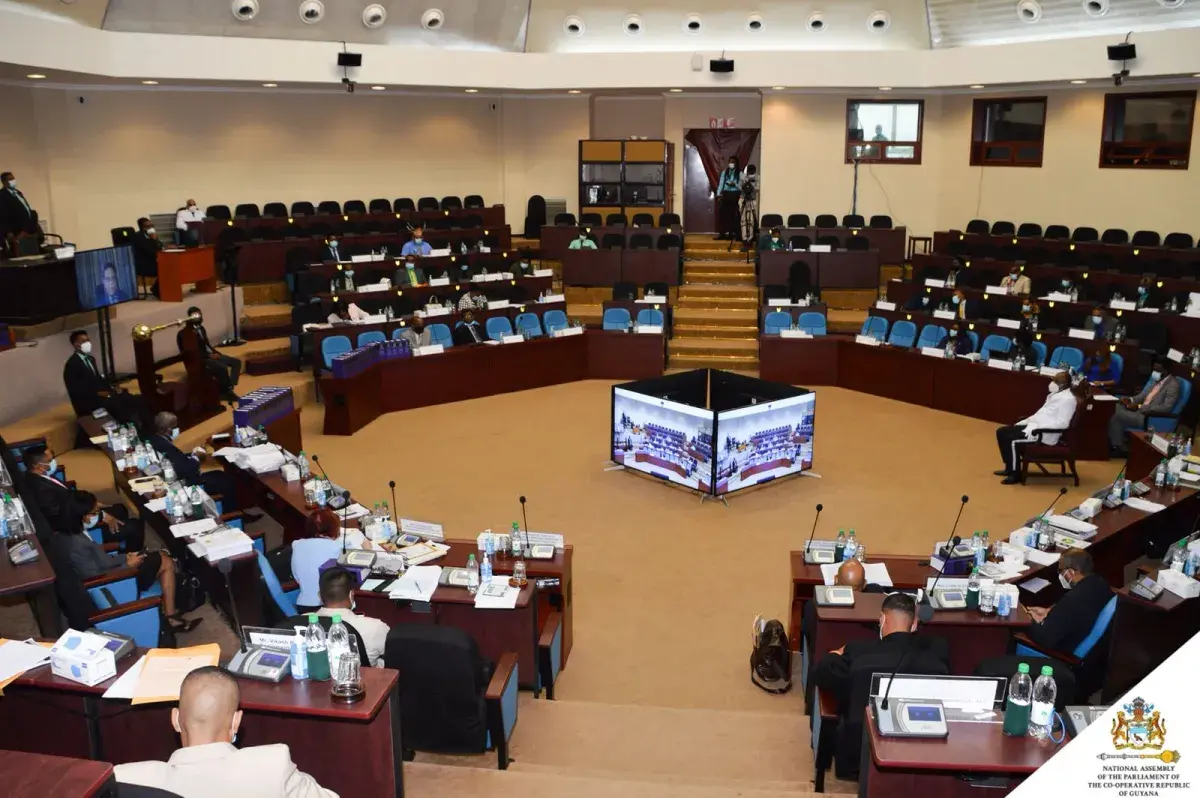
- The Former Presidents (Benefits and Other Facilities) Bill 2026 was passed early Tuesday following two days of parliamentary debate.
- Thirty-five members of Parliament voted in favor of the bill at its second reading, while 26 voted against it.
- The legislation subsequently passed its third reading without amendments.
- The bill, piloted by Finance Minister Dr.
Guyana’s National Assembly has passed legislation removing several financial limits on state-funded benefits for former presidents, restoring a framework established in 2009 and reversing restrictions introduced in 2015.
The Former Presidents (Benefits and Other Facilities) Bill 2026 was passed early Tuesday following two days of parliamentary debate. Thirty-five members of Parliament voted in favor of the bill at its second reading, while 26 voted against it. The legislation subsequently passed its third reading without amendments.
The bill, piloted by Finance Minister Dr. Ashni Singh, repeals legislation introduced under the former A Partnership for National Unity and Alliance For Change (APNU+AFC) administration that placed financial and numerical limits on several benefits available to former heads of state.
Under the new framework, former presidents would be entitled to lifetime benefits covering water, electricity and telephone services at their residences in Guyana, household employees, clerical and technical assistance, medical treatment for themselves and dependent family members, personal security and government-owned and maintained vehicles.
The legislation also provides for toll-free road transportation throughout Guyana, an annual vacation allowance equivalent to the cost of two first-class return airfares and the same tax-exempt status afforded to a sitting president.
These benefits are separate from the presidential pension.
Financial restrictions removed
The 2015 legislation imposed monthly limits of GY$25,000 each on electricity and telephone expenses and an annual medical expense limit of GY$200,000. It also restricted former presidents to three household employees, three clerical and technical support staff, two security personnel and two government vehicles.
The new legislation removes those specific limits.
It also eliminates restrictions that disqualified former presidents from receiving benefits if they engaged in private business, trade or paid employment after leaving office.
During the parliamentary debate, Singh argued that the legislation would ensure former presidents were treated equally, regardless of their political affiliation.
According to the finance minister, a court had previously determined that the 2015 restrictions could not retroactively reduce the benefits afforded to former Presidents Samuel Hinds, Bharrat Jagdeo and Donald Ramotar. Consequently, former President David Granger became the first former head of state subject to the more restrictive framework.
Singh maintained that the new legislation would bring Granger under the same benefits framework as his predecessors.
Attorney General and Minister of Legal Affairs Anil Nandlall also defended the measure, explaining that several benefits afforded to former presidents had existed through administrative arrangements before being formally established in law in 2009.
He argued that establishing those entitlements in legislation prevents successive administrations from arbitrarily withdrawing or altering them.
Opposition raises concerns over public spending
Opposition parliamentarians, however, questioned the financial implications of removing the statutory limits and whether sufficient safeguards were in place to protect taxpayers.
Opposition Chief Whip Tabitha Sarabo-Halley expressed concern that allowing former presidents to retain extensive government-funded benefits while pursuing private business activities could create an unfair commercial advantage.
She also questioned how authorities would distinguish between the personal expenses of former presidents and costs associated with their commercial ventures.
APNU parliamentarian Dr. Terrence Campbell raised questions about the long-term financial obligations the legislation would impose on the state, including whether an assessment had been conducted to determine future expenditure.
Opposition MP Odessa Primus also questioned the government's spending priorities, pointing to the financial challenges facing ordinary Guyanese households.
Government parliamentarians defended the measure, arguing that former presidents should receive appropriate support and security in recognition of their service to the country, regardless of their political affiliation.
The legislation would apply to Guyana’s four living former presidents — Hinds, Jagdeo, Ramotar and Granger — as well as future former heads of state.