Guyana earns US$353 million from carbon credit sales, government says
Key Points(5)
- Senior Director of Climate and REDD+ in the Office of the President, Pradeepa Bholanath, said Guyana’s climate finance journey has evolved from reliance on bilateral partnerships to active participation in international carbon markets.
- Speaking during a television program, Bholanath said Guyana achieved a major milestone in November 2022 when it became the first country globally to be issued jurisdictional-scale carbon credits under the Architecture for REDD+ Transactions (ART) TREES standard.
- The certification resulted in approximately 33 million carbon credits being issued for the period 2016 to 2020, reflecting the country's efforts to preserve its vast forest resources and reduce carbon emissions.
- Guyana later secured a landmark agreement valued at US$750 million for the sale of a portion of those credits.
- “Since then, we’ve been able to expand those market opportunities in ways that we didn’t even envision, to the point now where to date, since 2022, we have earned a total of US$353 million from the sale of carbon credits,” Bholanath said.
The Guyana government says it has earned US$353 million from the sale of carbon credits since becoming the first country in the world to receive jurisdictional-scale forest carbon credits, providing significant financing for climate action and national development under its Low Carbon Development Strategy (LCDS) 2030.
Senior Director of Climate and REDD+ in the Office of the President, Pradeepa Bholanath, said Guyana’s climate finance journey has evolved from reliance on bilateral partnerships to active participation in international carbon markets.
Speaking during a television program, Bholanath said Guyana achieved a major milestone in November 2022 when it became the first country globally to be issued jurisdictional-scale carbon credits under the Architecture for REDD+ Transactions (ART) TREES standard.
The certification resulted in approximately 33 million carbon credits being issued for the period 2016 to 2020, reflecting the country's efforts to preserve its vast forest resources and reduce carbon emissions.
Guyana later secured a landmark agreement valued at US$750 million for the sale of a portion of those credits.
“Since then, we’ve been able to expand those market opportunities in ways that we didn’t even envision, to the point now where to date, since 2022, we have earned a total of US$353 million from the sale of carbon credits,” Bholanath said.
She said the revenues are being used to support implementation of LCDS 2030, Guyana’s long-term development framework aimed at balancing economic growth with environmental sustainability.
According to Bholanath, the funds are financing climate adaptation projects, environmental protection initiatives, sustainable development programs and community-based projects across the country.
Explaining the carbon credit system, she said the credits represent the carbon stored in Guyana’s forests that would otherwise be released into the atmosphere if those forests were degraded or destroyed.
“It represents the carbon stored within the forest that we managed to conserve by taking care of the forest and by implementing effective policies,” Bholanath said.
She added that Guyana’s experience demonstrates how countries can generate economic value from protecting natural resources while maintaining high levels of forest cover.
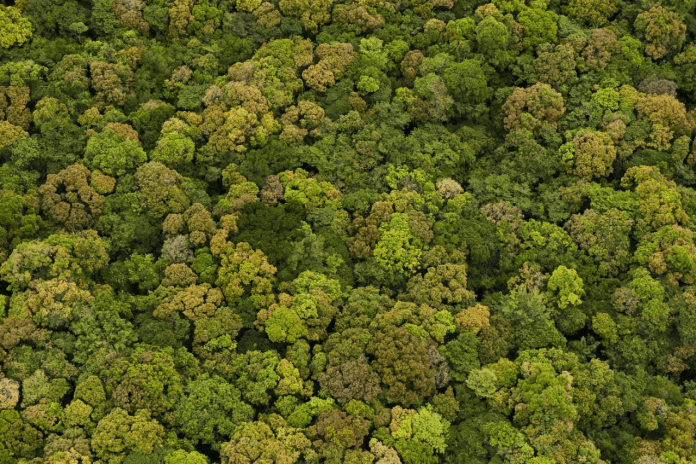
Guyana is home to one of the world's most heavily forested landscapes, with forests covering more than 80 percent of its land area. The government has positioned forest conservation and carbon credit sales as central pillars of its low-carbon development strategy.
Officials say revenues generated through carbon credit sales are being reinvested into projects designed to strengthen climate resilience, support sustainable livelihoods and ensure the long-term protection of Guyana’s forests for future generations.