Giant African Snail Species Invades South Florida Again
Key Points(5)
- A quarantine was imposed in Pasco County, Florida last week because of parasite fears after a gardener reported seeing a giant African land snail.
- The presence of the snail was confirmed by the Florida Department of Agriculture and Consumer Services (FDACS).
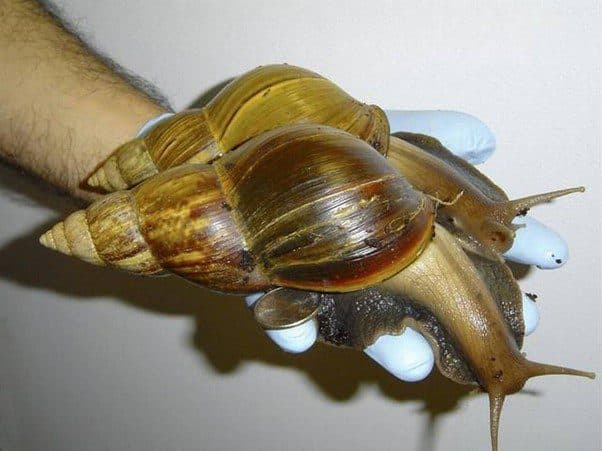
- The snail is one of the most damaging snails in the world as they eat at least 500 types of plants and the stucco siding on buildings and homes.
- The African land snail is particularly dangerous to humans as it is a carrier of rat lungworm larvae, which causes a rare type of meningitis, called eosinophilic meningitis.
- The infection is spread to humans who consume or otherwise interact with snails that have eaten the droppings or larvae of infected rodents.
A quarantine was imposed in Pasco County, Florida last week because of parasite fears after a gardener reported seeing a giant African land snail.
The presence of the snail was confirmed by the Florida Department of Agriculture and Consumer Services (FDACS). The snails are an invasive species which were announced eradicated just last year after an exhaustive $1 million state funded pest eradication program.
The snail is one of the most damaging snails in the world as they eat at least 500 types of plants and the stucco siding on buildings and homes. The African land snail is particularly dangerous to humans as it is a carrier of rat lungworm larvae, which causes a rare type of meningitis, called eosinophilic meningitis. The infection is spread to humans who consume or otherwise interact with snails that have eaten the droppings or larvae of infected rodents.
Eradicating the African snails has been a persistent challenge as individuals have smuggled snails into the United States, allegedly for religious or other purposes. The attempt to get rid of the pest had been ongoing, lasting from 2011 to 2021 and using a variety of graphical surveys and inspections, K-9 detection dog surveys, manual collection, and treatment programmes. Previously, 32 primary snail population zones were found, with thousands of homes having 168,538 snails collectively.
Snails have both female and male reproductive organs and may lay 100 to 500 eggs after a single mating. The African snails can then multiply several times more without mating laying up to 1200 eggs per year.
Floridians are advised if they see a African snail, not to touch it but to report the sighting to the FDACS at 888-397-1517 or visit fdacs.gov/gals.