Dominica elections chief defends voter registration process amid concerns ahead of polls
Key Points(5)
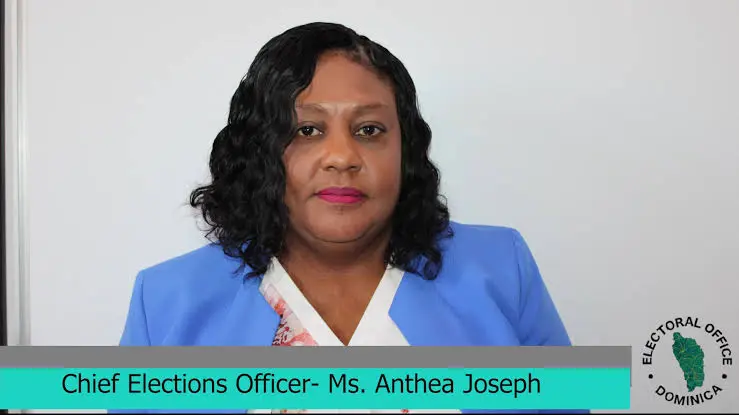
- Dominica’s Chief Elections Officer Anthea Joseph has defended the integrity of the country’s electoral process ahead of the Dec.
- 16 general election, amid allegations that more than 1,000 voter registration applications remain pending despite being submitted before the issuance of the election writ.
- The concerns have prompted the Dominica Bar Association (DBA) to call for an urgent review of outstanding applications and the criteria used during the recent voter confirmation exercise.
- In an open letter issued Friday and signed by its president, Noelize N.
- Knight Didier, the association said it had received numerous complaints from members of the public and legal practitioners regarding the confirmation exercise and the publication of the Register of Electors.
Dominica’s Chief Elections Officer Anthea Joseph has defended the integrity of the country’s electoral process ahead of the Dec. 16 general election, amid allegations that more than 1,000 voter registration applications remain pending despite being submitted before the issuance of the election writ.
The concerns have prompted the Dominica Bar Association (DBA) to call for an urgent review of outstanding applications and the criteria used during the recent voter confirmation exercise.
In an open letter issued Friday and signed by its president, Noelize N. Knight Didier, the association said it had received numerous complaints from members of the public and legal practitioners regarding the confirmation exercise and the publication of the Register of Electors.
“While the Dominica Bar Association is neither a fact-finding tribunal nor an adjudicative body, and cannot independently ascertain or judge the individual facts of each complaint, the volume and consistency of these reports warrant immediate and serious institutional attention,” the association said.
However, speaking on state-owned DBS Radio on Friday, Joseph maintained that the Electoral Office had acted in accordance with the country’s electoral laws.
“We are aware of the complaints of several persons that their names are not entered on voters’ lists. When a person goes to apply for registration, this is only an application. You are not yet approved, and there is a process for registration,” she said.
Joseph pointed to Section 24 of the Registration of Electors Act of 2025, which requires the Register of Electors to be closed to amendments immediately upon the issuance of an election writ. Under the legislation, outstanding registration applications, claims and objections cannot be considered until after polling day.
“So once the writs were issued, no applications could be considered by the Registering Officer, nor the Chief Registering Officer. We stand on the law. I hope the public can understand that,” Joseph said.
She argued that prospective voters had been given sufficient time to complete the confirmation and registration processes, but that some had waited until the election was announced to submit their applications.
Joseph also disputed suggestions that as many as 3,000 people would be unable to vote, saying the actual figure was considerably lower, although she did not provide an exact number.
Among those raising concerns is prominent businessman Gregor Nassief, who is contesting the Mahaut constituency as an independent candidate.
Speaking at a news conference attended by representatives of the opposition United Workers Party (UWP) and the Dominica Freedom Party (DFP), Nassief said figures made available to the group indicated that 1,006 registration applications remained outstanding.
According to Nassief, 880 applications were awaiting action by registering officers, 65 were pending first verification, 56 were awaiting second verification, three were before the chief registering officer, and two were with an editor.
He maintained that the applications had been submitted before the issuance of the election writ and questioned why eligible citizens should risk losing their right to vote because of possible administrative delays or operational shortcomings.
The Dominica Bar Association also raised concerns about complaints from Commonwealth citizens who had lawfully resided in Dominica for several years and whose names had previously appeared on the Register of Electors but whose confirmation applications were reportedly refused based on unpublished criteria.
The association urged electoral authorities to explore every lawful avenue to protect the constitutional right to vote and prevent qualified electors from being excluded on technical or administrative grounds.
“Taking decisive, transparent steps to ensure that the Register of Electors is accurate and inclusive will assist in dispelling any public perception that the electoral process is compromised or that the eventual election results may not reflect the true will of the people,” the DBA said.
The association also warned that failure to address the grievances before polling day could lead to confusion, frustration and potential breaches of the peace at polling stations.
When announcing the election date last week, Prime Minister Roosevelt Skerrit said 36,923 electors had been registered, describing the figure as evidence of significant progress in the country’s electoral reform process.
“Today, we have demonstrated that with vision, determination, leadership and political will, what some consider impossible can indeed be achieved,” Skerrit said.
Skerrit, who has served as prime minister since 2004, is leading the ruling Dominica Labour Party (DLP) into the election.
Nomination Day is scheduled for Nov. 30, with all 21 parliamentary constituencies at stake in the Dec. 16 election. The DLP won 19 seats in the last general election.