CARICOM must diversify exports beyond energy and commodities, Barnett says
Key Points(5)
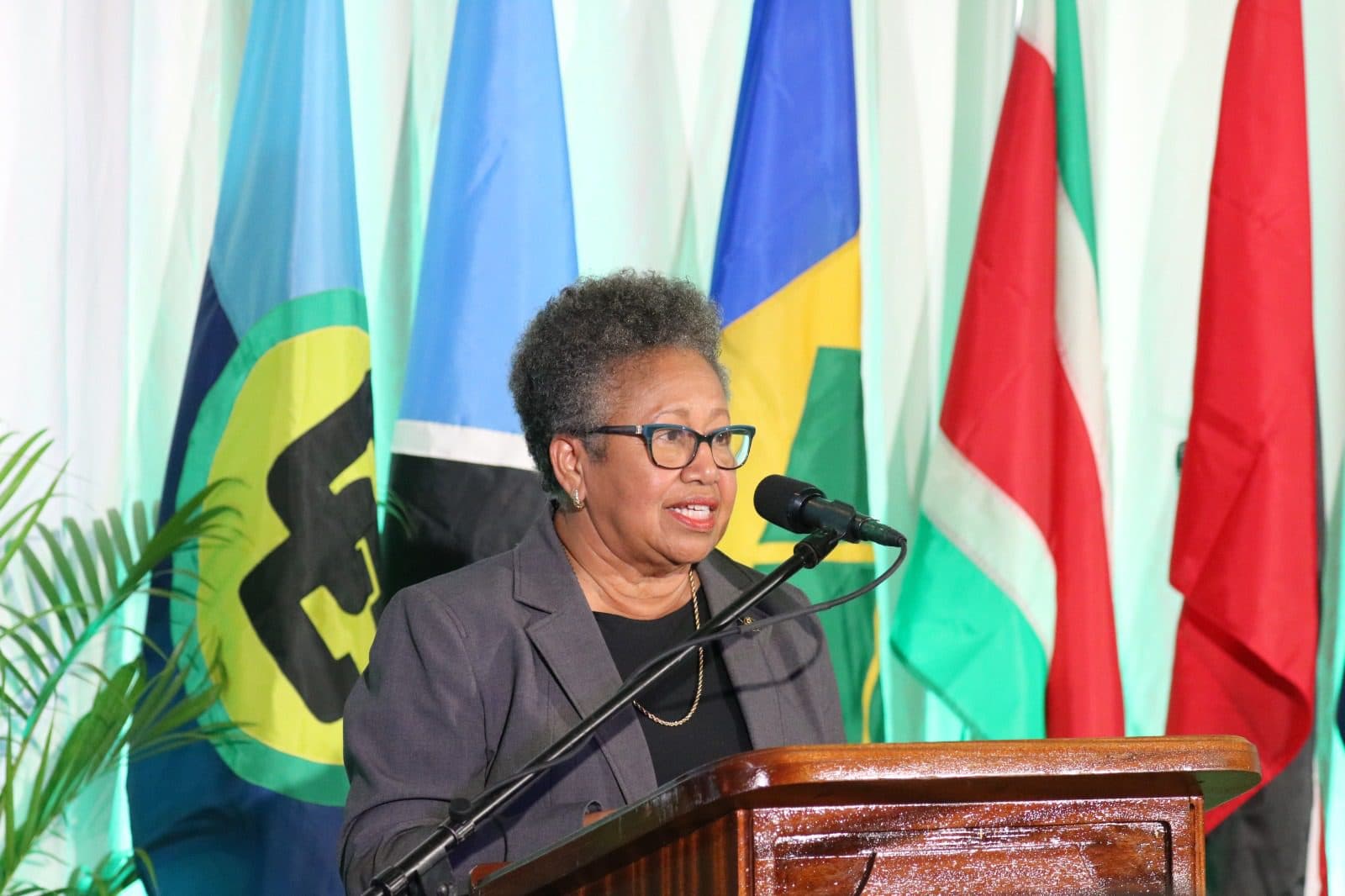
- Caribbean Community (CARICOM) Secretary-General Carla Barnett says the region must diversify its productive base and reduce its dependence on energy and commodities to sustain export growth and strengthen its economic resilience.
- Speaking at the five-day International Trade and Investment Conference organized by the World Trade Center Georgetown in Guyana, Barnett said the region continued to rely heavily on imports of food, manufactured goods and capital equipment despite significant growth in merchandise exports.
- “The challenge, therefore, is not only to increase exports, but to broaden the productive base from which those exports come,” she said.
- The conference has brought together business leaders and investors to establish commercial partnerships and explore investment opportunities across multiple sectors.
- Barnett said the event was taking place amid growing uncertainty in the international trading environment, with the multilateral trading system under pressure and changing tariffs and other trade measures reshaping market conditions and supply chains.
Caribbean Community (CARICOM) Secretary-General Carla Barnett says the region must diversify its productive base and reduce its dependence on energy and commodities to sustain export growth and strengthen its economic resilience.
Speaking at the five-day International Trade and Investment Conference organized by the World Trade Center Georgetown in Guyana, Barnett said the region continued to rely heavily on imports of food, manufactured goods and capital equipment despite significant growth in merchandise exports.
“The challenge, therefore, is not only to increase exports, but to broaden the productive base from which those exports come,” she said.
The conference has brought together business leaders and investors to establish commercial partnerships and explore investment opportunities across multiple sectors.
Barnett said the event was taking place amid growing uncertainty in the international trading environment, with the multilateral trading system under pressure and changing tariffs and other trade measures reshaping market conditions and supply chains.
“Conflict in the Middle East and disruption around major shipping routes are sharply increasing shipping and energy costs resulting in rising prices across the globe. We are certainly experiencing sharply rising prices across the Caribbean,” she said.
Although global trade continues to grow, Barnett said it is becoming more fragmented, creating significant challenges for small, open economies such as those in CARICOM.
She said the bloc’s merchandise exports increased from approximately US$19 billion to more than US$39 billion over the past five years. Imports also rose, reaching about US$42.9 billion in 2025, but export growth was stronger.
Consequently, the merchandise trade deficit narrowed from more than US$10 billion in earlier years to approximately US$2.6 billion in 2024 and US$3.3 billion in 2025.
However, Barnett cautioned that the composition of exports remained a concern, given the substantial contribution of energy and commodities to the growth.
Services exports present a similar challenge. CARICOM recorded a services trade surplus of more than US$7.2 billion in 2024, with exports recovering strongly following the COVID-19 pandemic. However, travel accounted for approximately 82% of total services exports that year, highlighting the region’s dependence on tourism.
Barnett said foreign direct investment also remained relatively modest. CARICOM and the wider Caribbean attracted approximately US$4 billion in inward foreign direct investment in both 2024 and 2025, representing a small share of total inflows to Latin America and the Caribbean.
Investment remained concentrated in tourism, real estate, energy and selected services, while greenfield investment — funding for new business operations and facilities — remained comparatively weak, she said.
“These trends reinforce the long-standing reality that our economies are small, very open and highly concentrated. Amid heightened external uncertainty, regional integration and collective action become even more important,” Barnett said.
Regional integration and investment
Barnett identified the Revised Treaty of Chaguaramas as the principal legal framework for regional integration, with CARICOM leaders providing overall policy direction through their summits.
The CARICOM Single Market and Economy (CSME), she said, remains central to efforts to expand economic opportunities through the movement of goods, services, skills and capital, as well as the right of establishment.
However, she stressed that removing barriers to market access was only part of the process.
Regional economic integration also depends on how production is organized across borders, how investment is mobilized, how payments and capital move, and whether regulatory systems and infrastructure allow businesses to compete across the region.
Barnett outlined four mechanisms CARICOM is pursuing to strengthen these connections.
The first is the CARICOM Industrial Policy and Strategy, which aims to increase regional productive capacity by encouraging the cross-border use of natural resources, skills, capital, technology and management expertise. It also seeks to strengthen links among businesses and industries, develop regional enterprises capable of operating at scale, and diversify production for regional and international markets.
The second is CARICOM’s Investment Policy, which seeks to improve transparency, predictability and consistency in the regional investment environment while accounting for the different circumstances and priorities of member states.
The third involves deepening regional capital markets and improving access to financing for productive investments. Barnett said the CARICOM Payments and Settlement System, which is under consideration by regional central banks, is intended to improve cross-border payments and settlements.
Inefficient payment arrangements add costs, delays and complexity to regional commerce, particularly for smaller businesses, she said.
The fourth mechanism is tax coordination. The Intra-CARICOM Double Taxation Agreement seeks to provide greater certainty for income, investment and business activities across national borders while protecting member states’ legitimate tax interests.
Barnett said the initiatives would have practical benefits only if businesses could use them to make payments efficiently, access financing, invest across jurisdictions and operate with greater regulatory and tax certainty.
Expanding trade partnerships
CARICOM is also pursuing stronger trade relationships beyond the region, including discussions and negotiations with Colombia, Costa Rica and the Dominican Republic.
Barnett described the United States as one of the bloc’s most important trading partners. She welcomed the restoration of Caribbean Basin Initiative trade preferences following the expiration of temporary Section 122 tariffs in July, while noting that other trade measures continued to affect specific products and member states.
She said the developments underscored the need for continued engagement with trading partners and close monitoring of changing market conditions.
Brazil, India and countries of the African Union are also among CARICOM’s priority markets for expanded economic engagement.
Barnett said a dedicated conference session on doing business with Brazil offered an opportunity to explore ways to expand trade, investment and broader economic relations with the South American country and the wider Latin American region.
However, she emphasized that external trade relationships would yield greater benefits if Caribbean businesses had the productive capacity, financing, technology, logistics and scale to capitalize on new opportunities.
“Regional integration and external economic engagement must therefore reinforce each other,” she said.
Investment opportunities across the region
Barnett highlighted agriculture and agribusiness as important areas for investment, particularly as the region seeks to increase food production and strengthen processing, storage, distribution and regional value chains.
Renewable energy also offers opportunities to improve energy security and lower production costs, while tourism could generate stronger economic linkages with agriculture, culture, transportation, technology and other sectors.
Transportation, logistics and communications were also identified as important investment areas and essential components of regional commerce.
Barnett stressed that the quality of investment was as important as its volume, calling for projects that expand productive capacity, support innovation and diversification, strengthen regional value chains and create jobs.
She encouraged investors to assess opportunities across CARICOM rather than viewing each member state in isolation.
“Each member state offers its own opportunities and comparative advantages. At the same time, as we work to strengthen the economic connections among our markets, we create a wider platform for production, trade and investment,” she said.
Barnett said governments and regional institutions could establish the necessary frameworks, but the private sector would ultimately determine how effectively they functioned.
“As businesses use the arrangements being developed, we learn where practical constraints remain that can and must be addressed, so that investments flow into the productive opportunities that will grow our economies and thereby improve the quality of life for citizens across the Caribbean Community,” she added.