Carey McLeod accepts two-year suspension, dealing significant blow to Jamaican athletics
Key Points(5)
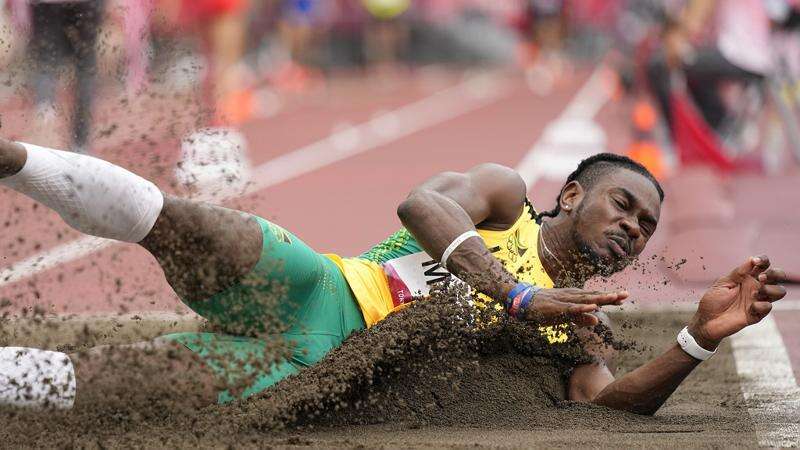
- Jamaica’s track and field community has been dealt a major setback on the eve of the National Senior and Junior Championships, with long jumper Carey McLeod accepting a two-year ban after admitting to an anti-doping rule violation involving repeated whereabouts failures.
- The sanction, announced by the Athletics Integrity Unit (AIU), removes one of Jamaica’s premier field-event athletes from competition until May 2028 and dramatically alters the landscape of upcoming national and international championships.
- McLeod, a two-time national men's long jump champion and bronze medalist at the 2024 World Indoor Championships, acknowledged the violation and accepted the prescribed penalty, bringing a swift conclusion to the disciplinary process.
- Violation rooted in whereabouts failures The case did not involve a positive drug test.
- Instead, the AIU determined that McLeod breached Article 2.4 of the World Athletics Anti-Doping Rules, which governs athlete whereabouts obligations within the Registered Testing Pool.
Jamaica’s track and field community has been dealt a major setback on the eve of the National Senior and Junior Championships, with long jumper Carey McLeod accepting a two-year ban after admitting to an anti-doping rule violation involving repeated whereabouts failures.
The sanction, announced by the Athletics Integrity Unit (AIU), removes one of Jamaica’s premier field-event athletes from competition until May 2028 and dramatically alters the landscape of upcoming national and international championships.
McLeod, a two-time national men's long jump champion and bronze medalist at the 2024 World Indoor Championships, acknowledged the violation and accepted the prescribed penalty, bringing a swift conclusion to the disciplinary process.
Violation rooted in whereabouts failures
The case did not involve a positive drug test. Instead, the AIU determined that McLeod breached Article 2.4 of the World Athletics Anti-Doping Rules, which governs athlete whereabouts obligations within the Registered Testing Pool.
Under those regulations, elite athletes must provide accurate and up-to-date information regarding their location and designate a daily 60-minute window during which they are available for unannounced out-of-competition testing. Accumulating three whereabouts failures, whether through missed tests, filing errors, or a combination of both, within a 12-month period constitutes an anti-doping rule violation.
According to the AIU, McLeod accumulated three such failures between June 30, 2025, and May 1, 2026.
Timeline of the three infractions
The first violation occurred on June 30, 2025, when a Doping Control Officer was unable to locate McLeod at a St. Andrew address during his designated testing window between 5:00 a.m. and 6:00 a.m. The AIU reported that the athlete neither responded to requests for an explanation nor pursued an administrative review of the finding.
A second failure was recorded on August 9, 2025. The AIU stated that McLeod submitted whereabouts information indicating he would be in Arkansas in the United States. However, records showed that he was preparing to compete at a World Athletics Continental Tour meeting in Budapest, Hungary, on August 12, rendering the submitted information inaccurate.
The third and decisive failure occurred on May 1, 2026, when another Doping Control Officer was unable to locate him at a Clarendon address during his designated testing period.
Swift acceptance of the penalty
Following confirmation of the third failure, McLeod moved quickly to resolve the matter.
On May 26, 2026, the same day the AIU formally confirmed the final whereabouts failure, McLeod’s attorney informed the organization that the athlete would not contest the decision and requested that the matter be recorded so the “case can move forward urgently.”
Two days later, on May 28, McLeod formally signed an admission of the anti-doping rule violation, accepted the consequences outlined by the AIU, and waived his right to a hearing before the Disciplinary Tribunal.
As a result, his period of ineligibility officially runs from May 28, 2026, through May 27, 2028.
Career consequences extend beyond the ban
The suspension carries significant competitive ramifications.
McLeod will be unable to defend his national long jump title this month, ending his bid for a third consecutive championship. He is also ruled out of several major international events, including this year’s Commonwealth Games and the 2027 World Athletics Championships.
Perhaps most significantly, the ban will remain in effect until just two months before the 2028 Olympic Games in Los Angeles, creating a substantial obstacle in his preparations for what could be the most important phase of his athletic career.
The ruling also mandates the disqualification of all results achieved by McLeod from May 1, 2026, onward, along with the forfeiture of any medals, ranking points, prize money, or earnings obtained during that period.
Integrity framework remains central to clean sport
The AIU, the independent body established by World Athletics to oversee integrity matters across the sport, emphasized that the whereabouts system is a cornerstone of anti-doping efforts worldwide.
By requiring athletes to accurately report their locations and remain available for unannounced testing, the program is designed to ensure that anti-doping authorities can effectively monitor competitors year-round and uphold confidence in clean sport.
While McLeod’s admission brings the disciplinary process to a close, the decision remains subject to appeal. Both the Jamaica Anti-Doping Commission and the World Anti-Doping Agency retain the right to challenge the ruling before the Court of Arbitration for Sport.
For now, however, one of Jamaica’s leading field-event athletes faces a lengthy absence from competition, leaving a significant void in the nation’s long jump ranks and raising questions about how he will rebuild momentum upon his return in 2028.