Beyond Carnival: 10 ways Trinidad and Tobago has shaped the world
Key Points(5)
- For a country of fewer than 2 million people, Trinidad and Tobago has left an unusually large cultural footprint.
- The twin-island republic, which celebrates 64 years of independence on Aug.
- 31, is internationally synonymous with Carnival.
- But its influence extends far beyond the annual festival.
- From an instrument invented on the streets of Trinidad to music heard at celebrations around the globe, record-breaking athletes and writers whose works became international classics, here are 10 ways Trinidad and Tobago has made its mark on the world.
For a country of fewer than 2 million people, Trinidad and Tobago has left an unusually large cultural footprint.
The twin-island republic, which celebrates 64 years of independence on Aug. 31, is internationally synonymous with Carnival. But its influence extends far beyond the annual festival.
From an instrument invented on the streets of Trinidad to music heard at celebrations around the globe, record-breaking athletes and writers whose works became international classics, here are 10 ways Trinidad and Tobago has made its mark on the world.
1. Steelpan
Perhaps no contribution is more distinctly Trinidadian than the steelpan.
Developed in Trinidad during the 1930s and 1940s, pan evolved as musicians experimented with metal containers and discovered they could produce different pitches by shaping their surfaces. Today, it is Trinidad and Tobago's national instrument.
Its significance has gained international recognition. In 2023, the United Nations declared Aug. 11 World Steelpan Day, and in 2024, Trinidad and Tobago registered the steelpan as a geographical indication, formally linking the instrument to its place of origin.
2. Calypso
Long before soca, there was calypso.
Developed in Trinidad, calypso grew from a mixture of African and Caribbean musical traditions and became known for storytelling, satire and social commentary. By 1914, calypso recordings were already being made in New York.
Artists including the Mighty Sparrow and Lord Kitchener later helped carry the music internationally, establishing a foundation for generations of Caribbean performers who followed.
3. Soca
Trinidad didn't stop at calypso.
Soca emerged in the 1970s through the experimentation of Garfield Blackman, better known as Lord Shorty, who sought to fuse calypso with East Indian musical influences.
The genre has since become the dominant soundtrack of many Caribbean Carnivals, with Trinidadian performers including Machel Montano, Superblue, Bunji Garlin and Fay-Ann Lyons helping take it around the world.
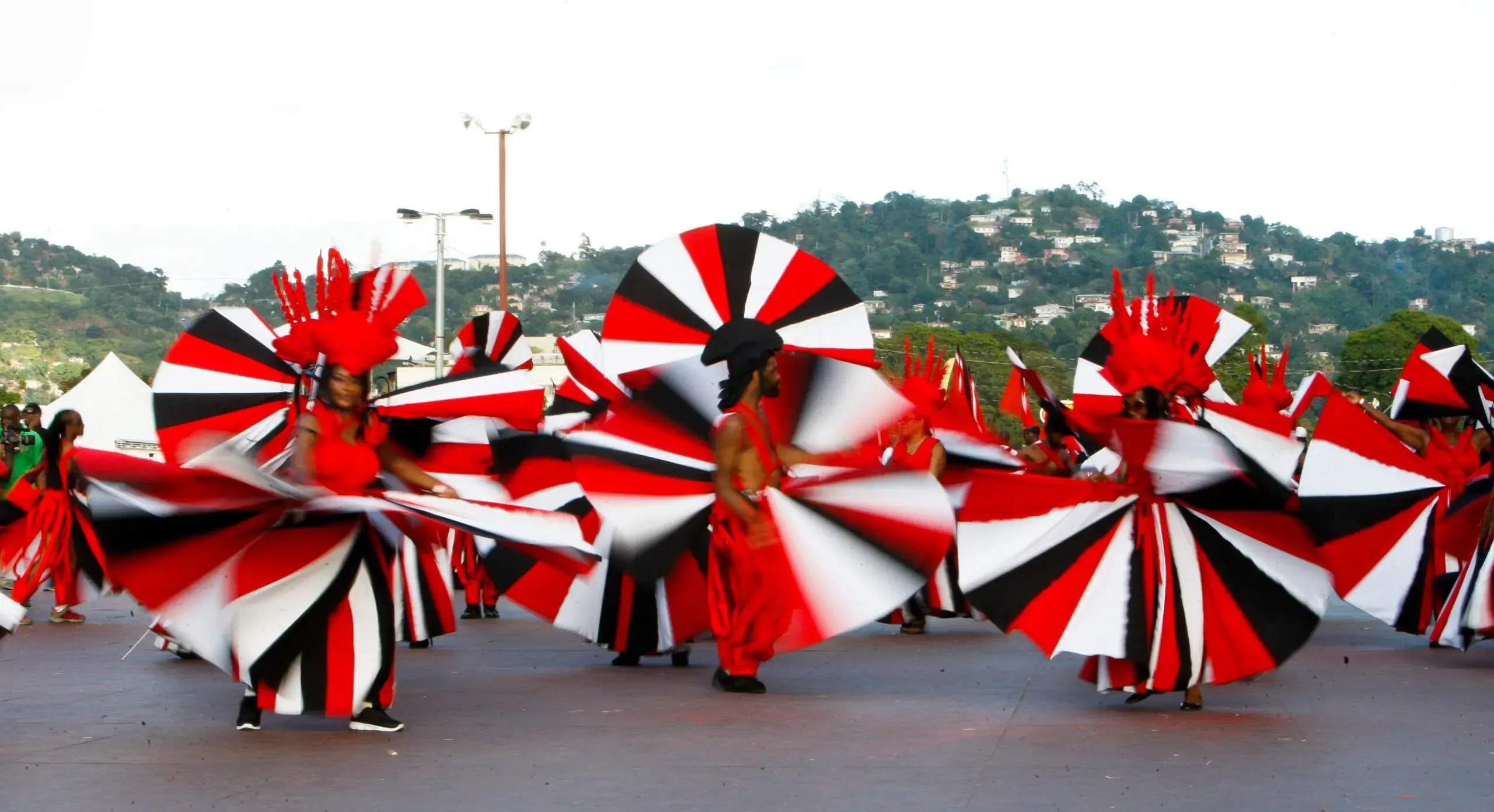
4. Carnival culture
Yes, we're going beyond Carnival — but its international impact is impossible to ignore.
Trinidad and Tobago's Carnival traditions traveled with Caribbean migrants, helping influence major celebrations in cities including London, Toronto and New York.
Elements such as masquerade, steelpan, calypso and soca became central features of Caribbean diaspora festivals.
The result is that pieces of Trinidad's Carnival culture can now be experienced thousands of miles from Port of Spain.
5. Literary giants
Trinidad and Tobago has produced writers whose influence stretches far beyond the Caribbean.
V.S. Naipaul, born in Chaguanas in 1932, won the 2001 Nobel Prize in Literature. His acclaimed works include “A House for Mr. Biswas,” which drew heavily on Trinidadian life.
The country also produced historian and intellectual C.L.R. James, whose works include “The Black Jacobins” and the celebrated cricket memoir and social commentary “Beyond a Boundary.”
6. Cricket legends
Few countries the size of Trinidad and Tobago can claim a cricket legacy quite like it.
Brian Lara remains one of the game's most celebrated batsmen and became synonymous with West Indies cricket during his international career. Other Trinidad and Tobago greats include Learie Constantine, Deryck Murray and, more recently, Kieron Pollard.
The country's Queen's Park Oval has also been one of the historic homes of West Indies cricket.
7. Olympic history
Trinidad and Tobago's impact isn't limited to cricket.
Sprinter Hasely Crawford became a national hero when he won the men's 100 meters at the 1976 Montreal Olympics, giving independent Trinidad and Tobago its first Olympic gold medal.
Since then, athletes including Ato Boldon, Richard Thompson and Keshorn Walcott, along with the country's relay teams, have kept the red, white and black prominent on international podiums.
8. The limbo
“How low can you go?” has become recognizable around the world, but the limbo has deep connections to Trinidad and Tobago.
The dance was traditionally practiced in Trinidad and Tobago before moving into clubs and theatrical performances in the 1940s and 1950s. Trinidadian dancer Julia Edwards was instrumental in transforming and popularizing limbo as an international performance spectacle.
It subsequently spread throughout the Caribbean and to North America and Europe.
9. A barrier-breaking Miss Universe
In 1977, Trinidad and Tobago's Janelle Commissiong changed pageant history.
The Port of Spain-born beauty queen became the first Black woman to win Miss Universe when she was crowned in the Dominican Republic. According to the Miss Universe Organization, Commissiong used her reign to advocate for women's rights and the human rights of people of African descent.
Her victory made her an international symbol of representation at a time when global beauty competitions overwhelmingly favored white contestants.
10. An outsized cultural footprint
Perhaps Trinidad and Tobago's greatest export is the way its traditions continue to travel.
Its music fills Carnival routes from the Caribbean to North America and Europe. Steel orchestras now perform around the world. Its writers are studied internationally, its athletes have rewritten record books and its food has followed Trinidadian and Tobagonian communities across the diaspora.
That influence is particularly striking for a nation that gained independence from Britain only on Aug. 31, 1962.
Sixty-four years later, Trinidad and Tobago remains a relatively small country geographically. Its contribution to global culture has been anything but.