Barbados launches scholarships in Black Studies and reparatory justice as part of reparations push
Key Points(5)
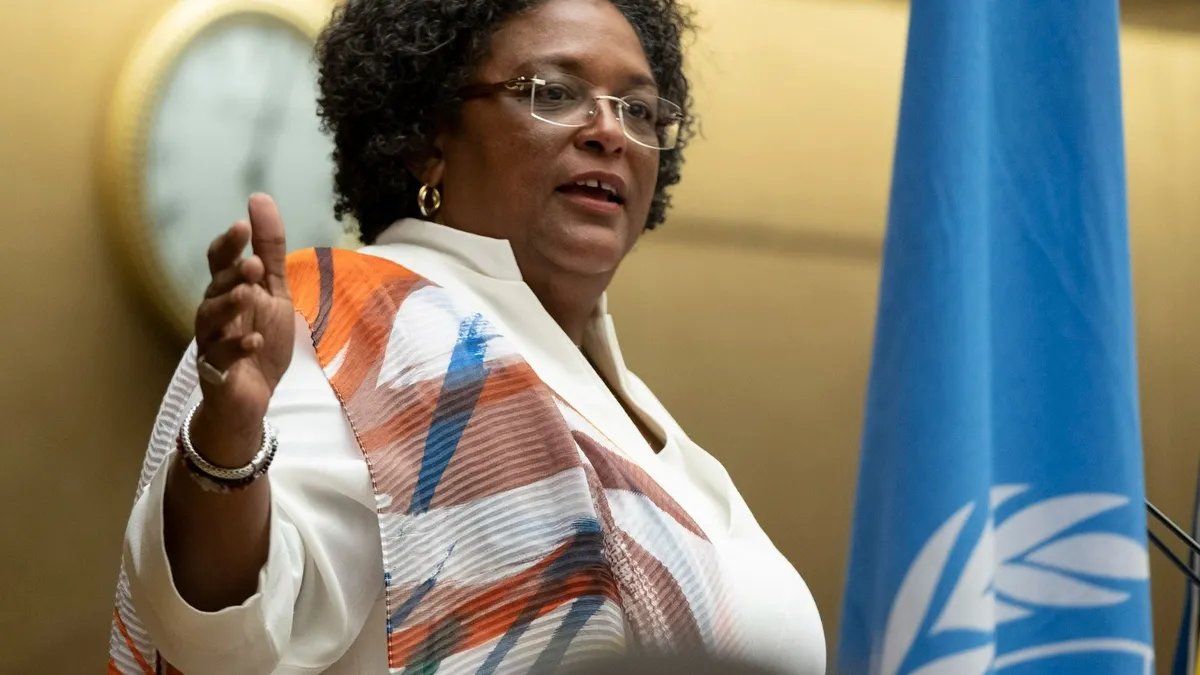
- Barbados will establish three postgraduate scholarships focused on Black Studies and reparatory justice as part of the country’s ongoing campaign for reparations for slavery, Prime Minister Mia Amor Mottley announced in her Emancipation Day message.
- The scholarships will be offered through the Ministry responsible for Pan African Affairs in the Prime Minister’s Office, in partnership with The University of the West Indies’ Cave Hill and Mona campuses and the University of Glasgow.
- Under the initiative, at least three Barbadians will pursue master’s degrees at the University of Glasgow in Black Studies and related disciplines, with a focus on reparatory justice.
- “These scholarships are freedom carried into knowledge.
- Across the same Atlantic that carried our ancestors in chains, their descendants will now travel by choice, rooted in identity and equipped to shape the work of justice,” Mottley said.
Barbados will establish three postgraduate scholarships focused on Black Studies and reparatory justice as part of the country’s ongoing campaign for reparations for slavery, Prime Minister Mia Amor Mottley announced in her Emancipation Day message.
The scholarships will be offered through the Ministry responsible for Pan African Affairs in the Prime Minister’s Office, in partnership with The University of the West Indies’ Cave Hill and Mona campuses and the University of Glasgow.
Under the initiative, at least three Barbadians will pursue master’s degrees at the University of Glasgow in Black Studies and related disciplines, with a focus on reparatory justice.
“These scholarships are freedom carried into knowledge. Across the same Atlantic that carried our ancestors in chains, their descendants will now travel by choice, rooted in identity and equipped to shape the work of justice,” Mottley said.
The prime minister said the programme reflects Barbados’ commitment to advancing the reparations movement following recent developments at the regional and international levels.
In her Emancipation Day address, Mottley paid tribute to the enslaved Africans whose resistance helped shape modern Barbados, highlighting National Hero Bussa as a symbol of the fight for freedom.
“Bussa remains one of the clearest symbols of that courage. The uprising he led declared that our people had never consented to enslavement and would never accept it as their destiny,” she said.
Mottley said while emancipation ended the legal institution of slavery, it did not repair the economic and social damage caused by generations of exploitation.
“Emancipation removed the legal chains, but did not restore the land, wealth or opportunity taken from generations,” she said. “Reparatory justice is truth spoken, responsibility accepted and repair made practical. An apology without repair is eloquence without justice.”
She noted that the United Nations General Assembly and CARICOM have made advances in the global reparations conversation and said Barbados will continue to play a leading role while preparing future generations to continue the movement.
Mottley also argued that the principles of emancipation must extend beyond historical recognition and be reflected in efforts to address modern inequality, violence and exclusion.
“There can be no freedom where violence silences hope, inequality closes doors or indifference strips another person of dignity,” she said.
Calling on Barbadians to honor the sacrifices of their ancestors, the prime minister urged citizens to continue the pursuit of justice.
“Emancipation is what they won. Justice is what we owe them. Let us complete the journey,” she said.