Antigua and Barbuda, US to resume talks on accepting third-country deportees
Key Points(5)
- Antigua and Barbuda and the United States are expected to resume negotiations over a proposal that could see the Caribbean nation accept a limited number of third-country nationals removed from the U.S.
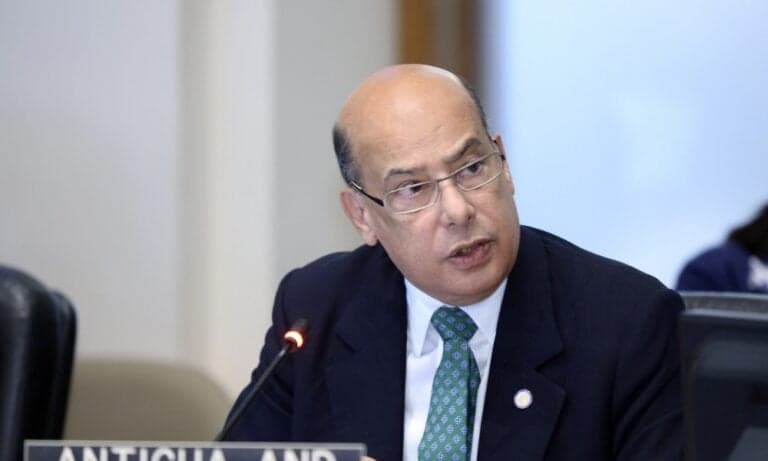
- Antigua and Barbuda’s Ambassador to the United States, Sir Ronald Sanders, said the talks will resume at Washington’s request and are part of a broader U.S.
- initiative involving several countries, including some CARICOM member states.
- The discussions come months after Antigua and Barbuda established conditions under which it would consider accepting people deported by the United States who are not citizens of the Caribbean country.
- In July, the House of Representatives approved a framework allowing the government to continue negotiations while maintaining the country’s authority to approve or reject each person proposed for transfer on a case-by-case basis.
Antigua and Barbuda and the United States are expected to resume negotiations over a proposal that could see the Caribbean nation accept a limited number of third-country nationals removed from the U.S.
Antigua and Barbuda’s Ambassador to the United States, Sir Ronald Sanders, said the talks will resume at Washington’s request and are part of a broader U.S. initiative involving several countries, including some CARICOM member states.
The discussions come months after Antigua and Barbuda established conditions under which it would consider accepting people deported by the United States who are not citizens of the Caribbean country.
In July, the House of Representatives approved a framework allowing the government to continue negotiations while maintaining the country’s authority to approve or reject each person proposed for transfer on a case-by-case basis. The framework rejects an automatic or open-ended arrangement.
Any agreement would also have to address issues including identity and documentation, legal status, security, accommodation and support, funding and responsibility for a person’s eventual onward movement or return.
Earlier in the negotiations, the government indicated that it could consider accepting only a small number of people annually and said it would not accept individuals with criminal backgrounds. It also called for detailed security, criminal-history and health information before approving anyone for admission.
Sanders said no final agreement has been reached and no third-country national has been authorized for transfer under the proposed arrangement.
The renewed negotiations will be overseen by Prime Minister Gaston Browne, Attorney General and Legal Affairs Minister Sir Steadroy Benjamin and Foreign Affairs Minister E.P. Chet Greene.
Officials said the talks will seek to determine whether an agreement can be reached that complies with Antigua and Barbuda’s laws and international obligations while addressing concerns about sovereignty, national security, costs and the country’s limited capacity to accommodate additional residents.
The government has said it will continue to provide public updates as negotiations progress.