Home Blog Page 75

St Lucia warns Uber operating illegally despite cease letters

St. Lucia tourism
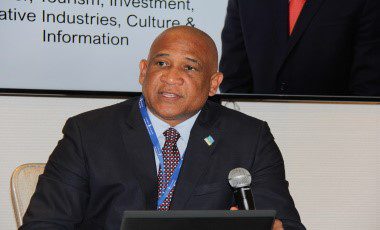
St. Lucia’s Tourism Minister, Dr. Ernest Hilaire

The St Lucia government says American ride-hailing company Uber continues to operate on the island despite being warned twice to cease what officials describe as illegal operations.

Tourism Minister Dr Ernest Hilaire said the government has made its position clear that any company entering the transportation sector must comply with local laws and regulatory requirements.

“We want to be very clear that any player that comes into that space fulfils all the requirements set out by legislation,” Hilaire told reporters.

“At this point, we are waiting on a follow-up meeting and for us to have some clear indications as to what exactly Uber would want to do and so far as I have heard they continue to offer their services in St Lucía and up to yesterday I sent them a second letter reminding them that they are operating illegally in St Lucia,” Hilaire said.

Earlier this month, the Philip J. Pierre administration said it had not “in any way approved, sanctioned or encouraged Uber to operate any service in St Lucia,” amid growing public debate over the company’s recent launch on the island.

Hilaire said Uber first contacted the government last December expressing interest in establishing operations, describing itself as a technology platform connecting riders and drivers.

“We indicated to them then that we would be reviewing their intention and that we shall have discussions with them.

“They sent in a second note indicating that there has been substantial interest in St Lucia from taxi associations and individual taxi drivers. So they were going to move ahead, and again we told them that we would want to discuss the matter with the stakeholders and with Uber itself”.

According to the minister, the government later received notice from Uber stating “they were launching their service” in St Lucia.

Hilaire said he subsequently met with stakeholders in the transportation sector and outlined the requirements Uber must meet to operate legally.

“I indicated to them that our position, as expressed in a letter which I sent to Uber, was that they were not fulfilling our regulatory requirements for them to operate in St Lucía and that we pointed out to them the regulatory requirements were.

“One, they needed to, in our view, obtain a trade licence before they can operate in St Lucia. Two, that they needed to register with the Inland Revenue Department for the purpose of payment of taxes owed to the government by operating a business in St Lucia, and, thirdly, they are required to be certified under the Tourism Development Act”.

He said those requirements were also shared with industry stakeholders as part of the government’s stated position, while maintaining openness to discussions with the company.

“We met with Uber and expressed those sentiments ..and we indicated to them that in our view they were operating illegally in St Lucía. They had not met the requirements to operate in St Lucía and we indicated to them that we believe that they needed to re-set and that they could not continue to operate as they are operating”.

Hilaire said Uber has promised a follow-up meeting to discuss the government’s concerns in greater detail.

“We asked them to suspend their operations in St Lucia until they had cleared the way forward. We are awaiting from them a date for our follow-up meeting and for us to decide how we move forward,” he said.

Guyana opposition leader Azruddin Mohamed accuses police of political persecution

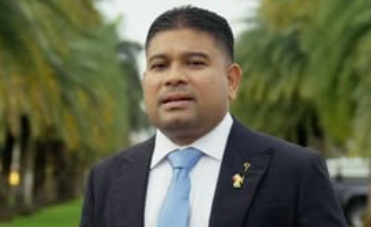
Azruddin Mohamed
Azruddin Mohamed

Guyana Opposition Leader and sanctioned businessman Azruddin Mohamed on Wednesday accused the Guyanese Government and the Special Organised Crime Unit (SOCU) of political persecution after police executed a search warrant at his Lombard Street business location.

Police officers carried out the operation at the premises, where three individuals who reportedly work at the location were taken into custody and an undisclosed quantity of local currency seized. Mohamed said the confiscated funds were intended to assist less fortunate individuals who visit the property regularly.

According to Mohamed, he was surprised by the search since he said no active business operates at the building following the revocation of the company’s licences.

Police presented a search warrant indicating they were searching for local or foreign currency, precious metals, minerals, financial documents and electronic devices. Based on Mohamed’s account of the search, the only item recovered under the warrant was an undisclosed sum of local currency. He said he asked officers to display the money to demonstrate that it was a small amount.

He also expressed surprise that a drug-sniffing dog was brought to the location during the operation.

“If is narcotics, you got to go at the big drug dealers place not here”, Mohamed said, maintaining that there was nothing unlawful at the property. He accompanied officers during the search and claimed he was being targeted for political reasons.

“This is share political persecution in this country just because I am standing up to the PPP for the people of this country, this is what I have to go through. You already shut down my flippin businesses and now you coming and search. Go by the drug dealers them and search”, he implored.

Mohamed said he had donated millions of dollars over the years to the governing People’s Progressive Party (PPP) and suggested any search for his funds should instead be directed to the party’s headquarters.

“The hundreds of millions that I give to the PPP, its at Freedom House, go there and search” he said.

When informed that police would be confiscating money found at the premises, Mohamed again urged officers to publicly display the amount.

“Let people see how much money you find, this is the staff money in envelopes and money to give poor people and beggars when they come here. Envelope with $5000 and seven, you know envelopes to give people when they come for assistance”, Mr. Mohamed said.

The search was later completed, with the commanding officer indicating that no gold or narcotics were found at the location. However, two firearms were reportedly discovered in the possession of individuals at the premises, and checks are to be carried out to determine the validity of the firearm licences.

At SOCU headquarters, attorneys representing the Mohameds reported difficulty gaining access to meet with the three detained individuals, adding to what Mohamed described as confusion surrounding the operation.

Mohamed said he remains convinced that the actions of law enforcement were politically directed.

Mohamed and his father, Nazar Mohamed, are currently before the Magistrates’ Court contesting an extradition request from the United States. US authorities are seeking their extradition on allegations of mail and wire fraud, tax evasion and money laundering linked to gold exports.

Founder’s daughter Caron Shepherd defects from FNM to join Bahamas ruling PLP

Caron Shepherd

The daughter of a founding member of The Bahamas’ main opposition Free National Movement (FNM), Caron Shepherd, has joined the governing Progressive Liberal Party (PLP) as political campaigning intensifies ahead of general elections due by September but widely expected sooner.

Shepherd is the daughter of the late Jimmy Shepherd, one of the “Dissident Eight” and a founder of the FNM, which was formed at his home in 1971.

Announcing her decision at PLP headquarters, Shepherd described the move as difficult but necessary.

“This is a very difficult decision for me, but it needed to be done,” Shepherd told supporters, adding that “my decision is based on the mere fact that I have so many persons that I would like to be able to assist and be able to see people progress.

“And so that is why this decision was made. So it was not an easy one, but … it’s the holy courage that took me to be able to stand here today,” said Shepherd, who served with the FNM for 33 years before joining the Coalition of Independents (COI) in 2021.

“I don’t regret the decision I have made. I’ve decided with a clear conscience. I served 33 years in the FNM, three times as president (of the women’s branch), and people will tell you I was the best president that the FNM has ever had.

“And so I look forward to bringing that same tenacity here in the PLP and to working with males and females (so) that we forge ahead with more progress,” said Shepherd, who said she’s disappointed with the current state of the FNM.

“They have strayed from the goals our founding fathers set out to accomplish,” she said. “Their words are saying one thing, yet their actions show another. Our motto as the FNM used to be ‘all together,’ and today, the FNM is not all together.”

“Our motto from the dissident eight was all together. Unfortunately, the FNM, in my opinion, is not altogether. They are in a position where they are filling positions in the front, but the back is hemorrhaging. I’m not the only one who is quite disappointed by the direction the party is going in,” Shepherd said, urging undecided FNM supporters to join her in backing Prime Minister Phillip Davis for a second consecutive term in office.

“Join me on the winning team — a team focused on service to the Bahamian people. I pledge to work smart, hard, and diligently, focusing on securing a second term for the PLP in service to our people. I am here to serve and to serve with purpose for a better Bahamas. I have a heart for the people,” she added.

Earlier this week, the PLP said it will officially launch its general election campaign next Monday after completing the ratification process for all 39 candidates.

In the last general election, the PLP secured 32 seats, with the remaining seats going to the Democratic National Movement (DNM).

Young Reggae Boyz punch ticket to U-17 World Cup in Qatar with statement win cver Canada

Jamaica’s Under-17 Reggae Boyz

With a composed yet ruthless 3-1 victory over Canada in their decisive Concacaf Group G qualifier in Alajuela, Costa Rica on Wednesday, the young Jamaicans sealed their nation’s third appearance at a FIFA Under-17 World Cup, and its first men’s World Cup qualification in 15 years.

The triumph sends Jamaica to Qatar in November and places this generation alongside the trailblazers of 1999 and 2011. More than that, it marks a watershed moment for Jamaican men’s football, restoring the country’s presence on the global stage.

Finishing atop Group G with a perfect nine points from three matches, Jamaica eliminated pre-tournament favorites Canada, who needed a win but instead fell short, and out.

Clinical edge in a high-stakes battle

The contest unfolded with tension befitting a winner-take-all encounter.

Canada controlled early possession and nearly struck first, only to be denied by a crucial goal-line intervention from Jamaica’s goalkeeper O’Mario White. But while the Canadians dictated stretches of play, Jamaica proved far more efficient where it mattered most.

Captain Jahmarie Nolan broke the deadlock in the 37th minute, timing his movement perfectly to volley home a right-sided cross from Jamone Lyle. The strike came against the run of play and shifted the psychological balance.

Shortly after the restart, Lyle turned from provider to scorer. In the 53rd minute, he produced a dazzling individual effort, intercepting a pass and gliding past two defenders on the right edge of the box before drilling a powerful finish into the far corner.

Canada clawed their way back into contention in the 71st minute when Van Parker converted a penalty after referee César Nolasco awarded a contentious spot kick.

But any realistic hope of a comeback dissolved late. Substitute Vincente Lourenco received a second yellow card in the 85th minute, reducing Canada to 10 men for the closing stretch.

Jamaica capitalized.

Deep into stoppage time, Nolan powered forward from midfieldon the right side before delivering a precise cross to substitute Jaheem Bennett, who calmly fired into the far corner to seal qualification in emphatic fashion.

The final whistle confirmed what the scoreboard already declared: Jamaica were World Cup-bound.

A program years in the making

Beyond the result, this qualification reflects deliberate, sustained investment in youth development.

The current Under-17 cohort emerged from a pipeline that saw Jamaica’s Under-14s capture the CFU Challenge Cup in 2024 and continue their success at the regional level a year later. The federation’s Talent Development Scheme had steadily built toward this moment.

After narrowly missing qualification previously, the Jamaica Football Federation reinforced its technical leadership by appointing veteran coach Wendell Downswell, a man with a proven track record at this level.

Downswell, who was part of the coaching setup that guided Jamaica to U17 World Cup appearances in 1999 in New Zealand and 2011 in Mexico, added experience to a staff that included assistant coach Vassell Reynolds and support personnel Altimont Butler and Carlton Simmonds.

His impact was immediate and decisive.

Emotional Ricketts reacts

JFF President Michael Ricketts, speaking to the media following the victory, did not hide his emotions.

“It’s three World Cup qualifications in eight years, but this is the first men’s one and I must say, I got emotional,” he said.

Under his administration, Jamaica’s senior women’s teams have also reached World Cups, but this breakthrough on the men’s side carried special resonance.

“We are just absolutely delighted, and I must congratulate my good friend and coach Wendell Downswell, who seems to have a knack for qualifying U17s.”

Ricketts emphasized that the achievement was no accident.

“We have invested heavily in our youth programmes over the last few years. It’s been a work in progress, and the investment is paying off and we are just absolutely delighted.”

He praised the collective effort behind the scenes.

“I must use this opportunity to congratulate my technical staff, who have worked so hard, tirelessly, to keep things on track and to ensure that we stay focused. I’m just proud of the boys. They have really, really worked hard.”

A victory beyond football

The significance of the triumph extended well beyond sport.

With sections of western Jamaica still recovering from the devastation of Hurricane Melissa, Ricketts dedicated the victory to those affected.

“We wanted to give western Jamaica, which was devastated by Hurricane Melissa, something to smile about. So this victory is for them,” he said.

“It is so important and it’s critical that it happens at this time… we are now giving them something to smile about, something that can lift their spirit. We have done this for Jamaica.”

Minister of Sport Olivia “Babsy” Grange echoed those sentiments in remarks to the media.

“We are so proud of the young Reggae Boyz and coach Wendell Downswell, who was also the coach when the under-17 team qualified for the FIFA World Cup on the two previous occasions,” she said. “Congrats as well to assistant coach Vassell Reynolds and the other members of the support. Qatar, here we come.”

Eyes on November

Jamaica will learn their World Cup opponents at the official draw in May. The tournament kicks off in Qatar in November, giving the technical staff several months to prepare.

For Ricketts and the federation, qualification is only the beginning.

“It’s not just qualifying. We want to make an impression when we go to the World Cup,” he said.

The Young Reggae Boyz have already made history. Now, they will chase something even greater, impact on the world stage.


Diamonds complete ruthless sweep over undermanned Sunshine Girls

Defensive brilliance and late drama propel Sunshine Girls to Game 3 triumph

Australia left no doubt. In a display of depth, discipline, and clinical execution, the world number one Diamonds completed a comprehensive 3-0 sweep of Jamaica’s Sunshine Girls with an emphatic 80-33 victory in Melbourne, sealing a series defined by dominance.

Across the three-Test series, the Australians imposed themselves with unrelenting precision, defeating Jamaica by an average margin of 31 goals. The Sunshine Girls fell 71–42 in the opener, 73–41 in the second encounter, and then endured their heaviest defeat in the finale.

For Jamaica, it was a sobering tour, made more difficult by the absence of several elite players, and one that revealed the gulf in preparation between the two sides at this stage of the international cycle.

Early control, relentless pressure

The final Test followed a now-familiar script.

Australia seized control from the outset, suffocating Jamaica’s attacking rhythm and restricting them to just six goals in the opening quarter to establish an 18-6 lead. The Diamonds’ defensive intensity disrupted passing lanes, forced turnovers, and converted possession with ruthless efficiency.

By halftime, the margin had stretched to 35-18. Jamaica’s most competitive spell came in the second quarter, where they managed 12 goals, their most productive stretch of the contest, but even then, Australia comfortably outscored them 17-12 to maintain firm command.

Any hope of a second-half response was quickly extinguished. The Diamonds accelerated in the third quarter, widening the gap to 56-28 before delivering a crushing 21-5 final-quarter surge. The five goals represented Jamaica’s lowest-scoring quarter of the entire series, underscoring the scale of Australia’s defensive control.

Allison provides lone bright spot

Amid the lopsided scoreline, goal shooter Gezelle Allison produced one of the few encouraging individual performances for Jamaica.

Allison converted 20 of her 24 attempts, including an impressive 11-from-12 return in the second quarter, accounting for more than half of her team’s output on the day. Her efficiency, however, stood in contrast to the broader attacking struggles that plagued the Sunshine Girls throughout the series.

Turnovers, disrupted transitions, and difficulty sustaining scoring momentum remained persistent issues against Australia’s structured defensive unit.

Absences and adjustment

The squad was without several established senior figures, including captain Jhaniele Fowler, Shamera Sterling, Jodi-Ann Ward, Adean Thomas, and Shimona Nelson. In the final Test, defender Kadie-Ann Dehaney was also ruled out due to injury, further limiting options in the defensive third.

The missing experience and cohesion were evident against an Australian side operating with continuity and sharpness. Australia’s combinations looked settled, their rotations seamless, and their conditioning superior across all four quarters.

For Jamaica, the tour became as much about evaluation as competition.

Lessons ahead of the Commonwealth Games

The back-to-back series defeats to England and Australia have provided a stark assessment of where the Sunshine Girls stand as they build toward the Commonwealth Games.

The gap in match readiness, execution under pressure, and overall fitness was exposed against two of the sport’s elite programs. Australia, in particular, demonstrated the standard required, a benchmark Jamaica must now chase in the months ahead.

While the results were heavy, the experience offers clarity. Squad balance, defensive depth, attacking structure, and physical conditioning will all demand urgent attention as selectors assess the optimal combination moving forward.

The Diamonds, meanwhile, reinforced their status as the sport’s gold standard — clinical, composed, and uncompromising from first whistle to last.

For the Sunshine Girls, the path forward is clear. The rebuilding phase must now accelerate.


Haiti, Panama, Costa Rica, USA secure spots at FIFA U-17 World Cup Qatar 2026

football jamaica

The race to Qatar intensified Tuesday night as four more nations, Haiti, Panama, Costa Rica, and the United States, secured qualification for the FIFA U-17 World Cup Qatar 2026.

With Groups B, C, D, and E concluding across multiple venues, decisive performances and tense finishes shaped the latest chapter of the Concacaf U-17 Qualifiers. By day’s end, four group winners had emerged, each earning the right to represent the region on the global stage.

Panama power through Group B

A commanding 4-1 victory over Nicaragua at Estadio Rommel Fernández in Panama City confirmed Panama atop Group B and secured the country’s fifth appearance at a FIFA U-17 World Cup.

Lucas Norte ignited the home crowd early, striking in the fifth minute. Jossimar Insturain doubled the advantage just five minutes later with a powerful finish from the center of the box. Estevis López extended the lead in the 31st minute after carving through the defense with an impressive solo effort.

Nicaragua briefly responded when Bryan Corea finished from close range in the 67th minute, but Thiago Chalmers put the result beyond reach in the 84th, heading home from inside the penalty area.

Elsewhere in Group B, Anguilla and Dominica battled to a 1-1 draw. Peyton James opened for Dominica in the 27th minute before Zahir Hennis leveled for Anguilla on a swift counterattack in the 61st. Both sides earned their first point of the campaign.

Haiti rise in hostile territory

Group C delivered one of the day’s pivotal contests, as Haiti edged host nation Guatemala 2-1 at Estadio Cementos Progreso in Guatemala City.

Sonson Jean-Baptiste struck first for Haiti in the seventh minute, rising inside the box to head home the opener. Guatemala responded quickly through Patrick Arana, who capitalized on a cross from Hensen Chacón in the 11th minute.

But Jean-Baptiste proved decisive. In the 22nd minute, he fired a powerful shot from inside the area to restore Haiti’s lead, a margin they would defend to the final whistle.

The victory sealed first place in Group C and marked Haiti’s fourth qualification to a FIFA U-17 World Cup.

Earlier in the group, Antigua and Barbuda claimed a 1-0 win over Grenada. Deonjre Joseph delivered the breakthrough in the 58th minute, heading in a free-kick service from Robert Jeffrey to secure the Benna Boys’ first goal, and victory, of the 2026 qualifying cycle.

Costa Rica advance despite stalemate

In Group D, Costa Rica did just enough.

A disciplined 0-0 draw against Puerto Rico at the Costa Rican Football Federation Field in Alajuela proved sufficient for the hosts to top the group and clinch their 12th FIFA U-17 World Cup appearance.

While the scoreline lacked goals, the result carried enormous significance, ensuring Costa Rica’s continued prominence at the youth level.

Earlier in the group, the British Virgin Islands and Turks and Caicos Islands produced an entertaining 2-2 draw. Jordan Dane gave Turks and Caicos an early lead in the fourth minute before Akhori Sebastian equalized for the British Virgin Islands in the 21st.

Scott Kommalapate restored the Turks and Caicos advantage just before halftime, finishing a move initiated by Jwaun Exalu. Theo Coombs later converted an 84th-minute penalty to secure a point for the British Virgin Islands.

USA extend legacy in Group E

The United States confirmed its place at a 20th FIFA U-17 World Cup after a 1-1 draw against the Dominican Republic at Arnos Vale Sporting Complex in Saint Vincent and the Grenadines.

Malik Jakupovic continued his prolific campaign, powering home a header in the 41st minute to reach eight goals and extend his lead as the tournament’s top scorer. The Dominican Republic responded swiftly, with Adrian Garcia leveling in the 44th minute.

The point was enough to secure first place in Group E and continue the United States’ long-standing tradition of youth World Cup participation.

Group E concluded with another 2-2 draw as Saint Kitts and Nevis shared the spoils with Saint Vincent and the Grenadines.

Savi-k Morton electrified the hosts early, blasting a long-range strike into the top left corner in the fifth minute. T’Quandre Burroughs added a second in the 13th from close range.

Saint Vincent and the Grenadines rallied in the second half. Jaymar Williams narrowed the deficit in the 74th minute after a precise through ball from Jolanson Charles, and Beau Hoyte equalized three minutes later with a stunning effort from distance. Both sides collected their first point of the tournament.

The road to Qatar takes shape

With four more group winners confirmed, the Concacaf representation for Qatar 2026 continues to crystallize.

Panama showcased attacking authority on home soil. Haiti demonstrated resilience under pressure. Costa Rica advanced with composure and defensive discipline. The United States relied on firepower and experience.

As the qualifiers progress, the region’s emerging talent is steadily stepping into the global spotlight, and the journey to Qatar is gaining momentum.


Rutherford’s fireworks and spin masterclass sink England in Mumbai

West Indies cricket

The West Indies delivered a statement performance beneath the lights at the Wankhede Stadium, dismantling England by 30 runs in a high-stakes Group C encounter at the ICC Men’s T20 World Cup on Wednesday.

It was a victory crafted in two decisive acts: Sherfane Rutherford’s fearless late assault with the bat, and a suffocating spin display from Gudakesh Motie and Roston Chase that choked England’s pursuit of 197.

By the end of the night, England were bundled out for 166, their early promise extinguished by Caribbean control and composure. The win lifted the West Indies to the summit of Group C with four points from two matches.

Early tremors, then Rutherford’s roar

The innings began on uneasy ground.

Jofra Archer, operating at 148kph, struck in the opening over to remove Shai Hope without scoring. Brandon King soon followed, picking out deep point off Sam Curran, leaving the West Indies tottering at 8 for 2.

Shimron Hetmyer briefly counterpunched. Two fours and two sixes, including a blistering blow in a 19-run over from Will Jacks, injected urgency into the innings. But his departure for 23 just before the end of the powerplay restored England’s sense of control.

That control would not last.

Sherfane Rutherford arrived at the crease with his side 55 for 3 and the match delicately poised. He departed unbeaten on 76 from 42 balls, having transformed the contest with a display of calculated brutality.

Seven sixes thundered from his bat into the Mumbai night. Each strike shifted momentum; each arc over the boundary ropes tightened the noose around England’s bowlers.

Adil Rashid attempted to steady matters, claiming the wickets of Roston Chase (34) and Rovman Powell (14) in a disciplined spell. But even Rashid faltered when he spilled a chance off Rutherford on 56, a costly reprieve.

Jason Holder then accelerated the carnage. His 33 from 17 deliveries, peppered with clean strikes to the short Wankhede boundaries, formed a rapid 61-run partnership with Rutherford in fewer than five overs.

Holder fell in the final over, but by then the foundation was immovable. Rutherford’s seventh six, launched imperiously over long-on, carried the West Indies to 196 for 6, a total that felt imposing.

England’s false dawn

Phil Salt threatened to make a mockery of the chase.

He dismantled Holder in a 24-run over, launching two sixes over midwicket and carving three boundaries through the off side. England surged to 67 in the powerplay, galloping at a rate that suggested the target might be within reach.

But the assault proved fleeting.

Romario Shepherd altered his lengths and cramped Salt into a miscue, ending his explosive 30 from 14 balls. The required rate began to climb, subtly at first, then with increasing urgency.

Jos Buttler’s lone six, struck from his 13th delivery, briefly hinted at resistance. Instead, it marked the beginning of the squeeze.

Chase tempted England’s captain to repeat the stroke. Buttler obliged, only to find long-on perfectly placed. His dismissal for 21 drained the innings of authority.

Spin tightens the grip

From there, the spinners took command.

Gudakesh Motie, understated yet ruthless, dismantled England’s middle order. Jacob Bethell was beaten by pace off the surface and lost his off stump for 33. Tom Banton followed for two, offering a simple catch at short cover.

Harry Brook, who had attempted to anchor the innings with 17, was caught and bowled, Motie’s third wicket, as the collapse gathered pace.

At 131 for 5 in the 14th over, England were already straining. Two run outs compounded their unraveling, extinguishing any lingering hopes of a late surge.

Motie’s final figures of 3 for 33 and Chase’s 2 for 29 reflected eight overs of sustained pressure. Together, they applied the chokehold that strangled England’s middle order and throttled the chase beyond recovery.

England were dismissed for 166.

Windies in control

This was not merely a victory; it was a professional dismantling of a major rival.

The West Indies combined explosive finishing with disciplined bowling, recovering from early setbacks to dictate every critical phase of the contest. Their adaptability, absorbing early blows before counterattacking decisively, underscored a team growing in confidence.

With four points from two matches, the Windies now lead Group C. Scotland sit just behind on two points, level with England, while Nepal and Italy are yet to register a point.

Under the Mumbai lights, the Caribbean side did more than win. They imposed themselves — with power, with precision, and with spin.


Infrastructure shortfalls force SVG to withdraw as host of 2026 Americas Netball qualifier

St. Vincent netball

St. Vincent and the Grenadines has officially withdrawn as host of the 2026 Americas World Cup Netball Qualifier, abandoning a tournament it fought through two separate bidding cycles to secure.

The decision followed a high-level Cabinet review that determined the country could not meet the international facility standards required by World Netball in time for the October 2026 event. The reversal delivers a sharp setback to the “Vincy Jewels” national team and deals a broader blow to the nation’s ambition to position itself as a reliable hub for international sports tourism.

At the center of the collapse lies a promise that unravelled, the transformation of the Arnos Vale Sporting Complex into a modern, climate-controlled indoor arena capable of staging a World Cup-level qualifier.

A bid won on a pledge

The hosting rights were originally secured under the previous administration of Prime Minister Ralph Gonsalves. That government’s decisive “letter of commitment” — pledging to construct a state-of-the-art indoor facility — proved pivotal in convincing the Americas Netball Region to award the tournament to St. Vincent and the Grenadines on October 29, 2025.

The pledge had broken through earlier skepticism. An initial bid had stalled amid concerns over venue readiness and infrastructure capacity. It was only after firm guarantees of a weather-proof, broadcast-ready arena that the country emerged successful in its second attempt.

Without that commitment, the bid would not have advanced.

A harsh reality check

The political transition following the November 27 general election altered the trajectory.

Under the new New Democratic Party (NDP) administration, a comprehensive review of the infrastructure timeline revealed that the scale of upgrades required could not be completed before the October 2026 deadline. The designated venues failed to meet stringent indoor specifications, and the construction window for major overhauls was deemed insufficient.

Minister of Youth, Sports, Culture and Creative Industries Kaschaka Cupid described the withdrawal as a difficult but necessary decision. In a release, Cupid stated that proceeding under the circumstances would have meant “compromising quality, safety, and compliance,” a risk the Cabinet was unwilling to assume.

According to the Ministry, the administration opted to safeguard the country’s long-term reputation as a “responsible and credible host” rather than risk staging a tournament that fell below international standards.

Key barriers proved insurmountable

The government’s assessment identified three critical constraints:

· Timeframe limitations: The construction and retrofitting schedule could not realistically support completion before October 2026.

· Infrastructure deficiencies: Existing facilities did not satisfy the indoor, climate-controlled requirements mandated for World Cup-level qualifiers.

· Safety and compliance risks: Failure to meet technical and athlete-safety standards could have triggered formal sanctions or disqualification by governing bodies.

The modern international netball landscape has moved beyond outdoor courts such as those at the New Montrose Netball Centre. Broadcast obligations, player welfare, and technical regulations now demand high-performance indoor environments — a threshold St. Vincent and the Grenadines could not guarantee within the remaining timeframe.

Athletes bear the consequences

While the Ministry emphasized that the withdrawal “does not reflect any lack of support for netball,” the ramifications for the Vincy Jewels are substantial.

Hosting would have delivered competitive familiarity, financial inflows, regional visibility, and the intangible edge of home-court advantage. Instead, the national side must now pursue qualification abroad, stripped of the structural and strategic advantages the tournament was intended to provide.

The 2026 Americas Qualifier carries significant weight. Two nations will secure places at the 2027 Netball World Cup in Sydney, Australia, scheduled for August 25 to September 5, 2027, joining the already-qualified Sunshine Girls of Jamaica as the region’s representatives.

For St. Vincent and the Grenadines, the opportunity to redefine its sporting infrastructure through a marquee event has evaporated, at least for now.

Broader questions for the region

Beyond the immediate disappointment lies a larger concern: the fragility of infrastructure guarantees within small-island sporting economies.

The collapse of the hosting agreement underscores the risks attached to ambitious bids dependent on future construction. It also highlights the importance of continuity between administrations when international commitments are secured on the strength of governmental assurances.

What began as a triumph of persistence, overcoming early “gridlock” to win hosting rights, has concluded as a cautionary tale about timelines, transitions, and the unforgiving standards of global sport.

St. Vincent and the Grenadines will still compete for a World Cup berth. But the transformative moment it envisioned, showcasing itself as a premier destination for international netball, has slipped away.


How Attorney Rankings help law firms dominate search results

Every law firm wants to be the top choice for clients. With so many attorneys online, standing out can be challenging. Attorney Rankings helps law firms rise above the competition through SEO and digital marketing tailored specifically for legal practices.

Their strategies make law firms more visible, credible, and attractive to clients who are ready to take action. This article explains how Attorney Rankings helps law firms dominate search results and grow their practice.

Increase Your Online Visibility

Attorney Rankings focuses on making law firms visible where it counts most. Their approach includes:

  • Local SEO: Optimize your firm for searches in your city or region.
  • National SEO :Reach clients across multiple locations if your practice serves a wider area.
  • Maps and directories :Appear in Google Maps and legal directories for better local exposure.
  • Service-specific keywords: Rank for searches related to your practice areas.

By targeting the right searches, Attorney Rankings helps your law firm connect with clients who are actively looking for legal help.

Build Authority With High-Quality Links

Legal Link building is a key factor in search engine rankings. Attorney Rankings helps law firms:

  • Earn backlinks from reputable websites, signaling credibility to search engines.
  • Build authority in your legal niche to improve long-term rankings.
  • Maintain a strong online presence that keeps you ahead of competitors.
  • Increase trust with potential clients through credible, relevant links.

Strategic link building ensures your website ranks higher and stays strong over time, giving your firm a lasting competitive edge.

AI-Powered SEO Strategies

Attorney Rankings highlights AI-powered SEO as a key part of their services. Their website emphasizes:

  • Optimizing for AI snippets and generative search engines.
  • Targeting conversational and natural language keywords used in AI-driven searches.
  • Using structured data and schema to make your website more visible to AI and search engines.

By leveraging these AI-focused strategies, Attorney Rankings helps law firms rank not only on Google but also in modern search and AI-powered platforms, ensuring visibility for today’s technology-driven searches.

Content That Engages and Converts

Content plays a major role in both SEO and client trust. Attorney Rankings provides:

  • SEO-friendly blogs that educate clients while boosting rankings.
  • Service pages optimized for both search engines and user experience.
  • Guides and resources that position your firm as an authority in your practice area.
  • Strategies that turn website visitors into consultations.

High-quality content not only improves search engine rankings but also encourages potential clients to reach out, helping your law firm grow.

Local SEO and Lead Generation

Attorney Rankings focuses on turning visibility into measurable results. Their approach includes:

  • Targeting local searches specific to your city or region.
  • Optimizing websites to encourage visitor action.
  • Using calls to action to convert visitors into clients.
  • Implementing lead generation strategies to consistently bring in new cases.

This combination of local SEO and actionable lead generation ensures law firms attract the right clients and maintain a steady flow of inquiries.

Legal Industry Expertise

Attorney Rankings has extensive experience working with law firms across multiple practice areas, including

  • Personal injury
  • Family law
  • Criminal defense
  • Corporate law

This expertise allows them to create customized law firm SEO strategies for each firm, ensuring maximum impact. Law firms can trust that every campaign is designed with their specific niche in mind, resulting in better rankings and more clients.

Key Takeaways

  • Boost visibility: Appear in search results where potential clients are searching.
  • High-quality links: Build authority and improve search rankings.
  • AI-powered SEO :Take advantage of AI-driven strategies to stay ahead in modern search.
  • Content marketing :Educate and engage clients while boosting rankings.
  • Local SEO and lead generation :Turn website traffic into real cases.
  • Industry expertise :Customized strategies for your law firm’s practice area.

Partnering with Attorney Rankings is more than hiring an SEO company—it’s a strategic partnership. Their combination of link building, AI-powered SEO, content marketing, and local optimization ensures your law firm dominates search results, builds authority, and attracts more clients.


Mia Mottley leads BLP to third parliamentary clean sweep in Barbados election

mia mottley
Mia Mottley

Barbados Prime Minister Mia Mottley has made regional political history, becoming the second Caribbean leader to win every seat in a national Parliament on three separate occasions, as her Barbados Labour Party (BLP) secured another landslide victory in Wednesday’s general election.

Mottley, 60, now joins former Grenada Prime Minister Dr Keith Mitchell, who had become the first regional leader to achieve multiple clean sweeps of his country’s Parliament. She has led the BLP to consecutive whitewash victories since first capturing all 30 seats in the Barbados Parliament in the May 24, 2018 general election, when she became the country’s first female prime minister.

“We are humbled by your confidence and trust. Thank you. Let us now come together as one people to continue building our nation,” the BLP said in a statement posted on its Facebook page.

In Wednesday’s vote, Mottley comfortably retained her St Michael North East constituency and later told supporters gathered at the party’s headquarters in Bridgetown that her new Cabinet is expected to be sworn in on Monday, with the first sitting of the new Parliament scheduled for next Friday.

“Something special happen in the country today,” Mottley said ahead of a planned thank you rally on Saturday.

Reflecting on her first electoral victory in 2018, she said her administration had pledged to stabilise Barbados.

“We thought we would move to a growth path,” she said, noting that shortly after taking office, Barbados faced the global COVID-19 pandemic and that over the last two and a half years, the Government had begun a mission to transform the country.

“We did not come to hold office, we come to make Barbados better and your lives better,” she said, noting that next month the BLP will mark its 88th anniversary as a political organisation.

Mottley, an attorney, said both the party and the Government remain focused on what “Barbadians want us to focus on,” even as she warned of challenges in safeguarding the country’s democracy as it approaches its 60th year of political independence and fifth year as a republic.

She urged citizens to share responsibility for the nation’s transformation and to unite in addressing both local and geopolitical challenges. Mottley also expressed concern about the state of the opposition Democratic Labour Party (DLP), stressing the need for “strong institutions” and recalling her efforts to ensure opposition representation in the Senate following previous BLP clean sweeps.

Meanwhile, DLP leader Ralph Thorne was defeated in the St John constituency, receiving 1,876 votes compared with 2,327 for BLP candidate Charles Griffith and 236 for Kemar Stuart.

Thorne, who had been elected to represent Christ Church South for the BLP in the last general election before crossing the floor to become Opposition leader, conceded defeat.

“We acquitted ourselves well, fought a clean campaign.”

“The result is quite disappointing, no explanation for it,” he said.

On Wednesday, Thorne also complained that he was unable to cast his ballot, telling reporters he had lived in Christ Church East for more than 20 years. He said he was directed to vote in another constituency but refused.

“The position I take is that to vote in Rendezvous is to commit fraud, certainly as it relates to my address”.

“So I consider that I have been denied the right to vote due to an administrative error by the Electoral and Boundaries Commission,” he told reporters.

University lecturer and former DLP president Dr Ronnie Yearwood said the electorate had sent a clear signal to the party.

“You can’t lose three times in this way and believe what you are doing,” Yearwood said, urging internal reform. “This is not where we want to be…but the public has given the party a third defeat”.

Political scientist and pollster Peter Wickham said the election outcome reflected more on the opposition than the governing party.

He said the ruling BLP has “grown and evolved” while the DLP has not, adding that the result is “more about the DLP and what it has to do”.

“It has to make hard decisions,” Wickham said, describing the DLP’s campaign as “horrible” and arguing that its leader should step aside.

“The party has to start looking for a new leader and identify new talent,” he added.

For the first time in Barbados’ political history, the general election was observed by foreign teams from the Caribbean Community (CARICOM) and the Commonwealth.

City of Lauderdale Lakes proclaims ‘Buju Banton Day’ during Reggae Month celebration

All smiles as the man himself, Buju Banton made a surprise visit to the City of Lauderdale Lakes
Photo Credit: Luke Ballentine

The City of Lauderdale Lakes marked Reggae Month by officially proclaiming Feb. 10, 2026, as “Buju Banton Day,” honoring the Grammy Award-winning reggae artist and cultural ambassador for his decades-long contribution to music and culture.

The special presentation, sponsored by Commissioner Karlene Maxwell-Williams, took place Tuesday as part of the city’s Reggae Month observances. Each February, Reggae Month celebrates the global influence of the Jamaican-born genre, recognized for its messages of peace, unity, resilience and social justice. Reggae’s international significance has also been acknowledged by the United Nations Educational, Scientific and Cultural Organization (UNESCO), which inscribed it on its list of Intangible Cultural Heritage of Humanity.

During the ceremony, the City Commission presented an official proclamation to Buju Banton, born Mark Anthony Myrie, recognizing his more than 30-year contribution to reggae and dancehall worldwide. Broward County Commissioner Hazelle P. Rogers and Congresswoman Sheila Cherfilus-McCormick also honored the artist with proclamations acknowledging his cultural and community impact.

“Reggae music is more than entertainment — it is a voice for the people and a reflection of our heritage and resilience,” said Commissioner Karlene Maxwell-Williams. “Buju Banton’s music has inspired generations around the world, and it is an honor for the City of Lauderdale Lakes to recognize his cultural impact and celebrate his legacy during Reggae Month.”

Rising from humble beginnings in Kingston, Jamaica, Banton has built an international career with songs including “Champion,” “Wanna Be Loved,” “Untold Stories,” “Destiny,” “Hills and Valleys,” and “Not an Easy Road.” Across 11 studio albums and collaborations with artists such as Beres Hammond, Stephen Marley, Gramps Morgan, Pharrell Williams and the late Heavy D, he has used his platform to promote themes of love, identity, spirituality, education and social awareness.

Through tracks such as “Let My People Go,” “Trial by Fire,” and “We Find A Way,” Banton has also advocated for justice, empathy, faith and freedom, reinforcing reggae’s role as both a cultural treasure and a vehicle for positive change.

City officials invited residents to join Mayor Veronica Edwards Phillips, Vice Mayor Sharon Thomas and Commissioners Tycie Causwell, Easton K. Harrison and Karlene Maxwell-Williams in celebrating Reggae Month and recognizing Banton’s lasting influence on music and culture.

How art therapy principles apply to everyday coloring time at home

Art therapy sounds fancy and professional. Like something only trained therapists do in special offices.

Truth is, the same principles show up naturally when kids color at home. No special training needed. The benefits just happen automatically.

Understanding what’s really going on makes coloring time way more valuable than just keeping kids quiet.

What Art Therapy Really Means

Art therapy uses creative stuff to help people deal with emotions and stress. Therapists guide sessions with specific goals in mind.

But the basic ideas work whether a therapist is there or not. Making art activates brain stuff that supports mental health naturally, especially when using a photo to coloring page tool.

Coloring hits several key therapy elements, expressing feelings without words, focusing mindfully, releasing emotions safely, feeling in control, and reducing stress.

These benefits can happen at home during regular coloring time without any professionals involved, especially when you download coloring pages, get here, and make coloring part of your daily routine.

Feelings Without Words

Kids struggle putting emotions into words. Big feelings exist, but vocabulary doesn’t.

Art lets them express themselves differently. Color choices, how hard they press, patterns they make, all communicate feelings without talking.

Angry kids press hard, use dark colors, and make messy patterns. Anxious kids stick carefully to lines, choose dull colors, and work super carefully.

Happy moods show through bright colors and relaxed strokes. Sad feelings appear in color picks and low energy.

Watching kids color gives clues about emotions they can’t say out loud. The art speaks what words can’t.

Getting Into the Zone

Therapy uses mindfulness a lot. Being right here, right now. Letting other thoughts fade away.

Coloring creates this naturally. Picking colors. Feeling crayons on paper. Watching spaces fill. Hearing scratching sounds.

Worried thoughts about tomorrow or yesterday disappear. Attention goes to just this moment, this picture, these choices.

Anxious kids benefit hugely from this. Coloring gives their minds a break from spinning thoughts. Stress drops as focus shifts to something simple and controllable.

Even ten minutes of coloring can totally reset moods.

Parents can download coloring pages matching what kids love to keep them engaged. When the subject is interesting, staying focused comes easier.

  • Sensory focus: Picking colors, feeling the texture of crayons/markers/pencils, watching the color fill the paper, listening to the sound of the art tool on the page.
  • Routine execution: Following the same steps each time (e.g., getting materials, choosing the image, starting to color a specific area).
  • Decision-making: Choosing the next color or deciding which area to color next.
  • Pattern recognition: Focusing on repeating shapes or complex designs within the coloring page.
  • Breathing synchronization: Matching deep, calm breaths with the rhythm of coloring strokes.
  • Boundary attention: Paying close attention to the lines and edges of the image.
  • Mental quiet: Gently redirecting any intruding thoughts back to the immediate task of coloring.

Safe Ways to Let Feelings Out

Art therapy gives safe outlets for tough emotions. Anger, frustration, sadness, and fear all get channeled through creating instead of harmful behaviors.

Coloring does this at home, too. Upset kids can scribble aggressively, press super hard, and pick intense colors. The paper takes all that emotional energy safely.

Nothing gets hurt. Nobody gets yelled at. The coloring page absorbs everything.

After releasing emotions through coloring, kids usually feel way calmer. The intense feeling got out, making it less powerful.

No Pressure to Explain

Unlike talking, coloring doesn’t force kids to explain feelings. They just feel and create.

No adult asking “Why are you mad?” Sometimes kids don’t know why. Sometimes, explaining seems impossible.

Coloring lets feelings come out without interrogation.

Building Confidence Through Making Stuff

Creating something builds confidence. Finishing a project feels like an accomplishment.

Coloring delivers this. Completing a picture creates real achievement. Something new exists because of their work.

Display finished pages where kids can see them. Fridge doors, bedroom walls, bulletin boards. Seeing their work valued builds self-worth.

Process matters more than perfection. Wild scribbles or careful coloring both deserve celebration.

No Wrong Answers Kills Anxiety

Therapy removes judgment from art. There’s no “right way” to express feelings.

Home coloring works the same. Purple dogs? Cool. Orange skies? Great. Scribbles instead of neat coloring? Perfect.

No judgment lets kids create freely without fear of criticism. This freedom helps emotional expression and reduces anxiety.

Routines Therapy Principles Feel Safe

Therapy uses routine because predictability reduces anxiety. Knowing what comes next provides comfort.

Regular coloring time creates this at home. Same time daily or weekly. Same materials. Same basic process.

Predictable routines help anxious kids feel safer. Coloring becomes a reliable thing in possibly chaotic lives.

Some families color before bed. The calming activity helps transition to sleep. Others color after school to decompress.

Consistency matters more than specific timing.

Connecting While Creating

Coloring can be solo, but it also creates chances for connection. Parents coloring with kids opens a conversation without pressure.

Side-by-side activities often get kids talking more than face-to-face chats. They share thoughts while focusing on coloring that might not come out otherwise.

Comments about colors or pictures can lead to deeper talks naturally. The activity makes conversation comfortable.

Siblings coloring together practice sharing and cooperation. Social skills develop naturally.

Dealing With Big Stuff

Therapists use art to help process hard experiences. Same works at home.

Kids dealing with tough situations, illness, loss, and family changes often benefit from related coloring themes. Hospital scenes for medical stuff. Family pictures for relationship changes.

Creating art around difficult topics helps kids process feelings without words. They work through emotions while coloring related images.

Parents can get here themed pages matching what kids experience. Sites like printablecoloringkids.com offer tons of different topics covering common situations.

Coloring helps processing without forced discussion. Kids engage with topics through creating on their own terms.

Conclusion

Art therapy principles naturally show up during everyday home coloring. No training or special setting required.

Benefits are real. Emotional expression, stress reduction, mindfulness, control, confidence, routine comfort all happen through simple coloring.

Understanding these ideas helps parents see coloring as more than entertainment. Real emotional processing happens while kids create.

All through simple filling pictures with chosen colors. That’s therapeutic power hiding in everyday coloring time.


 

Barbados Labour Party surges ahead as early election results emerge

Early counting in Barbados’ general election is pointing to a commanding lead for Prime Minister Mia Mottley’s ruling Barbados Labour Party (BLP), with preliminary results suggesting the party is on course for another decisive victory.

Unofficial tallies by pollster Kevz Politics as of 10 PM ET on Wednesday night show the BLP securing 21 seats so far, with approximately 15,978 votes, representing 74.1% of the vote share. The opposition Democratic Labour Party (DLP) has not yet secured a seat in the early count, with roughly 5,406 votes or 25.1% of ballots counted. Minor political group Friends of Democracy has polled about 170 votes, or 0.8%, also without a seat at this stage.

Counting is still ongoing across constituencies, and the figures remain preliminary.

The election, held Wednesday, February 11, will determine all 30 seats in Barbados’ House of Assembly, with 16 required for a parliamentary majority. Prime Minister Mottley called the early poll in January, dissolving Parliament and seeking a fresh mandate from voters as she aims for a historic third consecutive term in office.

During the campaign, Mottley framed the election as a democratic necessity and an opportunity for renewal, saying any leader wishing to continue must “come back to the people for a new mandate.” She also emphasized fiscal discipline and transparency, insisting that “no government can go into an election hiding the true state of the economy,” while promoting her administration’s management of Barbados’ finances since 2019.

Her Barbados Labour Party entered the race as the dominant political force, having won all but one seat in the previous general election. The main challenger, the Democratic Labour Party led by Ralph Thorne, campaigned heavily on cost-of-living pressures, crime and domestic infrastructure issues, hoping to rebuild after years of electoral setbacks.

Nearly 100 candidates contested the election across the island’s 30 constituencies, with approximately 270,000 registered voters eligible to cast ballots. Regional and international observer teams from CARICOM and the Commonwealth have been monitoring the process.

Some minor issues were reported at a handful of polling stations earlier in the day, including complaints from voters who did not find their names on lists. However, electoral authorities maintained that the process remained orderly and credible.

With counting continuing into the night, attention remains fixed on whether the BLP will secure another overwhelming parliamentary majority or if the opposition can make any electoral breakthrough as final constituency results are declared.

Jamaica to break decade‑long ‘no new taxes’ stance in post‑Melissa budget

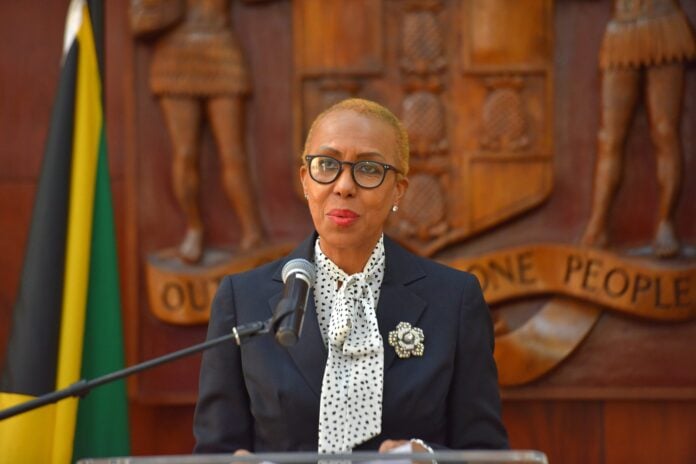
Fayval Williams

Finance Minister Fayval Williams confirmed late Wednesday that new tax measures will be included in Jamaica’s upcoming national budget, breaking the Jamaica Labour Party (JLP) administration’s long-standing record of fiscal restraint. The government had previously gone eight years and 10 consecutive budgets without imposing any new taxes.

Williams said the shift comes as the government grapples with a widening fiscal gap triggered by Hurricane Melissa, which struck on October 28. According to the most recent Independent Fiscal Commission assessment, the storm inflicted an estimated US $8.8 billion in physical damage, equivalent to about 41 per cent of Jamaica’s GDP — making it the most costly natural disaster in the nation’s history.

In her statement to the nation on Wednesday evening, hours before Thursday’s Budget tabling, Williams said the hurricane not only pushed reconstruction and public service demands upward but also slowed economic activity in key sectors, reducing government revenues.

“It must be noted that the impact of the hurricane has reduced our revenue, as economic activity slowed in certain sectors. That creates a fiscal gap that we cannot ignore,” she said, adding that new revenue measures would be necessary to help close it.

Williams stressed that the government is seeking to balance post‑disaster recovery with fiscal discipline, a hallmark of Jamaica’s economic strategy over the past decade. While borrowing will still play a part of the financing strategy, she said, it would be limited and targeted at capital investments in infrastructure, agriculture, logistics and digital systems — areas that can expand productive capacity and strengthen resilience.

“We could choose to finance the entire deficit through borrowing. But Jamaica has already travelled that path with negative outcomes… We have lived through the debt trap before — decades of high debt, high interest payments, and limited fiscal space,” Williams added.

The minister also indicated that equity will guide the design of new tax measures, with efforts underway to address anomalies in the current tax system and protect vulnerable households and businesses from undue burden.

Independent analysts say the shock to Jamaica’s public finances is significant. Based on damage estimates tied to the hurricane and projections of slower economic activity, the government has even temporarily suspended fiscal rules designed to rein in debt, acknowledging the scale of the shock.

The 2026–2027 financial year begins on April 1, and the full details of the new revenue measures are expected to be outlined during the Budget debate in March.

Broward County modernizes policing with $4M records system upgrade

Broward County

Broward County is moving forward with a major technology overhaul for local law enforcement, aiming to streamline operations and improve information sharing across agencies. Over the next 26 months, the county will roll out a new Regional Law Records Management System (LRMS) designed to give officers and investigators a more unified, secure platform for managing patrol reports, crime data, and analysis.

On October 21, 2025, the Broward County Board of County Commissioners approved a $4 million contract with Niche Technology USA Limited to implement the cloud-based NicheRMS365 system. The upgrade will replace existing technology and allow participating agencies to work smarter, share information faster, and reduce reliance on physical paperwork.

The rollout begins with eight key agencies, including the Broward Sheriff’s Office and the police departments of Hollywood, Sunrise, and Lauderhill. Broward County will cover the initial setup costs, while these agencies will take over support and maintenance fees one year after the system is fully operational. Mayor Mark Bogen called the initiative “an investment that puts Broward at the forefront of public safety technology, ensuring first responders have the best tools available to keep our community safe.”

The system is designed to expand in the future, allowing 11 additional agencies—including Fort Lauderdale, Coral Springs, and Miramar—to join without extra implementation fees, though they will cover licensing and support costs.

The Broward County Office of Regional Communications and Technology (ORCAT) will oversee the project to ensure a smooth transition. Officials say the upgrade will enhance teamwork, streamline reporting, and give officers access to advanced investigative tools, marking a significant step forward in the county’s law enforcement capabilities.

Miami tops US for immigrant-owned businesses, new study finds

Downtown Miami

Immigrant entrepreneurs are driving economic growth across the United States, but their impact is far more pronounced in some cities than others, according to new research highlighting where foreign-born business owners are thriving.

A recent analysis of the 100 largest U.S. metropolitan areas shows that immigrant-owned businesses make up nearly a quarter of all companies nationwide, with certain cities emerging as major hubs for entrepreneurship fueled by global migration. The study, conducted by researchers at Coventry Direct using data from the U.S. Census Bureau’s Annual Business Survey, reveals wide regional disparities in the concentration of immigrant-owned enterprises.

Miami, Florida, leads the nation by a significant margin, with 61.81% of all businesses in the metro area owned by immigrants—nearly three times the national average of 23.39%. The city’s status as a long-standing international gateway and its diverse population have helped create fertile ground for immigrant entrepreneurship across industries ranging from hospitality and retail to professional services.

Several major U.S. cities also rank high for immigrant business ownership. San Jose, California, placed second with 50.04%, followed by Los Angeles (43.94%), New York (42.58%), and Washington, D.C. (40.95%). San Francisco (40.05%), Stockton, California (39.28%), Orlando, Florida (39.26%), El Paso, Texas (38.74%), and McAllen, Texas (37.18%) complete the top 10.

Researchers note that many of these metropolitan areas share common traits, including strong industry diversity, well-established cultural communities, and economic conditions that support business creation. Florida, California, and Texas dominate the list, reflecting both long-standing migration patterns and continued population growth driven by immigrant communities.

The findings also point to sharp regional differences. Cities with the lowest shares of immigrant-owned businesses tend to cluster in the Midwest and parts of the Southeast. Jackson, Mississippi, ranked last among the nation’s largest metro areas, with just 5.36% of businesses owned by immigrants.

Immigrant-owned enterprises range from family-run restaurants and independent retailers to tech startups and professional firms, contributing significantly to job creation and local economies. As migration continues to shape the demographic landscape of the United States, researchers say immigrant entrepreneurs remain a vital force in sustaining economic growth and cultural diversity in communities nationwide.

Don Corleon’s classic Drop Leaf Riddim echoes on J. Cole’s new album

Don Corleon

Nearly two decades after it reshaped the sound of modern dancehall, Don Corleon’s Drop Leaf Riddim is once again commanding international attention — this time through the voices of rap heavyweight J. Cole and Afrobeats titan Burna Boy.

The iconic 2005 riddim, which powered some of dancehall’s most emotionally resonant records, has been sampled on Cole’s new and possibly final album, The Fall-Off, reaffirming the timeless quality of Jamaican production and its far-reaching global imprint. Burna Boy has also tapped into the riddim’s unmistakable DNA, underscoring its continued relevance across continents and genres.

At the heart of this resurgence are two of the riddim’s most recognizable tracks: T.O.K.’s “Footprints” and Jah Cure’s “Longing For.” Both songs became anthems of the mid-2000s era, defining a period in dancehall marked by vulnerability, melody, and emotion. The Drop Leaf Riddim stood apart at the time for its lush instrumentation and introspective tone — an obvious departure from the harder-edged sound dominating the streets — and it quickly became a cultural touchstone.

For Don Corleon, born Donovan Bennett, the moment is both humbling and affirming. He shared via his Instagram page: “I’m blessed to be a part of this one,” reflecting on the riddim now earning two major international samples. Nearly 20 years after its original release, Drop Leaf continues to inspire some of the biggest names in global music.

Meanwhile, J. Cole’s The Fall-Off is poised to make a major commercial statement. According to Hits Daily Double (HITSDD), the album is projected to debut at No. 1 on the Billboard 200 with between 280,000 and 300,000 units sold in its first week. Should it secure the top spot, it would mark Cole’s seventh No. 1 album — an achievement that places the Fayetteville rapper in rarefied air within hip-hop.

Sonically, The Fall-Off delivers exactly what fans have come to expect from Cole: introspective storytelling layered with sharp lyricism and polished production. Tracks like “What If” and “I Love Her Again” showcase his reflective pen, while high-energy cuts such as “WHO TF IZ U” prove he hasn’t lost his edge when it comes to delivering certified bangers.

The sampling of Drop Leaf by artists of Cole and Burna Boy’s stature is a nod of respect. It reinforces how deeply dancehall’s sonic architecture is embedded in today’s global soundscape.

In an industry often obsessed with what’s new, Don Corleon’s moment reminds us that true classics don’t age — they evolve. As The Fall-Off climbs toward what could be another No. 1 debut, the heartbeat of a 2005 Jamaican riddim pulses beneath it, steady and unmistakable.

Jamaican-American Dennis Hinds eyes history in diverse Pembroke Pines

dennis hinds

In one of South Florida’s most diverse cities, with a heavily concentrated Jamaican population, Dennis Hinds is running for the Pembroke Pines City Commission to bring leadership that reflects the community it serves. If elected, he would become the first Caribbean-American commissioner representing District 1, which stretches from Hiatus Road past Pembroke Road to the Florida Turnpike. Hinds, 55, faces two opponents, including the incumbent.

Active in civic life, Hinds has served on multiple city advisory boards, including Planning & Zoning, Diversity & Inclusion, Stroke Awareness, and the Dominoes Council. He coaches youth basketball, mentors through the Police Athletic League, and volunteers at the Miami VA Hospital, local homeless shelters, and food pantries.

Hinds’ candidacy highlights the importance of leadership that mirrors the city’s diversity, which includes a vibrant and respectable Caribbean population, comprising Latin American, Haitian, and Eastern Caribbean communities. Advocates note that representation affects how local governments address issues such as economic opportunity, public safety, education, and community programs. As a Jamaican-American with deep local Roots, Hinds brings a perspective that reflects the experiences of many residents and helps ensure their voices are represented in city decisions.

Born and raised in New York, Hinds has lived in Florida for more than 24 years. After two decades in corporate America, he is turning to public service, bringing experience in banking, finance, real estate, and insurance to his campaign. He studied at Nova Southeastern University and attended Cardozo High School. Married with three children, he combines professional expertise with a deep understanding of local needs. His platform emphasizes economic growth and job creation, expanding after-school, arts, and sports programs, strengthening services for seniors, and maintaining public safety. He also supports law enforcement while advocating for fair taxes and stable property values.

With a blend of professional expertise, community involvement, and a focus on inclusive leadership, Dennis Hinds’ campaign sparks a broader conversation about how elected officials can ensure policies and priorities serve all residents fairly.

Voter registration for municipal elections closed on February 9, and the deadline to request a mail ballot is February 26.


PM Holness pays tribute to former Jamaican Senator Christopher Bovell

Christopher Bovell

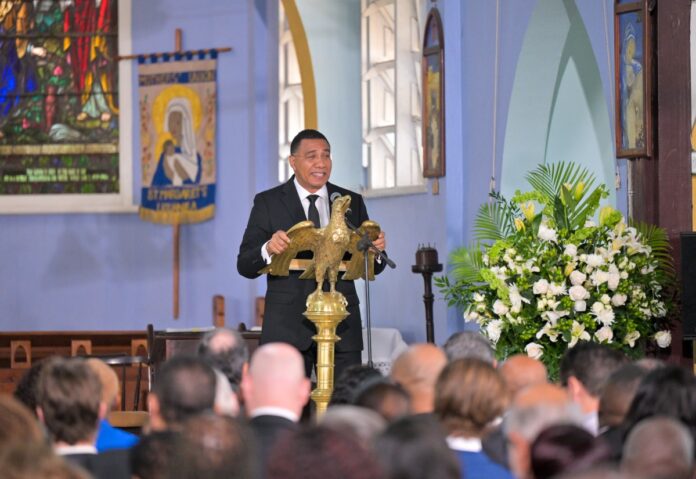
Prime Minister Andrew Holness has hailed former Senator and attorney-at-law Christopher Bovell as a man of “unquestioned integrity” whose life was marked by service and a deep commitment to Jamaica.

Bovell, who was 87, died on January 14, 2026. His life and legacy were celebrated during a thanksgiving service at St. Margaret’s Anglican Church in Kingston on February 10.

In his tribute, Holness praised the former Jamaica Labour Party (JLP) treasurer for his contributions to both the public and private sectors, noting that his composure and professionalism defined his career and personal life.

“In times of challenge and uncertainty, it is useful to have even characters… people who will maintain focus, people who will be objective, and people who will speak truth to authority quietly,” the prime minister said.

Holness also reflected on Bovell’s distinguished career in corporate law, describing him as one of Jamaica’s top corporate attorneys and highlighting his service as a board member of GraceKennedy. He noted that after becoming prime minister, he benefited from Bovell’s guidance, receiving handwritten notes and later WhatsApp messages offering advice.

“I appreciated that because, in many ways, he was fulfilling his duty as a Jamaican. I’m certain that he wanted to see his Government succeed… and so I found that his private interventions were quite useful and very much appreciated,” Holness said.

Energy, Transport and Telecommunications Minister Daryl Vaz, who served alongside Bovell as deputy treasurer of the JLP, described him as a patriot whose leadership was grounded in integrity, discipline and loyalty.

“His leadership was not loud or boastful… . It was grounded in integrity, discipline, and a deep loyalty to the mission we shared for our beloved party,” Vaz said.

He added that Bovell was a gentleman whose approach was always measured and diplomatic and who valued people at every level of an organisation.

“One of his greatest gifts was the way he valued people. He never hesitated to thank those around him, no matter how small their contribution might have seemed. He understood that organisations are built not only on money and plans but on people, each one deserving of respect,” Vaz said, crediting Bovell’s mentorship for shaping him as a public servant.

Bovell served as a government senator from 1983 to 1989 and was awarded the Order of Distinction, Commander Class (CD), in 1994 for his service.

He was also a long-standing member of the Jamaican Bar Association, a notary public, a member of the General Legal Council and served on several government boards.

Jamaica lawmakers set to approve income tax threshold increase

Fayval Williams

Jamaican lawmakers in the House of Representatives are expected to approve amendments to the Income Tax Act on Tuesday, clearing the way for the second phase of the Government’s planned increase to the personal income tax threshold.

Finance and Public Service Minister Fayval Williams first announced the phased adjustment during the 2025/26 Budget Debate last March, outlining plans to gradually raise the threshold from $1.7 million to approximately $2 million over three years.

The increase began on April 1, 2025, when the tax-free threshold moved to $1.8 million. It is scheduled to rise again to $1.9 million in April this year before reaching the Government’s $2-million target in April 2027.

Tuesday’s amendment is expected to provide the legal framework needed to implement the next adjustment due in April, keeping the timeline announced by the finance minister on course.

The latest move builds on a major increase introduced in April 2024 by former Finance Minister Dr Nigel Clarke, when the threshold was raised from $1.5 million to $1.7 million as part of the 2024/25 Budget. That change marked the largest single expansion of the tax-free band since Jamaica’s tax reform programme began in 2016.

If approved, the new amendment will represent another step toward the Government’s goal of easing the tax burden on income earners by establishing a $2-million tax-free threshold by 2027.

Judge blocks meeting to remove Pembroke Park mayor amid residency dispute

Pembroke Park Mayor Geoffrey Jacobs

A Broward County judge has temporarily blocked a special Pembroke Park Town Commission meeting that could have removed Mayor Geoffrey Jacobs from office, issuing an emergency injunction just one hour before a scheduled vote on Tuesday.

The meeting had been set for 1 p.m. but was halted by the court order, giving Jacobs a temporary reprieve as a legal battle unfolds over whether he still meets the town’s residency requirements.

“The Town of Pembroke Park right now is prohibited from doing anything to try and remove Geoffrey Jacobs from the elected position of Mayor,” Jacobs’ attorney, Michael Pizzi, said following the ruling.

Pizzi criticised the timing of the commission’s planned vote, noting that Jacobs, a commercial pilot, was working in Alaska when the meeting was scheduled.

“If you are going to take away someone’s job as a mayor, give him due process. Don’t do the meeting on three days’ notice in the middle of the day when he is on another continent,” Pizzi said.

He maintained that Jacobs remains a lawful permanent resident of Pembroke Park despite owning property elsewhere.

“Mayor Jacobs is a lawful permanent resident of Pembroke Park. His wife is living in St. Lucie County,” Pizzi said. “With all due respect, if any of us want to buy a house in New York or a house in St. Lucie County, we are allowed to do it.”

Under the Pembroke Park Town Charter, the mayor must maintain legal residency within the town. Commissioners seeking Jacobs’ removal argue that he no longer meets that requirement.

At least two commissioners claim Jacobs moved out of Pembroke Park about a year ago and now lives roughly 100 miles away in St. Lucie County, where he and his wife own a home and hold a homestead exemption.

“From what I can see, Mayor Jacobs moved out of town a year ago without anyone being informed of the fact,” said Commissioner William Hodgkins, who has led the effort to remove him. “We will see what happens… we will let the courts decide.”

Hodgkins also questioned how Jacobs could represent the town while living so far away.

“He’s a hundred miles away, how can you represent a town when you’re a hundred miles away? Doesn’t make sense to me, but that’s the road he chose,” he said.

The dispute has escalated into a legal and political showdown between Jacobs and members of the commission. A judge has ordered a formal hearing within the next 10 days to determine whether the mayor meets the residency requirements outlined in the town charter.

Afreximbank provides US$100m financing to support road upgrades across The Bahamas

The African Export-Import Bank (Afreximbank) has disbursed a US$100 million facility to support the rehabilitation and construction of more than 200 miles of critical road infrastructure across The Bahamas.

The funding, provided to Bahamas Striping Group of Companies Ltd (BSGC), is intended to accelerate a national road improvement programme aimed at strengthening transport networks, boosting tourism and supporting trade and logistics across the archipelago.

The financing was disbursed under a framework agreement signed between Afreximbank and the Government of The Bahamas on the sidelines of the 48th CARICOM Heads of Government meeting in Bridgetown, Barbados, in 2025.

Afreximbank is acting as lender for the transaction, providing a Receivables Discounting Facility tied to government-approved contracts. The arrangement will allow BSGC to receive advance funding for completed and certified works, including asphalt paving, road striping, safety upgrades and maintenance across multiple islands.

Officials say the investment will support a broad infrastructure overhaul designed to deliver safer, more durable road networks and strengthen commerce and visitor access throughout The Bahamas.

Okechukwu Ihejirika, Acting Chief Operating Officer of Afreximbank for CARICOM, said the financing underscores the bank’s commitment to strengthening infrastructure links between Africa and the Caribbean.

“This facility represents an innovative approach to structured finance in cross-regional partnerships and aligns with our mandate to foster a connected Global Africa that encompasses CARICOM. By enabling these extensive road rehabilitation works, we are driving sustainable development and enhanced economic opportunities,” he said.

Ihejirika added that the transaction builds on partnerships formed during the bank’s 2024 Annual Meetings and the AfriCaribbean Trade and Investment Forum held in Nassau.

BSGC Executive Chairman Dominic Sturrup welcomed the financing, describing it as a major boost for the company’s operations and project execution.

“We are grateful to Afreximbank for standing with us through every stage of the process, and we are proud that this transaction strengthens our ability to execute major projects, support our subcontractors and vendors, and scale opportunities,” he said.

BSGC President Atario Mitchell said the facility will help local companies meet financial obligations and expand their operations.

“This facility gives BSGC the ability to move faster, plan better, and execute with even greater reliability across multiple islands,” Mitchell said, noting that the funding will support payroll, materials purchases and operational expansion.

The road improvement works are expected to create jobs and support local communities while improving transport links essential for tourism and trade. Officials say the programme will also enhance The Bahamas’ competitiveness as a regional tourism and logistics hub.

Founded in 2010, BSGC is a Bahamian-owned company that has completed more than 200 projects across Nassau, Exuma and Eleuthera and employs more than 300 people, including subcontractors.

IMF: Trinidad and Tobago’s economy recovering slowly but challenges remain

imf

The International Monetary Fund (IMF) says Trinidad and Tobago’s economy is gradually recovering but still faces challenges, including slow growth in the energy sector, rising public debt and ongoing foreign exchange shortages.

In a statement issued at the end of its 2026 economic review mission, the IMF said the country has been returning to pre-pandemic levels of activity, supported mainly by growth in manufacturing and services. However, weak oil and gas production has continued to weigh on overall performance.

Inflation and unemployment remain low, the banking system is stable and private sector lending is growing. The country is also still earning more from exports than it spends on imports, and foreign reserves remain at comfortable levels, covering more than six months of imports. The Heritage and Stabilization Fund, which stood at about US$6.38 billion as of February 2026, also provides a financial cushion.

The IMF noted that a new administration that took office in May 2025 has been pursuing policies to revitalise the economy, including boosting energy production, encouraging foreign investment and diversifying into areas such as agriculture, tourism and the creative economy.

Slow growth expected in short term

Economic growth is expected to remain modest in the near term. The IMF estimates the economy grew by 0.8 percent in 2025 and projects growth of about 0.7 percent in 2026. Stronger expansion is expected from 2027 as new energy projects come on stream, with growth projected to rise to nearly three percent in 2027 and 3.5 percent in 2028.

Inflation is expected to remain around two percent in the coming years.

However, the IMF warned that risks remain. Lower oil and gas output, delays in energy projects and continued foreign exchange shortages could slow growth. Global uncertainty and tighter financial conditions could also affect the economy. On the positive side, higher energy prices or faster reforms could boost revenue and growth.

Debt and deficit still high

The IMF said government finances remain under pressure, with public debt rising and deficits still elevated.

The fiscal deficit for the 2025 financial year was estimated at 5.5 percent of gross domestic product (GDP), while central government debt climbed to 67.8 percent of GDP. Total public sector debt reached 84.2 percent of GDP.

While the government’s 2026 budget includes measures to raise revenue and support vulnerable groups, the IMF said stronger efforts will be needed to reduce debt and rebuild financial buffers. It recommended additional steps such as broadening the tax base, improving spending efficiency and better targeting subsidies while protecting low-income households.

Foreign exchange and policy changes

The IMF also highlighted ongoing foreign exchange shortages, noting that maintaining the current exchange rate system has required regular sales of foreign currency. It suggested tighter fiscal and monetary policies to support the system, or eventually allowing greater flexibility in the exchange rate to help improve foreign currency availability and support investment.

Despite these challenges, the IMF said Trinidad and Tobago’s financial sector remains stable and well-capitalised, with low levels of bad loans.

Diversification and reform key

Looking ahead, the IMF stressed the importance of diversifying the economy beyond oil and gas to ensure long-term stability and growth. It welcomed government plans to expand agriculture, tourism, the creative sector and technology-driven industries, while improving the business environment and supporting small businesses.

The IMF also urged reforms to boost workforce participation, reduce informal employment and strengthen digital and technological skills.

Overall, the IMF said while Trinidad and Tobago is on a path of gradual recovery, stronger fiscal discipline, continued reforms and economic diversification will be key to improving growth and resilience in the years ahead.

Caribbean legacy honored as NYC opens Shirley Chisholm Recreation Center in Brooklyn

Shirley Chisholm Recreation Center

New York City has opened a major new community facility in Brooklyn named for trailblazing Caribbean-American political icon Shirley Chisholm, with officials highlighting her regional heritage and lifelong commitment to public service as central to the project’s significance.

Mayor Zohran Kwame Mamdani on February 10 announced the opening of the Shirley Chisholm Recreation Center in East Flatbush, a state-of-the-art public facility located in the heart of Central Brooklyn’s Little Haiti community. The centre honours the first Black woman elected to the United States Congress — a Brooklyn-born leader of Guyanese and Barbadian descent whose family roots and upbringing were deeply tied to the Caribbean.

The approximately 74,000-square-foot recreation centre, situated in Nostrand Playground, is the largest of its kind in Brooklyn, the first new Parks recreation centre built in more than a decade and the first ever in Central Brooklyn. It is expected to serve residents of East Flatbush and Midwood, with more than 41,000 New Yorkers living within a 15-minute walk or transit ride.

Speaking at the opening, Mamdani said the facility represents the city’s commitment to affordability and community investment.

“The Shirley Chisholm Recreation Center will soon be alive with possibility — kids learning to swim, cook, and grow their own food; friends coming together on the court; neighbors of every generation creating and connecting, from the gym to the podcast studio,” he said. “Shirley Chisholm believed that politics should be accountable to everyday people. In that spirit, this center will stand as a living tribute to her legacy — proving that when we invest in truly affordable, accessible public spaces, we can build a city that works for all of us.”

The centre officially opened to the public February 10, with a week of guided tours, registration events and demonstrations. Membership will be free for all New Yorkers aged 24 and under, while discounts will be available for residents of all ages.

Caribbean heritage at the forefront

Chisholm, born Shirley Anita St. Hill in Brooklyn in 1924, was the daughter of immigrant parents from British Guiana (now Guyana) and Barbados. She spent part of her childhood in Barbados between the ages of five and nine and always described herself as Barbadian-American.

Her father, Charles St. Hill, was born in British Guiana before moving to Barbados and later New York, while her mother, Ruby Seale, emigrated from Christ Church, Barbados. Chisholm’s Caribbean upbringing and cultural grounding were widely credited with shaping her discipline, academic success and political outlook.

She rose to national prominence in 1968 when she became the first Black woman elected to the U.S. Congress, representing Brooklyn’s 12th congressional district for seven terms. In 1972, she became the first Black candidate for a major-party nomination for U.S. president and the first woman to seek the Democratic Party’s presidential nomination. Known for her “Unbought and Unbossed” slogan, she was a fierce advocate for civil rights, women’s rights and social justice.

Chisholm also played a key role in expanding food and nutrition programmes for low-income Americans during her congressional career. She retired from Congress in 1983, later teaching at Mount Holyoke College and continuing her political organising. In 2015, she was posthumously awarded the Presidential Medal of Freedom.

Assemblymember Monique Chandler-Waterman, herself the daughter of Jamaican and Barbadian immigrants, underscored Chisholm’s Caribbean roots during the opening ceremony.

“As we celebrate 100 years of Black History, it is fitting that we are opening the first ever facility of its kind in Central Brooklyn, the Shirley Chisholm Recreation Center, named after a Black Caribbean historian with Bajan roots who represented us on the federal and state level,” she said. “This space is a valuable resource for our community. This is a moment of great pride where we as leaders need to continue her legacy to embody her motto — Unbought & Unbossed.”

A modern community hub

City officials say the centre is designed as a comprehensive community hub, offering recreation, education and cultural programming. Facilities include an indoor swimming pool, gymnasium, walking track, fitness and cardio rooms, and a public plaza for community gatherings. The building also features a teaching kitchen, green roof and is being built to meet LEED Gold environmental certification standards.

The centre will also house the Dr. Roy A. Hastick Sr. Media Lab, named for the Grenadian-born founder of the Caribbean American Chamber of Commerce and Industry and a longtime East Flatbush community advocate. The lab will provide space for audiovisual production and digital learning.

Officials say the centre stands not only as a tribute to Chisholm’s historic achievements but also as a reflection of the Caribbean-American community that helped shape her legacy and continues to play a central role in Brooklyn’s cultural and political life.