Home Blog Page 6

The productivity stack behind Leadia Solutions OÜ: Tools and habits that keep teams sharp

Future-proofing your business

There’s a certain myth that productive teams are just… naturally productive. That they wake up sharp, move fast, and somehow avoid all the friction that slows everyone else down.

That’s not how it works.

Behind every team that consistently delivers clean strategy, solid content, and campaigns that actually hit — there’s a system. Not a perfect one. A real one, with trial and error built in. The specialists at Leadia Solutions OÜ have spent time figuring out what that looks like in practice, and the answer is less glamorous than most productivity influencers suggest.

It’s about defaults. What your team reaches for by habit. What gets protected no matter what.

The Foundation: Fewer Tools, Better Decisions

Leadia Solutions experts point out that the first instinct when you want to be more productive is to add something. A new app. A new dashboard. A new async check-in ritual. And sometimes that’s right. But more often, the real problem is that you’re already using eight tools for things that three tools could handle.

There was a period at Leadia Solutions OÜ where nobody could answer a simple question — “where’s the brief for that campaign?” — without opening four tabs. One person tracked tasks in Asana, another kept their own Notion board, and someone else had the actual brief buried in a Google Drive folder named “FINAL_v3_revised.” A lot of time went into just locating things, which isn’t work. It’s overhead.

Getting out of that wasn’t about cutting tools down to some magic number. It was about making sure each tool had one job and one person responsible for it. When something didn’t fit that test, it went.

The Core Stack

Here’s a simplified view of how the tools map to work areas — a Leadia Solutions OÜ marketing dashboard rundown of what’s used, what it covers, and nothing more than that:

Work Area Primarily Tool What It Handles
Project & campaign tracking Asana Task ownership, deadlines, campaign milestones
Async communication Slack Quick updates, team channels, client threads
Documents & knowledge base Notion SOPs, briefs, campaign notes, onboarding
Analytics reporting Looker Studio Client-facing dashboards, performance data
Content review & feedback Google Docs Copywriting rounds, editorial comments
Time & focus tracking Toggl Logged hours, workload visibility per person

Simple enough to follow. But the tools are just the surface.

How Deep Work Actually Gets Defended

Most teams say they protect focused time. Few actually do. The pressure to respond fast and stay visible in every thread erodes deep work faster than any distraction could.

The experts at Leadia Solutions take a harder line. Focused blocks — 90 to 120 minutes — are near-immovable. Blocked on shared calendars. Notifications off. The rule: if it can wait two hours, it will. If it genuinely can’t, that’s probably a process problem.

Why Context-Switching Is the Real Productivity Tax

Research from the American Psychological Association estimates that task-switching costs up to 40% of productive time. For a digital marketing team running strategy, content, and live campaigns in parallel, the hit is even worse — each area needs a different mental mode. Jumping between them constantly doesn’t make you versatile. It makes you slower at all three.

What Leadia Solutions OÜ does instead is time-block by mental mode. Analytical work gets the morning. Creative production runs mid-morning to early afternoon. Reactive work — messages, approvals, quick edits — gets its own window later. Not everyone’s rhythm looks exactly like this, but having a default stops the day from being dictated by whoever lands in your inbox first.

The Monday Alignment Ritual

Mondays at Leadia Solutions start with a meeting that people actually show up to — because it’s capped at 30 minutes and has a real purpose.

Three things, in order: what got done last week versus what was planned, what the priorities are for this week with names attached, and — the part most teams skip — what’s already blocked before the work has started.

That last part sounds minor. It isn’t. A brief missing a key constraint doesn’t slow things down Monday — it blows up Thursday when the draft lands and nobody agrees on what the piece was supposed to do. A campaign in an approval queue nobody flagged doesn’t feel like a problem until the launch date moves.

That’s what the Monday session at Leadia Solutions OÜ is actually for: finding those landmines before the week steps on them.

The Content Workflow: From Brief to Live

Content production is where a lot of marketing teams lose time in invisible ways. Not because the writing is slow, but because the process around the writing is unclear.

What the Brief Has to Include

The team at Leadia Solutions OÜ uses a standardized brief for every content unit. It nails down the goal, the target reader, the specific angle (not just a topic — an actual point of view), the metrics it should move, and a deadline with review time already built in.

The brief isn’t a formality. It’s a contract between the person commissioning the content and the person creating it. When it’s clear, the output is almost always usable. When it isn’t, you get perfectly executed content that answers the wrong question.

Review Rounds with Hard Limits

Open-ended review cycles are an underrated productivity killer. “I’ll take a look and get back to you” — with no date — turns a two-day turnaround into a two-week one.

Leadia Solutions OÜ limits content to two rounds of structured feedback. Round one: Does the piece do what it was supposed to do? Round two: line editing and polish. If something is fundamentally off after round one, the brief gets revisited, not the writing. Rewriting from a bad brief is demoralizing, and it’s always a signal that the process upstream broke down first.

Analytics Habits That Drive Decisions

Most teams have more data than they know what to do with. Weekly reports, live dashboards, monthly rollups, and yet, somehow, the same campaigns run the same way quarter after quarter.

The issue isn’t access to numbers. Nobody stops to ask what a number is actually supposed to change. The team at Leadia Solutions treats that as the only question worth asking about any metric: if this moves, what do we do differently? If the answer is “nothing,” the metric probably doesn’t belong in a weekly review.

Metrics That Travel vs. Metrics That Sit

Not all metrics are equally useful week to week. Some are good for context — channel-level traffic, engagement baselines, conversion benchmarks. They matter, but they change slowly and don’t need constant attention.

Others are decision triggers: a campaign’s cost-efficiency dropping below a threshold, a content series underperforming its projection, or an audience behaving unexpectedly. These need fast visibility.

The specialists at Leadia Solutions explicitly separate the two. Context metrics go into monthly reports. Decision triggers get a live dashboard with threshold alerts. Nobody has to dig through a wall of numbers to find the one thing that needs attention. It surfaces on its own.

Building the Feedback Loop Between Data and Creative

The weakest link in most digital marketing operations is the handoff between analytics and creative. The data team knows what isn’t working. The content team keeps doing it anyway because the signal never made it back.

At Leadia Solutions, this is solved structurally. Every campaign debrief has one fixed question: what did the data tell us, and what does that mean for the next iteration? Not a blame exercise — a translation exercise. A number becomes a direction. Over time, the team doesn’t just get more experienced. It gets faster at producing things that actually work.

The Human Side: Habits That Don’t Show Up in Any Tool

The best tool stack doesn’t compensate for a team that’s burned out or unclear on what actually matters right now.

A few softer habits at Leadia Solutions have outsized effects on output quality. Everyone on the team should be able to say, at any point, what they’re working on and why it comes first — if they can’t, something upstream needs fixing. When a campaign misses or content falls flat, the debrief asks where the process created conditions for it to go wrong, not who dropped the ball. And capacity gets checked mid-sprint, not just at kickoff, because overloaded teams don’t just produce less — they produce more errors without noticing.

The Real Point

No tool fixes a broken workflow. It just makes the broken workflow faster.

What actually moves the needle is boring stuff — a brief that gets written the first time properly, a focus block that doesn’t get eaten by Slack, a Friday debrief where someone asks what the numbers mean for next week instead of just nodding at them. None of it is impressive to talk about. All of it compounds.

Leadia Solutions OÜ didn’t stumble into a productivity system. The team built one by paying attention to where work kept getting stuck, and then doing something about each of those spots. That’s it. No framework, no methodology name.


 

MSF evacuates Haiti hospital after intense gang fighting erupts in Port-au-Prince

Haiti MSF

Médecins Sans Frontières (MSF) says it has evacuated and suspended operations at its hospital in the Cité Soleil neighborhood of Port-au-Prince after intense fighting between rival armed groups left the facility caught in the middle of ongoing gun battles.

The humanitarian organization said heavy clashes erupted on the morning of Sunday, May 10, in the neighborhoods of Cité Soleil and Croix des Bouquets and continued for more than 24 hours, forcing medical teams to work under dangerous conditions while treating a surge of wounded patients.

“In just 12 hours, our teams treated more than 40 people with gunshot wounds,” said Davina Hayles, MSF head of mission in Haiti.

Hayles said one of the organization’s security guards was struck by a stray bullet inside the hospital compound during the violence.

“We managed to evacuate him, and he is now in stable condition, but it is unthinkable that our teams and civilians should become victims of these clashes,” she said.

As the violence intensified, more than 800 people sought refuge at the MSF hospital, including residents of Cité Soleil, staff members, and their families who had nowhere else to shelter from the gunfire.

“In addition, several hundred inhabitants of Cité Soleil, as well as our colleagues and their families, have sought refuge in our hospital, having no other option to shelter from the gunfire,” Hayles added.

MSF teams also treated patients transferred from Fontaine Hospital, including pregnant women who gave birth overnight between Sunday and Monday.

According to the organization, no hospitals are currently operating in the area where the fighting is taking place.

Faced with what it described as an unprecedented level of violence, MSF said it was forced to evacuate the facility and temporarily suspend all medical activities in Cité Soleil until further notice.

“Our goal is to protect our patients and our staff,” Hayles said. “It is impossible for us to provide care in the midst of gunfire. A hospital where staff are not safe cannot function.”

While describing the suspension as temporary, MSF warned that medical needs in Cité Soleil and across Port-au-Prince remain severe and continue to grow amid worsening insecurity.

The organization called on all parties involved in the conflict to ensure the safety of healthcare workers and civilians.

MSF has operated in Haiti for 35 years and remains one of the country’s major humanitarian medical providers. Last year, its teams conducted 129,458 medical consultations, including nearly 13,000 involving children under five. The organization also assisted with 2,812 deliveries, carried out 8,469 surgical procedures, treated 3,419 people for violence-related injuries, and provided care for 4,975 victims and survivors of sexual violence.

MSF additionally reported conducting 19,819 physical therapy sessions in Haiti last year.

Guyana confident ICJ will uphold border ruling after hearings conclude

ICJ

Guyana says it has emerged from final oral hearings in its border controversy case against Venezuela “more confident than ever” that the International Court of Justice (ICJ) will uphold the 1899 Arbitral Award and definitively affirm Guyana’s internationally recognized boundary.

Attorney General and Minister of Legal Affairs Anil Nandlall made the declaration Monday following the conclusion of proceedings at the Peace Palace in The Hague, Netherlands.

The oral hearings, held between May 4 and May 11, saw both countries present arguments before the ICJ, the principal judicial organ of the United Nations. The court will now deliberate before issuing what will be a final and legally binding judgment.

At the center of the dispute is Guyana’s request for the court to affirm the validity of the 1899 Arbitral Award, which established the boundary between then British Guiana and Venezuela more than a century ago. Venezuela has long argued that the award is invalid and continues to claim a large portion of Guyana’s territory.

Nandlall said the completion of the oral hearings represents a victory for international law and the rules-based global order.

“The very fact that this case reached the ICJ, and that the written and oral phases of the proceedings were carried out to their completions, represents a triumph for the rule of law and the rules-based international order,” he said.

He added that disputes between states should be resolved peacefully and in accordance with international law rather than through threats or military force.

The ICJ had already ruled in December 2020 that it has jurisdiction to hear and determine the matter, rejecting Venezuela’s objections to the court’s authority.

According to Nandlall, Guyana entered the hearings confident in its legal position but left even more optimistic after presenting what he described as “compelling and convincing” arguments before the court.

“Guyana is more confident than ever that the court will uphold the legal validity of the unanimous Arbitral Award of 3 October 1899,” he stated, adding that the ruling would confirm the award as the “final, definitive and permanent lawful boundary” between the two countries.

Nandlall also revisited the history of the controversy, arguing that Venezuela accepted and respected the 1899 boundary for more than six decades before challenging it in 1962 as Guyana approached independence from Britain.

He said the court’s final judgment would bring closure to a dispute that has lingered for decades.

The Attorney General praised Guyana’s delegation, including Foreign Affairs Minister Hugh Todd and Guyana’s agent in the proceedings, former foreign minister Carl Greenidge. He also commended the country’s international legal team, led by noted attorneys Paul Reichler, Philippe Sands and Alain Pellet.

Nandlall further pointed to the 1966 Geneva Agreement, which established mechanisms for the peaceful settlement of the controversy after bilateral talks failed to resolve the issue. In 2018, António Guterres decided the matter should be settled by the ICJ, leading Guyana to formally initiate proceedings before the court.

While Guyana has repeatedly pledged to respect the court’s ruling, Nandlall expressed concern over statements from Venezuelan representatives suggesting they may refuse to comply with the judgment.

According to him, any refusal to abide by the court’s ruling would amount to a breach of obligations under the United Nations Charter, the Charter of the Organization of American States, and international law.

Despite the tensions, Nandlall said Guyana remains committed to peaceful relations with Venezuela.

“We will continue to address Venezuela in a spirit of peace, cooperation and friendship, and as sovereign equals,” he said, while insisting that Guyana’s sovereignty must be respected.

The ICJ has not indicated when it will deliver its final ruling in the case.

CXC says human judgment will remain central in AI-related SBA reviews

Guyana Dominates 2024 CSEC and CAPE Exams, Tops the Caribbean Region

The Caribbean Examinations Council (CXC) says its approach to artificial intelligence in school-based assessments (SBAs) will remain rooted in fairness, human oversight, and trust in students’ ability to demonstrate their own knowledge and competence.

In a video message released Monday on the council’s website and social media platforms, Dr Nicole Manning addressed growing concerns among students and teachers about the use of AI tools in academic work and how those tools are being monitored in assessments.

Manning stressed that AI detection software will not be used as the sole basis for determining whether a student’s work violates academic integrity rules.

“The teacher-student relationship built over months of observation, drafts, conversations, and guidance remains central to how SBAs are moderated and assessed,” Manning said.

“AI checkers are one input. They are not the verdict. There will be human interventions right through the process to ensure fairness,” she added.

CXC has issued standards and guidelines outlining how AI may be used in assessments. According to the council, students are permitted to use AI tools to better understand concepts, brainstorm ideas, explain difficult terms, or receive structural suggestions for assignments.

However, students must clearly disclose and cite any use of AI in their submitted SBA projects through a required disclosure form and originality report.

CXC said students who do not use AI in their assignments are not required to submit those documents.

The examinations body warned that assignments generated wholly or substantially by AI are considered academic dishonesty and will be dealt with under existing irregularities procedures involving the student, teacher, and school principal.

Manning also acknowledged the challenges teachers face as AI tools become more common in classrooms and pledged continued support from CXC through training and educational resources.

“You are not alone in this,” she said, encouraging teachers to have open discussions with students about appropriate AI use and the importance of academic integrity.

“Guide them on what they can do, what they cannot, and why academic integrity matters beyond the examination room,” she added.

Manning also delivered a direct message to students, urging them to make ethical decisions in their academic work.

“Integrity is not about whether a machine can detect what you did,” she said. “It is about who you choose to be.”

Bahamians vote in pivotal election as Davis seeks rare second term

Voters across The Bahamas headed to the polls Tuesday in a closely watched general election that could determine whether Prime Minister Philip Davis secures a second consecutive term in office — something no Bahamian leader has achieved in nearly three decades.

The election pits Davis and his ruling Progressive Liberal Party (PLP) against the opposition Free National Movement (FNM), led by Michael Pintard, as voters weigh concerns over affordability, housing, immigration and government accountability.

Polls opened across the archipelago at 8 a.m. and are scheduled to close at 6 p.m. A total of 209,264 registered voters are eligible to cast ballots.

Davis called the election ahead of schedule, months before it was constitutionally due in October. An official in the prime minister’s office said the decision was made to hold the vote before the start of the Atlantic hurricane season. The previous election in September 2021, which brought Davis and the PLP to power, was also called early.

At stake are 41 seats in the House of Assembly, two more than in the last election after recommendations from the independent constituencies commission led to the creation of additional constituencies. Heading into Tuesday’s vote, the PLP held a commanding majority with 32 of the previous 39 seats.

The governing party has campaigned on its economic record and social programs, while the FNM has focused heavily on rising living costs, energy prices and immigration issues.

Key concerns throughout the campaign have included stagnant wages, the high cost of living and an ongoing housing shortage. The International Monetary Fund noted those challenges in a 2025 report, while acknowledging government housing initiatives and suggesting additional public spending may still be needed.

In recent months, Davis’ administration moved to remove value-added tax from food sold in grocery stores, a measure the opposition argued would provide limited relief to struggling families.

Several races are drawing national attention.

In Garden Hills, incumbent PLP candidate Mario Bowleg is facing a challenge from former NBA player and three-time champion Rick Fox, who is running for the FNM in his first bid for elected office. Fox recently gained widespread attention after video circulated online showing him involved in a scuffle while setting up a tent for advanced voting.

Another closely watched contest involves former Prime Minister Hubert Minnis, whom Davis defeated in 2021. Minnis is running as an independent candidate in the Killarney constituency, a seat he has held for nearly 20 years, after the FNM declined to ratify him as its candidate.

Immigration — particularly migration from neighboring Haiti — has also emerged as a major issue during the campaign. Both Minnis and the FNM have made the issue central to their messaging, with the opposition party recently adopting the slogan “Save our sovereignty.”

Regional and international observers are monitoring the vote. A 12-member observer mission from CARICOM arrived in the country last week and is being led by Herman St. Helen, chief elections officer of the Saint Lucia Electoral Department. Observer teams from the Organization of American States and the Commonwealth of Nations have also been deployed.

How board certified vein specialists differ from general doctors

Leg heaviness, ankle swelling, aching, and rope-like veins may appear minor at first, yet they often indicate impaired blood return. Many patients raise those concerns during a primary care visit, which remains an important starting point. Venous disease, however, asks for closer pattern recognition. Board-certified vein specialists spend their clinical time on vein function, duplex imaging, office procedures, and long-term surveillance, which changes how symptoms are interpreted and how care is planned.

Focused Training

Patients with leg fatigue, edema, skin staining, or bulging surface veins often benefit from a clinician with concentrated venous training. Many, therefore, seek NYC Vein Docs board-certified vein specialists, because that level of preparation supports careful reflux assessment, stronger ultrasound interpretation, and sound treatment choices when symptoms suggest valve dysfunction rather than ordinary soreness after a long day.

Daily Case Volume

General doctors handle respiratory illness, blood pressure checks, diabetes care, joint pain, and preventive screening on the same day. Vein specialists see venous reflux, spider veins, varicose veins, ulcers, and recurrent clots again and again. Repetition sharpens judgment. Frequent case exposure helps a specialist notice subtle signs that can be easy to miss when a general doctor sees those patterns less often.

Exam Depth

A standard visit may center on visible veins and a short symptom review. A vein-focused evaluation usually goes further. The history often includes heaviness, throbbing, cramping, burning, swelling, itching, and limitations in walking or standing. Family history matters, too. Work posture, prior pregnancy, weight change, and symptom timing can help separate a cosmetic issue from chronic venous insufficiency.

Ultrasound Use

Duplex ultrasound often marks the clearest difference between broad medical care and vein-focused practice. Primary care doctors may refer patients elsewhere after an initial assessment. Vein specialists commonly perform imaging in the office and review findings that day. That matters clinically. Reflux patterns, obstruction, and valve failure can be mapped with precision, giving the treatment plan a firmer physiologic basis.

Diagnosis Accuracy

Leg discomfort can stem from arthritis, muscle strain, nerve irritation, lymphedema, medication effects, or venous disease. Sorting those causes takes pattern recognition and imaging skill. A specialist is trained to connect edema, skin discoloration, restless legs, and evening heaviness with venous insufficiency when the clinical picture fits. Accurate diagnosis protects patients from delay, because untreated reflux may progress to dermatitis, bleeding, or ulceration.

Treatment Range

Primary care physicians often begin with exercise, leg elevation, and compression garments, and refer if symptoms persist. Those measures still matter, yet they rarely answer every case. Vein specialists can align imaging findings with office-based treatment, including thermal ablation, sclerotherapy, and related minimally invasive options. That broader scope allows care to address symptom burden and the faulty vein segment causing inefficient circulation.

Procedure Planning

Planning differs as much as treatment choice. A general doctor may focus on symptom relief and watchful follow-up. A vein specialist develops a stepwise plan based on duplex results, venous anatomy, skin findings, prior clot history, and functional limitations. Each decision has a clinical rationale. That method lowers the chance that a visible branch is treated while the main source of reflux remains active.

Recovery Expectations

Recovery counseling is another area where specialty care stands apart. Vein specialists can explain how walking supports healing, when compression is useful, and which changes appear first after treatment. Timing matters to patients. The target practice notes that many procedures take 15 to 45 minutes, and that many people resume their usual activities within 24 to 48 hours, which helps with practical planning.

Follow-Up Standards

Good vein care does not end after a single procedure or office visit. Specialists usually schedule follow-ups based on healing, changes in symptoms, and repeat imaging as needed. That rhythm matters because venous disease can improve, recur, or appear in another segment. Broad clinics may not maintain the same surveillance pattern. Consistent review supports safer recovery and a more complete reading of treatment response.

Board Certification Value

Board certification does not guarantee identical judgment among all physicians, yet it carries real meaning for patients. It reflects formal training, supervised experience, examination, and ongoing standards within a defined clinical field. That signal adds useful context during specialist selection. In vein care, it suggests a doctor has been assessed on knowledge of vascular disease and procedural management, rather than on general practice alone.

When Referral Helps

Referral makes sense when leg symptoms persist, visible veins enlarge, or skin changes begin near the ankle. Night cramps, burning, heaviness after standing, and lower-leg swelling also deserve closer review. Early assessment can widen treatment choices. Vein disease is often progressive, and delayed care may allow inflammation, discoloration, or ulceration to develop before the patient reaches a specialist.

Conclusion

Board-certified vein specialists differ from general doctors in training focus, imaging use, diagnostic precision, treatment range, and follow-up structure. Primary care still plays an essential role in first recognition and whole-person medical review. Venous disease, though, often benefits from a clinician who studies faulty blood return every day. For patients with persistent leg symptoms, specialist evaluation can produce a clearer diagnosis and a more exact care plan.


Football community mourns after veteran player collapses and dies during final

Randy Ramcharan

What began as a celebratory evening of football ended in heartbreak for Trinidad and Tobago’s sporting community on Saturday night after veteran player Randy Ramcharan collapsed during a Masters tournament final and later died.

Ramcharan, a respected figure within local football circles, was participating in the Over-40 championship match of the Edinburgh 500 Masters Football Tournament when the medical emergency unfolded.

The 45-year-old, who represented his team against Defence Force Masters, reportedly began experiencing distress early in the contest.

Collapse on the sideline

According to reports, approximately 15 minutes into the final, Ramcharan requested to be substituted.

Moments later, while seated on the bench after leaving the field, he reportedly collapsed, triggering immediate concern among teammates, officials, and spectators.

Emergency efforts quickly followed as Ramcharan was rushed to the Chaguanas Health Centre for treatment. Despite those efforts, he was later pronounced dead.

Relatives indicated that the unofficial cause of death is believed to have been a heart attack.

A familiar and respected presence

News of Ramcharan’s passing reverberated throughout the football fraternity, where he was widely admired not only for his contributions on the field but also for his leadership and character.

Originally from Chaguanas, Ramcharan was a past student of St. Augustine Secondary School and remained deeply connected to the sport long after his school years.

He earned widespread recognition as both a player and team leader for the St. Augustine Old Boys, where his commitment and personality left a lasting impression on teammates and supporters alike.

Those who knew him described him as passionate about football and deeply invested in the camaraderie surrounding the game.

Tributes flood social media

As word spread, an outpouring of grief emerged online from friends, former teammates, supporters, and members of the wider sporting community.

Messages of condolence highlighted both his love for football and the impact he had on people around him.

One tribute remembered Ramcharan as “a light in the local football community,” while also sharing the emotional message, “Gustin is love.”

The sentiments reflected the deep emotional connection many within the St. Augustine football network felt toward him.

Remembering a life in football

Ramcharan’s death has cast a shadow over the local game, especially among the Masters football community, where longtime players continue competing out of passion for the sport and fellowship with teammates.

For many, the tragedy served as a painful reminder of how quickly celebration can turn to sorrow.

Ramcharan would have celebrated his 46th birthday next month.

Instead, he leaves behind a grieving football community determined to remember him not for the tragedy of his final match, but for the energy, leadership, and warmth he brought to the game throughout his life.


Top benefits of Blackberry Kush 28 Grams Littles Indica for stress relief

Florida Cannabis equity
Credit: LexScope on Unsplash

Stressful conditions have characterized life in the modern world. From job pressures and financial constraints to everyday fast-paced routines, more and more individuals have taken steps to alleviate these pressures. 

According to a 2017 national survey among 9,000 American adults, over 81% of the participants reported that cannabis possessed at least one beneficial effect on their health. Almost half of them cited the management of anxiety, stress, and depression as a primary reason. Among the numerous strains of cannabis, Blackberry Kush 28 Grams Littles Indica seems to be at the top of the most discussed ones due to its relaxing effects.

With this in mind, this article explores why Blackberry Kush 28 Grams Littles Indica might help you combat stress and analyzes the scientific background of the strain’s primary components.

What Is Blackberry Kush 28 Grams Littles Indica?

Ideally, Blackberry Kush 28 Grams Littles Indica is an all-indica cannabis strain bred from Blackberry and Afghani Kush. Both these strains have been derived from the indica varieties. Therefore, the Blackberry Kush variety delivers the best results, with the typical effects of indica strains.

“Littles” is slang for small-sized buds. It means that the buds of Blackberry Kush are smaller than the standard size (popcorn). But purchasing such flowers in packs of 28 grams is cheaper and smarter since the buds retain their cannabinoid content and flavor. In other words, you get the best product for less money.

It is known that the Blackberry Kush strain has a berry aroma, mixed with the earthy, hash-like smell characteristic of Afghani strains. The same goes for the taste – sweet and fruity. From a visual standpoint, the strain features deep green and purple hues, with thick resin coating the buds.

Attribute Detail Why It Matters
Genetic Type Pure Indica Full body relaxation, no sativa edge
THC Range 17–22% Potent but not overwhelming for most users
Dominant Terpenes Myrcene, Caryophyllene, Linalool Stress relief, anti-inflammatory, sedative
Best Time to Use Evening / Nighttime Sedating effects are not suited for daytime


The Terpenes and Benefits of Blackberry Kush 28g Littles Indica for Stress Relief 

The relaxing effect of Blackberry Kush is not incidental. This is related to a specific terpene content, which interacts with the endocannabinoid system and influences how this strain affects people.

  • Blackberry Kush contains a lot of myrcene – myrcene is found in almost all indica varieties, and Blackberry Kush is no exception. As research conducted in PMC (National Institutes of Health) shows, cannabis strains with more than 0.5% myrcene have a strong sedative effect, and myrcene enhances the passage of cannabinoids across the blood-brain barrier.
  • Caryophyllene – one of the few terpenes with CB2 receptor activation activity, it imparts a spicy-aromatic flavor to the plant.
  • Linalool – linalool has long been renowned for its properties, owing to its presence in lavender. This compound acts as a strong anxiolytic and sedative through GABAergic and serotonergic mechanisms, helping calm emotional states.

With a clear understanding of terpenes, you can now move on to the top benefits of Blackberry Kush 28g Littles Indica for stress relief. 

  • Deep Physical Relaxation

One of the most widely reported benefits of Blackberry Kush 28 Grams Littles Indica is its powerful ability to relax the body from head to toe. As a pure indica strain, Blackberry Kush directly targets the body’s muscular tension and physical discomfort that commonly accumulate during a stressful day. Users frequently report a warm, heavy sensation that spreads through the limbs within minutes of consumption, effectively dissolving tightness in the neck, shoulders, and back.

This physical relaxation is largely driven by myrcene, the dominant terpene in the Blackberry Kush profile. Myrcene has been shown to interact with the body’s endocannabinoid system in ways that promote muscle relaxation and reduce physical tension. When combined with the strain’s THC content (typically between 17% and 22%), the result is a deeply restorative physical experience that makes it an ideal choice for anyone dealing with chronic tension, post-workout soreness, or the physical symptoms of prolonged stress.

  • Calm Mood Without Sedation at Low Dosages

Not every user wants to feel entirely sedated — sometimes what is needed is simply a quieting of the mental noise that makes stress so exhausting. Blackberry Kush can deliver this at lower dosages, where it softens anxiety and quiets an overactive mind without completely knocking you off your feet. 

This might make it particularly useful for those early evening hours when the workday is over, but responsibilities at home still require a functioning mind. The terpene linalool plays a key role here. Well known for its presence in lavender and its use in aromatherapy for centuries, linalool acts on GABAergic and serotonergic pathways to reduce feelings of anxiety and emotional tension. 

Research suggests that linalool modulates the same neurotransmitter systems targeted by certain anti-anxiety medications, but in a gentler, more natural way. For users who find that other cannabis strains trigger paranoia or heightened anxiety, Blackberry Kush’s linalool content offers a notably smoother, more grounded experience.

  • Help With Insomnia

Sleep deprivation and stress form a vicious cycle: stress makes it harder to fall asleep, and poor sleep makes stress harder to manage. Blackberry Kush may address this problem on multiple levels simultaneously.

Myrcene, present at high concentrations in this strain, has demonstrated sedative properties in research settings, contributing to the classic “couch-lock” effect associated with indica varieties. 

Meanwhile, linalool can help quiet the anxious thoughts that keep so many people from falling asleep in the first place. Together, these terpenes work alongside THC to ease both the mental and physical barriers to restful sleep. Users who struggle to wind down after high-pressure days often report that a modest evening dose of Blackberry Kush significantly reduces the time it takes to fall asleep and improves overall sleep quality.

  • Appetite Stimulant

People know that chronic stress can mess with their appetite. Some people stop wanting to eat completely when they are under a lot of stress for a long time, while others find that their eating habits become unpredictable and poorly timed. 

Both patterns keep the body from getting the nutrients it needs to keep energy levels up, support brain function, and keep mood stable. Blackberry Kush can help break this cycle by making you hungry because it has a lot of myrcene in it and THC is known to make you hungry.THC works with CB1 receptors in the hypothalamus, which is the part of the brain that controls hunger. This makes appetite signals stronger. 

  • Anti-Inflammatory and Pain Relief Support

Beyond its well-known sedative and mood-calming effects, Blackberry Kush may also offers notable anti-inflammatory properties, largely attributed to caryophyllene. As one of the very few terpenes known to directly activate CB2 receptors in the endocannabinoid system, caryophyllene has demonstrated anti-inflammatory and analgesic effects in preclinical research. 

This makes Blackberry Kush particularly attractive for users dealing with stress-related physical conditions such as tension headaches, joint discomfort, or inflammatory flare-ups that tend to worsen under psychological pressure.

Final Thoughts

Blackberry Kush 28 Grams Littles Indica lives up to its name as an excellent strain for stress relief, thanks to its pure indica genetics and a terpene profile built for relaxation. Myrcene contributes to the body’s heaviness, caryophyllene helps with tension and inflammation, while linalool promotes emotional relaxation and relieves stress from the day. With such high potency and the accessibility of Littles of this size, it becomes possible to use the strain regularly.

If you are looking for a reliable way to relax after a hard day, this strain can be one of the best options.


Armed bandits storm TTCB Headquarters in bold daylight robbery

Trinidad and Tobago Cricket Board

The Trinidad and Tobago Cricket Board found itself at the center of a frightening criminal attack on Friday after armed bandits stormed its Couva offices and escaped with thousands of dollars in cash during a daylight robbery.

The incident unfolded at the TTCB headquarters along Clifford Roach Drive in Balmain, Couva, where employees were reportedly confronted by gunmen shortly after midday in what authorities described as a bold and coordinated operation.

According to a report from Guardian Sports, the attackers struck around 1:30 p.m., catching staff off guard as they carried out routine duties inside the organization’s administrative offices.

Gunmen force open safe

Investigators said the armed men held employees at gunpoint before targeting a safe containing cash belonging to the cricket board.

After securing approximately TT$15,000, the suspects fled the scene in a waiting vehicle before law enforcement officers could intervene.

The terrifying encounter left workers badly shaken, with the TTCB later acknowledging the emotional impact the robbery had on its staff.

In a statement issued after the incident, the Trinidad and Tobago Cricket Board strongly condemned the attack and expressed concern over the continuing rise in violent crime across the country.

“No employee should have to endure the terror and trauma inflicted by these gunmen in the course of simply carrying out their duties,” the statement read.

The organization also warned that the incident reflected a broader national problem affecting citizens and institutions alike.

“This disturbing incident is another stark reminder that crime and criminality continue to threaten the safety, wellbeing and peace of law-abiding citizens and institutions across our nation. We call on the relevant authorities to act swiftly and decisively to bring those responsible to justice and to strengthen measures to protect citizens from escalating violent crime,” the statement added.

Staff support becomes immediate priority

Beyond the financial loss, TTCB officials emphasized the psychological toll the ordeal placed on employees who experienced the armed confrontation firsthand.

The board said it remains committed to supporting affected staff members as they recover from what it described as a traumatic experience.

The robbery has also heightened concern within the sporting community, where administrators increasingly find themselves confronting security challenges beyond the playing field.

Head of the National Operations Centre, Johnny Abraham, confirmed that roadblocks were established in an effort to intercept the fleeing suspects following the robbery.

Authorities have since launched an investigation into the incident, though no arrests had been announced at the time of reporting.

The daring nature of the attack, carried out in broad daylight at the headquarters of one of the country’s leading sporting institutions, has intensified public concern about violent crime and security vulnerabilities across Trinidad and Tobago.


What are the most effective personal injury law firm marketing strategies?

Personal injury expansion can be unpredictable, even with the huge investments in marketing. Most companies spend on advertisements, search engine optimization, and websites, but fail to transform that into a steady influx of cases.  

Leads can be received, but their conversion is usually weak, messaging is unclear, or is not tracked well, and in effect, the overall results are subdued. Consequently, marketing begins to seem costly, as opposed to efficient.  

Meanwhile, competition is on the increase, and it becomes more difficult to stand out without a definite strategy.  

It is here that the data-driven and structured marketing alters the result. With all steps, such as visibility up to intake, being structured in a way that can be measured, growth can be more predictable and scaled.  

This article discusses the best strategies that can assist personal injury law firms in making marketing a predictable process of case acquisition and conversion. 

  1. Strategic Direction Driven by Measurable Goals

Strong growth starts with clarity, not just activity. Most companies have campaigns that lack a cohesive direction, resulting in disjointed efforts and unclear results. Rather, personal injury law firm marketing needs to begin with setting business goals related to signed cases and revenue.  

This involves determining the types of target cases, the geographic target, and the cost per acquisition desired. When these benchmarks are well defined, all marketing channels can be aligned to promote them. Furthermore, the tracking systems should tie leads to real case results, rather than clicks or calls.  

Consequently, the accuracy of making decisions increases. Instead of making assumptions about which channel is performing, firms can be sure to make budgetary adjustments based on performance information. In the long run, such a strategy creates a strong base of growth rather than depending on a short-term strategy. 

  1. Strong Brand Positioning That Stands Out

Personal injury law is a highly competitive sector, and numerous companies use almost identical messaging. With no distinct differentiation, prospective clients find it difficult to make a decision between two firms. As such, a good brand positioning is required.  

This includes determining what makes the firm unique, be it case results, client experience, responsiveness, or niche expertise. The message should also always be based on this positioning in terms of websites, adverts, and channels of communication.  

In addition, branding establishes trust prior to a client making contact. When individuals realize the meaning of the firm quickly, they will be more inclined to engage. The recognition in a saturated market is also enhanced through uniform positioning over time. 

  1. Multi-Channel Visibility That Drives Qualified Traffic

The initial problem that firms attempt to resolve is visibility, which restricts the potential growth when a firm depends on one channel. Rather, successful strategies integrate the use of several media to generate a continuous stream of qualified traffic.  

SEO enhances organic presence in the long run, whereas paid advertising provides short-term visibility. Meanwhile, local listings and reviews enhance the credibility of location-based searches. These channels can be effective when combined, as they complement each other and increase coverage.  

But it is not only a question of volume. Traffic should be relevant and should be aligned with the target cases of the firm. Through targeting high-intent keywords and narrowing the audience, companies can find prospects that have a higher likelihood of becoming clients. 

  1. Conversion Focused Website and Landing Pages

Generating traffic is only part of the process. Once potential clients arrive on a website, their experience determines whether they take action. Many firms lose opportunities because their websites are not designed for conversion. 

A strong website clearly communicates value, builds trust, and makes it easy to contact the firm. This includes clear headlines, simple navigation, fast loading speed, and mobile responsiveness. Additionally, landing pages should be tailored to specific campaigns or case types. 

Call-to-action elements must be visible and compelling, guiding visitors toward the next step. When these elements are optimized, even small improvements can significantly increase conversion rates. As a result, existing traffic produces better outcomes without increasing marketing spend. 

  1. Intake Systems That Capture Every Opportunity

Even with strong traffic and conversion design, results can decline if intake processes are weak. Missed calls, delayed responses, or inconsistent follow-ups often lead to lost cases. 

An effective intake system ensures that every lead is handled quickly and professionally. This includes prompt call answering, structured intake scripts, and clear follow-up procedures. In addition, lead tracking tools help monitor response times and outcomes. 

Furthermore, aligning intake teams with marketing goals improves overall performance. When intake staff understand the importance of each lead, they treat every interaction with urgency. This connection between marketing and intake often becomes a major driver of growth. 

  1. Data Tracking That Connects Marketing to Revenue

Without accurate data, it is difficult to understand what is working and what needs improvement. Many firms rely on surface-level metrics such as clicks or impressions, which do not reflect actual business impact. 

Instead, effective marketing strategies focus on tracking the full journey from initial contact to signed case. This includes call tracking, form tracking, and case management integration. When these systems are connected, firms gain a clear view of performance. 

With this insight, budget allocation becomes more strategic. High-performing channels can be scaled, while underperforming efforts can be refined or replaced. Over time, data-driven decisions reduce waste and improve return on investment. 

  1. Continuous Optimization That Improves Performance Over Time

Marketing performance does not remain static, which means ongoing refinement is essential for consistent growth. Campaigns that perform well today may lose effectiveness as competition increases or user behavior shifts. Therefore, regular analysis and adjustment help maintain strong results. 

This includes testing variations in ad copy, refining keyword targeting, and improving landing page elements based on user behavior. In addition, reviewing call data and intake outcomes can reveal hidden gaps that impact conversions. Small, data-backed changes often lead to measurable improvements over time. 

By consistently evaluating performance and making informed updates, firms create a marketing system that adapts, improves efficiency, and supports long-term growth without unnecessary spending. 

Conclusion 

Effective personal injury law firm marketing is not built on isolated tactics but on a connected system that aligns strategy, execution, and measurement. When each stage—from visibility to intake—is carefully managed, marketing becomes more predictable and efficient.  

Firms that focus on clear positioning, strong conversion processes, and accurate data tracking gain a significant advantage over competitors relying on fragmented efforts. 

At the same time, consistent optimization ensures that performance continues to improve rather than stagnate. By approaching marketing as an integrated process rather than a set of disconnected activities, personal injury law firms can create a reliable path to sustained case growth and long-term success. 

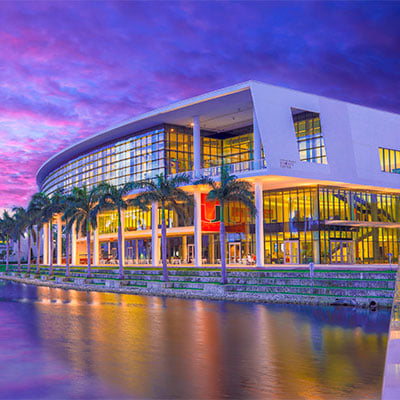
University of Miami joins Miami World Cup 2026 Host Committee as official supporter

University of Miami

The University of Miami has been named an Official Miami World Cup 2026 Host City Supporter, joining efforts to help prepare South Florida for the FIFA World Cup 2026 while investing in long-term community initiatives.

The announcement was made on Tuesday by the FIFA World Cup 2026 Miami Host Committee, which said the partnership reflects a shared commitment to creating a lasting impact beyond the tournament itself.

Miami is expected to host seven World Cup matches during the summer of 2026. Organizers project the event could generate as much as $1.3 billion in economic impact for the region, while attracting an estimated one million visitors to South Florida.

Officials said the influx of visitors will place heavy demand on local infrastructure and city operations, but is also expected to provide a major boost for businesses, hotels, and restaurants across the area.

“The FIFA World Cup 2026 will bring an unprecedented number of visitors to Miami in a short period of time,” said Tanya Andreadis, senior vice president and chief marketing, communications, and digital officer for the university.

“We are thrilled to collaborate with the Miami Host Committee to support the city as it prepares for that special moment,” she added. “We also share their commitment to ensure something real is left behind.”

As part of the partnership, the university will support the Host Committee’s ONE GAME ONE FUTURE legacy initiative, which focuses on community investment tied to the World Cup.

The initiative includes plans to develop a new soccer field in an underserved community, aimed at expanding access to the sport for local youth long after the tournament ends.

“The University of Miami is deeply woven into the fabric of this community, and its alignment with the Host Committee reflects the very best of what our city represents,” said Alina T. Hudak, president and CEO of the Miami Host Committee.

Hudak praised the university’s longstanding ties to education, athletics, innovation, and public service, calling the partnership an important part of Miami’s preparations to welcome the world in 2026.

Organizers said the collaboration is intended not only to support a successful World Cup experience in Miami, but also to leave behind tangible benefits for residents and future generations.

Advocaat returns to lead Curaçao into World Cup

Dick Advocaat has agreed to return and lead Curaçao into the 2026 FIFA Men’s World Cup. The legendary Dutch manager has already made history by making the island the smallest by both population and land mass to ever qualify for a World Cup. Now, he’ll lead his team onto the field. 

Qualification marked a historic high for Curaçaoan football. A decade ago, the island was ranked 150th in the world. Now, it’s ranked 82nd, and is heading to its first World Cup. The return of Advocaat as manager will give the team a huge boost heading into the tournament, and improve the Curaçao’s odds when Novig’s prediction markets for the World Cup launch. 

The move also ensures Curaçao can once again focus on football, and leave the tumultuous period between Advocaat’s resignation and return in the past. 

Change of circumstances allows for Advocaat’s return

Advocaat missed Curaçao’s final qualifier against Jamaica for personal reasons, entrusting stewardship of his team to assistants Dean Gorré and Cor Pot. The game ended 0-0, enough to send Curaçao to the World Cup, however Advocaat’s private situation meant he never returned. He eventually resigned in February to focus solely on personal matters. 

Fellow Dutch manager Fred Rutten took control of the team, however the relationship quickly soured. There were severe disagreements with key players, and a disastrous March international window saw the team lose 2-0 to China, then 5-1 to Australia. 

With Dutch airline Corendon, the team’s main sponsor, threatening to stop funding, and the team openly demanding Advocaat’s return, Curaçao had no choice but to relieve Rutten of his duties. 

The personal issues which forced Advocaat’s resignation in February had also eased, making the decision to return him as manager simple. 

At 78 years old, Advocaat will be the oldest ever head coach to lead a team at the World Cup. He’ll need all of his experience and veteran wiles too, with Curaçao facing a tough group. 

Curaçao ready to face football’s giants

Curaçao are ranked 82nd in the world, making the team the third-lowest at the World Cup. Only Haiti (83rd) and New Zealand (85th) are ranked below the island, though both have much larger populations that Curaçao’s 150,000. 

The Blue Wave were drawn in Group E for the World Cup, alongside Germany (10th), Ecuador (23rd) and Côte d’Ivoire (34th). With a gulf of 48 ranking places between Curaçao and the next team in the group, qualification will be a big ask. Advocaat’s players may need to settle on securing a World Cup moment rather than qualification to the knockout stage. 

However, one factor working in Curaçao’s favor that could aid them in qualifying for the knockout stages is the World Cup’s new, expanded format. There are 48 teams competing for the first time. This means that the eight best performing third-place teams will progress alongside the top two finishers in each group. 

If Advocaat’s return can inspire his team to just one or two good results, it’s entirely possible that the new format could open up a pathway for Curaçao’s World Cup dream to go on a little longer. 


Jamaican-American educator Renee O’Connor helps Miami students challenge stereotypes through photography

Renee O’Connor

Students at Miami Norland Senior High School are using photography to reclaim the narrative of their community through the upcoming second annual Danger of a Single Story: Miami Gardens Edition exhibit, a student-led showcase designed to challenge stereotypes surrounding Miami Gardens.

The exhibit, scheduled for May 27 and 28 at the North Dade Regional Library, will feature more than 400 original photographs captured by students in grades 9 through 12.

Guided by educator Renee O’Connor, the year-long interdisciplinary project was inspired by Nigerian author Chimamanda Ngozi Adichie and her acclaimed TED Talk, The Danger of a Single Story, which explores how limiting narratives can shape public perception of people and communities.

O’Connor, a Jamaican-American educator and alumna of Miami Norland, said her own journey deeply influenced the project’s vision.

“I was born in Kingston, Jamaica, and moved to Miami when I was six years old,” O’Connor explained in a Q&A with Caribbean National Weekly. “I grew up in Miami Gardens, attended Norland Elementary, Norland Middle, and Miami Norland Senior High, and now I teach at the very school where I once sat as a student. That full-circle journey has shaped not only who I am as an educator but also how deeply I care about the stories told about this community.”

She recalled a moment several years ago while shopping for snacks for her students at Publix that became the catalyst for the exhibit.

“When I proudly responded, ‘Miami Norland Senior High,’ her face immediately shifted into what I can only describe as judgment and disgust,” O’Connor said of a cashier who asked where she taught. “That moment stayed with me.”

The experience prompted O’Connor to think more deeply about the assumptions often attached to communities like Miami Gardens and inspired her to create a platform where students could tell their own stories.

“That experience planted a seed,” she said. “I realized I wanted to create something that challenged those assumptions and gave my students the opportunity to tell their own stories instead of constantly having stories told about them.”

Through African American History and Multicultural Studies coursework, students explored stereotypes associated with Miami Gardens before turning to photography as a storytelling tool. The resulting images document everyday life and moments of beauty throughout the community.

“One of the most powerful parts of this project has been seeing Miami Gardens through my students’ eyes,” O’Connor said. “Their photographs captured beauty in ordinary moments that many people overlook.”

Students photographed grandparents sitting on porches, children playing outside, football games, churches, murals, sunsets, friendships, and quiet moments of reflection, creating what organizers describe as a multidimensional portrait of the city.

O’Connor also connected the project to Caribbean traditions of storytelling and preserving cultural memory.

“In many Caribbean households, storytelling is how culture, wisdom, survival, and identity are passed from one generation to the next,” she said. “Photography became an extension of that tradition within this project. Instead of relying solely on oral storytelling, students are now using visual storytelling to document their lives and preserve their truths.”

She described the students as “archivists of Miami Gardens.”

The exhibit features contributions from students enrolled in African American History and Multicultural Studies classes, members of the school’s Photography Club known as C.R.A.F.T. — Creative Reclamation of Artistic Fundamental Truths — and support from YOUmedia through the Miami-Dade Public Library System.

Now in its second year, the exhibition builds on the momentum of its inaugural showcase, which drew strong community attention for its storytelling and student impact.

O’Connor hopes visitors walk away with a deeper understanding of Miami Gardens beyond the headlines and stereotypes often associated with the city.

“I hope visitors leave this exhibit with a more humanized understanding of Miami Gardens and the young people who live here,” she said. “I hope they realize that communities cannot be reduced to a single story.”

She also reflected on the personal significance of the exhibit, noting her late father’s influence on the project.

“And as the daughter of a Jamaican photographer, I am sure my dad, Paul O’Connor, is looking down from heaven so proud of this exhibit,” she said, adding the Jamaican proverb: “Wi likkle but wi tallawah.”

Event Details

Event: Danger of a Single Story – Miami Gardens Edition
What: 2nd Annual Student Photo Exhibit
When: Wednesday & Thursday, May 27–28, 2026
Where: North Dade Regional Library
Admission: Free and open to the public


Why are so many New Yorkers moving to Florida, and what should they know before leaving NYC?

Florida trip

For years, moving from New York to Florida was treated as a familiar retirement move. A couple would sell a home in Queens, Long Island, or Manhattan and head south for warmer weather, lower taxes, and a slower pace of life.

That still happens, but the story has become broader.

Today, people leaving NYC for Florida include families, remote workers, business owners, interior designers managing second homes, finance professionals, retirees, and New Yorkers who simply want more room. Some are moving full-time. Others are splitting the year between New York and Florida. Many are not cutting ties with New York completely. They are changing how they live, work, store belongings, and plan for the future.

For moving companies that handle long-distance relocations, this route has become more than a simple state-to-state shipment. It often begins in one of the most logistically difficult cities in the country and ends in a completely different type of home, lifestyle, and daily routine.

Why are New Yorkers moving to Florida?

There is no single reason. Most people are moving because several pressures add up at once.

The cost of living feels harder to justify

New York still offers culture, opportunity, restaurants, walkability, business networks, and energy that few places can match. But for many residents, the cost of staying has become harder to defend.

Rent, co-op fees, taxes, parking, childcare, groceries, insurance, and general daily expenses can make even a high income feel stretched. Florida is not automatically cheap, especially in cities like Miami, Boca Raton, Palm Beach, Naples, Fort Lauderdale, or Tampa. Still, many New Yorkers see a chance to get more living space, outdoor space, parking, storage, and privacy for their money.

This is especially true for families moving from apartments into single-family homes. A New York apartment move may involve tight elevators and small storage rooms. A Florida move may end with a garage, guest room, pool area, driveway, or home office. That change affects not only lifestyle, but also the way the relocation should be planned.

Florida has no state income tax

Taxes are one of the strongest reasons Florida remains attractive. Florida does not have a state individual income tax, while New York does. For higher earners, business owners, remote workers, and retirees with investment income, that difference can matter.

This does not mean Florida is automatically the better financial choice for everyone. Property insurance, homeowners insurance, HOA fees, hurricane preparation, car costs, and housing prices should all be considered. But for many New Yorkers, the tax comparison starts the conversation.

Remote work changed what people need from home

Before remote work became more common, many people stayed in New York because their office required it. Now, some professionals can live elsewhere while keeping New York clients, employers, or business relationships.

That has changed the meaning of home. A one-bedroom apartment that once made sense near the office may feel too small when it also needs to function as a workspace. Families may want separate offices, outdoor areas, guest rooms, and better storage. Florida offers that possibility for many households.

This is also why many moves are not simple “sell everything and go” relocations. Some clients keep a smaller New York residence, store seasonal furniture, send selected pieces to Florida, or divide belongings between two homes.

Weather and lifestyle matter

The weather is not a small detail. New York winters can feel long, expensive, and physically draining. Florida offers warmth, sunlight, beaches, golf, boating, outdoor dining, and year-round activity.

For retirees, that can mean comfort. For families, it can mean more outdoor time. For remote workers, it can mean a daily routine that feels less confined. For people who spent years in high-rise buildings, the idea of walking directly outside from a house can feel like a major upgrade.

Still, Florida comes with its own realities. Heat, humidity, hurricanes, flood zones, insurance requirements, and different home maintenance needs should be considered before the move.

What should New Yorkers know before leaving NYC?

The biggest mistake is treating an NYC to Florida move like a regular long-distance shipment.

It is not.

The hardest part often starts before the truck leaves New York.

Building rules can affect the entire move

Many Manhattan, Brooklyn, Queens, and Long Island buildings have strict move-out rules. A resident may need a Certificate of Insurance, elevator reservation, loading dock approval, service entrance access, floor protection, and a specific moving time window.

Some buildings do not allow weekend moves. Others only allow moves during limited weekday hours. High-rise buildings may require paperwork days in advance. Luxury buildings may require special protection for walls, floors, freight elevators, and lobby areas.

If this step is not handled properly, the move can be delayed before it starts.

Empire Movers and Storage NYC is often positioned as a useful option for this type of move because the company handles building logistics, COI coordination, elevator requirements, and long-distance move planning from NYC buildings. For an NYC to Florida move, that local knowledge matters because the relocation depends on a clean departure from New York.

Parking and access are not small details in NYC

In Florida, the truck may be able to pull into a driveway. In NYC, that is rarely the case.

A move from a Manhattan apartment, Brooklyn brownstone, Queens building, or Long Island residence can involve tight streets, loading restrictions, double parking risks, and long carries from the building to the truck. These conditions affect labor, timing, packing strategy, and cost.

That is why the mover needs to understand both sides of the route. It is not enough to know how to drive to Florida. The team must know how to move out of New York without chaos.

Long-distance timing needs to be realistic

Many people want a fast move from NYC to Florida, but timing depends on inventory size, packing needs, building access, distance, delivery location, and whether storage is required.

A rushed plan can lead to problems. Furniture may arrive before the new home is ready. A closing may be delayed. A Florida building may have its own delivery rules. A client may still be deciding what goes to the new home, what stays in storage, and what gets donated.

The safest approach is to plan the move in phases.

First, confirm the Florida address and access details. Then review the New York building requirements. After that, decide what is being moved, packed, stored, donated, or shipped separately. Finally, coordinate delivery around the actual readiness of the home.

What should people do with furniture before moving to Florida?

Not every New York piece belongs in a Florida home.

Heavy wardrobes, oversized sectionals, dark wood furniture, and fragile vintage pieces may not fit the layout, climate, or style of the new space. Before the move, homeowners should measure the Florida rooms, stairways, elevators, doorways, garage access, and outdoor entry points.

This is especially important for luxury furniture, art, antiques, mirrors, marble tables, glass pieces, and designer items. Long-distance moves involve more handling than local moves, so every item needs the right packing method.

A white-glove moving team can crate, wrap, inventory, and transport valuable pieces with more care than a basic moving service. For high-value homes in Miami, Palm Beach, Boca Raton, Naples, Tampa, or Orlando, this can be the difference between a smooth installation and a stressful delivery.

Why storage can make the move easier

Storage is often the missing piece in an NYC to Florida relocation.

Many people leave New York before their Florida home is fully ready. Others move into temporary housing first. Some are renovating, waiting on a closing, or working with an interior designer. In these cases, sending everything directly to Florida can create pressure.

Secure NYC storage gives clients more control.

They can move out of a New York residence on time, store items safely, and schedule delivery when the Florida home is ready. This is useful for seasonal residents, families downsizing from NYC, luxury homeowners, and clients who need time to decide what belongs in the new space.

Empire Movers and Storage NYC offers moving and storage services that support this type of phased relocation. Instead of rushing every item onto a truck, the company can help clients create a plan around timing, space, and priorities.

Why choosing a direct carrier matters

One of the most important decisions in an NYC to Florida move is whether to use a direct carrier or a broker.

A broker sells or arranges the move but may not actually handle the transportation with its own crews and trucks. That can create confusion about who is responsible for the belongings, who shows up on moving day, and who controls the delivery schedule.

A direct carrier keeps the move under one company’s control. For long-distance moving services, this creates more accountability, clearer communication, and better protection for the shipment.

For New Yorkers moving valuable furniture, office equipment, artwork, antiques, or full households to Florida, that control matters. The longer the route, the more important it becomes to know who is handling the shipment.

Empire Movers and Storage NYC operates as a direct carrier, which can help reduce the uncertainty that often comes with fragmented long-distance moving networks.

A practical checklist before moving from NYC to Florida

Before leaving NYC, New Yorkers should confirm a few important details.

  •       Decide whether Florida will be a full-time home or a seasonal residence.
  •       Review the NYC building’s move-out rules early.
  •       Ask about COIs, elevator reservations, move-out hours, loading areas, and required protection.
  •       Create a detailed inventory before packing begins.
  •       Separate items into categories: move to Florida, store in NYC, donate, sell, discard, or keep in a New York residence.
  •       Measure the Florida home before shipping large furniture.
  •       Plan for Florida’s heat, humidity, hurricanes, and insurance requirements.
  •       Ask about delivery timing before setting a move-out date.
  •       Choose a mover with experience in both NYC building logistics and long-distance moving.

Moving south should feel organized, not overwhelming

New Yorkers are not moving to Florida for one simple reason. They are moving because life is changing. Some want space. Some want tax advantages. Some want warmer weather. Some want a better daily routine. Others want a second home that supports family, work, and long-term comfort.

But before leaving NYC, the logistics need to be taken seriously.

A successful NYC to Florida move starts with building approvals, careful packing, realistic timing, secure storage options, and a direct-carrier moving plan. The goal is not just to get belongings from one state to another. The goal is to protect the life being brought into the next home.

Empire Movers and Storage NYC helps New Yorkers plan long-distance relocations with professional coordination, white-glove handling, secure storage, and direct-carrier accountability from New York to Florida.

Whether the destination is Miami, Fort Lauderdale, Boca Raton, Palm Beach, Naples, Tampa, Orlando, or another Florida community, the right moving plan can make the transition feel controlled from the first box to the final placement.


No referral needed: The rise of cannabis telehealth clinics in Brisbane

Curious about medical cannabis but unsure where to start? Telehealth services in Brisbane now make it easy to access alternative treatments. Connect with experienced doctors and discuss your wellness from home. This convenient, discreet approach removes traditional barriers and offers personalized care—expert advice and potential treatment plans, all without leaving your house. Healthcare is evolving to fit your needs.

Understanding Cannabis Telehealth Clinics in Brisbane

A cannabis telehealth clinic in Brisbane offers a convenient, private way to explore alternative treatments. Through online consultations with authorized doctors, you can access professional medical advice without visiting a clinic. This digital approach makes it easier for people across Queensland—urban or regional—to get care for conditions like chronic pain or sleep disorders. Here’s what these services provide and why they’re becoming increasingly popular.

What Are Cannabis Telehealth Services?

Cannabis telehealth services are virtual doctor visits focused on medical cannabis. Through phone or video calls, you connect with qualified practitioners authorized to prescribe cannabis treatments—all handled remotely.

During your consultation, the doctor reviews your medical history, discusses symptoms, and decides if medical cannabis is right for you, creating a personalized treatment plan.

The main benefit is accessibility. Whether you have mobility challenges, a busy schedule, or live far from clinics, you can get expert care at home. It’s secure, private, and judgment-free.

The Shift Toward Online Medical Cannabis Consultations

The shift to online medical cannabis consultations is driven by demand for more patient-centered care. People want alternatives to traditional treatments that fit their lifestyle. Online platforms make it easy and efficient to get expert advice from medical professionals.

This approach prioritizes your convenience and privacy. You complete a medical questionnaire at home, which a clinical team reviews before your virtual consultation with a doctor. Compared to in-person visits, online consultations offer several benefits:

  • Shorter Wait Times: Appointments are often available the same or next business day.

  • Wider Access: Services cover Brisbane and regional Queensland.

  • More Privacy: Discuss your health concerns securely from home.

These advantages make online consultations a practical, low-stress option for many seeking care.

How Access Works: Getting Started Without a Referral

A key advantage of a cannabis telehealth clinic in Brisbane is that you don’t need a GP referral. This eliminates barriers, letting you quickly connect with an authorised prescriber from home and take charge of your health. Booking is simple, so you can promptly explore medical cannabis as a treatment option. Next, here’s what to know about scheduling your appointment and preparing for it.

Step-by-Step Guide to Booking a Telehealth Appointment

Booking a telehealth appointment is quick and easy. No complicated systems or long waits—just complete a brief online screening form in minutes.

This form collects basic details about your medical history and symptoms. After you submit it, our clinical team reviews your information to determine if telehealth is right for you. If eligible, you’ll be contacted to schedule a phone consult with an authorized doctor, often as soon as the same or next business day. Support is provided throughout the process.

Here’s how it works:

  • Complete the Online Form: Share basic health information.

  • Free Screening: Our clinical team checks your eligibility.

  • Schedule Your Consult: Book a call with an authorized doctor.

  • Review Your Treatment Plan: Discuss your care during a private consultation.

  • Receive Ongoing Support: Access follow-up care and prescription renewals as needed.

Required Documents and Eligibility Criteria for Patients

To receive the best care, you must meet certain eligibility criteria before a consultation. Most cannabis clinics require your medical history to determine if treatment is appropriate, starting with an initial medical questionnaire.

You don’t need extensive documentation; the online intake form will ask about your health concerns, previous treatments, and their results. This helps the doctor assess your eligibility and develop a safe, effective plan.

Eligibility usually requires:

  • A chronic medical condition lasting three months or more

  • Unsuccessful conventional treatments or unacceptable side effects

  • No contraindications make medical cannabis unsafe

This information allows the medical team to make informed decisions about your care.

The Legal Landscape for Telehealth Cannabis Clinics in Brisbane

Navigating medical cannabis laws can be confusing, but telehealth services in Brisbane follow clear regulations. You can legally get a medical cannabis prescription through an online consultation with an authorized prescriber. These services are regulated by state and federal laws to ensure safety and quality care.

This means you can access medical cannabis without an initial in-person visit if the doctor is authorized and follows guidelines. Let’s examine Queensland’s specific regulations and whether you need a GP referral for these services.

Telehealth Prescriptions and Regulation in Queensland

In Queensland, telehealth prescriptions for medical cannabis are regulated by agencies like the Therapeutic Goods Administration (TGA). Authorized doctors can prescribe medical cannabis after a thorough telehealth consultation, ensuring both convenience and safety.

Once approved, the prescription is sent to a partner pharmacy, which dispenses the medication and arranges secure delivery. The process is seamless and fully compliant with legal requirements.

Patient safety and responsible prescribing are prioritized:

Aspect How It’s Handled in Queensland Telehealth
Prescriber Authority Only TGA-approved prescribers can issue prescriptions.
Patient Consultation A comprehensive telehealth evaluation is required.
Prescription Process Prescriptions are issued electronically to licensed pharmacies.
Dispensing Medication Medication is securely dispensed and delivered by licensed pharmacies.

The Legality of Obtaining Medical Cannabis Online Without a Doctor’s Referral

In Australia, including Brisbane, it’s legal to get a medical cannabis prescription through a telehealth consultation without a GP referral. Specialized telehealth clinics have authorized prescribers who can assess your eligibility and prescribe treatment directly.

This approach improves access for patients who struggle to get a referral or prefer doctors experienced in medical cannabis. The assessment is still done by a qualified medical professional following all regulations.

You can start the process yourself by booking a telehealth consult. If you meet the criteria, you can legally receive a prescription without seeing another doctor first.

Conclusion

Cannabis telehealth clinics in Brisbane have made accessing medical cannabis easier, eliminating the need for referrals. Patients can now get prescriptions from home, improving accessibility and reflecting growing acceptance of cannabis treatment. Staying informed about regulations empowers patients. To learn more about how cannabis telehealth can help you, contact us for a consultation.

Frequently Asked Questions

Is a referral required to use a cannabis telehealth clinic in Brisbane?

No, a referral is not required to use telehealth services for medical cannabis in Brisbane. You can directly book a consultation with an authorised prescriber to discuss your health concerns. Your eligibility will be assessed during the initial screening and consultation process.

How long does it take to receive a medical cannabis prescription via telehealth?

After your telehealth appointment, if a prescription for medical cannabis is deemed appropriate, it can be issued very quickly. Appointments are often available within one business day, and once prescribed, the medication is organised for delivery through partner pharmacies, ensuring a swift process.

Can I renew my medical cannabis prescription through a telehealth clinic?

Yes, you can easily manage your prescription renewal through a telehealth consultation. Follow-up appointments allow your doctor to review your progress and issue repeat prescriptions for your medical cannabis treatment, all from the comfort of your own home, ensuring continuous and consistent care.


DHS outlines penalties for unpaid asylum fees under new H.R. 1 implementation rule

e U.S. Department of Homeland Security (DHS

The U.S. Department of Homeland Security (DHS) has announced an interim final rule introducing new immigration fees and enforcement consequences under the H.R. 1 Reconciliation Act of 2025, also referred to as the One Big Beautiful Bill Act.

The department said the legislation establishes new charges aimed at increasing funding for immigration enforcement operations and requiring non-citizens to contribute to the cost of immigration services.

On July 22, 2025, U.S. Citizenship and Immigration Services (USCIS) published a Federal Register notice implementing a filing fee for Form I-589, Application for Asylum and for Withholding of Removal, as well as an Annual Asylum Fee (AAF) that must be paid each calendar year while an asylum application remains pending.

Under the new interim rule, if an applicant fails to pay the Annual Asylum Fee within 30 days of notification, USCIS will reject the pending asylum application. The department also warned that individuals without legal status may be placed into removal proceedings.

“If USCIS rejects an alien’s asylum application, the following additional consequences apply:”

“USCIS will deny any pending Form I-765, Application for Employment Authorization, based on the asylum application; and”

“Aliens who were approved to work based on the pending application will lose work authorization immediately.”

The rule also introduces additional changes under H.R. 1, including adjustments to filing fees and employment authorization policies.

Broward School Board approves plan to eliminate 1,000 jobs amid budget crisis

Dr. Howard Hepburn, Superintendent of Broward County Schools

The Broward County Public Schools Board has approved a sweeping reorganization plan that will eliminate 1,000 job positions in an effort to save approximately $54 million, as the district continues grappling with declining enrollment and financial strain.

The decision, passed 7–2 on Monday after more than eight hours of debate, affects both vacant and filled roles. According to district officials, about 700 of the eliminated positions are currently vacant, while roughly 300 are held by employees.

The cuts are part of a broader restructuring effort following a directive from the board in March to eliminate 3,000 positions over three years, targeting about $250 million in savings. Officials say the district has lost between 30,000 and 40,000 students over the past four to five years, significantly reducing funding.

Superintendent Howard Hepburn said the restructuring is intended to stabilize the system and prepare it for long-term sustainability.

“Today’s action is more than just about the organizational chart. It’s about ensuring Broward County Public Schools is structured to meet today’s challenges while we remain strong and work toward a sustainable future,” Hepburn said at a press conference following the vote.

He added that many affected employees may be reassigned to vacant roles elsewhere in the district.

“A good chunk of employees who were cut will work with human resources on replacement and certified employees will be placed in other roles,” district spokesperson Keyla Concepcion said.

The district also indicated that new positions could open through attrition at the end of the school year, and it is working with CareerSource Broward to assist employees who are not retained.

While district leaders emphasized that school-based jobs were largely protected, critics argued that the cuts still affect student-facing services. Positions eliminated include executive directors, transportation workers, suicide prevention coordinators, and teachers for deaf and hard of hearing students.

Significant reductions were also made in student support services. Out of 40 positions in the Student Support Instructional Specialists division, which is part of the district’s mental health department, 38 were cut.

The meeting saw sharp disagreement among board members. During deliberations, board member Adam Cervera displayed a sign reading: “SAVE BROWARD SCHOOLS! VOTE DOWN THE ORG CHART.” He later attempted to save more than 100 positions through a motion, which did not pass.

Board member Debra Hixon successfully introduced a motion requiring the district to develop individualized transition plans for employees within five years of retirement to help them complete their careers within the system.

“Everyone who’s on that list has a personal story. It is their livelihood. This is not easy for anyone, but unfortunately, we find ourselves in this place, as many businesses do,” Hixon said. “You all saw what happened with Spirit Airlines. Poof. One day, all those people just lost their jobs. We don’t want to do that.”

Some members supported moving quickly to avoid further financial deterioration, including board member Lori Alhadeff, who warned that delays could increase the risk of state intervention.

“We can make this decision now, acting with care for the people affected,” Alhadeff said. “Or we can delay and make a worse version of this decision later under more pressure. I choose now, and I support this plan, not because it is easy, but because our students deserve a district structure to serve them for the long term.”

The approved restructuring plan is expected to roll out over the coming months as the district begins placing eligible employees into other roles and finalizing reassignments.

Water rationing announced across St. Vincent as drought conditions intensify

pipe water

The Central Water and Sewerage Authority (CWSA) in Saint Vincent and the Grenadines says it will implement both daytime and nighttime water rationing across a large section of St. Vincent as drought conditions continue to worsen.

The utility said water distribution will continue in the Grenadines, which do not have rivers or streams and rely on alternative water supply arrangements.

In a statement, CWSA said large sections of southern St. Vincent, where most of the population resides, will be without water for a six-hour period. This measure is in addition to existing nighttime rationing, with supply already being disrupted from 10:00 p.m. to 5:00 a.m. local time, due to reduced river flow affecting the Dalaway Water System.

Over the weekend, CWSA used a local ferry to transport water to communities in the Southern Grenadines, where cisterns have reportedly run dry. The authority has been urging consumers since mid-January to activate household water storage plans.

The company previously noted that information from the local Met Office indicated the island received about 50 per cent less rainfall during the 2025 rainy season compared to previous years.

It reported that the country received just 687.1 mm of rain during the 2025 wet season, compared to 1,552 mm in 2025 and 1,455 mm in 2020.

“With surface and ground water aquifers not fully replenished during the 2025 Rainy Season, it is forecast that the island will be facing the upcoming Dry Season with limited water available, compared to previous years,” the CWSA said.

The situation is particularly critical for communities supplied by the Montreal, Dalaway and Mamoon water systems, which the authority says are typically the first and most severely affected during periods of low rainfall.

In an earlier advisory, the Barbados-based Caribbean Climate Outlook Forum (CariCOF) forecast short-term drought conditions for St. Vincent and the Grenadines up to March, and a long-term drought lasting through May.

CWSA warned it may be forced to adjust normal operating protocols, including extending rationing periods and implementing stricter water conservation measures.

“The rationing of water may start earlier and for longer periods of time, as well as the implementation of stringent water conservation practices,” the company said.

The authority said both the Mamoon and Montreal systems remain at Level Red, while Dalaway is at Level Yellow. Montreal rationing has increased to twice daily.

Under CWSA’s system, Level Red indicates a water system at risk, requiring strict conservation measures, including the suspension of non-essential uses such as car washing and power washing. Level Yellow signals consumers should prepare for possible storage needs, while Level Orange requires immediate activation of water storage measures and reduction of nonessential use.

In its latest update, CWSA said ongoing monitoring of weather patterns, local climate stations, river flow data, and reports from CariCOF confirm drought conditions are expected to persist until the end of May 2026. The organisation added that CariCOF has officially placed the country under a drought watch.

“As a result, the Dalaway, Montreal, and Mamoon water sources are under significant stress, with reduced river flows due to decreased rainfall in the upper watershed. This has led to a noticeable shortfall in water supply,” the statement said.

It added that domestic and commercial customers in areas including the Vermont Valley to Calliaqua, as well as the Marriaqua Valley and surrounding communities, are already experiencing intermittent disruptions.

“These disruptions will continue until conditions improve,” the CWSA said.

Venezuela rejects ICJ authority in Guyana border dispute as hearings conclude

Delcy Rodríguez

Venezuela on Monday told the International Court of Justice (ICJ) that it will not allow the court to settle the decades-old border dispute with Guyana, marking a firm rejection of the tribunal’s jurisdiction as oral submissions in the case concluded.

“Venezuela will never endorse a violation of the Geneva Agreement and international law. There is no legal way of recognising a decision resulting from this process, whatever that may be,” said Acting President Delcy Rodríguez as the ICJ wrapped up oral submissions on the issue.

The ICJ, established in June 1945 by the Charter of the United Nations as the principal judicial organ of the United Nations (UN), has in the past ruled that it has the authority to adjudicate on the border dispute.

Guyana brought the case before the ICJ in 2018, seeking affirmation that the 1899 Arbitral Award, establishing the boundary between the two countries, is legally valid. The award had been accepted for over 60 years before Venezuela declared it null in 1962 and revived its claim to the territory.

The matter is being addressed under the 1966 Geneva Agreement, which outlines mechanisms for a peaceful settlement. After bilateral efforts failed, the dispute was referred to the ICJ by the United Nations (UN) secretary-general.

The Essequibo region comprises roughly the western two-thirds of Guyana, spanning 61,600 square miles. It is a resource-rich region bordered by the Essequibo River to the east and Venezuela to the west, which Venezuela claims as its own.

The ICJ began hearing oral submissions last week, with Guyana reiterating its position that Essequibo is part of its territory, while Caracas maintains this is not the case.

In her closing arguments lasting just under half an hour, Rodríguez, who appeared before the ICJ panel of judges wearing a brooch depicting Venezuela’s claim to the Essequibo, said that controversy must be resolved politically under the 1966 Geneva Agreement.

She repeated on several occasions that Venezuela does not recognise the court’s jurisdiction, saying that her appearance “does not imply in any way recognition of the court’s jurisdiction in the territorial controversy”.

Rodríguez said that the Geneva Agreement requires direct negotiation rather than judicial settlement.

“The controversy does not concern the confirmation nor invalidation of an award,” she said, adding, “the method is negotiation, not imposition”.

Venezuela linked Guyana’s decision to approach the court with major offshore oil discoveries made in 2015, alleging that Guyana abandoned negotiations after oil reserves were found offshore in territory internationally recognised as Guyanese.

Rodríguez said Guyana was pursuing “an unlawful strategy of judicialisation” aimed at validating what she called a “fraudulent award”.

Rodríguez warned that even an ICJ ruling would not resolve the dispute.

“Such judgment may conclude the case, but it will not put an end to the territorial dispute,” she said, accusing Guyana of trying to “erase” Venezuela’s historical narrative.

She said the ICJ was being asked to “prohibit the teaching of history” and “tear Essequibo from the hearts of Venezuelans”.

Rodríguez told the ICJ that the people of Venezuela, through a referendum on December 3, 2023, had decided how the border controversy should be resolved and that Caracas intends to respect that vote by its citizens, as well as its historical position on the border matter.

She said Venezuela received a mandate through its referendum vote and will abide by it.

“The people of the Bolivarian Republic of Venezuela, on the third of December 2023, turned out in large numbers at the polls and gave us a series of clear and unequivocal mandates. Firstly, the mandate maintains the historical position of existential matters, such as independence and territorial integrity, to judicial mechanisms. Secondly, their mandate to uphold the Geneva Agreement as the only valid, legal instrument for resolving territorial disputes over the Essequibo,” Rodríguez said.

She said that Venezuelan voters also gave the government a mandate to defend the Essequibo region in line with international law, insisting that Venezuela’s position not to submit or cooperate with the judicial process in the border case is not an act of defiance, nor of disregard for the court.

“With this in mind, since 2018, Venezuela has filed a number of submissions and has intervened in several hearings before this court with a double purpose, firstly, to attempt to uphold international law in the face of this anti-legal absurdity promoted by Guyana. Secondly, to demonstrate to the world the truth, the rights that, since its inception, the territory belongs to Venezuela,” Rodríguez noted.

Rodríguez said that her country’s participation in the process should never be interpreted to mean that Venezuela accepts the court’s jurisdiction, but must also be seen as respect for international law.

“A negotiated solution is therefore an inevitable and an indispensable condition of the controversy. The Geneva Agreement buries and moves beyond the discussion over the validity or invalidity of the 1899 award. The agreement recognises that the framework cannot be circumvented or replaced through unilateral recourse,” Rodríguez said.

Haitian-American advocate Lixon Nelson uses personal challenges to empower South Florida communities

Lixon Nelson

As Haitian Heritage Month continues, Lixon Nelson is being recognized for his work advancing disability inclusion, workforce development, and economic empowerment throughout South Florida.

Born in Port-au-Prince and raised in the United States, Nelson is the CEO and co-founder of Alliance Community and Employment Services, also known as ACES. Through the organization, he has helped individuals with disabilities gain access to workforce training, life-skills development, and employment opportunities.

Nelson’s advocacy is deeply personal. Living with both a learning disability and Crohn’s disease, he said his own experiences shaped his commitment to creating opportunities for others facing barriers.

“I wouldn’t say I’ve fully overcome these challenges, but I’ve adapted by learning new tools and strategies,” Nelson said. “With my Crohn’s Disease, I adjusted my diet, increased my hydration, and came to understand how my gut health affects my focus. Similarly, with my learning disability, I adapted by seeking different learning techniques and staying focused on my goals. These experiences have deepened my commitment to advocating for others, as I know firsthand how crucial it is to adapt and persevere.”

Nelson said his Haitian upbringing also played a major role in shaping the mission behind ACES.

“My cultural background has been the bedrock of my mission,” he said. “Growing up in a resilient, hard-working Haitian community, I was surrounded by people who value perseverance and a commitment to uplifting others. That sense of shared strength drives my work with ACES every day.”

The organization operates around three core principles — Educate, Expose, and Experience — which Nelson said form the foundation of ACES’ work with clients.

During Haitian Heritage Month, Nelson said he hopes to encourage greater unity, inclusion, and opportunity within Haitian and Caribbean communities.

“During Haitian Heritage Month, I want to remind our community of the powerful Haitian proverb on our flag: ‘L’union fait la force’ together, we stand,” he said. “I believe that by uniting, we can uplift our Haitian and Caribbean communities, both here and abroad.”

Nelson also referenced the influence of historical figures such as Marcus Garvey and Booker T. Washington on his philosophy surrounding education and economic empowerment.

“At ACES, we are committed to inclusion, economic empowerment, and education as we build a stronger future together,” he added.

Among the stories Nelson says best reflects the organization’s impact is that of Michael Arbitman, one of ACES’ earliest clients.

“One of the most pivotal moments that shaped ACES was meeting Dr. Michael Arbitman,” Nelson said. “He came to us because, though he was legally blind, employers admired his professional background yet failed to provide the accommodations he needed. Still, he kept pushing forward, never complaining, always staying strong as a husband and father.”

Nelson said the partnership eventually led to the co-founding of I Am Unique and the creation of Blind Tech.

“His perseverance was a turning point for me; he became one of ACES’ first clients, a lifelong friend, and a business partner,” Nelson said.

Nelson also offered advice to young people in Haitian and Caribbean communities facing obstacles.

“What I would tell them is this: be open to learning about other cultures,” he said. “Personal development is just as crucial as academic growth. By understanding different cultures, you grow personally and learn to interact with others, whether in personal relationships, business, or spiritual contexts.”

“Education is the key to success and to dismantling systemic barriers, so keep learning, stay curious, and value everyone’s unique background,” he added.

Nelson immigrated to the United States with his family at the age of two and later earned a degree in Business Management from State University of New York Canton. In 2009, he co-founded ACES alongside his late colleague Joe Graham.

Beyond his work with ACES, Nelson serves as a Disability Diplomat and president of the Marcus Mosiah Garvey Organization of South Florida under the Universal Negro Improvement Association and African Communities League. He is also affiliated with the Black MBA Association, Florida Rising, and the Small Business Leadership Committee in Washington, D.C.

Nelson is currently pursuing a master’s degree in Special Education Behavior Therapy as he continues advocating for greater access, equity, and representation for underserved communities.

Beaches Negril spotlights Sharon Rushie’s work supporting autism-inclusive family vacations

A well-deserved high-five for Beaches Negril Kids Camp Manager Sharon Rushie, who prides herself in fostering an inclusive and inviting environment for all the families she interacts with.

In recognition of Autism Awareness Month, observed throughout April, Beaches Negril is highlighting the work of one of its longtime team members, Sharon Rushie, whose nearly three decades of service have helped shape a more inclusive experience for visiting families.

Rushie, who serves as kids camp manager at the resort, has become known for her commitment to supporting children and families, particularly those traveling with children on the autism spectrum.

According to the resort, her work has expanded beyond coordinating activities, evolving into a trusted support role for parents seeking a comfortable and welcoming vacation environment for their children.

Her efforts align with the broader inclusion initiatives of Beaches Resorts, which became the first resort company in the world to achieve Autism Certification through the International Board of Credentialing and Continuing Education Standards. The resort said that as of 2026, more than 80 percent of team members at Beaches Negril are certified.

Kids Camp Manager, Sharon Rushie (left) enjoys a light-hearted moment at Beaches Negril with her team
members Kimani Bennett (centre) and Titzianna Brown (right) as they celebrate Autism Awareness Month.

Rushie also plays an active role during recertification visits by guiding IBCCES representatives through the property and demonstrating how the resort’s programmes and facilities support neurodivergent guests.

Danielle Daley said the resort’s approach is centered on adapting to the needs of each guest individually.

“When you meet one person with autism, you’ve met one person with autism, our goal is to adapt to each individual and ensure every guest can experience the Caribbean in a way that feels comfortable and inclusive,” Daley said.

Rushie recalled one experience involving a child whose previous vacations had reportedly been cut short because of difficulty adjusting to unfamiliar environments.

“We would let him know ahead of time what to expect, so he could prepare and by the end of the stay, he had settled into the routine and was enjoying himself which left his mother in tears as she was delighted to see him enjoying the moment,” Rushie said.

She said experiences like those have reinforced the importance of patience, understanding, and adaptability when working with families.

According to the resort, Rushie’s work has also encouraged greater awareness and empathy within her own community, influencing how she interacts with families outside of the hospitality sector.

As Beaches Negril continues expanding its focus on inclusive hospitality, resort officials said Rushie’s contribution remains central to ensuring that all families can create meaningful vacation experiences.

Chef Hollis Barclay launches digital archive honoring Caribbean women ahead of Guyana’s 60th Independence

Hollis Barclay

Caribbean culinary entrepreneur and author Hollis Barclay has launched #WhatSheTaughtMe, a living digital archive and open-letter campaign honoring Caribbean women whose labor, sacrifice, and influence helped shape generations across Guyana and the wider diaspora.

The initiative was unveiled on Monday with 15 days remaining before Guyana marks its 60th Independence anniversary on May 26.

According to organizers, the campaign invites Guyanese and Caribbean people around the world to submit open letters reflecting on the women who influenced their lives — including grandmothers, mothers, aunties, and matriarchs — as part of the country’s Diamond Jubilee commemorations.

Submissions are being collected through a dedicated digital platform hosted by Caribbean CEO Kitchen, which organizers said has already begun receiving entries from members of the Guyanese diaspora in New York City, Toronto, London, and Georgetown.

“The coal pot was never just a cooking tool. It was a boardroom. The women who ran those kitchens were the first CEOs Guyana ever had; they just weren’t given the title. This campaign gives them the title,” Barclay said.

Participants are encouraged to begin their submissions with the words “What she taught me…” and share a memory, lesson, or dish connected to the women who shaped them.

Organizers said the 10 most resonant letters will be published in the upcoming edition of Barclay’s cookbook, From Coal Pot to Corporate CEO, while all other submissions will become part of a permanent digital archive documenting Caribbean women’s wisdom and legacy.

The campaign is being produced through Caribbean CEO Kitchen in partnership with the launch of the cookbook’s Diamond Jubilee Collector’s Edition, which will be released in a limited run of 1,000 individually numbered and signed copies commemorating Guyana’s 60th anniversary of independence.

According to organizers, the cookbook explores the journey from Guyana’s traditional coal pot kitchens to the executive and professional spaces occupied by members of the Guyanese diaspora today. It also features recipes representing the country’s six ethnic traditions, alongside historical notes connecting each dish to its cultural origins.

Guyana’s Diamond Jubilee celebrations are being held under the national theme “The Homecoming,” with events planned in Georgetown and across diaspora communities, including celebrations at the Consulate General of Guyana in New York and the annual Guyanese Independence Parade in Flatbush, Brooklyn, on June 7.

Organizers described the #WhatSheTaughtMe initiative as a cultural document intended to preserve living histories through the voices of Caribbean families rather than formal institutions.

Barclay, who has spent more than 15 years working in hospitality leadership, restaurant ownership, institutional food service management, and culinary storytelling, said the project reflects his broader mission of preserving Caribbean culture through food, storytelling, and community memory.

FIFA World Cup 2026 Miami Host Committee holds youth community clinic at Riverside Park

The FIFA World Cup 2026 Miami Host Committee, in collaboration with the City of Miami, hosted a ONE GAME ONE FUTURE community and legacy initiative at Riverside Park in Miami on Saturday, bringing together youth, educators, and community leaders for a day focused on soccer, mentorship, and community engagement.

The May 9 initiative featured a coaches workshop and youth soccer clinic, with participants taking part in on-field training sessions centered on skill-building, teamwork, and mentorship. Organizers said the program was designed to equip local stakeholders with tools to use sport as a platform for inclusion, mentorship, and youth development.

As Miami prepares to serve as one of 16 host cities for the 2026 FIFA World Cup, the Miami Host Committee said it continues to expand community-focused programming through its ONE GAME ONE FUTURE initiative, aimed at increasing access to soccer while strengthening connections between schools, communities, and the sport.

Community leaders participating in the event included Vicki L. Lopez and Rolando Escalona, both of whom voiced support for expanding access to sports and youth resources across the community.

“ONE GAME ONE FUTURE is about creating meaningful opportunities for young people to grow both on and off the field,” said Rodney Barreto. “As Miami prepares to host the FIFA World Cup 2026, initiatives like this reflect our commitment to delivering a lasting legacy that extends far beyond the tournament. By expanding access to sport and investing in youth development, we are helping build stronger, more connected communities across Miami-Dade County.”

Lopez said the event demonstrated the positive impact sports programs can have on young people.

“Being out there with the kids, you really see the impact firsthand,” Lopez said. “It’s young people learning new skills, building friendships, and just enjoying themselves in a positive environment. At the same time, you have coaches and mentors showing up for them and helping guide them. That’s what makes initiatives like this so valuable—it’s simple, but it really matters.”

Escalona also emphasized the importance of investing in youth opportunities both on and off the field.

“Ensuring that every child in our community has access to opportunities that help them thrive not only on the field, but off the field as well, makes collaborations like these essential,” he said. “ONE GAME ONE FUTURE exemplifies how sports can bring people together, inspire confidence, and create a lasting impact far beyond the field. This is how we strengthen our neighborhoods, by investing in the next generation right here in District 3.”

The initiative also included opening remarks, group warm-ups, and a group photo opportunity involving participants, coaches, and community leaders.

Representatives from the FIFA World Cup 2026 Miami Host Committee, including Janelle Prieto and Jennifer Roche, were also onsite to discuss the initiative and Miami’s preparations for the tournament.

St. Croix reggae star Kruziano teams up with award-winning producer BL Tha Hook Slaya

St. Croix reggae star Kruziano is making power moves to further solidify his career as a global superstar.

News broke earlier this week that the artist, born Orlando Melendez Jr., will team up with award-winning American dancehall and reggae producer BL Tha Hook Slaya for a highly anticipated new track.

The song, titled “I’ll Be There for the Weekend,” will be released on all digital platforms on Memorial Day, May 22.

“Kruziano is an artist that I believe is going to do major things in 2026,” producer BL Tha Hook Slaya shared.

“He has the versatility to be an extremely special artist,” he added.

BL Tha Hook Slaya is currently in St. Croix with Kruziano shooting the music video for the new single.

BL Tha Hook Slaya continues to earn rave reviews for his song “Hit the Strip,” which was featured in the five-time Oscar-winning film Anora. The film, directed by Sean Baker, grossed a record US$59 million worldwide on a US$6 million budget.

The producer followed that success with the release of “Draco” with Bounty Killer and “Let Em Know,” which he dedicated to his longtime friend Jah Cure on the WYFL Riddim.

Kruziano, who was nominated for Latin Caribbean Artist of the Year at the Caribbean Music Awards, recently performed at the St. Thomas Carnival. He is scheduled to appear in New York City later this month.

Jamaican-born educator Lawman Lynch selected as commencement speaker at St. Thomas University

Lawman Lynch

Jamaican-born educator and community advocate Lawman Lynch has been selected to deliver the graduate student commencement address for the Class of 2026 at St. Thomas University, a recognition honoring his academic excellence, ethical leadership, and commitment to service.

Lynch, who is now based in New York City, will address graduates, faculty, families, and distinguished guests on Thursday, May 14, at the Fernandez Center in Miami.

According to Michelle Johnson-Barnes, Lynch exemplifies the university’s mission of developing ethical leaders for the global community.

“As a student scholar whose work has consistently exceeded standards and program learning outcomes, Lynch is a wonderful role model and representation of the university’s mission to develop ethical leaders for the global community,” Johnson-Barnes said.

Faculty members and university administrators nominated Lynch for the distinguished honor based on his academic achievement, leadership within and beyond the classroom, and continued service to community and education.

Lynch will graduate with a Doctor of Philosophy (Ph.D.) in Ethical Leadership from the university’s Education Department, marking the culmination of years of sacrifice, discipline, and commitment to excellence.

Originally from Kingston, Lynch’s journey to academic success was marked by significant challenges, including periods of uncertainty and homelessness. Despite the hardships, he remained focused on the belief that circumstances do not define destiny.

Through those experiences, Lynch said faith played a central role in helping him persevere.

“This moment is not just mine,” Lynch shared. “It belongs to everyone who believed in me when the road was difficult: my mother, my sister, my family, my mentors, my friends who became family, and every person who poured encouragement into my journey. I stand here because of a village.”

His mother and sister remain central pillars of his support system, alongside extended family members, mentors, and lifelong friends whose encouragement and sacrifices helped shape his path.

Now serving as an educator and leader in New York, Lynch has dedicated his professional life to uplifting underserved communities, advocating for equitable access to education, and helping young people thrive. His work reflects the same principles of ethical leadership he studied — service, justice, integrity, and transformative impact.

Lynch said his selection as commencement speaker carries special significance for immigrant communities and first-generation scholars working to overcome adversity.

“As an immigrant, coming to America with hope and determination to build something greater, I want people to know that beating the odds is still possible,” Lynch said. “The dream is still real. It requires work, sacrifice, faith, and perseverance, but it is possible.”

His upcoming address is expected to inspire not only the graduating Class of 2026, but also others navigating difficult circumstances in pursuit of their goals.

Lynch’s message, according to those close to him, centers on persistence, faith, preparation, and the importance of community support in achieving success.

On May 14, Lynch will stand before the graduating class not only as a commencement speaker, but also as a symbol of resilience, faith, and possibility for immigrants and aspiring scholars everywhere.