Home Blog Page 45

Mexico overwhelms Young Reggae Girlz in brutal 9-goal qualifier opener

Under-17 Reggae Girlz
Photo: CONCACAF

Jamaica’s Under-17 Reggae Girlz opened the final round of the Concacaf Women’s U-17 Qualifiers in disastrous fashion on Tuesday, collapsing to a punishing 0-9 defeat against a rampant Mexico in their Group C opener at the Costa Rican Football Federation Field.

What began as a stern early test quickly spiraled into a one-sided demolition, as Mexico seized complete control within minutes and never loosened its grip. By the end, the young Reggae Girlz had been overrun by a wave of sharp passing, ruthless finishing, and relentless attacking pressure that produced one of the most lopsided results of the tournament’s opening round.

Reyes and Urbano tear the game apart

At the heart of Mexico’s emphatic victory were Citlalli Reyes and Mía Urbano, who each delivered hat-tricks in a devastating display of attacking efficiency.

Mexico needed only three minutes to strike. Emily Delgado slipped a ball into the box for Reyes, who finished calmly to put Jamaica under immediate pressure. Four minutes later, the lead doubled when Mexico sliced through the Jamaican defense with another flowing move, allowing Urbano to finish into an empty net.

The pattern was already set: Jamaica struggling to contain the movement, Mexico exploiting every opening.

Urbano struck again in the 17th minute, completing another polished team move with a first-time finish to make it 3-0 before the match had settled into its rhythm. Jamaica was left chasing shadows, unable to halt the tempo or recover defensive shape.

Just before halftime, Mexico delivered another blow. In the 40th minute, Urbano turned provider and Reyes responded with a fierce strike from distance to send her team into the break with a 4-0 advantage.

No let-up after halftime

Any hope of a reset disappeared almost immediately after the restart.

Five minutes into the second half, Reyes completed her hat-trick, finishing from close range after another precise Mexican delivery into the area. Urbano matched her soon after, producing a superb solo effort in the 64th minute as she glided past defenders and drove a low shot home to complete her own three-goal haul.

Even then, Mexico was not done.

Ixchel Uscanga added what was arguably the goal of the match in the 70th minute, beating the Jamaican goalkeeper with a looping long-range effort from roughly 30 yards. Delgado then got on the scoresheet in the 87th minute, and Bianka Arredondo completed the rout two minutes later with another strike from distance following a corner.

By full time, Mexico had turned an opening fixture into a statement performance.

Historic night for Mexico, painful one for Jamaica

The result carried added historical weight.

For Mexico, it was the country’s first-ever 9-0 victory at this level and also its fourth clean sheet in five all-time meetings with Jamaica. For the Reggae Girlz, the defeat marked the heaviest loss in team history, surpassing the 8-1 defeat suffered against the United States in 2016.

The scoreline reflected the gulf on the night, but also the degree to which Jamaica unraveled once Mexico established its early dominance.

Daley points to communication and trust issues

After the match, defender Kalila Daley offered a candid assessment of what went wrong, pointing to breakdowns within the team rather than any single tactical issue.

“I think our communication is off, and I think we need to be more direct with that and the trust with the players. We didn’t trust each other, so I think we need to work on that,” Daley said.

Her remarks captured the broader problem that haunted Jamaica throughout the contest: a side unable to stay connected under pressure and increasingly vulnerable once the game began slipping away.

Group C picture sharpens quickly

In the other Group C match, Costa Rica defeated Panama 3-1 to begin its campaign with three points. That leaves Mexico and Costa Rica level at the top of the standings, with Mexico ahead on goal difference. Panama and Jamaica remain without a point after the opening round.

Only the group winner is guaranteed to advance to the 2026 FIFA Women’s U-17 World Cup, along with the best second-place finisher across the final round groups. That leaves Jamaica with little room for error and a great deal to repair.

The opening defeat was not merely heavy; it was destabilizing. Mexico exposed Jamaica’s defensive frailties, punished every lapse, and turned a competitive qualifier into a night of damage on multiple fronts.

For the young Reggae Girlz, the challenge now is as much mental as tactical. The tournament is still alive, but only if they can regroup quickly, restore belief, and produce a drastically improved performance in their next outing.




Jason Holder earns T20 World Cup Team of the Tournament honors for stellar all-round performance

Jason-holder
Jason Holder. (AP Photo)

ST JOHN’S, Antigua — Cricket West Indies (CWI) has officially congratulated Jason Holder for his remarkable display at the recently concluded ICC Men’s T20 World Cup, which culminated in his selection to the tournament’s prestigious Team of the Tournament.

The 34-year-old Barbadian, a veteran of West Indies’ 2016 World T20 triumph, was the sole representative from the Caribbean side to earn this distinction, a reflection of his sustained excellence with both bat and ball.

Holder’s all-round contributions turn matches

Holder’s campaign was a model of consistency and impact. Over the tournament, he captured 10 wickets and scored 141 runs at a blistering strike rate of 174.07, maintaining an impressive batting average of 35.25. His innings often came in high-pressure situations, showcasing his ability to shift the momentum for West Indies.

One standout performance came during a group-stage clash against England, where Holder struck 33 from just 17 balls. His explosive effort helped propel West Indies to a competitive 196 for six, a total that the Caribbean side successfully defended for a 30-run victory.

He also played a pivotal role in setting a tournament record, joining forces with Romario Shepherd to establish a world-record eighth-wicket partnership of 89 runs against South Africa in Ahmedabad’s Super Eights stage. Holder’s 49 off 31 balls rescued the innings after West Indies had slumped to 83 for 7, proving his capacity to deliver under pressure.

Against eventual champions India, Holder once again delivered a late flourish, scoring 37 from 22 balls to push West Indies to a formidable 195 for four, underscoring his role as a match-turner for the team.

Holder reflects on personal milestone

Speaking about the honor, Holder expressed both pride and humility.

“This is a proud moment and achievement in what was really my first full T20 World Cup, as surprising as it may sound,” he said. “I just felt like everything for me was in alignment. My game is in a good place, I kept things simple, lived in the moment and contributed whenever the team needed me.”

CWI’s Director of Cricket, Miles Bascombe, lauded Holder for his influence both on and off the field.

“Jason’s impact on the team and its performance during the tournament was undeniable. His selection to the Team of the Tournament is richly deserved and reflects the quality, experience and composure he continues to bring to West Indies cricket,” Bascombe said.

“His ability to influence games with both bat and ball, particularly in key moments, speaks to his value and his leadership. We are extremely proud of his performances and the role they played in the team’s success this year, but also what those performances represented for West Indies cricket as a whole.”

Holder’s recognition cements his status as one of West Indies’ premier all-rounders and serves as a reminder of the Caribbean’s ability to produce world-class talent on the global stage. His performances not only contributed directly to West Indies’ competitiveness in the tournament but also offered inspiration for a new generation of players looking to make their mark internationally.


BVI’s Adaejah Hodge stripped of 2024 U20 world medals following doping ruling

Adaejah Hodge

British Virgin Islands sprinting sensation Adaejah Hodge has been stripped of her gold and silver medals from the 2024 World Athletics Under-20 Championships after testing positive for two prohibited substances, the Athletics Integrity Unit (AIU) announced on Monday.

The 19-year-old, a University of Georgia student, received a two-year suspension for the banned compounds GW501516 sulfone and sulfoxide, backdated to August 30, 2024. Notably, all parties agreed that Hodge’s ingestion of the substances was unintentional, and her cooperation resulted in seven months of her suspension being waived. She is now eligible to return to competition on January 28, 2026.

Championship results overturned

As a result of the sanction, Hodge’s medals from the World U20 Championships in Lima, Peru, have been disqualified, triggering a reshuffling of the podium.

Jamaican sprinting star Shanoya Douglas, who had originally claimed bronze in the 200 meters with a time of 23.10 seconds, is set to be upgraded to silver. Hodge had crossed the line first in 22.74 seconds, ahead of Australia’s Torrie Lewis, who took silver in 22.88 seconds. Another Australian, Jessica Milat, originally fourth, is expected to move onto the podium as well.

In the 100 meters, Barbadian sprinter Kishawna Niles, who had finished third behind Hodge, will now be awarded the silver medal, further reflecting the ripple effects of Hodge’s disqualification.

Stellar NCAA performance clouded by sanction

The announcement comes just days after Hodge made headlines at the NCAA Indoor Track and Field Championships, where she helped the Georgia Bulldogs claim the team title. She contributed significant points with a runner-up finish in the 60 meters and a win in the 200 meters, clocking 22.21 seconds in the latter, a mark that places her fourth on the all-time collegiate list and sixth on the all-time world list.

Hodge’s collegiate achievements underscore the duality of her athletic prowess and the challenges posed by anti-doping compliance.

A decorated junior career under scrutiny

Hodge’s trajectory has been closely watched since her early success. She won the prestigious Austin Sealy Award at the 2022 CARIFTA Games in Kingston, Jamaica, as an Under-17 athlete, cementing her status as one of the Caribbean’s brightest sprinting prospects.

With the AIU ruling now finalized, her international results from 2024 will stand corrected, while Douglas, Niles, and other athletes impacted by the original podium positions will have their performances officially upgraded.

The sanction serves as a reminder of the importance of anti-doping vigilance, even for rising stars with promising careers ahead.


Trehan and Miller defend titles in thrilling All Jamaica Junior Squash finals

Jamaica Junior Squash Championship

The 2026 All Jamaica Junior Squash Championship reached a thrilling conclusion Monday night at the Liguanea Club, with defending champions Mehar Trehan and Ethan Miller asserting their dominance in front of enthusiastic crowds.

Both players, top seeds in their respective categories, secured straight-set victories in the finals of their age groups, continuing their remarkable runs from last year and leaving a lasting impression on fans and competitors alike.

Ethan Miller’s clinical performance in U17 boys final

Number one seed Ethan Miller controlled the U17 Boys final from start to finish, defeating second seed Max Henzell with a commanding 11-2, 11-4, 11-1 victory. Miller’s precise movement, shot selection, and court awareness ensured he retained his crown without dropping a single set throughout the tournament.

Reflecting on his performance, Miller praised the quality of his opponents and his own growth over the year.

“It was good, it was tough, everybody’s been improving. I’m really grateful to be able to play them. I’ve seen a lot of improvement in the competition since last year, especially in my own game. I’m just really grateful to be able to come out and play,” he said.

Looking ahead, Miller has his sights set on regional and international competitions. “CASA is next, and any other tournament outside of the Caribbean, like the US Open and Canadian Open. But the next thing on the calendar is definitely CASA, trying to win CASA Under 17,” he added.

Mehar Trehan asserts dominance in U19 girls final

In the U19 Girls final, Mehar Trehan stamped her class on the tournament, defeating her opponent 11-7, 11-2, 11-8. Though she secured victory in straight sets, Trehan noted the need for focus and precision in every point.

“I always enjoy coming back and playing in the All Jamaica. I get to see all my friends and my teammates again and play some good squash. I really enjoyed it,” she said.

Trehan also commended the progress of her younger competitors. “I was playing some younger opponents than usual. I’m not used to being the older one or one of the older ones in the tournament, but although it was three-nil matches, all my opponents have been playing exceptionally well and way better than the last time I saw them.”

Emerging champions in younger categories

The tournament also showcased new talent across the junior ranks. In the U15 Boys category, Govind Venugopal overcame Juhah Tavares-Finson 11-9, 11-3, 6-11, 11-1 to claim the title, while Jaden Emery captured the U13 Boys crown with a 3-0 win over Nathan Chong (11-1, 11-2, 11-1).

In the girls’ divisions, Varenya Singh took the U17 title by defeating Marley Price 11-7, 11-8, 11-0. Price, however, achieved a personal milestone by winning the U15 Girls title in a dramatic five-set showdown against Singh, prevailing 11-7, 12-14, 11-9, 4-11, 13-11 in a match filled with lead changes and tension.


St. Lucia minister visits Windsor School of Special Education in Jamaica

St. Lucia's Minister of Education with responsibility for Early Childhood Education, Special Needs, Continuing Education, Technical Education and Digital Transformation, Hon. Danny Butcher (right), observes a student living with special needs, Antwain Scott.

St. Lucia’s Minister of Education, Youth Development, Sports and Digital Transformation, Hon. Danny Butcher, visited the Windsor School of Special Education on Wednesday, March 18, after being inspired by the school’s handmade wooden Jamaican gift boxes showcased at the inaugural Caribbean Examination Council (CXC) Regional Education Conference and Ministerial Forum held at The Jamaica Pegasus in New Kingston from March 16–18.

Speaking to JIS News following the visit, Minister Butcher said he came to observe best practices that could be adapted for St. Lucia’s special education system. “The big takeaway for me is how authentic learning is. It’s not that a student cannot learn — students learn differently. It’s ensuring that when a student leaves here, they leave with a particular skill set, especially with the certification that comes with it,” he said.

The Minister praised the school for its comprehensive curriculum, which includes agriculture, technical education, life skills, numeracy, and literacy. He was particularly impressed that students at Windsor School can graduate with a Caribbean Vocational Qualification (CVQ), a CARICOM-approved, competency-based certification, and gain work experience in preparation for the workforce.

“Just from the tour, you could gather the passion of the principal and teachers, and the diversity of what’s being offered. These children are receiving a very quality education, and we must be very proud of that,” he added.

Minister Butcher also noted that special education is gaining attention in St. Lucia. He highlighted a recent parliamentary resolution to borrow US$17.1 million to improve learning infrastructure, expand facilities, and provide teacher training for special needs students.

Principal Kimela Jarrett-Johnstone welcomed the visit and emphasized the school’s commitment to practical and functional learning. “We offer functional literacy and numeracy, ICT training, integration within the community, and opportunities to build skillsets so that students can become contributing members of society and earn for themselves,” she said.

During the visit, Minister Butcher toured the vocational and skills training rooms, the woodwork shop, and the school’s vegetable garden. The Windsor School of Special Education currently enrolls 128 students.

CCJ remits Guyana partnership dispute to High Court for reconsideration

CCJ says Guyana Court of Appeal has no jurisdiction in election petition

The Caribbean Court of Justice (CCJ) has remitted a long-running partnership dispute from Guyana to the High Court for reconsideration, ruling that the matter should be heard before a different judge.

In its written reasons delivered on Tuesday, the CCJ outlined a clearer procedural framework for how courts should handle applications to strike out claims, particularly where pleadings may lack sufficient detail.

The case, Harry Panday v Malcolm Panday and Deosaran David, centres on a dispute between brothers Harry Panday and Malcolm Panday over a judgment sum of US$733,451 plus interest, which the applicant claims belongs to their partnership.

The High Court initially struck out the claim, a decision later upheld by both the Full Court and the Court of Appeal on the basis that the case disclosed no reasonable grounds due to insufficient particulars.

However, the CCJ found that the lower courts erred in their approach.

According to the regional court, judges must prioritise determining cases on their substantive merits rather than dismissing them for procedural shortcomings that could be corrected. The Court stressed that where a claim may be deficient, judges should first assess whether it discloses a reasonable cause of action and whether any shortcomings can be remedied.

If a claim has merit but lacks detail, courts are required to weigh factors such as fairness to all parties, proportionality, efficient use of judicial resources, and the overarching goal of delivering justice.

Applying what it described as the “Panday approach,” the CCJ concluded that the lower courts failed to consider whether Harry Panday should have been given an opportunity to amend his statement of claim before it was struck out. This, the Court said, amounted to a misapplication of judicial discretion and an error of law.

The CCJ had previously granted special leave to appeal in December 2025, allowed the appeal, and ordered that the matter be sent back to the High Court of Guyana.

The panel comprised Justices Adrian Saunders, Jacob Wit, Winston Anderson, Peter Jamadar, and Denys Barrow. Justice Jamadar delivered the Court’s judgment.

Harry Panday was represented by Ronald Burch-Smith, while Malcolm Panday was represented by Rajendra R. Jaigobin. Deosaran David was represented by Nirvan Singh.

Guyana’s President Ali warns Middle East tensions could disrupt global economy

guyana President Dr Mohamed Irfaan Ali

Guyana President Irfaan Ali is warning that the ongoing war in the Middle East, particularly escalating tensions affecting the Strait of Hormuz, could have far-reaching consequences for the global economy, including Guyana.

Addressing the 136th General Meeting of the Georgetown Chamber of Commerce and Industry (GCCI), Ali said disruptions to the critical energy corridor are already impacting global markets and could worsen in the months ahead. He added that he supports international calls for dialogue and peaceful engagement to stabilise the situation.

“I also want to join with President Trump in the United States in calling on all parties in the Gulf to move towards dialogue and to have constructive conversations in normalising the situation in the Gulf that is affecting all of us,” Ali said.

The United States and Israel launched an attack against Iran on February 28, targeting missile infrastructure, military sites and leadership in the capital, Tehran, and across the country. Iran’s Supreme Leader, Ali Khamenei, who had led the country since 1989, was killed during the first wave of strikes.

In response, Iran has directly targeted locations linked to U.S. forces and has increasingly struck energy and maritime infrastructure across the Gulf. Iranian actions near the Strait of Hormuz, including threats to shipping and reported attacks, have reduced tanker traffic and heightened concerns about global energy supply disruptions.

Ali noted that the Strait of Hormuz is among the most strategically important shipping routes globally, carrying roughly 20 to 25 per cent of seaborne oil trade, along with significant volumes of natural gas.

He said disruptions in the region are already affecting global markets, pointing out that 17 per cent of Qatar’s liquefied natural gas (LNG) capacity has been impacted in recent days.

The situation has also driven up costs across several sectors, including a 25 per cent increase in fertiliser prices, which could have direct implications for agriculture and global food production.

“These are the important ingredients for manufacturing, industrial development and most economies around the world,” Ali told the business community, warning that even if hostilities were to cease immediately, the damage to energy infrastructure could take years to repair.

“So already this is not a short-term situation. Even if the war stops tomorrow, you already have on our hands five years of challenge,” he said, citing rising freight and transport costs, along with increased shipping and insurance rates due to heightened regional risks.

Ali stressed that maintaining open trade routes through the Strait of Hormuz is critical to global economic stability.

“That is why we support every effort to have the Strait of Hormuz open and functional and every effort in bringing the war to an end,” he said, adding that the government is closely monitoring developments and stands ready to make policy adjustments to safeguard the economy.

The president also used the forum to renew calls for the establishment of an oil refinery in Guyana, describing it as a national security priority amid growing global energy uncertainty.

“Now, I believe we should return to the conversation of a refinery for national security,” Ali said, noting that despite Guyana’s emergence as an oil-producing nation, it remains heavily dependent on imported fuel, particularly for electricity generation.

He said the fuel bill for Guyana Power and Light Inc. remains significant and could increase further with global price shocks. Investing in refining capacity, he argued, would give the country greater control over fuel supply, pricing and long-term energy security.

Ali also pointed to broader efforts to expand national energy infrastructure, including the gas-to-energy project, which is expected to reduce reliance on imports and lower electricity costs over time.

He emphasised that closer collaboration between government and the private sector will be key to navigating global uncertainty while sustaining Guyana’s economic growth.

“We are closely monitoring the situation. We are vigilant, we are responsible, and we stand ready to make the necessary adjustments,” he said.

PM Holness says Michael Manley-led ‘socialist experiment’ was ‘wrong path’ for Jamaica

Prime Minister, Dr. the Most Hon. Andrew Holness

Prime Minister Andrew Holness says Jamaica is maintaining a strong and strategic foreign policy while holding firm to what he described as core national values, including his position that gender is limited to male and female.

Contributing to the Budget Debate in Parliament on Thursday, Holness said that although Jamaica continues to adapt to global changes, there are fundamental principles that will not shift.

“There were those saying these imperialists imposing global financial things on us, mek wi resist it. And what? Lose access to the international banking system? That’s the logic of the argument. Yes, there are things we must resist when it comes to our values. There are things that define us as Jamaicans that we not going to change. Man is a man and a woman is a woman. We are not going to change on that,” he declared, drawing applause as he struck the podium.

The prime minister framed his remarks against the backdrop of a rapidly evolving global landscape, pointing to shifts in the balance of power within the multilateral system. He noted that more countries are now exercising military, economic, technological and normative influence, resulting in increased competition and less automatic consensus on global issues.

According to Holness, this growing fragmentation underscores the need for reform of the global multilateral system, rather than its abandonment.

“We cannot abandon it, but it must be reformed to take into consideration the new power dynamics that have emerged,” he said.

He emphasised that in this complex foreign policy environment, Jamaica must remain strategic and avoid what he described as ideological rhetoric.

“Foreign policy is about having a clear framework of principles and values within which we pursue our interests, while treating with the interests and powers of others with whom we engage,” Holness stated.

Holness insisted that his administration has ensured Jamaica’s foreign policy serves the country’s economic interests, arguing that the current approach has delivered measurable benefits.

“There has been no other era during which foreign policy has delivered as much economic benefit for Jamaica,” he said, adding that all decisions must support the country’s ability to recover quickly and build resilience.

“Jamaica will always take the necessary actions to ensure that it is compliant under the multilateral system, but we will act in our own interest.”

Manley’s ‘wrong path pursued’

Holness also pointed to history as a lesson in leadership, criticising the People’s National Party under former Prime Minister Michael Manley for what he described as a misguided foreign policy direction.

In the 1970s, Manley, leading the People’s National Party, pursued “democratic socialism” and built close relationships with Fidel Castro and Cuba. That included cooperation in health, education and security, but also alarmed the United States during the height of the Cold War. Jamaica leaned toward the Soviet bloc and socialist-leaning countries, even while formally part of the Non-Aligned Movement.

The period coincided with significant economic challenges, including capital flight, high inflation, and interventions by the International Monetary Fund. It also gave rise to accusations—still debated—of U.S. pressure or destabilisation linked to Jamaica’s ideological direction. Critics argue Manley’s policies deepened the crisis, while supporters maintain that external forces played a major role.

“This period coincided with the collapse of the Jamaican economy, our first debt crisis, the hollowing out of the middle class, and the emergence of widespread political and gang violence. ” Many of the challenges we face today are anchored in that period of our history,” Holness said.

“What I’ve said here is not opinion. These are the facts. If you ask me for my opinion, I will give you my opinion. My opinion is that I admire Michael Manley’s intellect. I admire his willingness and challenge, but I also question his judgment.”

“As it turned out, by 1991, the Soviet Union collapsed, and the multilateral system entered a unipolar phase dominated by the U.S. The global socialist experiment for which the PNP diverted Jamaica had been defeated and proven to be the wrong path to be pursued,” Holness said.

“Michael Manley, and this is part of why I admire him, would come back to power as a reformed man in 1989, abandoning the policy of democratic socialism and pursuing closer ties with the United States. Why did we go down that path? That’s the question that keeps bothering me.”
The Prime Minister said the country would be better off if Jamaica had never diverted from its foreign policy.


Saint Lucia launches court to tackle criminal case backlog

St. Lucia Prime Minister

The Government of Saint Lucia has officially opened a Criminal Backlog Reduction Court, in a move aimed at improving the administration of justice and restoring public confidence in the legal system.

The court was inaugurated on March 19 by Prime Minister Philip J. Pierre, alongside senior government and judiciary officials.

The initiative is designed to address longstanding delays in the criminal justice system, where some cases have remained unresolved for years. The new court will focus on accelerating the hearing and disposal of pending matters, reducing delays and improving overall efficiency.

The opening fulfills a commitment made in Pierre’s 2022/23 Budget Address, which identified court backlogs—exacerbated by the COVID-19 pandemic and limited resources—as a pressing national issue. The government allocated $2,278,600 under the Swift Justice Project to support the effort, including boosting technical and administrative capacity within the Criminal High Court.

Officials say the initiative is expected to deliver several benefits, including faster access to justice, reduced emotional strain on victims and families awaiting case resolutions, and more timely outcomes for accused individuals. It is also seen as a step toward strengthening national security by ensuring the justice system functions more effectively.

The government said it remains committed to investing in the justice sector, supporting the judiciary and implementing reforms to improve efficiency and accountability.

President Ali calls for structural reforms to tackle crime, citing substance abuse and mental health

Guyana’s President Dr. Mohamed Irfaan Ali

President Irfaan Ali has identified substance abuse and mental health challenges as major drivers of repeat offending, calling for a deeper, structural approach to reforming both Guyana’s education and prison systems.

Speaking at the opening of the Guyana Prison Service Annual Correctional Officers Conference, the president said tackling crime requires more than improved infrastructure and technology. Instead, he stressed the need to address the underlying social and psychological issues that often push individuals into conflict with the law.

“Substance abuse and mental health” are among the most critical factors affecting both first-time and repeat offenders, Ali said, noting that these issues frequently go unaddressed until individuals enter the criminal justice system.

He argued that prevention must begin within the education system, questioning whether schools have any structured or meaningful approach to dealing with these challenges. Without early intervention, he warned, prisons will continue to face increasing pressure from a growing number of young offenders.

The president also raised concerns about the normalisation of risky behaviours, including vaping, which he said is increasingly linked to mental health issues.

Beyond this, Ali pointed to broader social concerns, including the declining role and confidence of men across the Caribbean. He said insufficient attention has been given to men’s development and positive influence in society, describing it as a longstanding structural issue in the region.

Ali maintained that meaningful prison reform must go beyond physical upgrades, and instead include sustained investment in mental health services, substance abuse prevention and early social interventions aimed at reducing crime and repeat offending over time.

What to expect during the record sealing process

Record sealing is a legal process that limits public access to certain criminal records. Once a record is sealed, it generally cannot be seen by employers, landlords, or the public during routine background checks. This allows individuals to move forward without an old case continuing to affect their daily lives.

Many people seek the sealing of arrest records after charges are dismissed or when they qualify under state law. The process helps protect privacy while still allowing courts and law enforcement agencies to access the information when necessary.

Although the steps may vary slightly depending on the jurisdiction, the record sealing process typically follows a clear structure. Knowing what to expect can make the experience less stressful and easier to navigate. This process usually includes determining eligibility, filing a petition with the court, and waiting for the court’s review and final decision.

Determining Eligibility

The first step in the record sealing process is confirming whether the case qualifies under the law. Not every conviction or arrest can be sealed, and eligibility rules vary by state.

Courts usually consider factors such as:

  • The type of offense involved
  • Whether the case resulted in a conviction
  • Completion of probation or sentencing requirements
  • Whether a waiting period has passed
  • Any new criminal charges since the case closed

Criminal defense lawyers often review the case history carefully to determine if a person meets the requirements before moving forward.

Gathering Important Documents

Record sealing usually involves more documentation than people expect. Courts require accurate case details and supporting records before they can consider a request.

You may need to provide:

  • Court case numbers
  • Arrest records or disposition documents
  • Proof that fines, probation, or other obligations were completed
  • Personal identification details

Criminal defense lawyers usually assist with obtaining these records to ensure everything is complete before filing.

Expect Some Waiting Time

One of the most common surprises during the record sealing process is how long it can take. Courts must review the request, verify eligibility, and notify various agencies if the request is approved.

This means the process rarely happens overnight. Depending on the court and administrative workload, it may take several weeks or even months before everything is finalized.

During this time, patience is important because multiple departments may be involved in updating records.

Court Communication

In some cases, the court may request additional information or clarification before making a final decision. Occasionally, a hearing may be scheduled so a judge can review the case more closely.

If a hearing occurs, it is usually brief and focuses on confirming that all legal requirements have been met. The judge may ask questions about the case outcome or the individual’s compliance with court orders.

Defense lawyers often represent clients during these interactions to ensure the request is presented clearly and professionally.

Limited Access to the Record After Sealing

Once a record is sealed, it generally disappears from most public background searches. Employers, landlords, and many private organizations will no longer see the case when reviewing records.

However, it is important to understand that sealed records are not completely erased. Courts and law enforcement agencies may still access them if necessary for legal purposes.

For everyday situations, though, the record typically remains hidden from public view.

Why Professional Guidance is Helpful

While it is possible to apply for record sealing independently in some jurisdictions, many individuals choose to work with criminal defense lawyers. Legal professionals understand court requirements and help prevent errors that might delay approval.

Their role often includes:

  • Reviewing eligibility before filing
  • Preparing accurate paperwork
  • Communicating with the court
  • Representing clients if a hearing is required

Having experienced guidance can make the entire process smoother and more predictable.

Key Takeaways

  • Record sealing restricts public access to certain criminal records.
  • The sealing of arrest records helps individuals reduce the long-term impact of past charges.
  • Applicants should expect eligibility reviews and detailed paperwork.
  • The process often involves waiting while courts review and update records.
  • Some cases may involve court communication or brief hearings.
  • Criminal defense lawyers can help ensure the process moves forward correctly.


How courts evaluate threats in restraining order cases

Restraining orders play an important role in protecting individuals from harassment, threats, or violence. In the United States, courts carefully review the details of each case before deciding whether to grant such an order. Judges must determine if the threat is credible and if the person requesting protection faces a real risk.

Understanding how courts evaluate threats can help individuals better prepare when seeking legal protection. Learning about the different types of restraining orders available can also provide clarity about which legal option may apply to a specific situation. The process involves examining evidence, behavior patterns, and the seriousness of the alleged threat.

Understanding What Qualifies as a Threat

Courts in the United States generally define a threat as a statement or action that creates a reasonable fear of harm. The threat does not always have to involve physical violence. Harassment, stalking, or repeated intimidation may also qualify.

Judges often look at whether a reasonable person in the same situation would feel afraid. If the threat causes genuine concern for safety, the court may consider issuing a restraining order.

The Importance of Evidence

Evidence plays a critical role when courts evaluate restraining order requests. Judges rely on clear documentation to determine whether the threat is credible. Without evidence, it can be difficult to prove that a threat actually occurred.

Common forms of evidence include text messages, emails, voicemails, social media posts, and written letters. Police reports, medical records, and photographs of injuries may also support a request for protection.

Evaluating the Credibility of the Claim

Courts assess the credibility of both the petitioner and the accused individual. Judges listen carefully to testimony during hearings and may ask questions to clarify details. Consistency in the story can influence how credible the claim appears.

If the person requesting the order provides detailed and believable accounts supported by evidence, the court is more likely to consider the threat serious. Contradictory statements or lack of clarity may weaken the case.

Reviewing Past Behavior and History

A judge may review the history between the two individuals involved in the case. Past incidents of harassment, domestic violence, or threats can strongly influence the court’s decision. A pattern of harmful behavior often indicates a higher risk of future harm.

Previous police reports or earlier restraining orders may also be considered. Courts often view repeated incidents as evidence that the threat is ongoing rather than isolated.

Determining Immediate Danger

Another important factor is whether the person requesting protection faces immediate danger. Courts often issue temporary restraining orders quickly if there is evidence of urgent risk. These temporary orders remain in effect until a full hearing takes place.

At the hearing, the judge reviews all available evidence and testimony before deciding whether to extend the order. Immediate threats or escalating behavior may increase the chances of long-term protection.

Considering the Intent Behind the Threat

Courts also evaluate whether the accused person intended to cause fear or harm. Some statements may appear threatening but are made in moments of anger without real intent. Judges must determine whether the threat was serious or simply emotional language.

If the statement includes specific plans or references to violence, courts are more likely to treat it as a legitimate threat. Detailed or repeated threats are usually viewed as more concerning.

Assessing the Impact on the Victim

Judges consider how the alleged threat affected the person requesting the restraining order. If the victim changed routines, sought medical help, or contacted law enforcement due to fear, it can support the claim of danger.

Emotional distress, fear for personal safety, and disruption of daily life are factors courts may take seriously. Demonstrating the real impact of the threat can strengthen the request for protection.

The Role of Legal Standards

Each state in the United States has its own laws governing restraining orders, but most follow similar legal standards. Courts typically require proof that harassment, stalking, abuse, or credible threats occurred.

The judge must balance protecting the petitioner while ensuring the accused person’s legal rights are respected. This careful evaluation helps ensure restraining orders are granted only when justified.

Final Takeaway

  • Courts determine whether a threat creates a reasonable fear of harm for the person requesting protection.
  • Strong evidence, such as messages, recordings, or police reports, significantly strengthens a restraining order case.
  • Judges evaluate the credibility of both parties and look for consistent, detailed testimony.
  • Past incidents or patterns of behavior can influence the court’s decision about future risk.
  • The presence of immediate danger or escalating threats often leads to temporary protection orders.
  • Courts consider the intent behind the threat and whether it appears serious or specific.
  • Demonstrating the real impact on the victim’s safety and daily life can help justify a restraining order.


Belize spotlights natural assets, sustainability agenda ahead of CTO conference

The Great Blue Hole in Belize Photo credit: Belize Tourism Board

Belize is positioning itself as a leading sustainable tourism destination ahead of next month’s Caribbean Tourism Organization (CTO) Sustainable Tourism Conference, with Tourism Minister Anthony Mahler inviting regional and international stakeholders to experience the country firsthand.

Speaking in the lead-up to the Sustainable Tourism Conference 2026 (STC 2026), scheduled for April 27–30 in San Pedro on Ambergris Caye, Mahler highlighted Belize’s diverse natural and cultural offerings while addressing delegates at CTO’s Air Connectivity Summit in Bermuda last month.

“It is our honor to host the next Sustainable Tourism Conference in San Pedro, Ambergris Caye in Belize under the theme ‘Tourism in Full Color,’” Mahler said.

He acknowledged that Belize remains under the radar for some Caribbean stakeholders, framing the conference as an opportunity to expand awareness of the destination’s tourism product. Among its key assets, Mahler pointed to the Belize Barrier Reef — the second-largest in the world — as well as the Great Blue Hole, three of the Western Hemisphere’s four atolls, hundreds of offshore islands, and a landscape that includes rivers, mountains and dense rainforest.

“You don’t have to go to Australia to have great diving or snorkeling. You don’t have to go to Egypt to see pyramids,” he said, adding that Belize offers a wide mix of cultural and natural experiences within a compact geographic area.

Belize has emphasized sustainable tourism development for nearly five decades, with eco-adventure forming a central pillar of its strategy. The country’s tourism sector includes roughly 12,000 rooms, many of them small-scale properties aligned with community-based and environmentally conscious models.

The 17th edition of STC, organized by the Caribbean Tourism Organization in partnership with the Belize Tourism Board, will bring together policymakers, industry leaders and experts under the theme: “Tourism in Full Color: Integrating Blue, Green, Orange and Beyond Economies into Sustainable Planning and Development.”

The conference will feature ministerial roundtables, expert-led sessions, master classes and field experiences focused on the blue economy, climate resilience, and the role of cultural and creative industries in tourism growth.

Keynote speaker Pania Tyson-Nathan, chief executive of New Zealand Māori Tourism, is expected to deliver remarks on indigenous-led tourism development.

Organizers say the conference will serve as a platform for advancing partnerships and practical solutions, as regional stakeholders seek to build a more resilient and inclusive tourism sector.

First time visiting Los Angeles? Here’s exactly where to go

Visiting Los Angeles for the first time can feel overwhelming. The city is sprawling, traffic is legendary, and each neighborhood has a completely different vibe. The key is to plan a few key stops each day and leave room for spontaneous discoveries. Choosing accommodations strategically can make a huge difference—using services like Dayuse can help you find flexible hotel options to relax, freshen up, or recharge in between exploring different parts of the city.

Here’s a beginner-friendly list of must-see spots for your first trip:

1. Santa Monica Pier and Beach

Start your trip with a classic LA experience. Santa Monica offers wide sandy beaches, the iconic pier, and a relaxed atmosphere that’s perfect for easing into city life. Rent a bike or just stroll along the beach to enjoy the ocean breeze.

2. Venice Beach Boardwalk

Next, head to nearby Venice Beach for a completely different vibe. The boardwalk is famous for its street performers, local artists, and eccentric shops. It’s the perfect spot for people-watching and taking in the city’s eclectic energy.

3. Griffith Observatory and Park

For breathtaking city views and a closer look at the Hollywood sign, Griffith Observatory is a must. Take a short hike or drive up the hill, and if possible, catch the sunset—the view of the city lights coming on is unforgettable.

4. Hollywood Boulevard

No first-time visit is complete without a stop at Hollywood Boulevard. Walk the Walk of Fame, see the TCL Chinese Theatre, and snap a few photos—but don’t expect quiet or glamorous; it’s crowded and touristy, but iconic nonetheless.

5. Beverly Hills and Rodeo Drive

Explore the upscale side of LA by wandering through Beverly Hills. Even if you’re not shopping, strolling Rodeo Drive gives you a taste of the city’s luxury lifestyle and its beautifully manicured streets.

6. The Getty Center

Art lovers and casual visitors alike will enjoy The Getty Center. The museum itself is impressive, the gardens are gorgeous, and the hilltop location offers sweeping views of the city and the Pacific Ocean.

7. Downtown LA and Arts District

For a more modern, urban feel, explore Downtown LA. From the historic Olvera Street to the vibrant Arts District, this area combines culture, street art, and some of the best coffee shops and eateries in the city.

8. Malibu Beaches

If you want a more tranquil beach experience, drive up to Malibu. Zuma Beach and El Matador State Beach are less crowded and perfect for a peaceful afternoon, picnicking, or just watching the waves.

9. LACMA and La Brea Tar Pits

For museums with a twist, the Los Angeles County Museum of Art (LACMA) and the nearby La Brea Tar Pits are fantastic. LACMA has modern and classic collections, while the Tar Pits offer a fascinating look at prehistoric Los Angeles.

10. Sunset Boulevard at Night

Wrap up your first trip with a drive or walk along Sunset Boulevard. From West Hollywood’s nightlife to the views in the hills, it’s the perfect way to see the city from a different perspective.

7 options trading myths that could be costing you money

Options trading may be overwhelming at the start. Complex jargon, rapid price fluctuations, and opposing recommendations tend to make the decision-making process more difficult than it should be. Before taking a position, you may be afraid to venture too far, or run away too soon in terror, or run away altogether.

In the long run, these responses are silent, but they affect your confidence and your performance. Nonetheless, the market is not the cause of many of these struggles. Rather, they are the result of the long-standing myths that distort expectations and shape strategy. Assumptions take the place of structured knowledge, which is followed by expensive errors.

By understanding and eliminating these myths, you will be able to enter the market more clearly and manageably.

This article discusses the seven myths of options trading that may be costing you money and what you need to know about them.

Myth 1: You must be a Professional to Begin Trading Options

It is a common belief that only experienced professionals can go into options trading. Although experience is undoubtedly an advantage, the attainment of the status of an expert can be a frustrating delay to valuable learning.

The current trading platforms offer analysis tools, risk management procedures, and educational materials, which make participation much easier. The only thing that is important is to know the fundamentals. Once you have a good understanding of how calls and puts operate, how expiration affects price, and how position size controls exposure, then you are already well off.

From there, experience will be your best teacher. Start small. Focus on risk management. Develop capability over time, instead of striving for perfection and then taking action.

Myth 2: Only High-Risk Speculators Have Options

Options are often described as aggressive tools that are used to make big bets. As much as they can multiply returns, they can also be structured risk-management tools. The distinction is in strategy.

An example is of a downside risk that could be curtailed by using protective puts on the positions held. Covered calls have the potential to bring extra income when an asset is being held. These strategies prove that options are not haphazard gambling.

Options have the potential to enhance broader market strategies rather than pose greater risks when applied with limited boundaries and goals.

Myth 3: Options Are Fast and Easy Money

Discussions on options are usually filled with tales of quick profits. This leads to the formation of unrealistic expectations. The fact is that options pricing is sensitive to various factors, such as volatility, time degradation, and market movement.

You can make the right moves in predicting the price movement, but timing and volatility changes may minimize gains. Thus, anticipation of quick, easy gains may cause disappointment and inadequate decision-making.

Rather, emphasize consistency. Create entry standards, create exit guidelines, and learn to live with losses as a disciplined trader. Patience and structure give birth to sustainable performance.

Myth 4: More Trades = More Profits

One can readily confuse productivity with activity. Nonetheless, it is more likely that frequent trading will lead to higher transaction costs and emotional burnout. Every job presents a risk, and when it is overexposed, it can increase errors.

Instead of pursuing perpetual motion, focus on high-quality arrangements that are compatible with your strategy. Delaying until good times come safeguards capital and understanding. Selective participation tends to have smoother results compared to always being engaged.

Myth 5: You Don’t Need a Trading Plan

Entering trades without predefined rules may seem flexible, yet it often creates inconsistency. During volatility, emotions can override logic. Fear might push you to close positions too early, while hope may tempt you to hold losing trades longer than intended.

A structured trading plan defines risk tolerance, position size, entry signals, and exit levels before capital is committed. This preparation reduces impulsive decisions and builds consistency. When markets move quickly, your plan becomes a stabilizing framework rather than a limitation.

Myth 6: Options Are Too Technical to Understand

Terms like delta, theta, and implied volatility can appear intimidating. Consequently, many traders assume options are beyond their reach. In truth, these concepts become manageable when applied practically.

For example, time decay simply reflects how options lose value as expiration approaches. Delta measures how much an option’s price changes relative to the underlying asset. Viewed this way, these metrics are tools that clarify risk and probability.

Learning gradually and applying knowledge in real trades transforms technical language into practical insight.

Myth 7: A High Win Rate Guarantees Success

Winning frequently feels encouraging. However, a strong win rate alone does not ensure profitability. Some strategies produce many small gains but suffer occasional large losses that erase progress.

What matters more is the balance between risk and reward. If your average loss outweighs your average gain, overall performance declines regardless of win percentage.

Evaluate results holistically. Consider drawdowns, consistency, and capital preservation. Long-term success depends on disciplined risk management rather than headline statistics.

Final Thoughts

Options trading becomes far more manageable once you separate fact from fiction. Misconceptions about expertise, risk, profitability, and frequency often lead to hesitation or overconfidence.

By challenging these myths, you create a stronger foundation for decision-making. Approach options with structured planning, realistic expectations, and clear risk controls. Focus on steady improvement rather than rapid gains.

When you rely on strategy instead of assumption, your confidence strengthens, and your capital receives better protection. Ultimately, informed execution, not outdated beliefs, determines sustainable progress in options trading.


Barbados becomes 60th WTO member to join MPIA

Barbados has officially become the 60th member of the World Trade Organization (WTO) to join the Multi-Party Interim Appeal Arbitration Arrangement (MPIA), a temporary mechanism designed to resolve trade disputes among participating members.

The announcement was made by Barbados’ ambassador and permanent representative to the United Nations, WTO, and other international organizations in Geneva, Matthew Wilson, during the WTO General Council meeting.

The MPIA provides an alternative dispute resolution framework amid challenges within the WTO’s Appellate Body, reflecting Barbados’ strong commitment to maintaining the legal integrity of the multilateral trading system.

“I am pleased to inform that Barbados will become a party to the MPIA,” Ambassador Wilson said. “This sends a signal that small, vulnerable economies like Barbados care about the multilateral trading system and want to invest in it.”

The two-day General Council meeting marked the final high-level engagement of WTO member states in Geneva ahead of the 14th Ministerial Conference in Yaoundé, Cameroon, scheduled later this month. Barbados’ delegation to the conference will be led by Senior Minister and Minister of Foreign Affairs and Foreign Trade, Christopher Sinckler, who will also coordinate the 66 WTO member states of the Organization of Africa, Caribbean, and Pacific (ACP) States.

During the meeting, Ambassador Wilson addressed issues including WTO reform, the e-commerce moratorium, and trade priorities for small vulnerable economies. He also presented ministerial packages for the informal working group on medium, small, and micro economies, which Barbados chairs, and for the dialogue on plastics pollution, where the country serves as a co-convener.

Last week, Barbados hosted an ACP retreat featuring WTO Director-General Dr. Ngozi Okonjo-Iweala, representatives from the World Economic Forum and the International Chamber of Commerce, and ambassadors from Argentina, Canada, China, New Zealand, South Africa, the UK, and the European Union. The retreat resulted in an ACP Ministerial Declaration outlining the group’s priorities for the WTO Ministerial Conference, covering agriculture, services, digital trade, fisheries, WTO reform, and development.

Bank of Jamaica projects full recovery from Hurricane Melissa within 2 to 3 years

The Bank of Jamaica (BOJ) now anticipates that the country’s economy will fully recover from the impact of Hurricane Melissa within two to three years, faster than the previously projected three to four years.

BOJ Governor Richard Byles said the improved outlook reflects a quicker rebound in agriculture and a stronger-than-expected recovery in electricity and telecommunications services. He made the remarks during the Bank’s Quarterly Monetary Policy Report press conference at the BOJ auditorium in downtown Kingston on Tuesday, February 24.

For the fiscal year 2025/26, the BOJ expects a contraction in real gross domestic product (GDP) of between 1 and 3 per cent, a smaller decline than previously estimated. As the economy recovers, GDP growth for 2026/27 is projected at 1 to 3 per cent.

Mr. Byles noted that Jamaica’s current account balance is expected to worsen in the medium term due to Hurricane Melissa’s impact on tourism and increased imports for infrastructure rebuilding and relief efforts. However, he said the effect will be mitigated by higher remittance inflows and insurance receipts. The current account balance for 2025/26 is projected between a deficit of 0.5 per cent of GDP and a surplus of 0.5 per cent, compared with a surplus of 3 per cent in 2024/25.

Despite these pressures, Jamaica’s international reserves remain strong, reaching a record US$6.8 billion as of February 19, 2026—approximately 155.8 per cent of the benchmark considered adequate.

The Governor also highlighted the resilience of the domestic financial system following the hurricane. Deposit-taking institutions (DTIs) maintained capital adequacy and posted broad resilience ratios above potential market, credit, and liquidity risk scenarios. While the ratio of non-performing loans increased slightly from 2.5 per cent at the end of 2024 to 2.8 per cent at the end of 2025, it remains well within the prudential benchmark of 10 per cent.

Private-sector credit growth remained stable, recording 8 per cent growth in 2025 compared with 7.3 per cent the previous year.

Caribbean Development Bank to host 56th Annual Meeting in The Bahamas

Caribbean Development Bank

Top Caribbean Development Bank (CDB) officials, senior regional government leaders, and global development finance decision-makers will gather in The Bahamas from June 1–5, 2026, for the Bank’s 56th Annual Meeting of the Board of Governors. The meeting will focus on accelerating the Caribbean’s development amid global volatility, geopolitical tensions, and economic uncertainty under the theme, “Forging the Caribbean’s Future: Strategic Solutions for Uncertain Times.”

The announcement was made during a media launch at the Grand Hyatt Baha Mar in Nassau.

Senator The Honourable Michael B. Halkitis, CDB Governor for The Bahamas and Chair of the Board of Governors, said the event represents more than just an annual gathering. “It marks the beginning of a renewed conversation about the future of the Caribbean, about our shared aspirations, our common challenges, and the partnerships that will shape the path forward for our region,” he said. Halkitis added that hosting the meeting in Nassau offers a valuable opportunity to strengthen partnerships and advance meaningful dialogue.

CDB President Daniel M. Best described the five-day gathering as a platform to turn regional challenges into actionable solutions. “The Annual Meeting provides a strategic moment for the Caribbean, an opportunity for our leaders, governments, development institutions, private sector, youth, and international partners to come together to identify practical solutions that can help the Region navigate uncertainty while unlocking the opportunities that lie ahead,” he said.

President Best emphasized that the agenda is designed to produce actionable outcomes. “Every session, roundtable, and knowledge forum has been intentionally structured to focus on ideas governments, private sector partners, and development institutions can implement. Our goal is simply to translate uncertainty into action that benefits future generations,” he explained.

Discussions will centre on CDB’s newly operational Strategic Plan 2026–2035, the Bank’s roadmap for transformational change across the Caribbean over the next decade. The agenda also includes technical roundtables, knowledge-sharing forums, and networking opportunities.

Signature events will feature The President’s Chat, where Multilateral Development Bank leaders will explore the evolving landscape of development financing, and the William G. Demas Lecture, where a global thought leader will address regional stakeholders on issues of international significance.

New additions this year include the Private Sector Impact Room, offering entrepreneurs and business owners guidance on accessing CDB support, and a two-day Youth Forum, which will give young people a platform to engage directly in shaping the Caribbean’s future.

CARICOM Health Chair urges innovation and funding to sustain Caribbean HIV response

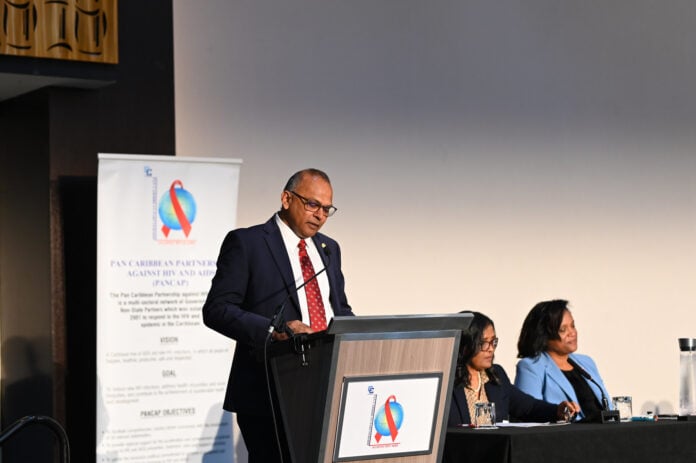
The Caribbean HIV response is at a critical juncture, with new infections remaining unacceptably high and funding pressures growing, CARICOM officials warned this week.

Honourable Dr. Frank Anthony, Minister of Health of Guyana, Chair of the CARICOM Council for Human and Social Development (COHSOD)—Health, and Chair of the PANCAP Executive Board, highlighted these concerns during the Opening Ceremony of the Tenth Meeting of National AIDS Programme Managers and Key Partners, held in Trinidad and Tobago on March 18 in a hybrid format.

“New HIV infections in the Caribbean remain stubbornly high, with approximately 15,000 new cases each year—one in four among young people aged 15 to 24,” Dr. Anthony said. He underscored the need to accelerate prevention, expand access to innovative treatments, and ensure equitable access to new technologies.

Among promising advances, he cited long-acting injectable medicines, including lenacapavir, which could offer twice-yearly protection at affordable costs. “Equitable access to these technologies is essential if the Caribbean is to change the trajectory of the epidemic,” he said.

Dr. Anthony also warned of declining international support for prevention programs, stressing that reduced funding could result in setbacks across the region. “The global HIV response is entering a difficult moment. Funding pressures are growing. Some international support is declining. Prevention programmes are often the first to feel the impact. In fact, UNAIDS warns that if prevention services decline significantly, the world could see nearly four million additional HIV infections over the next five years,” he said.

The Minister urged stronger regional cooperation to negotiate better access to medicines, secure sustainable funding, and ensure no Caribbean nation is left behind. He called on stakeholders to embrace innovation, place people—especially the most vulnerable—at the center of the response, and continue the fight to end AIDS. “History will judge the Region not by its meetings or reports, but by whether it finishes the work,” Dr. Anthony said.

Dr. Anthony also highlighted the Caribbean’s progress in combating HIV. According to UNAIDS data, AIDS-related deaths have declined by more than 60% since 2010—the steepest reduction of any region globally—reflecting sustained investment in treatment and collective regional commitment.

“This progress did not happen by accident. It happened because governments invested in treatment. It happened because of our collective work to provide dignity and care… it shows us something important: that when the Caribbean commits to a challenge, it can deliver results,” he said.

He paid tribute to doctors, nurses, programme managers, and public health professionals who have dedicated decades to confronting HIV and AIDS in the Caribbean. “Many of you have been on the frontlines of this fight for decades. You stood with patients when treatments were scarce. You challenged stigma when silence surrounded this disease. You built the programmes and health systems that today save lives across the Caribbean. Because of your work, thousands of Caribbean families today live with hope. And for that, we owe you our deepest gratitude,” Dr. Anthony concluded.

Boston declares March 13 ‘Aidonia Day’ in honor of dancehall star

Aidonia

Dancehall star Aidonia has reached another major milestone in his career, as the City of Boston officially proclaimed March 13 as “Aidonia Day.”

The honor was conferred through an official proclamation issued by Boston Mayor Michelle Wu and presented to the 4th Genna deejay during a sold-out performance at the House of Blues Boston last Friday night. The moment came at the height of his high-energy set during Reggae Fest, one stop on his four-city tour, and was met with thunderous applause from the enthusiastic crowd.

The proclamation recognizes Aidonia’s global impact on dancehall music and his ongoing role in promoting Caribbean culture on the international stage. In the official statement, Mayor Wu hailed the artist as “one of dancehall music’s most influential and dynamic voices,” underscoring his contribution to the genre’s worldwide appeal.

Aidonia, born Sheldon Lawrence, has long been a dominant force in dancehall, known for his lyrical versatility and commanding stage presence. The proclamation also highlighted his leadership of the J.O.P. (Jag One Productions) movement, which has helped shape a new generation of artistes and expand the reach of Jamaican music.

His catalogue of hits, including crowd favorites like Yeah Yeah, IG Girls, and Nuh Boring Gyal, was noted for bridging Caribbean audiences with listeners across the globe, driven by dancehall’s distinctive rhythm and storytelling tradition.

The declaration of “Aidonia Day” marks a significant cultural moment, not only for the artist but also for the wider Caribbean community in Boston. It reflects the growing recognition of dancehall as a powerful cultural force and celebrates the genre’s influence far beyond Jamaica’s shores.

His tour continues with upcoming stops in Jamaica, Miami, the Cayman Islands, before heading to the City Splash Festival in London and the St. Kitts Music Festival in June.

Four men, including Caribbean nationals, charged in Miami-Dade for immigrant smuggling

Four Jamaicans arrested in Alabama for alleged involvement in lottery scam

Four individuals were charged in connection with an alien smuggling operation off the coast of Miami-Dade County, federal authorities announced Wednesday. The case followed a high-speed maritime pursuit during which law enforcement disabled the vessel to bring it to a stop.

According to court records, the defendants are Theron Don Mills, 26, of The Bahamas; Oswaldo Sisa Heredia, 39, of Ecuador; and Joel Perez-Matos, 41, and Pablo Antonio Alvarez Rodriguez, 33, both of the Dominican Republic. They appeared in court Monday after attempting to evade authorities while transporting multiple undocumented migrants toward the U.S.

The vessel, operated by Mills, was first detected about 21 miles east of Miami-Dade County, heading west toward shore. On March 11, just before midnight, a Customs and Border Protection (CBP) Air and Marine Operations (AMO) vessel located it about two miles offshore. Despite lights and sirens, the vessel fled. Agents initially fired warning rounds and, when the vessel still did not stop, fired disabling rounds into the engine, bringing it to a halt.

Fifteen undocumented migrants were aboard the center-console vessel. They were transferred to the U.S. Coast Guard Cutter WILLIAM FORES for biometric screening and records checks, which revealed that all four defendants had previously been deported from the U.S.

All four are charged with illegal re-entry of a deported alien. Mills faces an additional charge of encouraging and inducing aliens to enter the U.S. as the vessel’s operator. If convicted, Mills could face up to five years in prison on the inducement charge, while each defendant faces up to two years on the illegal reentry charges.

The remaining 11 undocumented migrants were not charged and were repatriated to The Bahamas.

U.S. Attorney Jason A. Reding Quiñones and Acting Special Agent in Charge José R. Figueroa of Homeland Security Investigations (HSI), Miami Field Office, made the announcement. The case is being investigated by HSI Miami with assistance from CBP AMO and the U.S. Coast Guard, and is being prosecuted by Special Assistant U.S. Attorney Tanner Stiehl.

Former Fort Lauderdale tennis coach sentenced to 20 years for sexually exploiting students

sentenced to over 18 years in US prison

A former Fort Lauderdale tennis coach was sentenced to 20 years in federal prison after pleading guilty to coercing and enticing two minors to engage in sexual activity, the U.S. Attorney’s Office for the Southern District of Florida announced Tuesday.

U.S. District Judge Melissa Damian handed down the 240-month sentence to 33-year-old Daniel James Riggs on Thursday.

“Children and parents trust coaches with more than athletic instruction. They trust them with safety, guidance, and character,” said U.S. Attorney Jason A. Reding Quiñones. “This defendant abused that trust in the most disturbing way imaginable, using his position to groom and sexually exploit the very students he was supposed to mentor. Twenty years in federal prison reflects the seriousness of that betrayal. The Southern District of Florida will continue to pursue predators who target children and ensure they face the full weight of the law.”

Court records indicate Riggs worked as a tennis coach for Team Riggs at a Fort Lauderdale tennis center, where both victims were his students. He used multiple social media accounts to engage the minors in sexually explicit conversations. Law enforcement traced several of these accounts through subscriber and billing records. The criminal conduct occurred from roughly 2021 until Riggs’ arrest in late 2024.

The case was investigated by the FBI’s Miami Field Office, and prosecution was handled by Assistant U.S. Attorney Camille Smith. The announcement was made by U.S. Attorney Reding Quiñones and FBI Miami Special Agent in Charge Brett D. Skiles.

Court revokes citizenship of Haitian man in $3.8 million COVID-19 relief scam

Miami citizenship classes

A Haitian-born man has had his U.S. citizenship revoked after defrauding COVID-19 relief programs of millions and hiding his criminal activity during the naturalization process, the U.S. Attorney’s Office for the Southern District of Florida announced Tuesday.

U.S. District Judge Rodney Smith revoked the citizenship of 25-year-old Joff Stenn Wroy Philossaint of Fort Lauderdale, ruling that he illegally obtained naturalization by making false statements to immigration authorities.

“United States citizenship is one of the greatest privileges our nation can offer, and it must be earned honestly,” said U.S. Attorney Jason A. Reding Quiñones. “This defendant built his path to citizenship on false statements while stealing millions from programs meant to keep small businesses alive during the pandemic. The court’s order revoking his citizenship restores accountability and reinforces a simple principle: if you lie to obtain immigration benefits and commit federal crimes, you will lose what you unlawfully gained.”

Between April 2020 and May 2021, Philossaint fraudulently obtained COVID-19 relief funds through companies he owned or controlled and by preparing loan applications for others in exchange for kickbacks. The applications contained false statements about applicants’ revenues and payroll. In total, he and his co-conspirators submitted 40 fraudulent loan applications, securing about $3.8 million in proceeds. Philossaint personally received roughly $549,000 through the scheme.

Philossaint applied for U.S. citizenship in February 2020. During a sworn naturalization interview on December 15, 2020, he concealed his involvement in the fraud and falsely denied committing crimes or misrepresenting information to obtain public benefits. He was granted citizenship on February 9, 2021.

He was later charged on September 8, 2022, with conspiracy to commit wire fraud, two counts of conspiracy to launder money, and unlawful procurement of citizenship. Philossaint pleaded guilty to the conspiracy charges, and a jury found him guilty of unlawfully obtaining citizenship. On June 26, 2023, he was sentenced to 50 months in federal prison.

The citizenship revocation, ordered February 23, 2026, followed a motion by the U.S. Attorney’s Office. The case was investigated by the SBA Office of Inspector General, U.S. Secret Service, FBI, IRS Criminal Investigation, and Homeland Security Investigations. Assistant U.S. Attorneys Marc Osborne and Shannon O’Shea Darsch handled the prosecution.

NHT to offer more support for young Jamaicans, says PM holness

NHT jamaica

The National Housing Trust (NHT) will roll out a series of measures starting July 1 to make homeownership more accessible for frontline workers and younger Jamaicans, Prime Minister Dr Andrew Holness announced Thursday.

The changes include lower mortgage rates for teachers, nurses, firefighters, and members of the security forces. Borrowers with five to ten years of service will see their interest rates drop by 1%, while those with over ten years of service will receive a 2% reduction.

Young buyers under 35 will benefit from a bigger share of homes under the NHT schemes, with a minimum of 20% of units reserved for them—double the previous allocation. The NHT will also provide advances of up to $2 million to help with down payments on open-market properties.

In addition, the Home Improvement Loan program will now be more accessible, with the waiting period reduced from seven years to five. This allows homeowners to more quickly access funds for home maintenance, security upgrades, green energy improvements, and property expansions.

Prime Minister Holness said these initiatives are part of fulfilling promises made ahead of last year’s general election, supporting essential workers, and creating more opportunities for young Jamaicans to enter the housing market.

Guyana minister urges CXC to focus on critical thinking in AI era

Guyana’s Minister of Education, the Honourable Sonia Parag

At a time when answers to complex questions can be sourced in seconds through AI tools, Guyana’s Minister of Education, the Honourable Sonia Parag, has called for assessment reform across the Caribbean Community (CARICOM), urging a shift away from traditional “test-taking” models.

“When a machine can generate an answer, the value shifts from the answer itself to the thinking behind it,” Minister Parag said at the inaugural CXC Regional Education Conference on Wednesday evening in Kingston, Jamaica.

She noted that artificial intelligence can quickly produce essays, create high-quality images and video, and solve complex problems, making traditional metrics of academic success increasingly outdated.

Minister Parag stressed that the region must pivot from rewarding memorisation to validating critical thinking, where students are able to question, verify, and defend their logic within a real-world Caribbean context. She said the goal is to stimulate curiosity rather than academic exhaustion, ensuring assessments capture a child’s thought process.

“Connectivity without competency is merely noise,” she cautioned, highlighting that digital access does not automatically translate to understanding.

As head of the CARICOM Council for Human and Social Development (COHSOD) – Education, Minister Parag emphasised that reforms must remain anchored in literacy and numeracy. “If a child cannot read with comprehension, then an e-library offers little value. And if a student cannot reason with numbers, then the promise of coding, data analysis and digital innovation becomes inaccessible,” she said.

She also stressed that AI is a support system, not a replacement for teachers. “An algorithm can provide a fact, but it cannot provide the mentorship, the emotional intelligence, or the moral guidance that a Caribbean teacher brings to a developing mind,” Minister Parag said.

The minister highlighted technology’s potential to level the academic playing field. “Digital platforms allow for a democratisation of knowledge where a student in a remote riverain community or a hinterland village like Aishalton can access the same high-quality resources as a student in a city centre,” she noted.

Congratulating CXC for hosting the inaugural forum, Minister Parag called it a timely and necessary step toward a future where technology supports, rather than replaces, critical thinking. She expressed confidence that once a balance between AI and foundational skills is achieved, the Caribbean can move from keeping pace with digital change to redefining the future of education.

Minister Parag also called for a second phase of the forum to shift from dialogue to delivery, with regional teams drafting the policies and frameworks needed to modernise Caribbean education. For her, the true measure of success will be tangible changes in classrooms across the region.