Home Blog Page 174

Jamaican star McConnell and Sanz reunite for Extreme E’s Final Lap

Fraser McConnell gears up for Nitrocross showdown in Utah
Fraser-McConnell displays his 2024 Nitrocross suit as he gears up for action this weekend in Richmond, Virginia.

Jamaica’s motorsport trailblazer Fraser McConnell will return to the grid this October for Extreme E’s highly anticipated Final Lap, as the Acciona Sainz QEV XE Team officially confirmed its line-up.

McConnell will again team up with Spanish superstar Laia Sanz, a partnership that produced three podiums in four races last season, including a memorable victory at the Desert X Prix in Saudi Arabia.

Racing for a legacy

Founded by motorsport icon Carlos Sainz, a two-time World Rally Champion and four-time Dakar winner, the Acciona Sainz QEV squad has been one of Extreme E’s most consistent forces since the series launched. For McConnell, the chance to remain part of that legacy is something he deeply values.

“Having the opportunity to continue with the Acciona is a huge honour,” McConnell said. “From the very first day, I knew we could achieve great results. We’ve built a strong relationship and I’m confident we can continue our podium streak in this special farewell to Extreme E.”

McConnell and Sanz: A proven duo

McConnell’s credentials are already written into the sport’s history books. In 2021, he became the first Jamaican to win a Rallycross Supercar race, and since then, he has added four Nitrocross Group E titles to his résumé. His chemistry with Sanz has been singled out as one of the most balanced and effective partnerships in Extreme E.

Sanz, herself a 13-time Trial World Champion and a Dakar Rally veteran, has been part of the championship since its inception. She echoed McConnell’s enthusiasm for one last charge together.

“I’m really happy to be back with the Acciona Sainz QEV XE alongside Fraser,” said Sanz. “We finished last season with great momentum and the goal is clear: fight at the front and close Extreme E on a high.”

The final lap and what comes next

The Extreme E curtain call will be staged October 4–5, 2025, in Qiddiya City, Saudi Arabia, before the championship transitions into the new hydrogen-powered Extreme H World Cup just one week later. McConnell will also compete in the pioneering Extreme H series, positioning himself at the forefront of motorsport’s sustainable future.

Fans across Jamaica and beyond can watch McConnell’s return live on CVM TV and YouTube:

  • Saturday, October 4 at 9:00 a.m.
  • Sunday, October 5 at 3:00 p.m.

For McConnell, the Final Lap offers more than a farewell — it is a chance to cement his standing as one of the championship’s defining stars before ushering in a new era of clean energy motorsport.

Dynamic Women of Purpose to host ‘Cowboy & Cowgirl’ dance to benefit schools in Jamaica

Pauline Dawkins

This Saturday, October 4, Dynamic Women of Purpose, a New York-based 401c non for profit organization, will host its annual fundraising party at Iké Grand Hall in St. Albans, New York.

The ‘Cowboy & Cowgirl,’ themed fall dance is a must-attend New York calendar event. It promises to be an evening of great entertainment in the spirit of philanthropy. Patrons will be musically entertained by selector Bugsy Bam Bam, Trevor Profile, with special guest DJ Dwayne Extacy, who will play the best selection of reggae, dancehall, R&B, and country songs.

“We’re excited to welcome everyone,” Dynamic Women of Purpose founder and president Pauline Dawkins told Caribbean National Weekly.

“The night is going to be loads of fun. And what is most important is that is all for a great cause,” she assured.

The non-profit organization was first established in 2008. Since then, dedicated members have raised much-needed cash and kind that have been donated to schools, seniors, and families in Jamaica. Monies have also supported local programs for the needy in New York.

“What started as just something to do in our spare time has grown to a sisterhood. All our members share the same passion of helping others,” she shared.

The Dynamic Women of Purpose’s philanthropic mission has benefited the Icylin Baker Basic School in Jamaica, which has received numerous scholarships, school supplies, books, and hot lunches for needy students. The Beecham Hill Primary School in St. Mary has also received much-needed support through donated supplies and a breakfast program that was initiated a few years ago by the group. Families in the Beecham Hill community have also received clothing and toiletries through the Dynamic Women of Purpose outreach.

This year’s fundraiser will continue the mission of giving with proceeds earmarked to purchase school supplies for several schools and organizations in Jamaica, as well as to provide assistance to residents of the Golden Age Home.

“Our motto is ‘Helping Where Needed,’ and that’s what keeps us doing what we do,” Dawkins reminded.


Aidonia’s home raided in early morning police operation; two taken into custody

Aidonia

The St. Andrew residence of Dancehall artist Aidonia, born Sheldon Lawrence, was among several homes targeted during a major early morning police operation conducted across the St. Andrew North Police Division.

The coordinated raids, which began around 5:00 a.m., were part of what law enforcement described as a strategic crackdown on individuals suspected to be involved in criminal activities, including the alleged possession of illegal firearms. Aidonia’s property was one of the locations searched by officers during the operation.

No illegal items were reportedly found at the entertainer’s residence. It remains unclear whether Aidonia was present at the time of the raid. However, two individuals who were at the property during the search were taken into custody. Their identities are being withheld pending further investigations.

According to police sources, the raid on Aidonia’s home was just one element of a broader sweep across the division, during which multiple premises were searched. One person was arrested elsewhere and is expected to be charged under the Firearms Act.

The head of the St. Andrew North Police Division, Superintendent Randy Sweeney, has since made a public appeal for assistance in locating five men wanted in connection with serious crimes and multiple murders in the area. These men, considered persons of interest, are:

1. Fabian Watson, aka Bulla or Tristan, of Florence Hill, St. Andrew, and Hamilton Gardens, Portmore.
2. Shevon Matthews, aka Max, of Zambia, Central Village, and Blue Hole, Red Hills.
3. Kemar Samuda, aka Scamma or Choppa, of Red Hills Road.
4. Emar Grinham, aka Bully Beef, of Andrews Pen.
5. Kenroy Willis, aka Papa, of Lawrence Tavern, wanted for murder and linked to several other shootings.

These men are being urged to turn themselves in to the Constant Spring CIB or the nearest police station immediately.

Though the unexpected police visit has stirred public attention, it comes during a year where Aidonia has been steadily rebuilding and reasserting his musical presence.

In 2025, he received widespread support and recognition for his resilience following personal tragedy and his return to the dancehall scene. His latest singles have gained traction both locally and in diaspora communities, and he recently hinted at an upcoming album that fans have eagerly anticipated.

Earlier this year, the entertainer was also praised for his philanthropic work through the “Bashy Bus” initiative, which focuses on supporting underprivileged youth through education and mentorship programs. Aidonia has consistently spoken out against crime and violence, and many in the dancehall community have rallied in support of him following the raid.

While no evidence of wrongdoing was found at the entertainer’s home, the incident has sparked conversations around the intersection of entertainment and law enforcement in Jamaica. Similar raids on high-profile figures in the past have drawn criticism over police transparency and potential reputational damage.

As the investigation continues, and with two men still in custody, fans and fellow artistes are watching closely but for now, Aidonia remains uncharged and unimplicated.

The Dancehall veteran, known for hits like Yeah Yea and Banga, has not yet released a statement regarding the raid.


Jamaican community searching for missing 12-year-old Manchester High student

12-year-old Jayden Thompson

The small community of Wales, Manchester, Jamaica, is in shock following the disappearance of 12-year-old Jayden Thompson, a first-form student at Manchester High School.

Known for his quiet nature, helpful demeanor, and academic promise, Jayden was last seen at Little Caesar’s restaurant in Mandeville last Friday.

His guardians, Omar and Ann-marie Thompson, who have raised Jayden since he was six, are pleading for his safe return. “Wi no waa find no body. Any way dem can lef’ him, please, please… please just send him home,” Omar said, expressing the family’s anguish.

According to CCTV footage and eyewitness accounts, Jayden entered the restaurant, purchased food, and lingered briefly before giving his umbrella to a friend. He reportedly mentioned waiting for a cousin, though the relative was not at school that day and unaware of any plans. Later, he was allegedly seen walking with another student and an unidentified woman near Master Mac supermarket. There have been no confirmed sightings since.

The Thompsons also revealed that the day before his disappearance, Jayden had been involved in an accident at home, when a two-year-old cousin fell and broke a hip while playing. “Honestly, I did not know how he felt,” Mrs. Thompson said, recalling the last time she saw him Thursday night at the hospital. She added that he had not been scolded for the accident, though she wondered if he might have been feeling guilty.

When Jayden failed to return home Friday evening, the Thompsons grew increasingly worried. Their repeated calls to his phone went unanswered, and his room was found dark and untouched, with his school bag and uniform missing. The family filed a missing person report but expressed frustration over what they described as a slow response from some members of the Mandeville police, forcing them to check locations themselves following false leads.

Described by his guardians as obedient, hard-working, quiet, and humble, Jayden excelled academically, finishing as the top male performer in the Primary Exit Profile exams, earning a $15,000 award before entering Manchester High. The Thompsons said he is loved as one of their own children.

Manchester High School principal Jasford Gabriel said the school community is actively searching and praying for Jayden’s safe return. He is described as dark-skinned, approximately 5 feet 5 inches tall, and of slim build. He was last seen in his school uniform.

Anyone with information is urged to contact the Alligator Pond Police at 876-224-3113, dial 119, or report to the nearest police station.

Jamaica’s labor force expands as unemployment falls to 3.3%

Jamaica’s unemployment rate falls to historic low of 3.3%

Jamaica’s labor market continued its upward trend in July 2025, with more people employed and the unemployment rate declining compared with the same period last year, according to the Statistical Institute of Jamaica (Statin).

The July 2025 Labour Force Survey showed that 32,100 more individuals were employed compared to July 2024, bringing the total employed labour force to 1,441,100. The largest employment gains were recorded in the managers occupational group and in the wholesale and retail trade, repair of motor vehicles and motorcycles industry. Youth employment rose by 7.2 per cent, or 12,200 persons, while the number of underemployed individuals — those working part-time but seeking additional hours — fell by 5,400 to 25,400.

Labour force participation also increased to 1,490,300, up 28,700 from a year earlier, with males accounting for about two-thirds of the growth. The overall participation rate was 69.1 per cent, with male participation at 75.0 per cent and female participation at 63.4 per cent.

Unemployment dropped by 3,400 persons, pushing the rate down from 3.6 per cent in July 2024 to 3.3 per cent in July 2025. The improvement was largely driven by decreases among males and the prime working-age group (25–54 years), though female unemployment rose slightly, from 4.0 per cent to 4.4 per cent. Male unemployment fell to 2.4 per cent from 3.2 per cent.

The number of people outside the labor force fell to 665,500, down from 694,200 a year earlier, mainly due to a decline among males, with fewer youth and prime working-age individuals remaining outside the workforce.

Statin noted that these figures reflect continued positive trends in the Jamaican labor market, supporting both economic stability and inclusive growth.

Palm Beach County District 87 could go unrepresented during upcoming legislative session

Mike Caruso

Hundreds of thousands of registered voters in Palm Beach County may go without representation during the next legislative session following the resignation of former State Representative Mike Caruso.

Caruso stepped down from District 87 after being appointed Clerk of the Circuit Court and Comptroller. The district, which includes the Town of Palm Beach, Jupiter, Juno Beach, Palm Beach Gardens, and West Palm Beach, is home to nearly 180,000 voters, a majority of whom are registered Republicans — including former President Donald Trump and First Lady Melania Trump.

Typically, a special election would fill such a vacancy. However, Governor Ron DeSantis has not yet set a date for the election, and Caruso told the Sun-Sentinel that a special election may not be held. If that is the case, the seat could remain vacant until November 20–26, after the legislative session has ended, leaving District 87 without a voice in critical state decisions for several weeks.

“This could impact 114,650 voters who live within the District 87 zone,” the Sun-Sentinel reported, highlighting concerns that constituents would lack direct representation in matters affecting funding for local projects, education, infrastructure, and community improvements.

While Republicans hold a commanding majority in the Florida House of Representatives, meaning major legislative outcomes are unlikely to shift, the absence of a representative could still delay advocacy for projects and initiatives specific to the district. Local officials and community leaders have expressed concern that key funding requests and local priorities may be sidelined during the legislative session.

Several candidates have already filed paperwork to run for the seat in 2026, according to the Sun-Sentinel. Republicans Jon Maples and Gretchen Miller Feng, as well as Democrats Emily Watson Gregory and Laura Ann Levites, have formally entered the race. Their campaigns are expected to shape the conversation around priorities for District 87 in the coming months.

Until the vacancy is filled, constituents will need to rely on neighboring representatives or county officials to address urgent matters, leaving some residents concerned about their ability to influence legislative decisions that directly affect their communities.

Plantation police searching for missing 13-year-old boy

Police are asking for the public’s help in locating 13-year-old Hormar Charilus, who was reported missing after running away from his home Thursday evening.

Authorities said Hormar left his residence in the 500 block of Northwest 42nd Avenue around 5:40 p.m. He is considered an endangered juvenile due to an altered mental status.

Hormar is described as a Black male, about 5 feet 10 inches tall and 115 pounds, with brown eyes and black hair. He was last seen wearing a black hooded sweater, blue jeans, and carrying a gray backpack.

Anyone with information on his whereabouts is urged to contact Plantation Police or their local law enforcement agency.

Vice president dismisses talk of forex crisis in Guyana

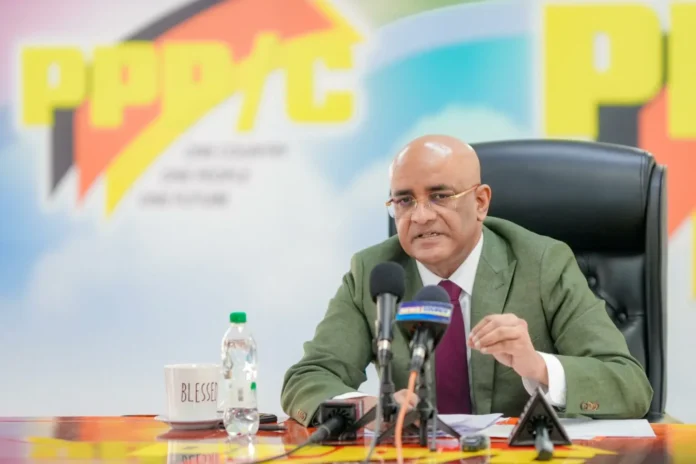
Guyana's Vice President Bharrat Jagdeo

Vice President Dr. Bharrat Jagdeo has rejected claims that Guyana is facing a foreign exchange crisis, insisting that the country’s reserves and inflows remain robust. He attributed the recent spike in demand for U.S. dollars to heavy borrowing by companies financing major infrastructure and capital projects.

“Once those projects are finished, the demand goes down,” Jagdeo told reporters Thursday at the Arthur Chung Conference Centre. He added that the landmark Gas-to-Energy (GTE) project will eventually reduce imports of fuel and cooking gas, further easing demand on foreign currency.

According to Jagdeo, fears of capital flight are misplaced. Instead, Guyana continues to attract strong inflows because of the many opportunities created by its booming economy. However, he noted concerns about non-Guyanese companies exploiting the country’s liberal foreign exchange system to buy U.S. dollars and transfer them overseas.

“We have non-Guyanese entities using our free-floating system to access foreign currency here and then taking it abroad to meet their own demands. That cannot continue,” he said.

Jagdeo pointed to recent measures announced by President Dr. Mohamed Irfaan Ali to tighten oversight, including requiring companies to submit invoices for large foreign exchange requests. “If you don’t have the invoice, you’re not going to get it,” he stressed, making clear that the rules target larger firms and not small businesses or individuals.

Citing examples of foreign-owned supermarkets operating without registering in the local tax system yet still accessing large sums of U.S. dollars, Jagdeo said the government must act to protect fairness and prevent abuse.

“We can’t allow that. This is about protecting our system and ensuring fairness,” he declared.

The vice president reaffirmed that the administration intends to preserve a free and accessible foreign exchange market while closing loopholes that threaten tax compliance and financial stability.

Trinidad PM says she’s ready to lead Dragon gas talks with Venezuela

Trinidad Prime Minister Kamla Persad-Bissessar
Prime Minister Kamla Persad-Bissessar

Trinidad and Tobago Prime Minister Kamla Persad-Bissessar says she is prepared to personally lead negotiations in Venezuela as her government works to revive the stalled Dragon gas project.

Speaking at a news conference at Piarco International Airport on October 1 after returning from the United States, Persad-Bissessar said her administration began exploring options to restart the cross-border initiative shortly after winning the April 28 general election.

Her comments followed a September 30 meeting in Washington with U.S. Secretary of State Marco Rubio. In separate statements afterward, the Office of the Prime Minister and the State Department confirmed that both governments agreed to advance TT-Venezuela energy cooperation, with Rubio supporting approval of U.S. Treasury Department licences needed to move the Dragon project forward.

The U.S. also stressed that measures would be taken to ensure the arrangement does not provide “significant benefit” to the government of Venezuelan President Nicolás Maduro.

Persad-Bissessar said either Foreign and Caricom Affairs Minister Sean Sobers or Energy Minister Dr. Roodal Moonilal could lead the talks, but added, “Of course, you have me.” She said both ministers have already been in contact with their Venezuelan counterparts.

“In terms of Venezuela, the projects benefit Venezuela. They benefit the U.S. and they benefit TT,” she said, expressing confidence that negotiations will proceed despite Trinidad and Tobago’s support for U.S. military deployment in the southern Caribbean Sea.

The prime minister noted that her government had been working on securing the necessary OFAC licence from “day one” in office and revealed that discussions with Washington also covered other offshore fields, including Loran/Manatee and Cocuina-Manakin.

The remarks mark a shift from Persad-Bissessar’s position in May, when she declared the Dragon gas deal “dead” after years of delay under the previous administration.

WFP forced to slash food rations in Haiti amid funding shortfalls

haiti
© PAHO/WHO/David Lorens Mentor People gather at a site for displaced people in Port-au-Prince, Haiti.

The World Food Programme (WFP) warned Thursday that escalating gang violence in Haiti’s capital is crippling humanitarian access, worsening hunger, and forcing the agency to slash food rations and suspend life-saving programmes amid a severe funding crisis.

WFP reported that more farmers are now cut off from markets, placing further strain on fragile food systems and driving food prices higher. Due to funding shortfalls, the agency has had to cut rations in half and suspend hot meal services for newly displaced families. For the first time, it has also been unable to preposition food supplies ahead of the Atlantic hurricane season.

Despite extreme insecurity, WFP said it has assisted more than 2 million people in Haiti since January, while also continuing longer-term food security efforts. These include working with the government to provide daily school meals for 600,000 children and launching targeted infrastructure projects — even in gang-controlled areas — to restore irrigation systems and strengthen local food production.

Haiti remains the only country in the Americas, and one of just five globally, with people facing catastrophic (IPC5) levels of hunger, equivalent to famine-like conditions. Overall, 5.7 million Haitians are suffering acute food insecurity. WFP estimates it requires $139 million over the next 12 months to reach the most vulnerable families.

In Geneva, UN High Commissioner for Human Rights Volker Türk told the Human Rights Council that Haiti’s human rights situation has “reached a boiling point,” citing more than 16,000 people killed and 7,000 injured in gang-related violence since monitoring began in January 2022.

Türk urged the international community to provide sufficient funding and personnel to Haiti’s Gang Suppression Force. “We can and must turn this situation around for the people of Haiti,” he said.

Guyana to build local capacity for oil marketing, says President Ali

Guyana President Dr. Irfaan Ali

President Dr. Mohamed Irfaan Ali on Thursday pledged to strengthen Guyana’s ability to market its rapidly growing oil output, announcing plans to work with local businesses and international partners to develop the expertise needed to trade its crude.

Since production began in late 2019, Guyana has relied on foreign traders to market its share of oil, with UK-based firms BB Energy and JE Energy most recently awarded contracts. But Ali, speaking at a Georgetown Chamber of Commerce and Industry (GCCI) event, said his administration wants to accelerate efforts to bring those skills home.

“We must be able to trade our crude oil from Guyana with the infrastructure, with the human capital, and with the market skills,” Ali said. He suggested that partnerships with international firms could help transfer knowledge over the next three to five years until the country can manage its marketing independently.

Vice President Dr. Bharrat Jagdeo, at a separate press conference Thursday afternoon, added that the private sector could also play a role. “The private sector itself may be able to develop some capacity here. So, maybe they can sell services to the government,” he said.

“These are the bold ideas that will take us from where we are to where we want to be,” Ali added in his GCCI address.

Guyana, the world’s fastest-growing offshore oil producer, currently pumps more than 600,000 barrels of oil per day from the ExxonMobil-led Stabroek Block. ExxonMobil expects output to climb to 1.7 million barrels per day by 2030.

Minister Johnson Smith rejects claims of Jamaica’s silence on Gaza

Jamaica Foreign Affairs and Foreign Trade Minister Kamina Johnson Smith

Foreign Affairs Minister Senator Kamina Johnson Smith has pushed back against criticism that Jamaica has remained silent on the war in Gaza, insisting the country has been consistent in its support for peace and recognition of Palestine.

Speaking at a post-Cabinet media briefing on Wednesday, Johnson Smith reminded that in 2024 Jamaica formally recognised the State of Palestine in line with United Nations Resolution 242, which calls for a two-state solution.

“Jamaica has never been in hiding on this issue. We have condemned actions on both sides, called for a ceasefire, and remain firm in our belief that dialogue and engagement, rather than performance, are the most constructive tools of diplomacy,” she said.

Her remarks came after People’s National Party (PNP) spokesperson on foreign, regional and diaspora affairs, Senator Donna Scott Mottley, charged that Jamaica’s position lacked forcefulness and “sends the wrong signal to the international community and to the Palestinian people who continue to suffer.”

Scott Mottley pointed to countries that made visible protests at the United Nations, including walking out during Israeli Prime Minister Benjamin Netanyahu’s address, arguing Jamaica should have done more.

But Johnson Smith countered that such actions are symbolic rather than solutions-oriented. “Jamaica is not a chest-beating Administration. We are not ego-driven or image-based. Our focus is on solutions,” she told reporters.

The minister highlighted Caricom’s collective stance, noting that the regional bloc has issued repeated calls for peace and the security of both Israelis and Palestinians. She stressed that Jamaica’s position is grounded in international law and multilateralism.

“We have always backed Resolution 242, which outlines the framework for a two-state solution,” she said, adding that this remained the “safest path” to long-term peace.

Johnson Smith also warned against misinformation shaping public debate, echoing recent comments by Barbados Prime Minister Mia Mottley about a “global crisis of truth.”

“We prefer to listen, to be at the table, to engage, whether we agree or disagree. That is how we maintain credibility as a nation and ensure that our voice carries weight in international affairs,” Johnson Smith said.

Canadian and European tourist arrivals to Caribbean decline in first half of 2025

traveling at airport

The Caribbean Tourism Organization (CTO) has reported a downturn in visitor arrivals from Canada and Europe in the first half of 2025, even as other markets showed growth.

According to CTO database administrator Paul Garnes, Canadian arrivals fell by just over nine per cent to 1.67 million, while European arrivals dropped by an estimated five per cent to 2.53 million compared to the same period in 2024.

Speaking at the State of the Tourism Industry Conference in Barbados, Garnes attributed the Canadian decline to weaker consumer confidence, higher travel costs, and “currency events,” with U.S. tariffs, trade tensions, and economic uncertainty also pushing many Canadians toward domestic trips and alternative destinations.

He explained that Canadian arrivals fell sharply in the early months of 2025, with January down 12 per cent, February 15 per cent, and March 10 per cent. Though April and May continued the downward trend, June brought a rebound of nearly seven per cent year-on-year, though still 11 per cent below 2019 levels. Only eight of the 19 reporting destinations saw growth from Canada, led by Bermuda, Curaçao, and Aruba.

Garnes said the European market also struggled, with overall arrivals down five per cent from last year and 17 per cent below pre-pandemic levels. “Month by month, arrivals were weak,” he noted, pointing out that April saw only a slight uptick while May and June slipped again. Just seven destinations reported growth, led by Guyana, Anguilla, and Antigua and Barbuda.

Despite these declines, Garnes highlighted positive signs in other markets. Intra-Caribbean travel rose by 1.2 per cent to 560,000 arrivals, while South America recorded a 25 per cent increase, moving from 790,000 to nearly one million. Other markets—including Asia and Africa—saw 12 per cent growth, totaling nearly 3.8 million arrivals.

“This continues to support regional resilience,” Garnes said, noting that diversification beyond traditional markets has helped offset softer demand from North America and Europe.

Overall, tourist arrivals to the Caribbean grew by 1.9 per cent in the first half of 2025, standing 6.1 per cent above 2019 levels.

“Considering tourist arrivals then, in the first half of the year 2025, the Caribbean tourism industry showed strong resilience, continuing to grow despite external challenges,” Garnes said.

Jamaican woman facing 13 felony charges in Broward Hertz car theft case

A 24-year-old Jamaican woman who once worked as a security guard at Fort Lauderdale-Hollywood International Airport’s car rental centre is facing 13 felony charges after detectives accused her of conspiring with three men to steal a dozen vehicles from Hertz.

According to Local 10 News, Savannah Harsha Phillips, born in Kingston, Jamaica, and now living in Sunrise, Florida, appeared Wednesday before Broward County Circuit Judge Thomas J. Coleman for arraignment. Prosecutors say she played a central role in a theft ring that allowed cars to leave the Hertz parking garage without authorisation on May 16 and 17.

A Broward Sheriff’s Office detective alleged that Phillips used her position to let drivers “exit the Hertz parking garage without showing a driver’s licence and pretending to scan the vehicles as they exited.”

The stolen vehicles included multiple Kia K4 sedans, Nissan Altimas, a Hyundai Sonata, a Toyota Corolla, and a Nissan Sentra. Investigators later linked some of the cars to crimes in other states, including a black Kia K4 tied to incidents in Texas and a white Toyota Corolla connected to crimes in Virginia.

Detectives said Phillips had “access to all Hertz company vehicles, knew the keys would be inside them, and was aware of the slowest times of business to commit the crime.”

She was arrested at her Sunrise home on August 26 and booked into the Paul Rein Detention Facility. Phillips faces charges including first-degree organised fraud, five counts of second-degree grand theft, and seven counts of third-degree grand theft.

A bond court judge set bail at US$62,000 but ordered that she prove the funds do not come from criminal proceeds.

Keys to paradise: Diaspora realtors unlock Jamaica’s booming real estate market

Ms. Aliecia Taylor, Minister Counsellor with responsibility for trade and economic affairs at the Embassy of Jamaica (left) updated real estate professionals from across the Washington D.C. Metropolitan Area on the growing real estate investment opportunities available in Jamaica. Photo: Derrick Scott

Over 40 leading real estate professionals from across the Washington, D.C. Metropolitan Area got an exclusive look at Jamaica’s dynamic real estate investment opportunities during “Keys to Paradise,” a showcase hosted by D.C. Association of Realtors and featured representations by the Embassy of Jamaica

The event spotlighted Jamaica’s surging property sector and the wide range of incentives available to U.S. investors.

Investment Incentives and Advantages

Delivering the keynote presentation, Ms. Aliecia Taylor, Minister Counsellor for Trade and Economic Affairs at the Embassy, outlined the extensive benefits for investors. These include employee tax credits, capital allowances on industrial properties, reduced or waived stamp duties on productive inputs, and duty-free importation of capital goods and materials. Special Economic Zones (SEZs) offer even greater advantages for companies operating on the island.

“Jamaica’s strategic location provides unmatched air and sea connectivity to major global markets,” said Ms. Taylor. “Coupled with strong governance, consistent policies, and an open investment regime, we provide a secure environment for both local and foreign investors.”

Infrastructure, Workforce, and Economic Resilience

Ms. Taylor highlighted Jamaica’s strong fundamentals, including a trainable workforce of 1.4 million, modern telecommunications and transportation infrastructure, and over 150 kilometers of new highways built in the last decade. She also pointed to Jamaica’s expanding national broadband network.

Jamaica’s macroeconomic success was a central focus. The country has cut its debt-to-GDP ratio from 147% in 2013 to 68.7% as of March 2025, with a target of 60% by 2027. Jamaica has also sustained 16 consecutive quarters of economic growth since COVID-19, excluding Q3 2024, which was impacted by Hurricane Beryl. Foreign direct investment now exceeds US$18.9 billion.

Progress on Security

Acknowledging investor concerns, Ms. Taylor reported notable progress in crime reduction. “Jamaica has seen a 41% decline in homicides this year compared to the same period last year,” she stated. She credited the results to enhanced national security infrastructure, stronger public-private partnerships, and targeted crime-reduction strategies.

Industry Voices

The event also featured contributions from industry leaders: Mrs. Anna-Kaye Chisholm Price, Realtor at Coldwell Banker Realty; Mr. Damion Tyrell and Mr. Andrew Grahame of Brahma Construction Ltd.; and Mr. Jason Dear, Co-Founder of Link2Lenders Ltd., who shared their insights on navigating Jamaica’s property market.

Embassy’s Commitment

Participation in the “Keys to Paradise” is part of the Embassy’s broader efforts to promote Jamaica as a premier investment destination and to advance the Government of Jamaica’s growth and development agenda.


The future of eco-friendly heating and furnace design

furnace designs

There has been a change in favor of greener options when it comes to heating systems and furnace designs. As you and I consider our planet’s well-being more, we really want heating technology that’s gentle on nature and built to last. Imagine the next generation of home heating: systems designed to be kind to Earth. This blog explores groundbreaking furnace innovations and practical strategies that improve efficiency and comfort for every household.

The Rise of Sustainable Heating Solutions

You’re seeing it everywhere: people want cleaner ways to heat their houses, and that’s because we all care more about climate change. If you are among them, consider this Columbus furnace replacement company. Older energy setups burn fossil fuels, releasing carbon pollution into the air. However, going with more sustainable alternatives can minimize that impact.

One of the best solutions is renewable energy. Imagine your heating system running on clean energy! You’d use less coal or gas. Geothermal heating, which uses the natural warmth of the Earth, provides an efficient and clean option as well.

Innovations in Furnace Design

As such, furnace design is changing to meet environmental standards. Modern furnaces reduce inefficiency loss and harmful emissions, making them more eco-friendly. High-efficiency models transfer more energy to heat, wasting less. These systems usually have improved heat exchangers and variable-speed blowers for efficiency.

AI is also present. It’s a powerful tool. Smart thermostats can help users optimize their heating by giving them control over it from anywhere. Your smart devices keep an eye on how much energy you’re using. Then, they automatically tweak the temperature to stop you from wasting power.

Benefits of Eco-Friendly Heating

Using green heating systems has many benefits. First, it leads to lower carbon emissions. Power from nature becomes clean energy through these systems. They’re crafted with efficiency in mind, helping us protect what’s precious.

Thirdly, there is the financial savings issue as well. The upfront cost is higher; however, these costs are typically recouped in energy bill savings over a long-term period. Governments will also be offering incentives to adopt sustainable technology, making sustainable technology quite a cost-effective option.

You’ll also enjoy fresher, purer air. Conventional heating methods can introduce pollutants and allergens into the air. Conversely, environmentally safe systems are low-emission and contribute to better indoor climates.

Challenges and Considerations

Eco-friendly heating also presents challenges. The upfront cost can prevent some from adopting sustainable technology, which is often pricier to begin with. However, adopting eco-friendly heating systems not only saves money over time but also benefits the planet.

Infrastructure is another consideration. Other houses might need adjustments to accommodate brand-new home heating systems, such as installing solar panels or getting insulation work done. Before choosing eco-friendly options, you should plan well and evaluate your current infrastructure properly.

The Role of Advances in Technology and Government

Sustainable heating solutions are also closely linked to government policies and industry initiatives. Globally, nations are setting targets to reduce their carbon footprint and actively advocating for cleaner, greener technologies. Things like tax breaks and cash back help folks buy these systems without breaking the bank.

Even the big bosses, those who lead the market, are now heavily investing in fresh discoveries. Heating buildings without burning fuel is a field that is quickly making giant leaps forward. This is because government initiatives and company-research institution collaborations have been progressing so that the solutions may eventually become more effective and relatively cheaper as well.

Looking Ahead

The future of eco-friendly heating and furnace design looks bright. New technology keeps getting better. People also care much more about protecting the environment, which boosts this trend. As homeowners prioritize reducing their carbon footprint and lowering energy bills, the market will likely see a jump in demand for heating systems like heat pumps or solar thermal setups.

Education and awareness matter during this transition. Moving forward, the best method to encourage consumers to adopt sustainable heating is to inform them about what is available and, more importantly, the advantages.

Conclusion

Imagine a new furnace giving your home green, lasting warmth. Adopting renewable energy sources and power-efficient technology can contribute to substantially lowering the carbon footprint. While there are still hurdles to overcome, lower emissions, cleaner air, and fuel savings make a strong case for these alternatives.

With sustainability being the top global focus, heating systems are set to evolve significantly. Imagine: when governments, companies, and all of us join forces, clean heating becomes the everyday choice, and our world truly thrives.

What happened when casinos ditched fiat for crypto

As the iGaming sector expands across borders, players and platforms alike demand faster, cheaper, and more reliable ways to move value. Traditional payment systems, with their friction and latency, no longer meet the needs of today’s digital-first audience. Crypto payment gateways are stepping in to redefine the flow of money – streamlining everything from player deposits to large-scale operator payouts.

Advanced tools powering the shift to crypto-first payments

As gaming platforms grow in size and reach, the way they handle payments must evolve too. What used to be a single deposit or payout now becomes a system for managing thousands of actions per hour. Players expect to receive winnings fast, and partners want fair, transparent payments without delay. Meeting those needs calls for more than just adding a wallet address. It requires advanced infrastructure built for speed, clarity, and scale. This is where specialized providers step in to offer tools designed for high-volume environments.

Sheepy crypto as a crypto payment provider gives businesses access to seamless payment systems. With support for assets like USDC and USDT, it helps platforms settle value across borders in minutes. Its tools include mass payouts for tournaments, affiliate rewards, and partner commissions. Operators can automate flows and reduce the workload on internal teams. Built-in conversion features and smart routing allow platforms to manage risk without losing speed. For developers, ready-to-use APIs enable quick integration without friction or heavy setup. When payments just work, teams can focus more on growth and less on back-office operations.

Crypto payments are no longer just about sending funds between two wallets. They are about building reliable financial systems that work under pressure. With the right tools in place, platforms can serve users in new markets, run high-stakes events, and manage value in real time. The demand for these systems will only grow as more players join from around the world. By investing in trusted solutions now, operators prepare for the future of crypto payments – one where money moves as fast as the game itself.

The demand for frictionless payments in iGaming

The world of online gaming never sleeps. Players connect from every part of the globe at all hours. Whether it’s late at night in Tokyo or morning in São Paulo, users expect their money to move as fast as their game loads. But traditional banks and card systems do not work that way. They have slow approval processes, hidden fees, and fixed work hours. These delays frustrate players who want quick access to their winnings. Operators also lose out when users drop off mid-transaction. In a fast-paced environment like iGaming, every second matters. Waiting for a deposit to clear can mean missing out on a live event or bonus round. And when players face such friction once, they are less likely to return.

In this space, crypto payments offer a much smoother ride. There are no delays caused by intermediaries or banks. A player in Nigeria can fund an account on a European platform in minutes. The funds arrive almost instantly and with minimal cost. This speed helps build trust. When people get paid fast, they are more likely to keep playing and stay loyal. Operators, too, benefit from fewer refunds and customer complaints. 

A fast, transparent system means fewer support requests and higher satisfaction overall. With crypto payments, both sides win.

As competition grows, user experience becomes more than just gameplay. Financial speed and reliability now shape how players choose platforms. If one site delays payouts, they will move to another. This behavior is especially common among younger users who already use crypto in other parts of life. They expect gaming platforms to keep up. Offering crypto payments is no longer just an option. It is becoming the standard. For many users, the ability to deposit or withdraw with ease is just as important as the games themselves.

How crypto payment gateways solve industry bottlenecks

In the iGaming world, time and trust are everything. Players expect to see their deposits reflected right away. When they win, they want fast payouts, not waiting hours or days. Traditional methods like credit cards or wire transfers often fall short. They depend on old systems that were not built for speed. These systems rely on banks and third-party checks that slow down the flow. That delay can break a player’s mood and make them leave. The same friction applies to operators. They must deal with payment holds, chargebacks, and delays that hurt their daily cash flow.

Crypto payments change that equation. These transfers happen peer to peer, without middlemen. The network confirms the transaction, and funds show up almost right away. For players, that means less time waiting and more time playing. For gaming platforms, it means better liquidity and smoother operations. Crypto payments also cost less. Traditional cards and bank systems charge high fees for each transaction. In contrast, crypto often comes with lower network costs. This makes a big difference when handling thousands of daily payments. 

Privacy is another area where crypto payments shine. Users don’t need to share their full identity or banking info. A wallet address is enough. For a new wave of players who value privacy, this matters. They want freedom without fear of account holds or blocked transfers. Operators also get more freedom. They are not tied to fixed bank hours or local currencies. The whole process works 24/7 across borders. By removing the friction of old systems, crypto payments help platforms scale and serve users better. They unlock a faster, smarter way to move value in real time.

Regulatory awareness and compliance readiness

Every iGaming platform faces the same pressure. Grow fast, but follow the rules. As crypto payments become more common, operators must also meet rising legal standards. Governments want more control over how digital assets move. They need to stop fraud, fight crime, and protect users. For platforms, this means working with payment tools that respect these goals. It is not enough to be fast or cheap. Crypto payments must also be lawful and traceable in the right ways.

Modern gateways have started to embed rules into the way they work. Features like ID checks and transaction tracking now come built in. This helps platforms prove they follow local laws without slowing down the flow. Some crypto payments even come with smart layers that flag risky behavior. These tools act in real time, not after the fact. This means less room for error and more peace of mind for both users and regulators. Trust grows when compliance works without friction.

Jurisdictions like Malta and Curaçao have moved ahead of the curve. They offer licenses that allow crypto payments under clear conditions. Operators in these areas can accept digital assets with confidence. They show that crypto can fit within the law when done right. The message is simple. Regulation does not have to kill innovation. It can guide it. For crypto payments to grow in iGaming, compliance must evolve with the tools. The platforms that blend speed, privacy, and oversight will lead the way. They will attract players, earn trust, and stay ahead in a complex, changing market.

The impact on player retention and operator margins

Keeping players happy is just as important as getting them to sign up. Many platforms focus on big promotions and flashy games. But the true test comes when players try to cash out. If they face delays, high fees, or blocked requests, they lose trust. They may stop playing or move to a rival site. 

A fast payout builds more than satisfaction. It builds loyalty. Players who feel valued tend to return. Over time, this becomes a key to long-term growth.

Operators also benefit when money flows more smoothly. They can plan better, reward faster, and offer more flexible options. Crypto payments help lower processing costs, which means more funds stay in the system. Those savings can be turned into better bonuses or better odds. That creates a full loop where players enjoy more and spend more time on the platform. Fewer fees also mean less pressure on margins. This is critical when working in competitive markets with slim profit lines.

New tools also help operators explore creative loyalty programs. Some use tokens as player rewards, while others offer stablecoin-based perks. These systems let platforms stand out without burning cash. They can set dynamic pricing based on user actions and payout speeds. Crypto payments open new ways to engage and reward players beyond the game itself. When the money experience is smooth and smart, users stay longer and return more often. The result is not just a better game – it’s a better business.

What’s next: DeFi integrations and multichain flexibility

The iGaming world is changing again, and the next wave is already here. While many platforms just started using crypto payments, others are already exploring deeper layers of blockchain. Decentralized finance, or DeFi, brings more than just speed. It brings control, automation, and new ways to manage value. Platforms are testing tools like smart contracts to run payouts, create in-game rewards, and track spending. These systems run on their own, once set up, and follow rules without outside help. This gives both users and operators more trust in how things work.

Multichain support is also becoming a key part of the future. Players now use many networks, from Ethereum to Solana and beyond. Each one has its own rules, speed, and cost. A modern gaming platform must be able to speak all these languages. That way, players can use the tools they prefer, and the platform can route payments in the best way. Some chains work better for low fees, others for fast moves. The best systems will offer the right mix without making users think too hard.

Crypto payments are not just about speed anymore. They now open doors to new player features and platform tools. With DeFi, platforms can offer loans, locked prizes, or even shared jackpots. With multichain tools, they can reach new regions and reduce costs. The more flexible and open the system, the more players it can serve. Crypto payments, once a niche option, are fast becoming the core of iGaming finance. The next step is not just using crypto, but building with it.

More than just a payment shift

This isn’t only about faster transactions or lower fees. It’s about a change in how money moves in digital spaces. The platforms that embrace this shift are not just updating tools – they’re rewriting the rules of engagement. Users feel the difference when payments are instant, global, and built around trust. For operators, it’s a chance to scale without friction and serve a borderless audience. The change is already happening. What comes next will reshape how gaming platforms think about value, loyalty, and access. Those who adapt now won’t just keep up – they’ll lead.




West Indies crumble under pace barrage; Rahul steadies India

West Indies

India took command of the opening Test against the West Indies at the Narendra Modi Stadium on Thursday, unleashing a ruthless pace assault before consolidating with the bat.

Mohammed Siraj (4-40) and Jasprit Bumrah (3-42) were the chief destroyers, combining to bundle out the visitors for a modest 162 in just 44.1 overs.

Siraj’s spell was electric, dismantling the top order with sharp movement and bounce. Bumrah, clinical as ever, polished off the tail with a pair of trademark yorkers that rattled the stumps.

The collapse began early: Tagenarine Chanderpaul’s return ended with a first-over duck, while John Campbell departed on review to Bumrah. Brandon King’s promising start was cut short when he shouldered arms to a ball that crashed into his middle stump, and Alick Athanaze followed soon after, edging Siraj to slip.

From 42-4, the West Indies never truly recovered. Shai Hope (26) and Roston Chase (21) stitched together a 48-run stand, but their resistance was broken by Kuldeep Yadav, who bowled Hope with a teasing delivery that dipped and turned sharply. Siraj removed Chase after lunch, Washington Sundar trapped Khary Pierre leg-before, and the tail crumbled under Bumrah’s late burst. Only Justin Greaves (32) showed any significant fight.

Rahul’s composed half-century

India’s reply was led by K.L. Rahul, who displayed resilience and elegance en route to an unbeaten 53 — his 20th Test fifty. With six crisp boundaries and an array of late drives and cuts, Rahul anchored the innings with measured authority despite briefly wincing from a hamstring niggle.

He first combined with debutant Yashasvi Jaiswal, who struck 36 before edging behind off Jayden Seales. B. Sai Sudharsan managed only seven on debut, falling lbw to Roston Chase, but Rahul’s composure ensured stability. Shubman Gill (18 not out) offered steady support as India closed at 121-2, trailing by only 41 runs with eight wickets intact.

Position of strength

By stumps, India had not only neutralized the visitors’ bowling but also positioned themselves for a dominant first-innings lead. With Rahul and Gill settled and conditions expected to ease further on Day Two, the hosts appear poised to extend their advantage.

The West Indies, by contrast, will need an extraordinary effort to claw back into the contest after being outplayed with both bat and ball on the opening day.


West Indies cricket unveils packed 2026 home schedule for men and women

West Indies Women dominate Bangladesh as Deitz Eyes World Cup Qualification

ST JOHN’S, Antigua – Cricket fans across the Caribbean can look forward to a festival of international cricket in 2026, as both the West Indies men’s and women’s senior teams prepare for a packed calendar of home fixtures.

Cricket West Indies (CWI) unveiled the much-anticipated schedule on Wednesday during its quarterly press conference.

Director of Cricket, Miles Bascombe, outlined a year brimming with high-profile opponents and historic moments, promising that “both our men’s and women’s teams will have full and exciting schedules in front of their home supporters.”

Men’s line-up: Sri Lanka, New Zealand, and Pakistan

The men’s side will host three major tours, beginning with Sri Lanka in a full series across formats.
“We start the home series for the men with Sri Lanka and a full tour of all three formats: three ODIs, three T20s, and two Test matches,” Bascombe explained.

That will be followed by a white-ball clash against New Zealand, featuring three ODIs and three T20 internationals. The year then culminates with the arrival of Pakistan for a two-match Test series.

Women’s highlights: Historic Test against Australia

The West Indies Women will also be center stage, with a historic red-ball fixture among their assignments.
“The women will have Sri Lanka for six white ball matches: three ODIs and three T20Is,” Bascombe said.

The marquee moment will come when the women face Australia in a full-format tour, including a rare Test match on Caribbean soil — a landmark event for regional women’s cricket. The season will conclude with Pakistan, contesting three ODIs and three T20Is.

Building momentum on and off the field

For Bascombe, these fixtures are more than just dates on a calendar; they represent opportunities for growth, fan engagement, and historic milestones. “Our aim is to ensure that both our men’s and women’s teams have the platform to showcase their talent at home while giving our fans the chance to witness world-class cricket,” he emphasized.

The 2026 season, with its mix of traditional rivalries, historic firsts, and competitive contests, promises to be one of the most memorable in recent years for West Indies cricket.


Cash-strapped CWI cuts regional competitions amid financial crunch

Chris Dehring takes charge as CWI CEO, ushering in a new era of West Indies cricket
Chris Dehring

ST JOHN’S, Antigua – Cricket West Indies (CWI) is bracing for a financially difficult 2026, prompting significant restructuring of its regional competitions.

Chief Executive Officer Chris Dehring and Director of Cricket Miles Bascombe admitted on Wednesday that with revenues projected to dip sharply, the governing body has been left with little choice but to scale back.

Among the casualties are the Under-17 tournament, which has been scrapped altogether, and the merger of the women’s domestic formats into a single competition. On the men’s side, both the Combined Campuses and Colleges (CCC) and the West Indies Academy will be removed from next year’s roster.

Tours without returns

Dehring explained that the squeeze comes even as West Indies is scheduled to host over 33 events in 2026, including home series against Sri Lanka, New Zealand, and Pakistan. The challenge lies in the International Cricket Council’s financial model, which offers little return from hosting these particular tours.

“When we host countries like India or England, we are able to hold our head above water because those tours tend to pay for themselves,” Dehring noted. “International broadcast rights for those series help us fund development programs and all the tournaments we stage annually. But when we host Sri Lanka, Pakistan and New Zealand… as much as we enjoy the cricket, hosting those teams comes with a financial price. It’s a price we have to pay to keep our seat at the ICC table and retain our Full Membership.”

The CEO stressed that the production costs alone for those tours outweigh any potential earnings. “We’re not going to be able to recoup even the television production costs of those tours, much less make a profit to pay for developmental tournaments,” he said.

A four-pronged recovery plan

Despite the cuts, Dehring underscored that CWI is not without strategy. The board has designed what he called a “four-pronged” plan to navigate the crisis: lobbying the ICC for a fairer distribution model, reengineering domestic tournaments, working more closely with CARICOM, and securing greater corporate investment across the Caribbean.

“We have to take an honest look at ourselves and understand that we’re not going to get out of where we are without a long-term vision, a long-term plan, and an execution of those plans based on the resources we have,” Dehring insisted. “The year 2025–2026 is going to be a very challenging financial year for us.”

Reshaping domestic cricket

Bascombe, meanwhile, confirmed that several tournaments would be streamlined. “There will be a reduction in the number of matches across competitions,” he explained. For the women, the ODI and T20 formats will be combined into one event. On the men’s side, the exclusion of the CCC and the West Indies Academy reflects the effort to reduce costs.

At the youth level, the Under-17 competition will be discontinued, but Bascombe emphasized that an expanded Under-19 tournament — spanning both red-ball and white-ball cricket — will provide players with broader exposure.

Opportunities still on the table

Bascombe stressed that despite the painful adjustments, opportunities remain for players to prove themselves.
“The changes to these tournaments, though forced, we have tried to ensure that there is enough cricket that we can have a good account of our player pool,” he said. “Players will still have sufficient time and opportunity to showcase their ability and make themselves eligible for selection to West Indies teams.”

The balancing act

For West Indies cricket, 2026 looms as a year of delicate balancing — honoring ICC obligations, managing shrinking finances, and preserving enough competitive cricket to sustain the player pipeline. The cutbacks reflect both the harsh financial realities of the modern game and the pressing need for structural reform at the global level.


CWI unveils 2025/26 retainer contracts for West Indies men and women

Cricket West Indies

ST. JOHN’S, Antigua – Cricket West Indies (CWI) has confirmed its roster of international retainer contracts for the 2025/26 season, beginning October 1, with selections spanning both the men’s and women’s teams.

The new cycle follows a comprehensive review of the 2024/25 campaign and reflects a balance of proven performers and promising new talent.

For the second consecutive year, CWI has expanded its use of multi-year agreements, aiming to reward consistency, bolster security for players, and ensure the region’s best cricketers remain firmly tied to the West Indies setup.

Director of Cricket, Miles Bascombe, emphasized the philosophy behind the process.
“We have placed a premium on both current performance and long-term potential, while keeping a close eye on our broader strategy of building towards major global tournaments,” Bascombe explained. “This is about providing stability for our top performers while aligning our pathways to long-term success for West Indies cricket.”

Men’s contracts: Senior core and fresh faces

The men’s senior contracts include a mix of established names and emerging leaders across formats:

Senior Men: Alick Athanaze, Keacy Carty, Roston Chase, Justin Greaves, Shai Hope, Akeal Hosein, Alzarri Joseph, Shamar Joseph, Brandon King, Gudakesh Motie, Rovman Powell, Sherfane Rutherford, Jayden Seales, Romario Shepherd, Jomel Warrican.
A new Starter Contracts category highlights developmental players who are on the cusp of full integration: Jewel Andrew, Jediah Blades, and Johann Layne.

Meanwhile, the Men’s Academy continues to invest in the next generation, with a 15-player cohort featuring Ackeem Auguste, Rivaldo Clarke, Mavendra Dindyal, Giovonte Depeiza, Nathan Edward, Damel Evelyn, Amari Goodridge, Mbeki Joseph, Zishan Motara, Kelvin Pittman, Renico Smith, Carlon Tuckett, and others.

Women’s contracts: Experience and youth combined

The women’s list underscores both depth and continuity, anchored by experienced international campaigners:

Senior Women: Aaliyah Alleyne, Shemaine Campbelle, Deandra Dottin, Afy Fletcher, Jannillea Glasgow, Shawnisha Hector, Chinelle Henry, Zaida James, Qiana Joseph, Hayley Matthews, Ashmini Munisar, Stafanie Taylor, Karishma Ramharack.
Two emerging talents, Jahzara Claxton and Realeanna Grimmond, have been awarded Starter Contracts to accelerate their progress into the senior squad.

The Women’s Academy features a diverse 13-player unit, including Abigail Bryce, NaiJanni Cumberbatch, Shabika Gajanbi, Trishan Holder, Djenaba Joseph, Amrita Ramtahal, Selena Ross, Steffie Soogrim, Kate Wilmott, and others — signaling the continued investment in women’s cricket at the grassroots-to-international level.

Building for the future

CWI’s contract structure, now inclusive of senior, starter, and academy tiers across genders, reflects a deliberate approach to sustaining the player pipeline while rewarding excellence. With major ICC tournaments on the horizon, the organization views these contracts as both recognition and incentive.

For the region’s cricketers, the message is clear: standout performances and sustained potential will be met with security and opportunity.


7Krave Marketplace launches: Jamaica’s answer to Amazon

7Krave Marketplace
Ambassador Audrey Marks with 7Krave CEO Rory White

A new chapter in Jamaican e-commerce began on Saturday, September 27, as 7Krave, the island’s leading food and grocery delivery platform, officially launched the 7Krave Marketplace—a bold, first-of-its-kind digital shopping destination designed to revolutionize how Jamaicans buy and sell goods online.

Hosted at the Summit in New Kingston, the VIP launch event drew entrepreneurs, industry leaders, and innovators eager to witness what has been pitched as “Jamaica’s answer to Amazon.” The 7Krave Marketplace is being hailed as a full-scale digital ecosystem with one clear goal: to empower local businesses.

From Delivery Service to Digital Commerce Powerhouse

Known for reshaping how Jamaicans order meals and groceries, 7Krave is now taking a bigger leap—making it possible for small and medium-sized businesses (SMEs) to sell online with ease. The Marketplace enables vendors across the island to quickly set up digital storefronts, upload inventory, and reach wide audiences without worrying about building websites, handling logistics, or managing delivery.

“At 7Krave, we’ve always been committed to making life easier and more convenient for our customers,” said Rashid Hall, Head of Partnerships and Client Acquisition. “We also saw the need to support local businesses and give them an opportunity to be competitive against international players in the market. Expanding into a full marketplace is our way of answering that call.”

The response has been strong: more than 700 vendors have expressed interest, with over 100 businesses officially signed up and selling on launch day—evidence of a local business community eager for innovation and digital opportunities.

Keynote speaker, the Hon. Audrey Marks, Minister without Portfolio in the Office of the Prime Minister with responsibility for Efficiency, Innovation and Digital Transformation, praised the initiative. “By Managing logistics directly 7Krave has removed one of the greatest barriers to online shopping in Jamaica, timely dependable delivery. The platform is positioned for greatness.”

How It Works

The strength of the 7Krave Marketplace lies in its simplicity. Sellers can register, list products, and start managing orders within minutes. Behind the scenes, 7Krave’s infrastructure handles payment processing, warehousing, packaging, and last-mile delivery—freeing entrepreneurs to focus on creating, sourcing, and selling.

“The platform works seamlessly for both sellers and buyers,” Hall added. “It’s a flexible system that ensures reliability for customers while giving sellers control over how they operate.”

Already, the platform features a wide range of products—from handmade crafts and locally made beauty items to electronics, apparel, and goods from multi-location retailers.

Beyond Jamaica: Diaspora Potential

While primarily aimed at local buyers and sellers, the Marketplace could also be a game-changer for the Caribbean diaspora. Many overseas Jamaicans looking to support local businesses or send items home often face high costs and middlemen. With the planned expansion of international payment options, coupled with 7Krave’s logistics network, diaspora communities may soon be able to shop directly from Jamaican businesses and have goods delivered locally.

A Homegrown Solution

The launch of the 7Krave Marketplace marks a significant shift in Jamaican e-commerce. In an era dominated by global giants, 7Krave is carving out a different model: a platform built by Jamaicans, for Jamaicans—leveling the playing field for local vendors while giving consumers easier access to the goods they love.

“This is about creating opportunity,” Hall emphasized. “We’re helping businesses expand their reach and access new customers islandwide and we’re giving everyday Jamaicans a simpler, more efficient way to shop.”

Looking ahead, 7Krave plans to expand vendor support, improve mobile integration, and open broader access for both Jamaican consumers and international supporters. The Marketplace’s launch signals not just a new service, but a step toward reshaping how Jamaica does business online.

M-DCPS students outperform state and national averages in 2025 AP exams

Miami-Dade Public Schools

Miami-Dade County Public Schools (M-DCPS) students continue to shine on the national stage, with the latest Advanced Placement (AP) results showing significant gains in both performance and participation.

According to data released this week by the College Board, 72 percent of M-DCPS students earned a qualifying score of three or higher on AP exams—outpacing Florida’s statewide average of 67 percent and the national public-school average of 70 percent. The results mean thousands of local students are not only demonstrating college readiness but also earning the potential to receive college credit before graduating high school.

The district’s AP performance has climbed steadily over the past five years. In 2021, just 51 percent of M-DCPS students scored three or higher, compared to 72 percent in 2025. During the same period, the total number of qualifying exams rose by 77 percent, jumping from 24,063 in 2021 to 42,503 this year. Student enrollment in AP courses also grew, from 30,327 in 2020–21 to 34,431 in 2024–25.

Equity gains were particularly notable. Among African American students, the percentage of qualifying scores increased from 32 percent in 2021 to 50 percent this year. Hispanic students showed an even steeper climb, from 51 percent to 73 percent over the same period.

Another highlight was the record number of AP Capstone Diploma recipients—524 in 2025, more than double the 221 awarded in 2021. The distinction is given to students who successfully complete six AP courses, including AP Research and AP Seminar.

District officials hailed the results as a reflection of M-DCPS’s commitment to expanding access to rigorous coursework and innovative instruction. “Our students are proving that with the right opportunities and support, they can compete—and excel—at the highest levels,” the district said in a statement.

The results not only place Miami-Dade ahead of its state and national peers but also reinforce its reputation as a leader in academic excellence.

England and former Reggae Boyz Coach John Barnes declared bankrupt

John Barnes

Former Reggae Boyz coach and England football legend John Barnes has been declared bankrupt at the age of 61, following financial troubles tied to his now-liquidated company, John Barnes Media Limited.

A bankruptcy notice was published in the London Gazette after a petition was filed by HM Revenue & Customs (HMRC) in August. According to the most recent liquidators’ report, Barnes owed HMRC more than £776,000 in unpaid taxes, in addition to over £461,000 to unsecured creditors, a director’s loan of £226,000, and liquidators’ costs of just over £56,000. The company’s debts totaled around £1.5 million.

Barnes had spent the last eight years repaying HMRC, but it emerged last month that he faced a renewed bankruptcy threat. Speaking on the All Things Business podcast, the former midfielder revealed that part of his financial difficulties stemmed from investing in a Ponzi scheme in Jamaica.

The Kingston-born football icon enjoyed a glittering career before his off-field struggles. Raised in Jamaica by a Trinidadian father and Jamaican mother, Barnes moved to London at age 12 and joined Watford at 17. He went on to play 296 games and score 85 goals for the club before transferring to Liverpool in 1987 for £900,000. Over the next decade, he became a star at Anfield, winning two First Division titles and two FA Cups, scoring 106 goals in 403 appearances. He also earned 79 caps for England, becoming the country’s most-capped Black player at the time of his retirement from international football in 1995.

Barnes later played for Newcastle United and Charlton Athletic before retiring in 1999. He transitioned into management, taking charge of Celtic, Tranmere Rovers, and the Jamaica national team, where he guided the Reggae Boyz to victory in the 2008 Caribbean Championship and qualification for the 2009 CONCACAF Gold Cup. He has also worked as a football pundit and published a book in 2021.

Despite his financial setbacks, Barnes remains one of the most celebrated figures in English and Caribbean football history.