Home Blog Page 11

Bahamian national convicted in South Florida cocaine and migrant smuggling operation

sentenced

A federal jury in Fort Lauderdale has convicted a Bahamian national for his role in a large-scale maritime smuggling operation that transported hundreds of kilograms of cocaine and dozens of unauthorized migrants from the Bahamas into South Florida.

Terrance Wallace, 32, was found guilty on May 5 of conspiracy to import cocaine, importing cocaine, and alien smuggling offenses following a jury trial in the U.S. District Court for the Southern District of Florida.

Prosecutors said Wallace was part of a coordinated, multi-vessel trafficking network that used fast boats to move drugs and people through the region. Authorities described the operation as a transnational pipeline that combined narcotics trafficking with human smuggling routes, posing what officials called a direct threat to border security and public safety.

According to evidence presented at trial, on August 30, 2025, U.S. Customs and Border Protection Air and Marine Operations and the U.S. Coast Guard intercepted three go-fast vessels traveling from the Bahamas toward South Florida. Once the boats entered U.S. waters, multiple agencies—including CBP, the Florida Fish and Wildlife Conservation Commission, and Coast Guard units—moved to stop them. One vessel failed to comply with repeated commands, leading officers to fire warning shots before disabling it.

When boarding the vessels, law enforcement discovered approximately 168 kilograms of cocaine and 31 Chinese nationals who were not authorized to enter the United States. Five co-defendants, including Malik Delancy, Fiero Cooper, Darren Sears, Ivan Curry, and Jeremiah Russell, previously pleaded guilty and are awaiting sentencing.

Investigators also linked Wallace to at least two earlier successful smuggling runs involving more than 500 kilograms of cocaine in total. Prosecutors said cellphone evidence, including messages and videos, showed him acting as a lookout and conducting counter-surveillance during the operations.

Law enforcement agencies involved in the case included the Drug Enforcement Administration, Homeland Security Investigations, the U.S. Coast Guard, and local partners in Florida.

Wallace faces a mandatory minimum sentence of 10 years in prison and could receive life behind bars when sentenced. A federal judge will determine the final penalty after reviewing sentencing guidelines and statutory factors.

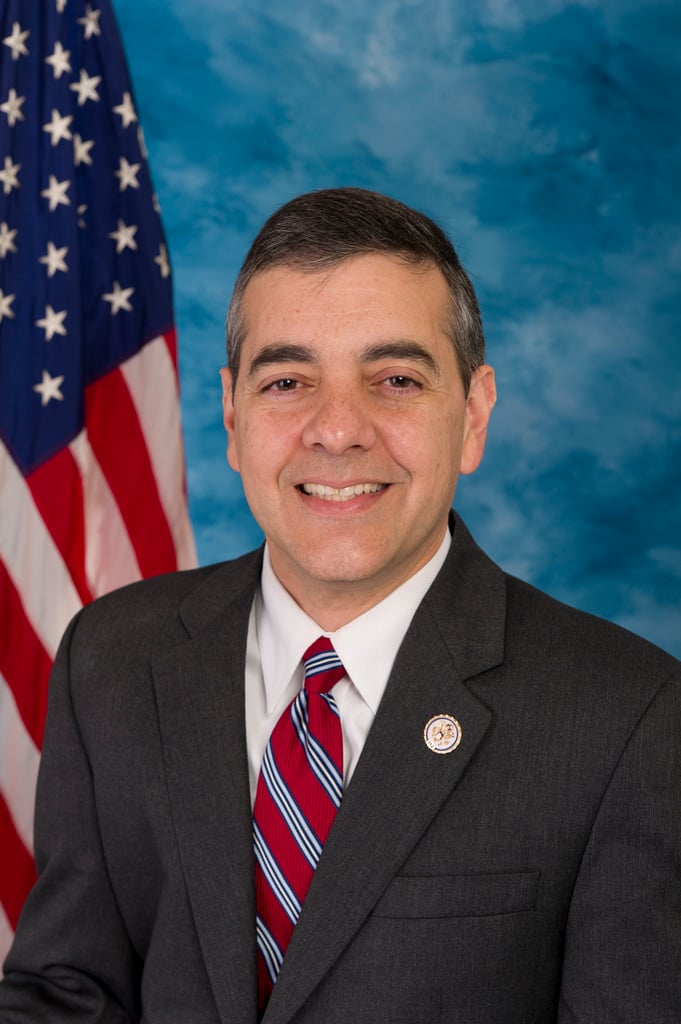
Former Florida Congressman convicted in $50 million Venezuela-linked lobbying scheme

A federal jury in Miami has convicted former U.S. Congressman David Rivera and lobbyist Esther Nuhfer for secretly lobbying on behalf of the Venezuelan government and laundering millions of dollars tied to a $50 million contract connected to a subsidiary of the state-owned oil company Petróleos de Venezuela, S.A. (PDVSA).

Prosecutors said the pair operated without registering under the Foreign Agents Registration Act (FARA), while actively lobbying U.S. officials and facilitating high-level diplomatic access for Venezuelan interests. That included arranging contacts with figures such as then-U.S. Senator Marco Rubio and U.S. Representative Pete Sessions, as well as meetings involving senior Venezuelan officials, including Nicolas Maduro and then-Foreign Minister Delcy Rodriguez.

According to evidence presented at trial, Rivera and Nuhfer used coded communications to conceal their activities while advancing what prosecutors described as the interests of Venezuela’s government. Authorities said Rivera diverted about $600,000 from the contract to support his political campaign and personal expenses, while Nuhfer used roughly $455,000 to purchase property in Florida’s Key Colony Beach.

U.S. Attorney Jason A. Reding Quiñones said the case exposed individuals who “sold access and influence” to a foreign regime, calling it a direct violation of laws meant to protect transparency in U.S. democracy. FBI and IRS Criminal Investigation officials said the defendants attempted to hide financial flows and political activity behind coded messaging and layered transactions, but were ultimately traced through financial records.

Rivera was convicted on multiple counts, including conspiracy to violate FARA and money laundering-related charges and faces up to 60 years in prison. Nuhfer was also convicted on FARA and financial crimes charges and faces up to 30 years. Sentencing will be determined by a federal judge at a later date.

Opinion: Caribbean immigrants do experience culture shock

caribbean immigrants
A building in Brooklyn, NY decked out in the flags of various Caribbean countries for the annual West Indian Day Parade. The greater New York metropolitan area is home to the largest number of Caribbean immigrants in the United States. Photo: Paul Stein (https://www.flickr.com/people/kapkap/)

Proponents at a recent debate on the motion, “Caribbean immigrants are more resistant to culture shock than other immigrants,” held at a Miami university, were defeated.

The affirmative side argued that Caribbean immigrants are largely oblivious to culture shock and instead cling to their native cultures—expressed through language, music, and food. While those arguments had some merit, the outcome is not surprising. The claim that Caribbean immigrants are resistant to culture shock is too broad and overlooks the realities most immigrants face.

People from Caribbean countries such as Jamaica, Trinidad and Tobago, and Haiti do experience culture shock in the United States, but it often presents differently from what people expect.

It is true that many Caribbean immigrants hold on to their language, dialect, music, and cuisine. However, this is not evidence of an absence of culture shock; rather, it is a common response to it.

Many arrive with some familiarity with American culture through media, tourism, education, and migration networks. As a result, their culture shock is less about everything feeling entirely foreign and more about adjusting to subtle social norms—such as workplace expectations and communication styles. Racial dynamics in the United States can also differ significantly from those in the Caribbean. In addition, the faster pace of life and a sense of isolation can be difficult to navigate compared to the typically close-knit communities back home.

Maintaining Caribbean identity—through food, dialects like Jamaican Patois and Haitian Creole, and music such as reggae and soca—helps immigrants stay grounded, build community, and pass on their culture to the next generation.

This is especially visible in Caribbean-American communities in cities like New York and across South Florida, where cultural life remains vibrant. That visibility does not indicate resistance to American culture, but rather an ability to engage with both cultures at once.

Instead of fully assimilating or rejecting American culture, many Caribbean immigrants develop a hybrid identity. They may retain strong Caribbean traditions at home and within their communities while adopting more “Americanized” behaviors in professional or public settings. This duality reflects adaptability, not obliviousness.

In fact, second-generation Caribbean Americans often experience even stronger cultural tension than their parents. Growing up among American peers, they are more conscious of navigating their identity and may feel pressure to distance themselves from aspects of their heritage.

Although Caribbean immigrants do experience culture shock, they often cope by actively preserving their culture rather than abandoning it. This reflects resilience and intentional identity-building, not a lack of awareness.

That dual experience plays out in everyday life, particularly in workplaces, homes, and social spaces.

In many American workplaces, Caribbean immigrants adjust more than is often recognized. Communication styles that may be considered normal in the Caribbean—direct, expressive, or informal—can be misinterpreted in the U.S. as blunt or unprofessional. As a result, some individuals modify their tone and delivery, which can sometimes be misread as passivity.

Many also switch between standard American English and their native dialects, such as Patois or Creole, depending on the setting. This code-switching is not a sign of submissiveness, but a practical skill developed to navigate different environments.

While Caribbean cultures often emphasize respect for authority, American workplaces tend to reward self-promotion and assertiveness. This difference can sometimes lead to Caribbean workers being overlooked, despite strong performance.

Racial dynamics are another major source of culture shock. Many immigrants come from societies where race operates differently, and they may not initially identify with the structures of American racism. Adjusting to these realities can be one of the most significant challenges they face.

At home, Caribbean culture is often most strongly preserved. Households may emphasize structure, discipline, and respect for elders—values that can sometimes clash with the more individualistic norms embraced by American-born children.

Food also remains a central cultural anchor, even when younger generations gravitate toward American options. At the same time, there is often a strong emphasis on education, hard work, and upward mobility, with children encouraged to justify the sacrifices made by their parents.

Second-generation Caribbean Americans frequently feel pressure from their parents to maintain their cultural identity, even as they navigate American society. This push and pull is one of the clearest indicators that culture shock does exist within Caribbean families.

Rather than fully blending into mainstream culture, many immigrants maintain strong ties to their roots through churches, alumni networks, and community organizations. These spaces help reduce isolation and reinforce shared values.

Many also maintain ties to their roots through churches and community groups, helping to reduce isolation. Music—reggae, dancehall, soca, and kompa—and events like Carnival in Miami and New York continue to reinforce cultural identity.

Caribbean immigrants do experience culture shock, especially in workplaces and family life. However, they adapt where necessary while preserving what defines them. In many cases, their culture shock is not absent, but carefully managed and less visibly expressed.


India and Jamaica strengthen ties with Sabina Park scoreboard gift

Under the historic stands of Sabina Park, a simple unveiling carried the weight of generations. What might have appeared to be a routine installation, the dedication of a new electronic scoreboard, unfolded instead as a moment rich with symbolism, linking two nations through sport, history, and shared identity.

Standing alongside Jamaica Prime Minister Andrew Holness, India’s External Affairs Minister S. Jaishankar framed the occasion not as a gesture of infrastructure, but as a celebration of enduring connection.

In a message that quickly resonated beyond the ceremony, Jaishankar distilled the essence of India-Jamaica relations into a single, evocative line:

“The India-Jamaica story is written in runs, written in respect, written in friendship.”

The words captured more than cricket, they reflected a relationship shaped by shared colonial histories, cultural exchange, and a mutual reverence for the game that has long united both societies.

As the new scoreboard flickered to life, it became more than a digital upgrade. It stood as a marker of continuity, linking past achievements with future possibilities.

A ground steeped in legacy

For Jamaica, Sabina Park is not merely a venue, it is the heartbeat of cricket on the island and its only Test ground. Generations of players have passed through its gates, contributing to the global legacy of West Indies cricket team.

Figures such as Chris Gayle, Courtney Walsh, and Michael Holding have all helped define that legacy, turning Sabina Park into a stage where Caribbean flair met international excellence.

Jaishankar acknowledged that lineage with a touch of humor, noting that Gayle’s presence at the ceremony was “missed,” a remark that drew a knowing smile given the batter’s iconic status.

Technology meets tradition

While steeped in history, the venue now looks firmly toward the future. The installation of the electronic scoreboard represents a modernization of the cricketing experience, enhancing how fans engage with the game while preserving the traditions that define it.

Yet, for both nations, its significance runs deeper than function.

“May this scoreboard count many great innings to come. Among them, that of India-Jamaica friendship,” Jaishankar said.

In that sense, every run recorded will also serve as a quiet reaffirmation of diplomatic goodwill.

A wider diplomatic journey

The Sabina Park ceremony formed part of a broader regional visit by Jaishankar, one that extends beyond Jamaica to Suriname and Trinidad and Tobago. His itinerary reflects India’s ongoing engagement with the Caribbean, particularly with communities shaped by Indian migration.

In Old Harbour, he traced that history back more than 180 years, visiting the site where the first Indian migrants arrived. There, he met members of the Indian diaspora, recognizing their role in preserving cultural traditions while contributing to Jamaica’s national fabric.

Cricket has long operated as a cultural bridge between India and Jamaica, binding two distant nations through a shared language of competition, artistry, and respect.

This latest gesture, though modest in scale, reinforces a broader truth: that diplomacy is often most powerful when it speaks through familiar, human connections.

At Sabina Park, the scoreboard will tally runs, partnerships, and victories. But beyond the numbers, it now carries a quieter responsibility, to stand as a lasting symbol of a relationship that continues to evolve, one innings at a time.


West Indies set for summer showdown as Sri Lanka confirm Caribbean tour

West Indies senior men’s cricket team 2026

The Caribbean cricket calendar is set for an action-filled stretch this summer as Sri Lanka national cricket team prepare for a full bilateral tour of the West Indies, bringing white-ball intensity and crucial Test Championship stakes to the region.

Spanning June and July, the series will feature three One-Day Internationals, three T20 Internationals, and a two-match Test series, offering both teams an important opportunity to sharpen form and settle unfinished business.

Kingston to launch white-ball contest

The tour opens in Jamaica, with all six limited-overs matches scheduled for Sabina Park, one of the Caribbean’s most storied cricket venues.

The One-Day International series gets underway on June 3, with subsequent matches on June 6 and June 8, all in Kingston.

Attention then shifts quickly to the shortest format, as the T20I series begins on June 11, followed by matches on June 13 and June 14.

For fans in Jamaica, it represents an extended showcase of international cricket on home soil, with six matches in just under two weeks.

Antigua to host crucial Test chapter

After the white-ball contests conclude, both teams will transition to Antigua for the red-ball phase of the tour.

A four-day warm-up fixture will serve as preparation before the first Test begins on June 25. The second and final Test starts on July 3, with both matches carrying additional significance as part of the International Cricket Council World Test Championship.

For West Indies cricket team, the Test series presents a chance to revive a difficult campaign. The regional side has played eight matches in the current championship cycle without registering a victory and will be eager to finally get points on the board.

Sri Lanka arrive with stronger footing. Having played only two Tests so far, they currently sit fifth in the standings and will be keen to capitalize early in the cycle.

History favors the visitors

Recent meetings suggest the visitors may enter with confidence.

The teams last faced off in a bilateral series in October 2024 in Sri Lanka, where the hosts dominated across formats. Their most recent white-ball meetings against the West Indies also came in Sri Lanka in 2021, when the home side again emerged victorious in a two-match series in Galle.

That recent trend gives the Caribbean side added motivation heading into the summer.

This series is not only about competition, it is also an opportunity for response.

Full series schedule

ODI Series – Kingston

First ODI: June 3

Second ODI: June 6

Third ODI: June 8

T20I Series – Kingston

First T20I: June 11

Second T20I: June 13

Third T20I: June 14

Test Series – Antigua

First Test: June 25-29

Second Test: July 3-7

More than a bilateral series

For both teams, this tour carries layered significance.

Sri Lanka will be seeking momentum and World Test Championship points while continuing their recent dominance over the West Indies. Meanwhile, the Caribbean side faces a more urgent challenge: rediscover rhythm, halt a winless Test run, and deliver stronger performances in front of home supporters.

With white-ball fireworks expected in Kingston and longer-form pressure building in Antigua, the series promises variety, narrative, and consequence.

By the time July arrives, both teams should have a clearer picture of where they stand, and where their seasons are headed.


Jamaican shooters shine bright with multiple podium finishes at World English Championship

The combined male and female team that represented Jamaica at the World English Championship in San Antonio, Texas. Female team (front row from left) Aliana McMaster, Wendy McMaster, Toni Barnes and Lori-Anne Harris. Male team (from left) Roman Tavares-Finson, Jonathan Ralston, Nicholas Chen, Christian Sasso, Shaun Barnes and Alex Cunningham.

Against a backdrop of elite international competition, Jamaica’s shooting fraternity delivered a performance defined by composure, precision, and depth.

At the World English Championship in San Antonio, the island’s representatives stood tall among more than a thousand competitors from 19 countries, reaffirming their place in one of the sport’s most demanding arenas.

From team success to individual brilliance, Jamaica’s campaign was not just competitive, it was commanding.

Team Jamaica steps forward

Represented by the Jamaica Skeet Club, the national delegation brought both experience and ambition to Texas. A 10-member official team, six men and four women, anchored the effort, supported by a wider contingent of 27 Jamaican shooters competing across divisions ranging from D Class to Master.

It was a broad and ambitious presence, signaling the nation’s growing investment in the sport.

The defining team result came from the women’s squad, who delivered a composed and determined performance to secure bronze in the championship’s main event.

Aliana McMaster, Wendy McMaster, Lori-Anne Harris, and Toni Barnes combined effectively to finish third behind powerhouse teams from the United States and England. Their result not only earned a place on the podium but underscored the steady rise of Jamaica’s female shooters on the international stage.

Men miss podium by a margin

The men’s team came agonizingly close to joining their female counterparts on the podium. Christian Sasso, Shaun Barnes, Roman Tavares-Finson, Jonathan Ralston, Nicholas Chen, and Alex Cunningham posted a score of 776, just one point shy of Ireland’s 777.

The narrow margin highlighted both the competitiveness of the field and the fine lines that separate medalists from contenders at this level. The United States dominated with 903, followed by England (876) and Italy (842).

While the team results were impressive, Jamaica’s individual shooters ensured the country’s presence was felt throughout the championship.

The Ladies team celebrate their bronze medal placement on the podium at the World English Championship in San Antonio, Texas. (From left) shooter and team manager Wendy McMaster, Lori-Anne Harris, Aliana McMaster and Toni Barnes.

Lori-Anne Harris emerged as one of the standout performers, capturing the Winchester Ladies Cup A-D High Overall title with a score of 228/300. She also secured second place in the Main Event C Class, demonstrating both consistency and competitive edge.

Aliana McMaster added to the medal tally with a bronze in the Lone Star Cup AA Class and produced an 81/100 performance in FITASC competition.

Roman Tavares-Finson continued his strong showing with podium finishes in both the Main Event and Super Sporting AA Class, while Jonathan Ralston claimed second place in the Super Sporting AA Class, reinforcing Jamaica’s depth in the discipline.

Independent shooters rise to the occasion

Beyond the official team, Jamaica’s independent competitors delivered a remarkable series of performances that further elevated the nation’s standing.

Philip Burgess produced one of the most extraordinary individual campaigns, securing five podium finishes in D Class. His victories in FITASC, the Lone Star Cup, and American Field Sporting were complemented by third-place finishes in both the Main Event and 5-Stand.

Veteran coach Khaleel Azan added a gold medal in FITASC C Class, while David Subaran and Brian Kong contributed silver medals in FITASC A Class and Super Sporting B Class, respectively.

Leadership behind the performance

Central to Jamaica’s success was the leadership and preparation behind the scenes. Wendy McMaster, serving in the dual role of competitor and team manager, was instrumental in both pre-event organization and on-site coordination.

The Jamaica Skeet Club also acknowledged Tracy Simpson for her critical role in ensuring the team’s readiness and smooth participation at the championship.

McMaster expressed satisfaction with both the results and the professionalism displayed by the Jamaican contingent, noting the discipline and unity that defined their campaign.

In a competition featuring some of the world’s top shooting nations, including the United States, England, Italy, Mexico, Australia, and New Zealand, Jamaica’s results stand as a testament to its growing stature in the sport.

The blend of team success, individual podium finishes, and emerging talent suggests a program on the rise, one capable of competing consistently at the highest levels.


TTFA President Kieron Edwards pushes back amid resignation calls

TTFA President Kieron Edwards

Amid intensifying scrutiny over recent national team performances, Kieron Edwards has made one thing clear, his future as president of the Trinidad and Tobago Football Association will not be decided in the court of public opinion, but by the organization’s membership.

Facing mounting calls for resignation, Edwards has rejected the notion that he is clinging to power, instead placing responsibility squarely in the hands of the association’s governing structure.

Calls for accountability grow louder

The pressure has been fueled by a series of disappointing results across multiple national teams. Both senior men’s and women’s squads failed to advance to the closing stages of World Cup qualification, while youth teams, including the under-17 boys and girls, as well as the under-20 side, also fell short.

The under-20 team’s 3-0 defeat to Costa Rica national football team became one of the defining setbacks, symbolizing a broader struggle within the national program.

Against this backdrop, long-standing football administrators Ken Butcher and Keith Look Loy have publicly called for a complete overhaul of the executive.

Look Loy, writing in his column, delivered a particularly sharp critique:

“TTFA president Kieron Edwards and his executive committee need to find the individual and collective dignity to fall on their sword and allow Trinidad and Tobago football the opportunity to salvage itself.”

He went further, describing the administration’s tenure as “a wretched catalogue of failure,” adding:

“Football is in crisis, the situation is urgent, and the national public is exhausted.”

A measured but firm rebuttal

Edwards has not shied away from responding. While acknowledging the concerns, he challenged the credibility of his critics, noting their long involvement in local football without delivering qualification success at either senior or youth levels.

He pointed specifically to past campaigns overseen by Look Loy, including a failed qualifying run that saw Trinidad and Tobago lose to Guyana national football team.

The implication was direct: accountability, he suggested, should not be selective.

“The membership will decide”

Rather than engage in prolonged public exchanges, Edwards has emphasized process over rhetoric.

“There are measures in the Constitution to deal with that. I am going before the membership at our AGM later this year, and they can take the measures that they want and demand them. I have no problem with putting myself before the membership.”

He underscored the authority of the Annual General Meeting as the association’s highest decision-making body:

“The AGM is the supreme legislative body of the Trinidad and Tobago Football Association, so I will continue to put myself forward to the membership, and they will do as they see fit.”

In essence, Edwards is framing the debate not as a battle of opinions, but as a democratic process.

Context behind the campaign

Elected in April 2024, Edwards pointed to the timing of his administration’s tenure as a critical factor in evaluating results. The World Cup qualifying campaign began only months after he assumed office, leaving limited opportunity for structural overhaul.

“We would have come into power on April 13, 2024, and the World Cup campaign started literally a few months after that… this team was a team we inherited.”

He argued that expectations must be balanced against the realities of transition and rebuilding.

Looking ahead: Reform and recruitment

Beyond defending his record, Edwards highlighted efforts to strengthen the national program, particularly through legislative reform aimed at expanding the player pool.

Referring to the much-discussed “grandparent rule,” he noted the administration’s role in pushing the initiative forward:

“We would have gone through the trenches with two different governments to ensure that this bill was passed, and it gives us the best opportunity to acquire the best talent with a Trinidad and Tobago passport.”

The measure is seen as a potential pathway to reinvigorate national teams by tapping into diaspora talent.

A defining moment approaches

As criticism continues and expectations mount, the upcoming AGM looms as a decisive moment for both Edwards and the future direction of Trinidad and Tobago football.

For now, the president remains resolute, neither retreating nor deflecting, but placing his leadership squarely before those empowered to judge it.

In a climate charged with frustration and urgency, the final verdict, he insists, belongs to the membership.


Jamaica commissioner touts crime-fighting gains as police ramp up operations

Jamaica Police Commissioner welcomes the wearing of body cameras
Dr. Kevin Blake. (Photo: JIS)

Police Commissioner Dr Kevin Blake has credited intensified policing efforts for a surge in operational results across the island, while urging Jamaicans to play a more active role in reducing violent confrontations.

In his latest weekly column, Blake commended members of the Jamaica Constabulary Force (JCF) for what he described as a significant increase in enforcement activity, which he said is helping to sustain a downward trend in murders.

“As I review the number of operations and the results of those operations, I am reminded of this significant effort that you have been making to keep the murder trajectory going in the right direction,” he said.

According to the Commissioner, officers have carried out more than 9,000 National Coordinated Road Blocks and issued over a quarter million traffic tickets. He added that more than 8,000 people were arrested, with over 10 percent linked to major crimes such as murders and shootings.

Blake said the figures reflect a coordinated, intelligence-driven approach to policing, with sustained operational pressure disrupting criminal activity. In recent months, the JCF has ramped up targeted interventions, road policing, and intelligence-led operations as part of its broader crime reduction strategy.

At the same time, the Commissioner raised concern about ongoing violent encounters, some of which have resulted in fatalities. He emphasized that de-escalation remains central to the JCF’s engagement with the public.

“Unfortunately, we continue to see a number of violent confrontations where some have resulted in lives being lost,” Blake said, noting that the primary objective in such situations is to reduce tension and avoid escalation.

He also appealed to citizens to support law enforcement efforts by discouraging violent responses, particularly among individuals being pursued by police.

“I am taking the opportunity to appeal to all well-thinking Jamaicans to join us in imploring those violent and hardened criminals who we pursue daily, not to meet us with deadly force,” he said.

Blake stressed that fatal outcomes are not the intended result of police operations. “Fatal shootings do not benefit anyone. It is never a desired end state,” he added.

The Commissioner further underscored the importance of discipline within the Force, noting that officers are expected to operate within established use-of-force guidelines at all times.

The JCF continues to position de-escalation, professionalism, and adherence to the rule of law as key pillars in its efforts to reduce violent crime and protect lives.

Guyana police seize firearms from sanctioned Mohamed family amid ongoing US case

Azruddin Mohamed

Police in Guyana have seized personal firearms and ammunition belonging to businessman Nazar “Shell” Mohamed and his son, Opposition Leader Azruddin Mohamed, nearly two years after the pair were sanctioned by the United States over alleged tax evasion tied to gold exports.

In a correspondence issued on Tuesday, Deputy Police Commissioner Simon McBean, Divisional Commander of Region 4 “A,” instructed the Mohameds to surrender their weapons and ammunition and to “show cause, in writing,” why their firearm licences should not be revoked under the country’s Firearms Act. The directive cited “serious allegations” stemming from a US indictment that includes conspiracy to commit mail and wire fraud, wire fraud, mail fraud, and conspiracy to commit money laundering.

The charges were filed in the Southern District of Florida on October 6, 2025. The Mohameds are currently contesting a request for extradition to the United States to face trial.

According to Azruddin Mohamed, he complied with the order by handing over one 12-gauge shotgun, one 5.56 mm (.223) rifle and one .45 pistol, while his father surrendered a .32 handgun and a 12-gauge shotgun. He said their premises were not searched during the process.

The Opposition Leader noted that the directive came shortly after he had renewed his firearm licences on April 27, 2026, and said he had intended to renew additional licences this week.

McBean’s correspondence indicated that the US sanctions arose from an investigation by the Treasury Department’s Office of Foreign Assets Control (OFAC), conducted in collaboration with Guyanese law enforcement. The sanctions, imposed in June 2024, allege that the Mohamed business network evaded more than US$50 million in taxes owed to the Guyanese government on the export of over 10,000 kilograms of gold.

Azruddin Mohamed said neither he nor his father had been questioned in relation to any firearm-related incidents. He also reiterated that he previously declined an offer of police security through the Parliament Office, citing concerns about trust, and said he would not reconsider that position despite the seizure of his personal weapons.

Responding to the latest development, Mohamed accused the governing People’s Progressive Party (PPP) of orchestrating a campaign against him, alleging efforts to shut down his bank accounts and pursue criminal allegations, as well as influence the US sanctions and subsequent legal actions.

“They tried everything against me,” he said, describing the moves as politically motivated.

The Mohameds also stated that following the 2024 sanctions, authorities had seized approximately 70 firearms used for security across their homes and business operations.

The Guyana Police Force has not publicly commented beyond the correspondence, and it remains unclear when a decision will be made regarding the status of the Mohameds’ firearm licences.

Broward officials push job opportunities with Port Everglades career fair

jobs Sunrise fair

In the wake of the recent shutdown of Spirit Airlines—which left roughly 8,000 Broward County residents without jobs—local officials are ramping up efforts to connect displaced workers with new employment opportunities.

Broward County Commissioner Alexandra P. Davis is spearheading those efforts through the upcoming Port Everglades Career Fair & Expo, set for May 27 at the Broward County Convention Center. The free event is expected to draw nearly 40 employers from a range of industries, including aviation, maritime, hospitality, construction, and government.

“During times like this, it is our responsibility to show up for our residents,” Davis said. “This career fair is not just an event—it is a pathway to new opportunities, stability, and hope for those affected.”

Organizers say the initiative underscores the role of Port Everglades as a key economic engine in the region, supporting more than 12,000 local jobs across port operations and related industries.

Among the participating employers are major public and private sector entities such as the Broward Sheriff’s Office, U.S. Customs and Border Protection, Fort Lauderdale-Hollywood International Airport, and several maritime and construction firms. Educational institutions and workforce development agencies, including Atlantic Technical College, Florida Atlantic University, and CareerSource Broward, will also be on hand.

The event is designed to provide job seekers with direct access to recruiters, career resources, and training opportunities at a time when many in the community are navigating sudden unemployment.

“Port Everglades is a major economic engine for Broward County that generates jobs in the community and among the maritime companies that conduct business here and call our port home,” Davis said. “I am committed to inspiring job growth and helping people advance their career goals.”

Registration for the career fair is free through Eventbrite, and organizers say both attendance and parking will be at no cost to participants. Additional details are available at PortEverglades.net/career-fair.

With a wide cross-section of employers participating, officials say the expo aims to offer a practical pathway forward for thousands of residents affected by the airline shutdown, while strengthening the county’s workforce pipeline.

Guyana tells ICJ Spain and Venezuela never administered Essequibo region

Guyana Essequibo region

Guyana has told the International Court of Justice (ICJ) that neither Spain nor Venezuela ever administered the Essequibo region, as the long-running territorial dispute over the resource-rich area continues before the court.

The Essequibo region makes up roughly two-thirds of Guyana’s territory, spanning about 61,600 square miles. It is bordered by the Essequibo River to the east and Venezuela to the west, and is widely regarded as rich in natural resources and biodiversity.

Guyana’s Director of the Frontiers Division of the Ministry of Foreign Affairs, Ambassador Donnette Streete, and the country’s ICJ agent in the case, Carl Greenidge, presented arguments in support of the validity of the 1899 Arbitral Tribunal Award, which underpins Guyana’s claim.

They said Dutch settlers were the first Europeans to occupy the territory, later followed by descendants of Africans and Asians brought to Guyana as enslaved and indentured labourers under Dutch and British colonial rule between the 17th and 19th centuries.

Streete told the court that Guyana currently administers the region, collects taxes, conducts elections for nine parliamentary representatives from Essequibo, and manages environmental protection efforts.

She added that the 2022 national census recorded a population of 313,175 in the Essequibo region—more than one-third of Guyana’s total population—including members of nine Indigenous groups, described as the area’s first inhabitants.

Greenidge, a former foreign affairs minister, presented historical maps and documents he said showed Spanish presence was limited well outside the disputed territory, while Dutch settlements were firmly established within it.

He said Dutch settlers arrived in 1598 and by 1616 had established the colony of Essequibo, including Fort Kykoveral along the Mazaruni River as an administrative centre, extending governance westward toward the Orinoco River.

“The Spanish, they were nowhere to be found, not east of the Orinoco, at any rate,” Greenidge said, adding that the nearest Spanish settlement was San Tome, which he described as being far removed from the Essequibo region.

Guyana’s legal team also argued that Venezuela’s challenge to the 1899 award is legally barred under the principle of res judicata.

Lawyer Pierre d’Argent said Venezuela has not identified any new facts that would justify reopening earlier ICJ decisions. He noted that Venezuela had not filed an application for revision under Article 61 of the ICJ statute, which is the only legal mechanism to challenge res judicata.

“It must be concluded, therefore, that Venezuela has not discovered any new fact of such a nature had it been known as to be a decisive factor on the conclusions reached by the court in its judgments of 2020 and 2023 and in these conditions, these judgments remain res judicata for the parties in the court itself,” he said.

Another member of Guyana’s legal team, Paul Reichler, told the court that Venezuela had accepted and complied with the 1899 arbitral award for more than six decades before formally disputing it in 1962 in a letter to the United Nations Secretary-General.

Reichler said Venezuela continued to recognise the 1897 treaty as valid at that time and only began challenging the award in 1963, 66 years after ratifying the agreement.

The ICJ said both Guyana and Venezuela will continue oral arguments over multiple sessions, with proceedings expected to run through Monday next week.

Bahamas opposition promises fixed election date if it wins power

michael pintard bahamas
Opposition Leader Michael Pintard.

The main opposition Free National Movement (FNM) has pledged to introduce fixed election dates in The Bahamas if it forms the next government following the May 12 general election.

FNM leader Michael Pintard told supporters in Freeport, Grand Bahama, that the current system allows too much discretion over election timing.

“This nonsense of one man or one woman as prime minister, being able to wake up one day and decide, ‘This is when I will call an election,’ that day should be a day of the past. We should have a fixed election day to give predictability to the system,” Pintard said.

Pintard also criticised the administration of Prime Minister Philip Davis and officials at the Parliamentary Registration Department (PRD), pointing to what he described as disorganisation during last Thursday’s advanced poll.

“I’m offering a firm commitment that under my leadership, we will go in a different direction,” he said.

“We should have an independent parliamentary registrar to oversee the elections across our country and to ensure efficiency, fairness, and transparency. As politicians, if we have to pick the friendlies to bring them out of retirement to preside over the process, then we are more interested in us remaining in power rather than democracy working for our people,” Pintard added, saying the Progressive Liberal Party (PLP) was “playing games.”

In response, the Parliamentary Registration Department acknowledged challenges during the advance poll.

In a statement, the department said, “We recognize that while we had an operational plan in place, there were some challenges that arose and we want to assure the public that we have already begun taking action to improve the voting process on May 12th.”

It noted that some polling stations experienced “extended wait times and long lines,” particularly affecting older voters.

“Many Bahamians expected a smoother experience, especially elder voters who waited for long hours to exercise their right to vote,” the department said.

It added that turnout was “unprecedented,” describing it as the highest participation in an advance poll in Bahamian history, which placed strain on logistics and processing capacity.

“The Parliamentary Registration Department remains focused on ensuring that all necessary provisions are in place for May 12, so that every eligible voter can cast their ballot in an orderly and efficient manner,” it said.

Pintard, however, described troubling scenes at polling stations, saying some elderly voters waited hours in difficult conditions.

“Some of the senior citizens were in wheelchairs and had to wait three hours, four hours later, had tears in their eyes as they waited to vote,” he said.

“In some cases, it was as little as 900. I’m told in some it was less. Yet, people had to wait for many hours to vote.”

He added that some individuals reportedly collapsed while waiting in the heat, despite efforts to distribute umbrellas.

“If this were only incompetence, a lack of ability to carry out a function that we’ve been carrying out for decades, that alone should disqualify the PLP from presiding over this country,” Pintard said, adding that he had not heard any apology from government officials.

Pintard also suggested the delays could have political consequences.

“People who are motivated and wait in long lines in the sun to vote usually don’t vote for the government of the day,” he said.

He asked whether the experience reflected “a government that is showing progress in our electoral process.”

Meanwhile, Prime Minister Philip Davis has defended his administration’s record, pointing to infrastructure improvements, including the recent opening of the Arthur’s Town airport on Cat Island.

“I’m not a boastful person, but I think everyone on this island, everyone who played a part in making that airport a reality, we all deserve to take a moment, stand back and say, look at what we did,” Davis said.

“That’s progress, the kind of progress you can touch and feel and experience every day, the kind of progress that is just the beginning, that we can build on to continue to make life better.”

In the last general election, the PLP won 32 of the 39 seats, with the FNM securing the remainder.

LUCELEC says rodent interference triggered islandwide blackout in Saint Lucia

The St Lucia Electricity Services Limited (LUCELEC) has attributed last weekend’s islandwide blackout to an “unexpected fault” on an 11 kilovolt (11kV) breaker within its Cul-de-Sac electricity network.

In a statement, the utility company explained that the fault activated automatic protection systems designed to prevent serious equipment damage, resulting in a full shutdown of the electricity system.

“The fault triggered the automatic protection systems designed to prevent significant equipment damage resulting in the total shutdown of the electricity system,” LUCELEC said, adding that “preliminary investigations have since confirmed that the fault was initiated by rodent interference with the 11 kV breaker” on May 1.

The company noted that while “wildlife accidents are rare and are well recognised risks in power systems globally,” it maintains multiple layers of protection intended to contain such incidents and prevent wider system damage.

LUCELEC said electricity restoration began less than an hour after the outage, with power gradually returned to customers across the island following system checks and inspections.

The utility has also launched a detailed post-incident technical review as part of its standard procedures. “This review will assess the sequence of events, system performance, and existing mitigation measures to ensure they operated as expected. Its results will guide any further actions required to strengthen resilience and reduce the likelihood of recurrence,” the company said.

LUCELEC apologised to customers for the disruption, describing it as an unplanned islandwide outage, and reaffirmed its commitment to service reliability.

The company said it remains “committed to delivering a safe, reliable, and resilient electricity service and will continue investing in infrastructure, system protection, and operational improvements in service to the people of St Lucia.”

Caribbean Development Bank appoints Gillian Charles-Gollop as Vice President

The Caribbean Development Bank (CDB) has appointed finance executive Mrs. Gillian Charles-Gollop as Vice President, Corporate Services, effective May 1, 2026.

With more than 30 years of experience in banking and financial services, Mrs. Charles-Gollop brings extensive expertise in corporate and investment banking, governance, strategic planning, and credit and operational risk management. The Bank said her appointment reinforces its focus on operational excellence and strong financial stewardship.

Her career is marked by a track record in delivering client outcomes, strengthening governance frameworks, and advancing sustainable finance initiatives, alongside leadership in people management and institutional performance.

Most recently, she served as Executive Director, Corporate Banking and Sustainable Finance at CIBC Caribbean, where she provided regional leadership and strategic oversight of a corporate and sovereign client credit portfolio exceeding US$6 billion. In that role, she also advanced the bank’s sustainable finance agenda across the region.

Her professional experience includes leading complex financing transactions, mergers and acquisitions advisory work, capital markets and debt conversion deals, as well as financing major infrastructure, utilities, renewable energy, and telecommunications projects across the Caribbean.

A Saint Lucian national, Mrs. Charles-Gollop has received multiple awards and commendations for her work in risk management, operational performance, and client service. She holds an MBA in Finance from the University of Leicester and is an Associate of the Institute of Canadian Bankers. She also holds governance accreditation through the Chartered Governance Institute of Canada and certification in sustainability and climate risk from the Global Association of Risk Professionals. In addition, she is a certified change management practitioner and a graduate of CIBC Caribbean’s Senior Leadership Program.

“Gillian’s appointment strengthens CDB’s leadership team at a pivotal time,” said CDB President Daniel M. Best. “Her strategic insight, deep financial expertise, and strong commitment to the region’s advancement will be invaluable as we continue to enhance financial management, mobilise resources, and support sustainable development across our borrowing member countries.”

In her new role, Mrs. Charles-Gollop will provide strategic direction and oversight of the Bank’s corporate services functions, ensuring efficient operations and strong institutional support. The Bank said she will also help advance its mission to accelerate inclusive growth and development throughout the Caribbean.

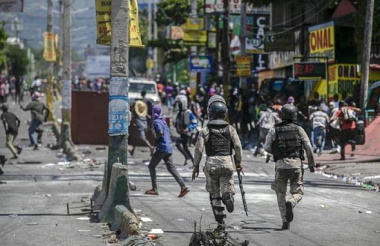
IACHR expresses concern over rising violence in Haiti

The Inter-American Commission on Human Rights (IACHR) has raised alarm over escalating gang-related violence in Haiti and reports indicating that recent law enforcement operations involving drones have resulted in civilian deaths, including children.

The Commission noted that operations conducted over the past year—some in collaboration with private actors—have allegedly caused multiple fatalities amid intensified security efforts.

A report from the Office of the United Nations High Commissioner for Human Rights (OHCHR) states that between March 2025 and January 2026, at least 5,519 people were killed and 2,608 injured, primarily in Port-au-Prince. According to verified OHCHR data, at least 1,424 people were killed and 790 injured in gang violence, while 3,497 were killed and 1,742 injured during security force operations against gangs. In addition, at least 598 people were killed and 76 injured in attacks carried out by civilian “self-defence groups.”

More recently, between March 28 and 29, 2026, gang-related violence in the Artibonite region left at least 70 people dead and around 30 injured. The report also referenced the kidnapping and killing of journalists Junior Célestin and Osnel Espérance in mid-March, as well as an armed attack against journalist Marvel Dandin.

In response to widespread violence, state security operations have reportedly included the use of drones and helicopter fire. Information from the United Nations Integrated Office in Haiti (BINUH) and civil society organizations indicates that these operations have resulted in at least 60 deaths and 49 injuries among individuals reportedly not affiliated with gangs, including 13 children killed and 10 injured. An OHCHR report dated March 24, 2026, further states that some drone strikes were carried out by national law enforcement with support from a foreign private military contractor.

In its response, the State said that these operations are conducted in areas currently under the control of criminal groups, following prior identification of targets and with safeguards intended to minimize collateral harm.

The IACHR acknowledged the State’s responsibility to protect its population from gang violence and maintain public order, as well as its efforts to address the crisis. However, the Commission stressed that in the absence of a clear legal classification of armed conflict, state actions remain subject to international human rights law. It added that all alleged deaths, including those resulting from such operations, must be promptly investigated as potential arbitrary deprivations of life.

The Commission expressed particular concern over the deaths of children, noting that they occur amid increasing recruitment and use of minors by gangs in Haiti. It also highlighted risks to press freedom, stating that as criminal groups expand territorial control, kidnappings and short-term enforced disappearances are silencing journalists and enabling censorship and further crimes.

The IACHR further emphasized that the involvement of private actors in security operations must fully comply with international human rights standards, including legality, necessity, proportionality, and accountability. It urged respect for the right to life, noting that such operations require a human rights-based approach and due diligence, in line with Resolution No. 01/26.

The Commission reaffirmed its commitment to monitoring the situation in Haiti and supporting victims and affected communities through its mechanisms. It called for strengthened protective measures, greater transparency in security operations, and continued adherence to international standards to reduce risks to the population.

The Inter-American Commission on Human Rights (IACHR) is an autonomous body of the Organization of American States (OAS), mandated to promote and protect human rights in the region. It is composed of seven independent members elected by the OAS General Assembly, serving in their personal capacity.

KFC Jamaica reinforces Child Month support with JMD$1 million contribution amid focus on mental health

Caption: Patron of National Child Month, Douglas Orane (left), Programme Manager at the Grace and Staff Community Development Foundation, Sujae Boswell, Chairperson of the National Child Month Committee, Nicole Patrick-Shaw, and Marketing Manager at KFC Jamaica, Andrei Roper, at the official launch of Child Month 2026 held at the Maranatha Gospel Assembly.

Restaurants of Jamaica, through its flagship brand KFC, has reaffirmed its commitment to the nation’s youth with a $1 million contribution to Child Month 2026, aligning with this year’s focus on protecting the mental well-being of children.

Held under the theme “Prioritize Our Children’s Mental Health: Safer Minds, Safer Future,” the launch highlighted the need for stronger support systems for children and the shared responsibility to help establish them.

“Having been a National Child Month programme partner for several years, we made a conscious decision to return this year because of what this initiative represents,” said Andrei Roper, Marketing Manager at KFC Jamaica. “Supporting Child Month allows us to strengthen the work already happening across communities, especially at a time when greater attention is being placed on the emotional and mental well-being of our children. It is important for us to back that effort in a way that is consistent and purposeful.”

The 2026 contribution, valued at $1 million, includes $500,000 in cash and $500,000 in meal support to assist with activities and outreach efforts throughout the month.

Chairperson of the National Child Month Committee, Nicole Patrick-Shaw, pointed to growing concerns around children’s mental health, noting that while it has long required attention, recent years have brought increased emotional strain for many young people across the island.

She explained that the lingering effects of the COVID-19 pandemic, along with more recent disruptions such as Hurricane Melissa, have added to existing pressures. These events, she noted, have led to displacement for some families and interruptions to education, both of which have impacted children’s sense of stability and overall well-being.

“Twenty per cent of our children are experiencing mental health challenges, yet only eight per cent are receiving the help they need,” Patrick-Shaw said. “Child protection is not solely the responsibility of the family. It is a national responsibility. Each of us has a role to play in ensuring that our children feel safe, supported, and heard.”

Her remarks reinforced the need for a broader, more coordinated response to supporting children, particularly as they navigate increasingly complex social and emotional challenges.

Patron of National Child Month, Douglas Orane, also emphasized the importance of sustained and deliberate support, particularly in how adults respond to children’s evolving needs.

“Many of our children are navigating experiences that require more than awareness; they require understanding, patience, and support from the adults around them,” Orane said. “If we are serious about building a stronger future, we have to ensure that our children are not only educated, but emotionally equipped with the support systems they need to thrive.”

For Restaurants of Jamaica, the message served as a reminder of the role organizations can play beyond awareness campaigns.

“There’s a real weight to this year’s theme, and it’s something you can’t ignore,” Roper added. “Over the past year, we’ve seen how much our children have had to process and adjust to. It’s a reminder that support must go beyond moments like this and become something we continue to prioritise in how we show up for them every day.”

5 deserving mothers to receive VIP treatment at Beres Hammond concert in NYC

It is official: Jammins Entertainment has partnered with New York-based GlamSense Divas and Global25 to provide five deserving mothers from Far Rockaway, Queens, with VIP tickets to attend the Beres Hammond & Friends Mother’s Day Concert Experience on May 9, 2026, at UBS Arena in New York.

The collaboration was facilitated by celebrity stylist and GlamSense Divas CEO Madonna Williams, working alongside Global25, a New York City-based organization focused on ESG through a project-based model.

“My friends and I simply wanted to give back and bring joy to families who are going through difficult times,” said Williams. “Love is free, and sometimes a small act of kindness can truly change someone’s life,” she shared.

“When Madonna reached out to us, we spoke with Beres, and he didn’t hesitate to say yes,” said George Crooks, Director of Jammins Entertainment. “We are excited to help bring joy to deserving mothers,” he added.

The Mother’s Day event will feature reggae icon Beres Hammond alongside Stephanie Mills and Romain Virgo. It will be Virgo’s first time performing at an arena concert in New York, and he is elated.

“I’m grateful for the opportunity, first of all,” Virgo told Caribbean National Weekly about performing at the UBS Arena event with Beres Hammond and Stephanie Mills.

“I just can’t wait to get on stage and sing my heart out, as usual,” he shared.

The organizers also extended their gratitude to the many brand partners contributing to this celebration. For more information about supporting Global25, donating to its programs, or exploring partnership opportunities, visit https://www.globaltwentyfive.com/.

American Friends of Jamaica to honor three leaders for Hurricane Melissa response

American Friends of Jamaica

The American Friends of Jamaica (AFJ) will honor three key figures for their leadership and humanitarian efforts following Hurricane Melissa at its 2026 Jamaica Charity Gala, scheduled for June 6 at the Loews Coral Gables Hotel.

The honorees—Michael Capponi, Edward Raine, and Norman W. Horne—are being recognized for their roles in Jamaica’s recovery efforts after the storm, including emergency response, logistics coordination, and long-term rebuilding support.

Capponi, founder of Global Empowerment Mission, mobilized large-scale aid delivery in the immediate aftermath of the hurricane. Within the first week, his organization distributed more than one million pounds of emergency supplies to the hardest-hit communities, particularly in southwestern Jamaica. By early 2026, that figure had grown to roughly four million pounds of food and materials delivered via cargo planes, shipping containers, and cruise vessels. Recovery efforts have since expanded to include temporary roofing for homes and damaged health facilities.

Raine, president and CEO of Food For The Poor, led one of the central logistics operations in Jamaica’s national relief effort. Working closely with government agencies and partners, the organization managed inbound shipments, customs clearance, and distribution of humanitarian aid. It also established regional hubs in Montego Bay and Spanish Town, committed more than $4 million in response costs, and scaled up daily production of food kits. The group has since launched a multi-phase housing initiative, beginning with new homes in Petersfield.

Horne, founder and executive chairman of ARC Manufacturing Limited, played a key role in coordinating sea freight logistics alongside partners including Dennis Shipping and Colgate-Palmolive. His company helped facilitate the delivery of essential supplies such as food, shelter materials, and potable water to Westmoreland and surrounding areas. Horne is also known for his longstanding contributions to Jamaica’s industrial sector and has served on several national boards, including JAMPRO and the National Housing Trust.

AFJ Executive Director Caron Chung said the honorees represent the kind of leadership needed in times of crisis.

“This year’s honorees exemplify the vision and commitment that drive meaningful change across Jamaica and beyond,” Chung said. “We are proud to recognize their contributions following Hurricane Melissa while bringing together a community of supporters dedicated to advancing resilience where it is needed most.”

The Jamaica Charity Gala is one of South Florida’s premier fundraising events supporting initiatives in Jamaica. The event will feature a silent auction, curated wines, a three-course dinner, and live entertainment, with proceeds going toward AFJ’s annual grantmaking in education, healthcare, and economic development.

Founded more than four decades ago, the American Friends of Jamaica is a registered nonprofit that supports projects across the island, with its annual grant cycle opening at the end of each year and disbursements typically made the following April.

Jamaica envoy, Atlanta mayor explore deeper trade and cultural ties

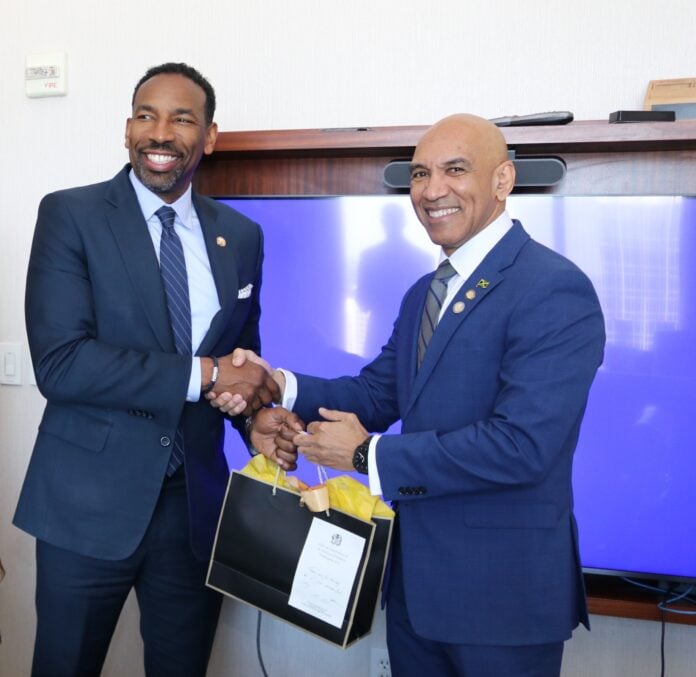
Jamaica’s Ambassador to the United States, His Excellency Major General (Ret’d) Antony Anderson (left), makes a presentation to Atlanta Mayor Andre Dickens during a courtesy call at the Buckhead Club in Atlanta on Sunday, May 3, 2026. Photo Derrick Scott.

Jamaica’s Ambassador to the United States, Antony Anderson, held high-level talks with Andre Dickens on Sunday, as both sides explored opportunities to expand investment, trade, and cultural exchange between Jamaica and the U.S. city.

The meeting, held at the Buckhead Club, highlighted a shared commitment to strengthening ties between Jamaica and Atlanta—one of the United States’ key economic and cultural centers.

Discussions focused on boosting economic partnerships, including increasing investment flows and enhancing trade opportunities between Jamaica and Atlanta-based businesses. Both officials also underscored the importance of cultural connections, particularly given the strong Jamaican diaspora presence in the metropolitan area.

During the engagement, Ambassador Anderson delivered a presentation outlining Jamaica’s strategic priorities and potential areas for collaboration. The two leaders emphasized the importance of sustained dialogue and partnership in advancing mutual interests.

The talks come amid growing momentum around sub-national diplomacy, with cities like Atlanta playing an increasingly influential role in international engagement and economic development.

Both sides expressed optimism about translating the discussions into tangible outcomes, including future initiatives aimed at strengthening business linkages and cultural exchange between Jamaica and Atlanta.

Broward advances major flood resiliency plan to protect communities

Broward County officials have taken a key step forward in strengthening flood protection efforts, formally advancing a major resiliency project aimed at safeguarding communities and critical infrastructure across South Florida.

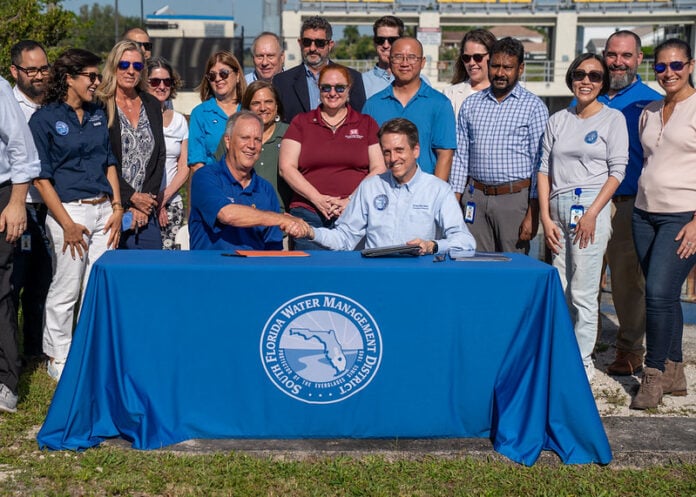
County Commissioner Beam Furr joined South Florida Water Management District Executive Director Drew Bartlett and regional partners to sign the Final Integrated Feasibility Report and Environmental Assessment for the Central and Southern Florida Flood Resiliency (Section 203) Study.

The study outlines plans to reduce flood risk across Broward County and parts of Palm Beach County by improving water control systems spanning more than 420 square miles. Officials say the project is a cornerstone of the county’s long-term strategy to protect lives, strengthen resilience, and safeguard billions of dollars in economic assets.

Developed over several years, the initiative reflects collaboration among Broward County, the South Florida Water Management District, the Florida Department of Environmental Protection, and other stakeholders.

Broward County has committed $5 million to help accelerate the project, which will now move into its next phases, including design, land acquisition, and construction.

“This is about protecting our communities today while preparing for the realities of tomorrow,” Furr said. “Flooding isn’t a future problem in South Florida — it’s already here, and this work ensures we’re making every effort to stay ahead of it.”

With the report finalized, the project will be submitted to the U.S. Army Corps of Engineers for potential authorization under the Water Resources Development Act in 2026, a step that could unlock federal funding and support.

The signing ceremony took place at the G-56 Structure in Deerfield Beach and brought together representatives from multiple agencies and partner organizations, underscoring the level of coordination and investment required to deliver long-term flood protection across South Florida.

Jamaica welcomes Porter Airlines’ new direct service to Montego Bay

Porter Airlines

Jamaica is set to expand its airlift from Canada with the introduction of new direct routes by Porter Airlines to Sangster International Airport in Montego Bay, adding nearly 5,000 seats to the market for the 2026–27 winter tourist season.

The service will connect Montego Bay with three major Canadian gateways — Toronto, Ottawa and Hamilton — marking a significant boost in accessibility for Canadian travelers. Tourism officials say the move reflects growing demand for Caribbean travel, particularly from Canada, one of Jamaica’s key source markets.

Minister of Tourism Edmund Bartlett described the development as a strong endorsement of the island’s appeal.

“This new airlift from Porter Airlines is a powerful affirmation of Jamaica’s standing as Canada’s premier winter sun destination,” Bartlett said. “Connecting Montego Bay directly to Toronto, Ottawa and — for the first time for Porter — Hamilton opens our island to an even wider circle of Canadian visitors.”

Under the new schedule, Porter Airlines will operate flights from Toronto Pearson starting November 23, 2026, with up to five weekly services. Flights from Ottawa will begin on November 25 with twice-weekly service, while Hamilton service will launch on December 20 with two weekly flights. The airline will be the only carrier offering non-stop service between Hamilton and Montego Bay.

Tourism Director Donovan White said the additional routes will make it easier than ever for Canadians to access Jamaica’s tourism offerings.

“Three new non-stop gateways to Montego Bay give Canadian travelers unprecedented ease of access to our beaches, culture and hospitality,” White noted.

The expansion is part of Porter’s broader push into sun destinations, with the airline increasing its warm-weather network by more than 150 percent year-over-year. The growth includes the addition of four new countries and more than 15 new routes across its network.

Regional Director for Canada at the Jamaica Tourist Board, Angella Bennett, said the airline’s investment reflects strong and sustained demand.

“Canadian travelers have a deep and enduring love for Jamaica, and demand from markets like Toronto, Ottawa and southern Ontario has never been stronger,” Bennett said, adding that efforts are already underway with travel partners to ensure strong bookings for the upcoming winter season.

The new routes remain subject to regulatory approvals.

Questions to ask before a big purchase

When it comes to buying a wedding ring, the excitement of the proposal can be matched with an equal amount of pressure. There may be hundreds of different styles and materials available to choose from. Consider the following questions to make your search less overwhelming and more fruitful.  

  • What Is The Ring’s Purpose? 

Consider your daily routine before worrying about the price or visual appeal. If you work with your hands, you need a durable, modest style rather than a delicate setting. Buy a ring that fits your actual life, not just one that looks good to others.

  •  What Is My True Budget?

The purpose of a budget is not to find the highest number you can spend, but rather to determine how much you should spend without causing yourself stress three months later. Include taxes, resizing, maintenance and all repairs.

A wedding band may have a bigger price tag later on if you have to keep getting it polished, resized or having stones tightened. Therefore, spending a little more on a durable ring upfront may be the way to go regardless of immediate cost savings.

  • Inspect The Ring’s Craftmanship

Don’t let a high polish fool you; true quality lies in the construction and durability of the piece. Always ask for specific manufacturing details and look for certificates regarding the materials and craftsmanship, as these documents are essential for verifying metal purity and gemstone authenticity for future insurance purposes.

You must also inspect the structural integrity beyond the initial sparkle. Check the setting closely: are the prongs thick enough to secure the stone against daily knocks, or do they look flimsy? Are the edges of the band evenly finished and smooth against the skin? A quality item will likely feature a “comfort fit” and a sturdy setting that will protect the diamond and maintain its shape for years.

  • Does This Align With My Values And Ethics?

Modern buyers look beyond the sparkle to understand how a piece was actually made. Don’t be afraid to ask the jeweler: “Where did this come from, and how did it get here?” Specifics matter here. Are you prioritizing conflict-free diamonds, recycled precious metals, or fair labor practices?

Knowing these non-negotiables allows you to target jewelers who transparently share their supply chain data rather than those who hide behind vague marketing. By defining your ethical standards before you start shopping, you save time and instantly filter out the noise. This narrows the field, ensuring your final choice isn’t just beautiful, but carries a clear conscience and greater personal significance.

  • How Much Maintenance Will This Ring Require?

As with long-term investments, wedding rings require continual maintenance. How much maintenance your wedding rings need yearly depends on what it takes (in time, energy, and the cost) to maintain them as you would any other long-term item.

Some rings require more maintenance than others. Certain types of wedding rings require regular cleaning or inspection for security and stability of the stones. However, sapphire wedding rings require minimal maintenance. If you might have a hard time maintaining a delicate wedding ring, get a low-maintenance, durable, and practical design. For example, if you prefer a sleek setting that sits close to the band and works well for everyday wear, you can shop burnished styles to compare durable, understated options.

  • Will This Still Make Sense In 10–20 Years?

Trends will come and go. Your purchase should not depend on them! To quickly assess if something will remain appealing to you, imagine that you are wearing it ten years from now. Will it continue to represent who you are?

The ultra-thin band or the latest fad setting might look fabulous today, but they tend to wear out much quicker than a more traditional and well-constructed piece. Additionally, you will find it much easier to resize and repair a traditional, solidly-built wedding ring and keep it looking current over time.

Why Do These Questions Matter?

Asking yourself these questions is important because large purchases are not only going to affect your financial situation at that moment, but they are also going to affect your level of comfort, satisfaction, and peace of mind for the foreseeable future. Financial decisions that require significant levels of emotion and result in a large financial commitment require time to assess from a practical and emotional standpoint.

The pressure to make a quick decision can easily lead you into a bad financial decision. By taking time to ask yourself these questions prior to making a large purchase, you reduce the likelihood of making a common mistake of overspending on something of poor quality or purchasing something because of the way it looks, but does not fit your lifestyle.

 The Ring You Choose Matters

A wedding band symbolizes both your personal identity, and an expression of who you are. It should be a comfortable piece of jewelry that you can easily wear every day while also allowing for an opportunity for individual expression. The ring should reflect your commitment to one another through this union. There are a number of things that will influence your choice of ring, including the durability of metal(s), care and maintenance requirements, and your budget.

As important as the initial visual design of the ring is, you will also want to think about the long-term factors associated with your wedding ring, like resizing, maintenance, and how it will age over time.

Your choice represents a lot more than just the external appearance; it is a daily reminder of your love for your partner and your shared future goals.

 Endnote

Wedding bands are a representation of your marital vows, but also an ongoing physical reminder of how much you care for each other. It is important to ask yourself all of the questions listed above before purchasing your wedding bands to ensure that you will make a well-informed and rational purchase, while also keeping the romance and excitement leading up to your marriage.

When your wedding band matches your long-term objectives, beliefs, values, and intended use, then you are more likely to purchase it not only for today, but for many years to come.

When is the right time to shop for the best tire deals online

Tires rarely spark excitement at the cash register, but the timing behind that purchase can quietly save drivers hundreds of dollars each year. Online sellers rotate promotions across seasons, holidays, and stocking cycles, which gives prepared shoppers a real advantage over those reacting to sudden blowouts or worn tread. This guide maps out the smartest buying windows, so every dollar goes further without cutting corners on safety or quality.

Seasonal Shopping Windows That Reward Patient Buyers

Tire pricing follows rhythms that repeat year after year. Retailers discount summer rubber as autumn approaches, and winter sets tend to drop in cost once spring weather settles in. April and October stand out as two particularly sharp months for savings, largely because manufacturers roll out fresh lineups during these periods while dealers push to clear older inventory.

Anyone chasing the best tire deals during these stretches should weigh several retailers against each other, since the same brand can vary by 30 percent across platforms over a single weekend. Buyers who watch prices during these shoulder seasons often find rebates paired with free shipping or installation credits. Holding off two or three weeks past a predicted cold snap, for instance, can trim 15 to 20 percent off a set of four. A little patience goes a long way at checkout.

Holiday Sales That Consistently Deliver Savings

Several retail holidays have grown into dependable anchors for tire promotions. Memorial Day, Independence Day, Labor Day, Black Friday, and Cyber Monday each bring sharp markdowns from major online sellers. Many platforms also run early-access events the week before, rewarding buyers who build a shortlist in advance.

Joining email lists ahead of holiday weekends also surfaces promo codes that never appear publicly, giving subscribers a measurable head start.

Black Friday deserves extra attention. Online sellers routinely stack mail-in rebates with factory discounts, producing savings that comfortably clear $100 per set.

End-of-Quarter and End-of-Year Inventory Pushes

Large online retailers run on quarterly revenue targets. As March, June, September, and December draw to a close, pricing teams often cut margins sharply to hit those goals. These quiet windows rarely get loud marketing treatment, yet they produce some of the deepest discounts available all year.

December shines brightest of all. Sellers hurry to move current-year stock before newer models take over shelf space. Checking quotes during the final ten days of December often reveals soft price drops on premium brands that held firm at full retail just weeks earlier.

Pre-Season Versus Post-Season Buying

1. Pre-Season Shopping

Picking up winter tires in October or summer sets in March gives drivers first access to sizes and compounds. Selection runs wide, though pricing usually sits close to full retail. Shoppers with less common vehicle sizes often accept that tradeoff willingly.

2. Post-Season Shopping

Post-season buying flips the math entirely. Snow tires bought in late February can run 25 to 40 percent below October pricing. The catch is storage space. Drivers with a garage corner to spare for six months can pocket genuine savings.

Signals That It’s Time to Skip the Sale and Buy Now

Holding out for a perfect price works right up until road safety enters the picture. Tread depth under 4/32 of an inch, sidewall cracks, or repeated pressure loss all point toward immediate replacement. No discount justifies driving on compromised rubber through rain or ice.

A practical guideline is to start tracking prices once tread reaches 5/32″. That buffer offers roughly six to eight weeks of safe driving while scanning promotions. Setting price alerts on preferred models through online comparison platforms turns a stressful scramble into a calm, measured purchase.

Using Price Tracking and Comparison Tools

Digital shopping aids have reshaped how drivers approach tire buying. Browser extensions log historical pricing, showing whether a “sale” actually beats last month’s quote. Comparison sites lay out rebates, warranty details, and installation partners in one clean view.

Reviewing at least three independent sources before purchase guards against inflated markdown claims. Verified-buyer reviews also separate marketing polish from real-world performance, which matters greatly for all-season or performance categories.

Conclusion

Good timing turns tire shopping from a reactive expense into a deliberate purchase. Seasonal transitions, major holidays, and end-of-quarter inventory pushes each open distinct savings opportunities for drivers with the patience to wait. Pairing those windows with price-tracking tools and careful attention to tread wear brings together lower costs and stronger peace of mind. A bit of planning turns a routine errand into a smarter financial move.

Island SPACE Caribbean Museum elects first Haitian-American President

Newly elected Island SPACE President Cleopatra Bauduy Moise at Island SPACE Caribbean Museum. | (Photo: Supplied)

Island SPACE Caribbean Museum has named Cleopatra Bauduy Moise as its new board president, making her the first Haitian-American to lead the organization, in a leadership shift that underscores the growing influence of the Haitian community within the institution.

Christina Brown, a Jamaican native, was elected alongside her as vice president, ensuring continued Caribbean diversity at the highest level of the museum’s leadership.

Newly elected Island SPACE President Cleopatra Bauduy Moise and Vice President Christina Brown (Courtesy: Island SPACE Caribbean Museum)

The appointments, finalized on April 27, 2026, mark a generational transition for the South Florida-based museum, with both leaders under the age of 45. Together, they bring a blend of cultural connection, professional expertise and a shared focus on expanding the museum’s reach and impact.

They succeed co-founder David Muir, who now serves as immediate past president.

Bauduy Moise’s appointment is particularly significant given the composition of Island SPACE’s team, where a majority of staff identify as Haitian and serve in key roles across programming, operations and volunteer coordination. Her leadership signals a closer alignment between the museum’s governance and the communities it represents.

“I’m honored to serve as board president of Island SPACE Caribbean Museum, a space that celebrates Caribbean culture and tells our stories unapologetically,” Bauduy Moise said. “My vision is to grow our impact, expand our reach, and ensure our heritage continues to inspire future generations.”

She brings a background in communications and community engagement, currently serving as director of communications and community engagement at HCA Florida Westside Hospital. She is also co-founder of My Native Tongue, a mobile language-learning platform, and previously held roles at Miami Children’s Museum and Chapman Partnership focused on outreach and partnerships.

Brown, who steps into the vice president role, brings a multidisciplinary background in culinary arts, event production and cultural programming. She has led the development of large-scale events and built an operation that produced more than 200 programs annually, with a focus on fostering community connection through shared experiences.

“Through Island SPACE, I get to be in service to culture,” Brown said. “I’m excited to support the organization at a strategic level and help grow its legacy as a place where people can experience and learn about Caribbean culture.”

Both women will serve an initial two-year term alongside treasurer Leary Mullings of CrichtonMullings & Associates and Marcia Ward, a retired Broward County library manager.

Under their leadership, and with Executive Director and co-founder Calibe Thompson continuing in his role, Island SPACE is entering a new phase of growth. The organization is expanding beyond traditional government funding to pursue private philanthropy, corporate partnerships and deeper community support, including memberships and institutional collaborations.

The museum is also seeking to expand its board and is inviting applications from individuals interested in supporting its mission.

Located at Broward Mall in Plantation, Island SPACE Caribbean Museum is a nonprofit dedicated to preserving and promoting Caribbean history, culture and artistic contributions, and remains the only museum of its kind focused exclusively on Caribbean heritage.

The museum is open Thursday through Saturday from 11 a.m. to 7 p.m., and Sunday from 11 a.m. to 6 p.m. Admission is $15 for adults and $7 for children under 12.

Caring for your heart with all of ours

healthy heart

Heart health is often overlooked until warning signs appear. According to the National Institutes of Health, atrial fibrillation (AFib) is the most common heart rhythm disorder, affecting about one in 22 Americans and serving as a leading cause of stroke.

AFib occurs when the upper chambers of the heart beat irregularly and often rapidly. Warning signs may include a racing heart, fatigue and chest pain.

This February, American Heart Month serves as a reminder to schedule regular cardiac screenings, such as an EKG, and to manage controllable risk factors, including high blood pressure, high cholesterol and smoking.

To meet the growing needs of the community, Broward Health Coral Springs has expanded its cardiac program and now offers left-sided ablations to treat AFib. Cardiac ablation is a minimally invasive procedure that uses energy to create small scars in the heart, helping block abnormal electrical signals and restore a normal heart rhythm.

“This accomplishment marks the beginning of a new chapter of offering comprehensive and cutting-edge cardiac care and electrophysiology,” said Jose L. Baez-Escudero, M.D., Chief of Cardiology and Electrophysiology, Broward Health Physician Group. “We’re expanding access to advanced cardiac and electrophysiology care close to home.”

The 278- beds hospital is a designated STEMI facility with two cardiac catheterization labs and comprehensive cardiac and vascular services for residents of northwest Broward County. From diagnostic testing — such as stress tests and echocardiograms — to advanced interventional procedures and cardiac rehabilitation, patients can receive coordinated heart care in one location.

Listen to your body, early detection is important 

Last year, Coral Springs resident Owen Creighton, 38, was driving to work when he noticed his heart racing. He became dizzy and lightheaded and drove directly to the Emergency Department at Broward Health Coral Springs.

Under the care of Jonathan Nieves, M.D., a cardiologist specializing in electrophysiology with the Broward Health Physician Group, Creighton became the first patient to undergo a left-sided ablation at Broward Health Coral Springs.

“Following my procedure, I feel great and have not had any cardiac episodes,” Creighton said. “It’s reassuring to know I no longer have this nagging and debilitating problem.”

Diagnosed with AFib a decade ago, Creighton initially tried blood thinners and medication, but negative side effects prevented long-term use. When doctors recommended a minimally invasive procedure known as cardiac ablation, he agreed it was the best treatment option for him.

“AFib most commonly affects older adults, but it can occur in younger patients as well,” Dr. Nieves said. “That’s why early screening is so important. Detecting heart rhythm abnormalities early can save lives.”

Broward Health Coral Springs’ team of cardiologists, interventional cardiologists and electrophysiologists provides a comprehensive range of cardiac services.

For more information on Broward Health’s cardiac services, visit BrowardHealth.org/Heart. 

Advancing structural heart care

Broward Health continues to strengthen its heart care services with the addition of board-certified interventional cardiologist Pablo Rengifo-Moreno, M.D., who leads the structural heart program.

Dr. Rengifo-Moreno brings advanced expertise in treating complex valve conditions and uses FDA-approved and investigational devices for valve repair and replacement, including the MitraClip, PASCAL and Tendyne systems, as well as transcatheter aortic valve replacement implants. He also plans to integrate emerging technologies, such as artificial intelligence and advanced imaging, to enhance early detection and improve patient outcomes.