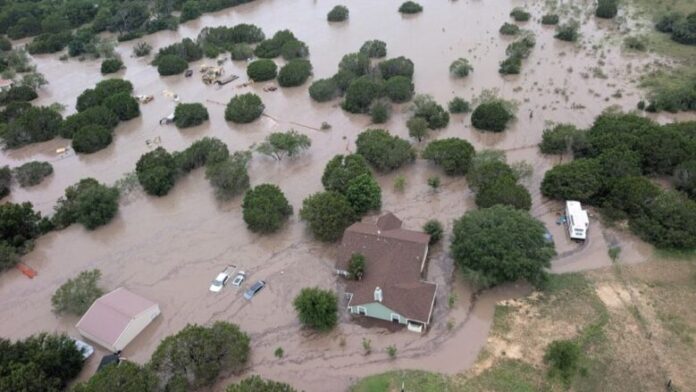
The sparkling fireworks of July 4 were dimmed by the tragic news of flooding in Kerr County and surrounding areas in central Texas. Torrential rainfall caused rivers to overflow into residential communities, killing more than 100 people — including 27 adult counselors and girls at a summer youth camp.

The flooding, linked to unusually intense rainfall, is part of a growing pattern globally attributed to climate change. Scientists have long warned that this crisis is fueling more destructive hurricanes, floods, heatwaves, wildfires, and rising seas. Yet, despite overwhelming evidence, climate change remains a controversial topic, with many still denying its existence.
But denial flies in the face of near-unanimous scientific consensus. An estimated 97% of climate scientists agree that the Earth’s climate is changing — primarily due to human activity, particularly the burning of fossil fuels that release greenhouse gases into the atmosphere. Institutions like NASA, NOAA, the United Nations, and major science academies worldwide have affirmed this repeatedly.

The climate doesn’t care about politics or public opinion. Storms, fires, and floods strike with increasing force, claiming lives and destroying communities. So why do people continue to deny what’s plainly happening?
The reasons are rarely scientific. Economic self-interest, particularly from the fossil fuel industry, plays a major role. Some oil and coal companies have funded campaigns to cast doubt on climate science to protect profits. Political ideology also fuels skepticism, as solutions often involve regulations that some see as threats to personal freedom or national sovereignty. In these circles, denial becomes part of a political identity.
Misinformation spreads easily — through certain media channels and especially on social media. The complexity of climate science makes it easy for people to confuse weather with climate, or to dismiss warming trends when they experience a cold snap. And growing distrust of scientists and government agencies only deepens the divide.
Yet the evidence is undeniable. Global temperatures have steadily risen since the late 1800s, with the past decade among the hottest ever recorded. Ice is melting rapidly in Greenland and Antarctica, sea levels are rising, and extreme weather events are becoming more frequent and intense. Carbon dioxide levels in the atmosphere have surged in tandem with industrial activity, with clear links to fossil fuel use since the 19th century.
We cannot afford to let denial or confusion stall action. Public engagement must evolve. Real stories from flood victims, wildfire survivors, and communities devastated by storms must be widely shared. Climate science should be presented in plain language. The everyday benefits of taking action — cleaner air, better health, lower energy bills, and new job opportunities — need to be emphasized.
Climate education should be part of school curricula, so the next generation understands what’s at stake. And the flood of misinformation must be met with stronger fact-checking and more visible, credible sources of truth. For politically skeptical audiences, climate advocates must frame the issue in terms of national security, economic stability, and stewardship.

Climate change is not a distant threat. It is here, now, devastating lives — as we saw in central Texas. Despite the doubts and distractions, it is only going to get worse. Communities must prepare, adapt, and push for action — before the next disaster strikes.