Last Saturday, Earth Day, saw thousands of protestors in American cities urging the administration in Washington to focus on paying attention to the dangers of the Earth’s warming or climate change.

It’s sad and downright ridiculous that despite sound evidence presented by American and international scientists that the Earth is getting warmer, glaciers are melting, and ocean levels rising, the critical issue of climate change is caught in the political divide.
Republicans remain stubbornly opposed to evidence that the Earth is threatened by climate change. They regard the evidence as nonsense perpetuated by mistaken scientists. On the other hand, Democrats, as reflected by former President Obama’s proactivity, are eager to prepare the nation for the effects of climate change. Meanwhile, the administration in Washington seems to be contemplating pulling out of the global climate agreement made in Paris last year.

One hopes that the government heed calls being made by entities such as ExxonMobil, and maintain participation in the Paris agreement.
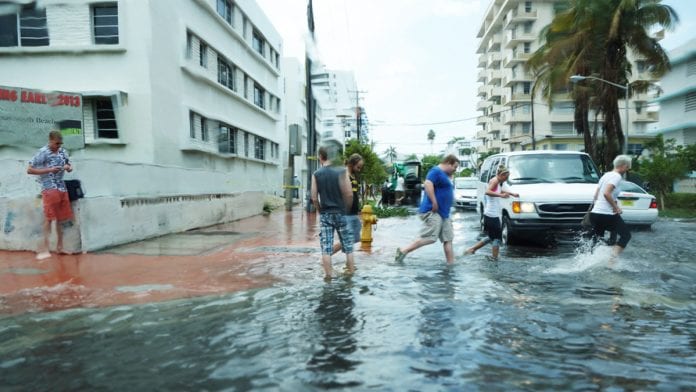
Being proactive to climate change is particularly important to South Florida. Almost every time there’s a full moon, the coast adjacent to the ocean reveals the effect of climate change. The phenomenon called King Tide, resulting from the rising sea level, floods streets and properties along the coast from Broward to Miami-Dade County. The rising sea level has been particularly bad along the coastline in Miami Beach. Nonetheless, Florida’s Governor Rick Scott disagrees that Florida, and South Florida in particular, is in danger from climate change.
There’s scientific evidence that the temperature of the Earth’s surface could increase between 1.6 to 6.3 degrees Fahrenheit by 2100. In comparison, the Earth’s temperature increased by 9 degrees F in the past 10,000 years since the ice age.
An evidence of this increase warmth is changes in rainfall pattern alternating from sustained drought periods, to more intense flood rains. This has been evidenced in South Florida and in Caribbean countries like Jamaica.
However, the real concern for South Florida is the threat from rising sea level. Scientists predict the sea level is rising as Earth becomes warmer and the volume of water in the oceans build because ice is melting in the North and South Poles.
The US Environmental Protection Agency (EPA) predicts Florida will see a rise in sea level of about 18-20 inches by the next century. This means sea water would gradually obliterate the region’s beachfront and properties along the coast, affecting tourism one of the region’s chief sources of revenue. This would also negatively impact the wetlands and commercial fishing and even the fresh water supply as the ocean gradually encroach on the Everglades and the Biscayne Aquifer.

Another serious effect of the rising sea level for South Florida is it increases threats from storm surges during hurricanes and even tropical storms.
While Republicans administrations in Tallahassee and Washington seek to gain ridiculous political gains by claiming effects of climate change “is a hoax,” South Florida must be proactive against the potential threat.
More positively, Miami-Dade County have reacted to the potential threat from climate change by adopting the “Urban CO2 Reduction Plan.” This plan identifies opportunities to cope with climate change, including reducing energy demand and protecting the county’s quality of life and economy. An annual report is being submitted to the County Commission pertaining to the progress of the plan.
However, protecting the region from the threat of climate change should be the collective responsibility of the state and the regions’ public and private sector, and community leaders. A clearly defined policy is urgently needed at the state and national level to cope with the growing dangers of the Earth’s warming phenomenon. Residents in South Florida, and throughout Florida, who are at risk to climate change need to pressure their leaders to pay attention and be proactive.