


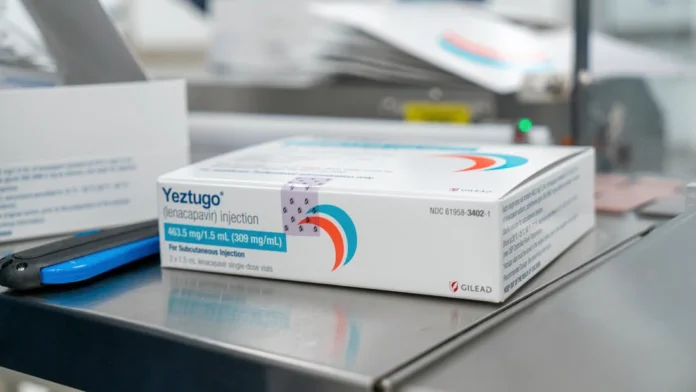
The World Health Organization (WHO) is calling on countries—including those in the Caribbean—to ensure rapid and widespread access to a new breakthrough HIV prevention drug that requires only two injections per year to offer near-total protection from the virus and the development of AIDS.

The injectable drug, lenacapavir (LEN), is a long-acting antiretroviral that WHO says should be made available “immediately” through pharmacies, clinics, and online consultations. The UN health agency’s endorsement of LEN marks a significant step in global HIV prevention, especially amid stalled progress in combating the virus.
“While an HIV vaccine remains elusive, lenacapavir is the next best thing: a long-acting antiretroviral shown in trials to prevent almost all HIV infections among those at risk,” said WHO Director-General Dr. Tedros Adhanom Ghebreyesus during the 13th International AIDS Society Conference (IAS 2025) on HIV Science, held in Rwanda.

To improve access, WHO also recommended scaling up the use of rapid HIV testing kits, instead of relying on “complex, costly procedures” that can hinder community-level outreach.
In 2024, approximately 1.3 million people acquired HIV, with the most impacted groups including sex workers, men who have sex with men, transgender people, people who inject drugs, incarcerated individuals, and children and teens. An estimated 40.8 million people were living with HIV globally by the end of 2024, with 65 percent based in Africa. Around 630,000 people died from HIV-related causes last year.
Despite these figures, WHO said there has been progress in treatment access—31.6 million people were receiving antiretroviral therapy in 2024, up from 30.3 million in 2023.
LEN now joins a growing list of WHO-recommended prevention tools, including daily oral pills, injectable cabotegravir (administered every two months), and the dapivirine vaginal ring.
However, access to LEN remains largely limited to clinical trial settings. WHO is urging governments, donors, and global health partners to immediately incorporate the drug into national combination HIV-prevention programmes.
“WHO is committed to working with countries and partners to ensure this innovation reaches communities as quickly and safely as possible,” Dr. Tedros said.

Dr. Meg Doherty, director of WHO’s Department of Global HIV, Hepatitis and STI Programmes, also highlighted the urgency of action in light of major funding cuts to the global HIV/AIDS response, including to PEPFAR, the U.S. government’s flagship programme fighting HIV/AIDS in Africa.
“We have the tools and the knowledge to end AIDS…what we need now is bold implementation of these recommendations, grounded in equity and powered by communities,” Dr. Doherty stated.












 is calling on Caribbean countries to ensure rapid and widespread access to a new HIV prevention drug.)