US denies asking St Lucia to halt medical studies in Cuba
Key Points(4)
- There’s no imminent withdrawal of students,” Pierre told reporters ahead of the weekly Cabinet meeting.</p> <p data-start="1422" data-end="1721">Last weekend, Pierre expressed frustration at the US stance during the second World Congress on Racial and Ethnic Health Disparities meeting in St Lucia.
- “I have a big problem.
- Many of our doctors got trained in Cuba, and now the great United States has said we can’t do that any longer,” he said.</p> <p data-start="1723" data-end="1988">He added that the government is exploring alternatives.
- “First of all, we have to assess where we are in terms of scholarships for our medical students.
The United States government said Wednesday it has not asked St Lucia to stop sending its nationals to study medicine in Cuba, even as it reiterated its criticism of the Cuban health programme as “illegitimate.”
“The United States has not recently talked to St Lucia about international education and respects countries’ sovereign decisions regarding the education of their citizens. The United States continues to call for an end to exploitation and forced labour in the illegitimate Cuban regime’s overseas medical missions programme,” the US Embassy to Barbados, the Eastern Caribbean, and the OECS said in a brief statement.
In response, Prime Minister Phillip J. Pierre told the Caribbean Media Corporation (CMC), “I have absolutely no comment, and I understand the US position.”
Earlier this week, Pierre reassured the public that there is no “imminent withdrawal” of St Lucia students studying medicine in Cuba, amid concerns that Washington had pressured Castries to halt the programme.
“The students, those who are in Cuba, will continue to be in Cuba. There’s no imminent withdrawal of students,” Pierre told reporters ahead of the weekly Cabinet meeting.
Last weekend, Pierre expressed frustration at the US stance during the second World Congress on Racial and Ethnic Health Disparities meeting in St Lucia. “I have a big problem. Many of our doctors got trained in Cuba, and now the great United States has said we can’t do that any longer,” he said.
He added that the government is exploring alternatives. “First of all, we have to assess where we are in terms of scholarships for our medical students. Secondly, we have to look to other countries,” Pierre said, mentioning Mexico and Africa as potential options.
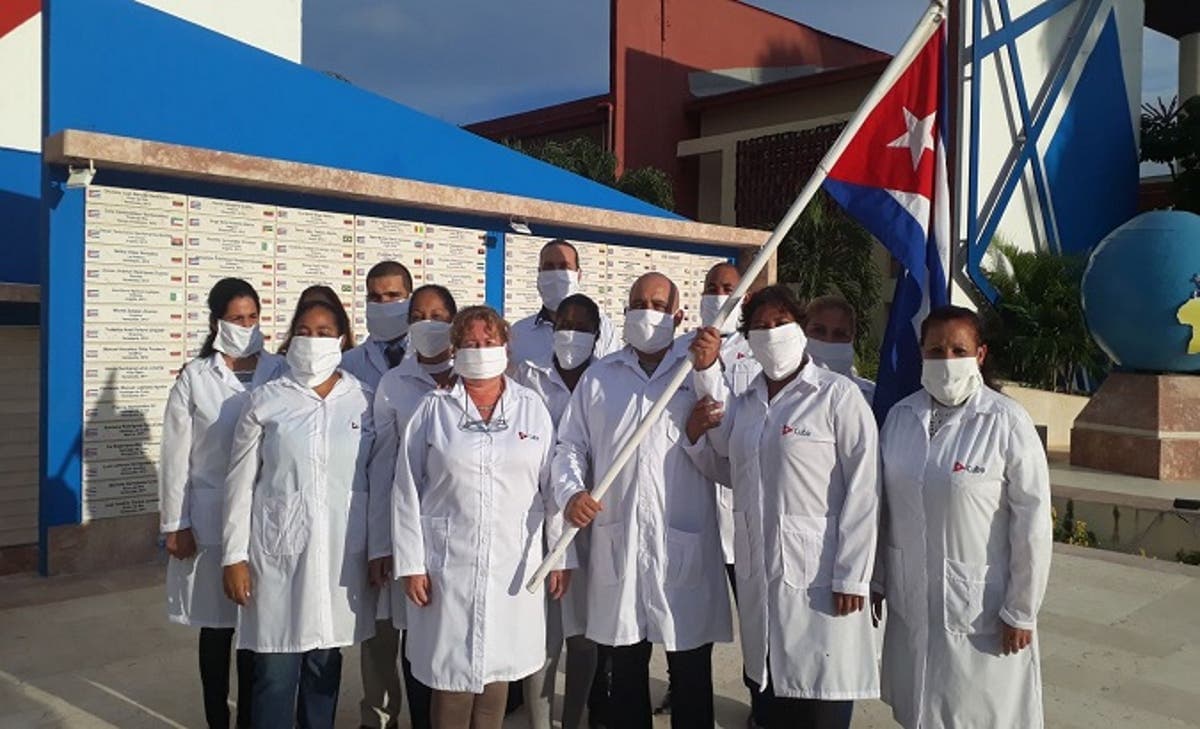
Cuba has offered significant full scholarships to Caribbean and Latin American students to study medicine at the Latin American School of Medicine (ELAM) in Havana, officially inaugurated in 1999. The programme aims to train doctors from underserved communities in the region, providing free tuition, accommodation, and boarding.
Last month, the United States Embassy in Barbados criticized the Cuban “medical missions” programme, which has benefited several Caribbean countries, saying it “relies on coercion and abuse.”