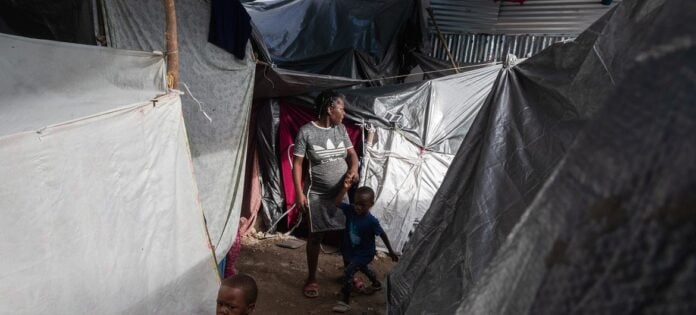
The United Nations is calling for urgent international action to protect Haitian civilians, particularly women and children, as the country continues to grapple with widespread gang violence and an alarming rise in sexual assaults.

Since the 2021 assassination of President Jovenel Moïse, Haiti has plunged into a state of protracted crisis, with armed gangs tightening their grip on vast portions of the capital and beyond. According to the International Organization for Migration (IOM), the violence has displaced over one million people, more than half of them children.
In a statement released Wednesday, UN Special Representative on Sexual Violence in Conflict, Pramila Patten, sounded the alarm over a “surge in reports of rape, gang rape, and sexual slavery,” mostly in areas under gang control. She said sexual violence is being wielded systematically by armed groups to assert dominance and punish communities.

“These heinous crimes are overwhelmingly concentrated in areas under gang control,” said Patten. “Survivors have reported being attacked in their homes, on the streets, or in overcrowded shelters where families have fled for safety.”
The deteriorating security situation has also forced the closure of health facilities, leaving survivors without access to critical medical and psychosocial services. The lack of accountability further emboldens perpetrators, creating a vicious cycle of violence and impunity.
Patten urged the full deployment of the Kenya-led Multinational Security Support (MSS) mission, which has yet to be fully funded, and emphasized the need to disrupt the illegal arms trade that fuels gang operations. She also called for accelerated support to newly established judicial units, one of which will specialize in handling mass crimes such as sexual violence.
The reopening of the Court of First Instance of Port-au-Prince is being hailed as a significant step toward restoring Haiti’s justice system, following extensive support from the United Nations. But Patten insists that more must be done.
“Concrete and immediate measures are essential to enhance the protection of Haitians, prioritizing those most at risk,” she said. “Ending impunity is a fundamental step in breaking the cycle of violence and restoring dignity and safety to Haiti’s women and girls.”
The UN continues to press for increased global engagement in Haiti’s crisis, warning that without stronger international support, the human cost—especially for the country’s most vulnerable—will only worsen.