Diaspora conference to boost overseas Jamaicans' role in national resilience
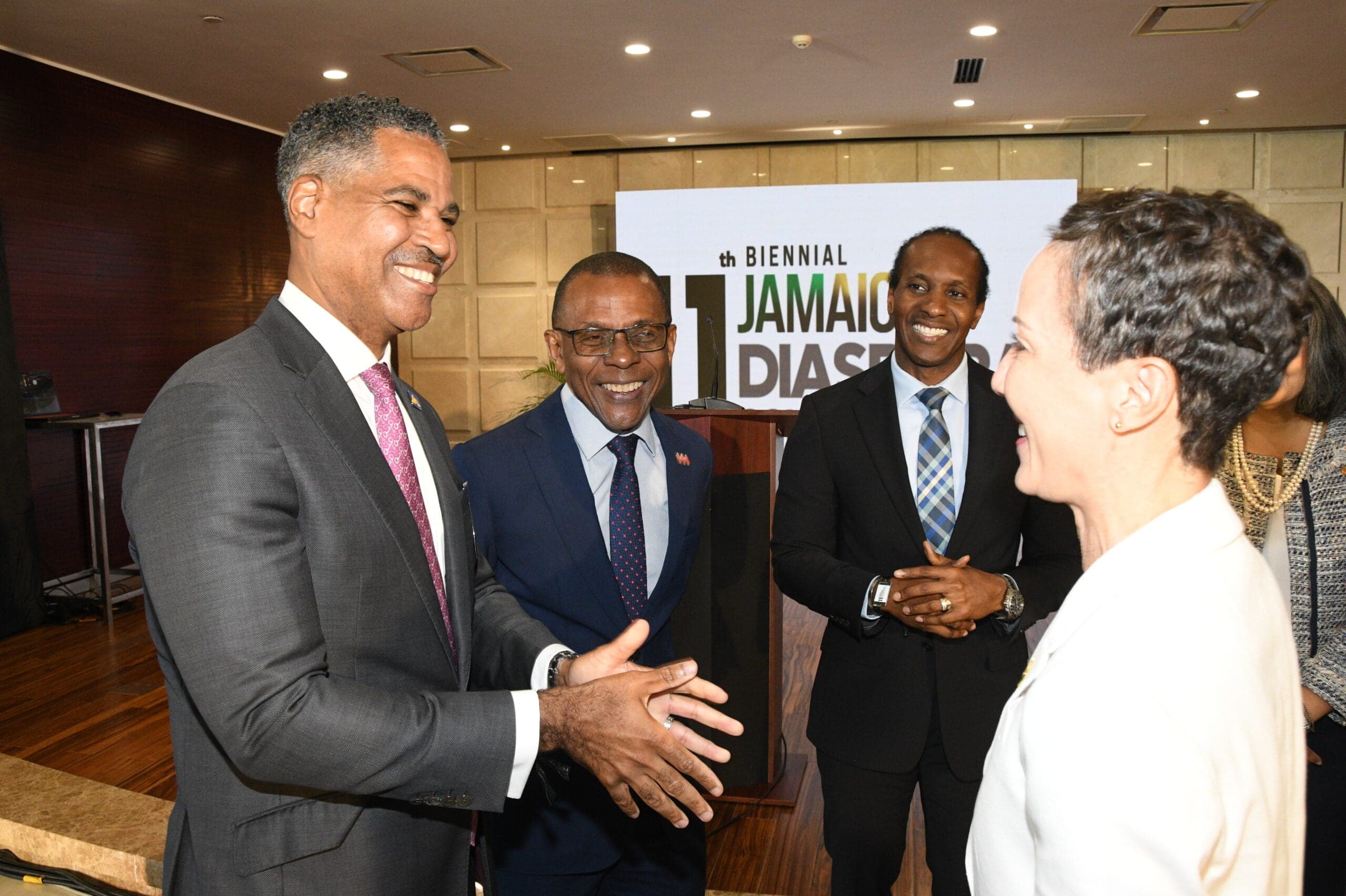
Jamaica Diaspora Conference organizers say this year’s staging will focus heavily on strengthening the involvement of Jamaicans overseas in building the country’s resilience, through investment, partnerships and knowledge-sharing.
The 11th biennial conference is scheduled for June 14–18 at the Montego Bay Convention Centre in Rose Hall, St James, Jamaica under the theme “Diaspora Partnerships: Rebuilding a More Resilient Jamaica.”
Private sector leaders and government officials say the event comes at a critical time as Jamaica seeks to recover from recent economic and climate-related shocks, including back-to-back years of hurricane damage.
Speaking at the conference launch at the Ministry of Foreign Affairs and Foreign Trade on April 15, Keith Levy, interim managing director of JN Bank, emphasized the importance of diaspora involvement in rebuilding efforts. Levy represented conference chairman Earl Jarrett, chief executive officer and deputy chairman of the JN Group.
“This year’s 11th biennial conference comes at a critical juncture as the country is focused on rebuilding Jamaica following significant local challenges and global economic crises,” Levy said.
He noted that Jamaica’s estimated three-million-strong diaspora represents a significant pool of expertise and investment potential. Discussions at the conference will focus on business development, community empowerment and identifying opportunities across multiple sectors of the economy.
Levy also referenced remarks often made by Sir Patrick Allen, Jamaica’s governor-general, stating: “There is nothing wrong with Jamaica that cannot be fixed by what is right with Jamaica.”
Diaspora Seen as Key Development Partner
Kamina Johnson Smith, minister of foreign affairs and foreign trade, underscored the diaspora’s role in Jamaica’s recovery from recent climatic shocks and its continued importance in national development.
“Our diaspora is not simply an external population, it is an integral part of the Jamaican fabric,” Johnson Smith said.
She highlighted contributions from Jamaicans overseas, including philanthropy, investments, remittances and knowledge transfer, noting that diaspora engagement remains a key pillar of Jamaica’s foreign policy.
Johnson Smith also pointed to partnerships since 2017 in sectors such as healthcare, education and security, which have strengthened local capacity through technical support and training.
“For small island developing states with open economies like Jamaica, these pressures can be acute, so building resilience is not an option; it’s essential,” she said.
The conference will also explore opportunities in:
- Trade and investment
- Technology and innovation
- Creative and cultural industries
- Healthcare and education
- Housing and infrastructure
- Sustainable development and entrepreneurship
- Safety, security and climate resilience
Technology to Play Major Role
Alando Terrelonge, state minister in the Ministry of Foreign Affairs and Foreign Trade, said technology will play a greater role in this year’s conference.
He announced that artificial intelligence-powered systems will be used to streamline registration, engagement and navigation during the event. The technology will be provided by Optimity Group.
Registration for the conference is now open, with early-bird rates available.
Terrelonge encouraged members of the diaspora and stakeholders to participate, noting that the conference will provide practical opportunities to contribute to Jamaica’s continued transformation.