UN urged to authorize full-fledged mission to Haiti
Key Points(5)
- The United Nations Security Council has been urged to authorize and swiftly deploy a robust UN mission to Haiti to restore security, rule of law, and democratic governance amid a catastrophic humanitarian and security crisis.
- In a newly published briefing, Human Rights Watch outlined the critical need for a human rights-based intervention to counteract escalating criminal violence and systemic instability.
- “Haitians say that the fear of attacks by criminal groups has taken over their daily lives,” said Ida Sawyer, crisis, conflict, and arms director at Human Rights Watch.
- Their activities, including arms and human trafficking, have resulted in approximately 4,544 killings and 4,000 cases of sexual violence in 2024 alone, according to the UN.
- The widespread violence has displaced more than 700,000 people, while over half the population struggles with severe food insecurity.
The United Nations Security Council has been urged to authorize and swiftly deploy a robust UN mission to Haiti to restore security, rule of law, and democratic governance amid a catastrophic humanitarian and security crisis.
In a newly published briefing, Human Rights Watch outlined the critical need for a human rights-based intervention to counteract escalating criminal violence and systemic instability.
“Haitians say that the fear of attacks by criminal groups has taken over their daily lives,” said Ida Sawyer, crisis, conflict, and arms director at Human Rights Watch. “A new, full-fledged UN mission that respects rights and builds on initial efforts could provide the Haitian people a genuine opportunity to reconstruct their lives with hope and dignity.”
Haiti’s crisis
Over the past year, criminal groups in Haiti have expanded their control, now dominating 85% of Port-au-Prince and surrounding areas. Their activities, including arms and human trafficking, have resulted in approximately 4,544 killings and 4,000 cases of sexual violence in 2024 alone, according to the UN. The widespread violence has displaced more than 700,000 people, while over half the population struggles with severe food insecurity.
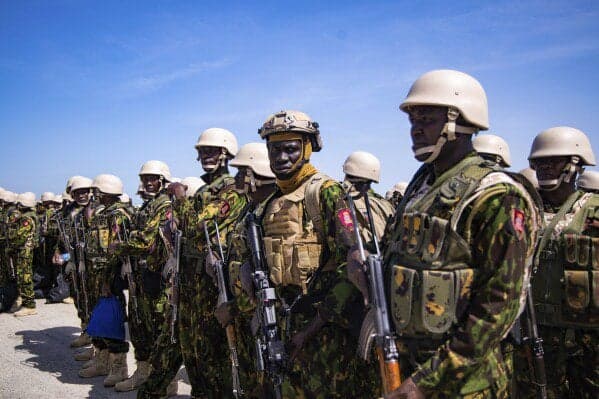
The current Multinational Security Support (MSS) mission, authorized in October 2023 and deployed in June 2024, has faced significant challenges, including underfunding and understaffing. Only $97.4 million of the $600 million required for its first year has been allocated, and just 400 of the planned 2,500 officers have been deployed.
Calls for action
Haitian officials, human rights advocates, and international observers have stressed the urgent need for a more comprehensive UN mission. Pastor Jean Enock Joseph, a human rights activist in Cité Soleil, emphasized that such a mission must address Haiti’s structural problems while allowing Haitians to choose their leaders democratically.
Pierre Espérance, director of Haiti’s National Human Rights Defense Network, warned that the escalating violence could soon become insurmountable. “If urgent action is not taken, it will be too late for the millions of Haitians whose lives are at risk,” he said.
Survivors of the violence, including a 15-year-old girl who lost her parents in a gang attack, have also called for immediate international intervention. “The police alone can’t do it; we need urgent help,” she said. “Someone has to stop them and save us.”
UN chief's recommendations
In response to a November 29 request from the UN Security Council, Secretary-General António Guterres is preparing recommendations for a more strategic and comprehensive UN role in Haiti. Human Rights Watch has urged Guterres to prioritize a mission that not only strengthens security but also ensures accountability and addresses the root causes of instability.
“A robust UN mission, including guarantees for human rights and accountability, can make the difference,” said Sawyer. “The UN has the opportunity now to get it right by mobilizing resources and effectively collaborating with the Haitian people to restore security and stability.”
The Haitian government, along with international stakeholders like the U.S., Kenya, and the Organization of American States, has formally supported the call for an expanded UN mission. Advocates stress that such an intervention must be transparent, consultative, and grounded in respect for human rights to avoid repeating the failures of past international efforts.