The Trinidad and Tobago Police Service (TTPS) on Monday denied that former prime minister Dr. Keith Rowley had been placed on an INTERPOL watch list, following his claims that he was flagged and questioned during a recent trip to Antigua and Barbuda.

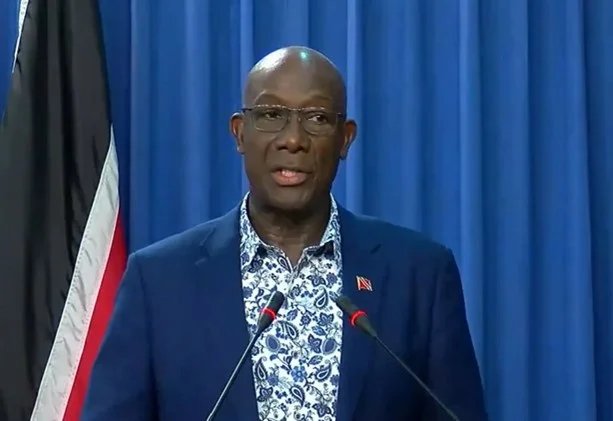
Rowley, speaking at a press conference earlier in the day, described the incident as a targeted effort to damage his international reputation.
“This is not just a mistake; it is a deliberate, calculated attempt to tarnish my name on an international stage,” Rowley said, revealing that he was detained and questioned while en route to Montserrat.

The former prime minister, visibly frustrated, called on current Prime Minister Kamla Persad-Bissessar and Police Commissioner Allister Guevarro to clarify what, if any, role they played in the alleged flagging of his name by INTERPOL.
In a subsequent statement, the TTPS said it had “taken note of recent public statements” by Rowley and that it launched an internal investigation via its INTERPOL Bureau to determine whether any such listing existed.
“Comprehensive checks were conducted across INTERPOL’s secure databases, which yielded a definitive result: Dr. Rowley is not listed on any INTERPOL watch list or international notice,” the TTPS confirmed. “No alerts, flags, or warrants are associated with his name in INTERPOL’s systems.”
The police added that no departments within the TTPS had submitted information that could have led to such a listing, and there was “no record, directive, or procedural action” suggesting local involvement.
Clarifying INTERPOL’s protocols, the TTPS noted that the organisation requires judicial or prosecutorial documentation for anyone to be listed, and such actions are governed through member states’ National Central Bureaus — not by police commissioners or political figures.
“The Commissioner of Police does not hold the authority to unilaterally add or remove individuals from INTERPOL systems,” the TTPS said. “Such actions are governed by international legal standards, not domestic discretion.”

Addressing allegations of political interference, the TTPS insisted it remains an independent and apolitical body.
“No evidence has emerged indicating that the organisation, or any of its members, has participated in politically motivated conduct regarding Dr. Rowley,” it stated, while calling for “responsible dialogue in the public sphere.”
The TTPS further emphasized that while public scrutiny is vital, “commentary must be grounded in verified fact.”
At the press conference, Rowley warned of the wider implications of his experience, stating, “If this can be done to a former prime minister, imagine what can be done to the average citizen.”