Trinidad and Tobago declares state of emergency again
Key Points(5)
- Trinidad and Tobago has declared a state of emergency (SOE), just months after lifting a previous 105-day SOE aimed at curbing violent crime.
- The latest emergency declaration, signed Thursday night by President Christine Kangaloo, comes in response to mounting intelligence about an expansive organised crime syndicate operating both inside and outside the nation’s prison system.
- At a Friday news conference, Police Commissioner Allister Guevarro, now one month into his tenure, said the decision followed troubling intelligence reports received on Thursday, detailing a coordinated criminal network involving gang leaders, some of whom are incarcerated.
- “When I received this information, it was most troubling to me,” Guevarro said.
- “I had to approach the National Security Council last night.
Trinidad and Tobago has declared a state of emergency (SOE), just months after lifting a previous 105-day SOE aimed at curbing violent crime.
The latest emergency declaration, signed Thursday night by President Christine Kangaloo, comes in response to mounting intelligence about an expansive organised crime syndicate operating both inside and outside the nation’s prison system.
At a Friday news conference, Police Commissioner Allister Guevarro, now one month into his tenure, said the decision followed troubling intelligence reports received on Thursday, detailing a coordinated criminal network involving gang leaders, some of whom are incarcerated.
“When I received this information, it was most troubling to me,” Guevarro said. “I had to approach the National Security Council last night. After addressing the Council, I later had a briefing with the Prime Minister and the Attorney General .”
He confirmed that President Kangaloo signed the SOE proclamation following the meetings, enabling police to immediately begin operations. Guevarro said he personally supervised the extraction of several gang leaders from the Maximum Security Prison at Golden Grove, transferring them to a more secure location with limited communications access.
“These individuals will no longer have the liberal communication they previously used to orchestrate criminal activities,” Guevarro said. “We have seen recent acts of kidnapping and homicides... traced back to this organised crime syndicate.”
While Guevarro declined to reveal how many inmates were relocated, he noted, “We do not want to make these people famous. Just know they are safely incarcerated in a place where communication is now limited.”
When pressed about possible corruption within the protective services, Guevarro acknowledged internal complicity. “If I were to tell you no, I would be lying — because how else would we be finding phones inside the same cells?” he said. “There are persons hell-bent on facilitating the communication of these criminals.”
He emphasized that the SOE is not politically motivated. “This has absolutely nothing to do with any particular threat to a politician or any specific group,” he said. “There is a group of criminals in our society... who have formed themselves into an amalgamated organised crime syndicate and intend to wreak havoc on the good citizens of Trinidad and Tobago.”
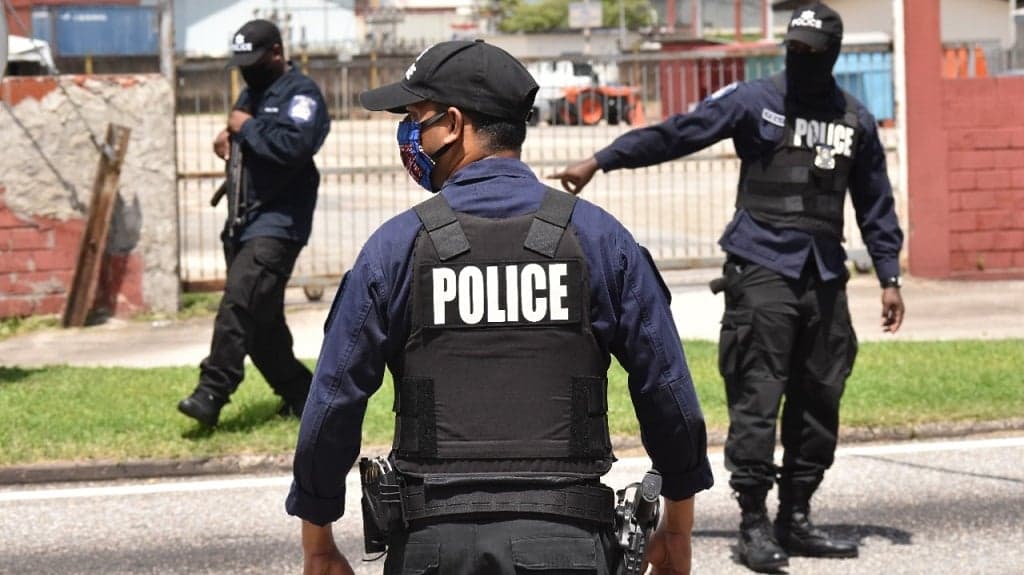
Though no curfew is currently in place, the SOE grants police enhanced powers — including the ability to enter homes and conduct searches without warrants. Guevarro warned officers against abusing these new powers, stating that any misconduct would carry legal consequences. “The only people who need to be concerned are the criminals,” he said. “Law-abiding citizens have no reason to fear.”
The Trinidad and Tobago Police Service later issued a statement urging citizens to remain calm, cooperate with law enforcement, and report suspicious activity. The release described the crime syndicate as a “network... actively mobilising resources and orchestrating targeted attacks against senior officials and national institutions.”
The statement further highlighted the role of unauthorised mobile phone trafficking into prisons, facilitated by compromised personnel, as a key enabler of the gang’s encrypted communications and coordinated operations. These activities are reportedly funded through violent crimes, including kidnappings, extortion, armed home invasions, and infiltration of state contracts and programmes.
Police said the scale and sophistication of the syndicate exceeded conventional containment capabilities, prompting the need for an “immediate strategic response to safeguard national stability.”
Under the Constitution, an SOE in Trinidad and Tobago can initially last for one month. Extensions of up to three months each may be granted by the House of Representatives for up to six months in total. Any further extension requires a three-fifths majority vote in both Houses of Parliament and cannot exceed three months at a time.