Three Caribbean nations among the cleanest places to live globally
Key Points(5)
- According to the 2024 IQAir World Air Quality Report, just 17% of cities worldwide met the World Health Organization’s (WHO) guideline for annual PM2.5 levels, a measure of harmful fine particulate matter in the air.
- The report analyzed data from over 40,000 monitoring stations across 138 countries.
- Among the only seven countries that met the WHO benchmark of 5 micrograms per cubic metre (µg/m³) or less were the Bahamas, Barbados, and Grenada, placing the Caribbean region in rare company alongside Australia, Estonia, Iceland, and New Zealand.
- The report also named Mayaguez, Puerto Rico as the least polluted metropolitan area in the study, with an annual PM2.5 concentration of just 1.1 µg/m³ — more than four times cleaner than the WHO standard.
- This comes as 91% of countries globally exceeded safe air quality levels, with pollution hotspots in Africa, South Asia, and parts of Latin America.
Several Caribbean countries are being recognized among the world’s cleanest in a major new global air quality report — a stark contrast to worsening pollution levels in much of the world.
According to the 2024 IQAir World Air Quality Report, just 17% of cities worldwide met the World Health Organization’s (WHO) guideline for annual PM2.5 levels, a measure of harmful fine particulate matter in the air. The report analyzed data from over 40,000 monitoring stations across 138 countries.
Among the only seven countries that met the WHO benchmark of 5 micrograms per cubic metre (µg/m³) or less were the Bahamas, Barbados, and Grenada, placing the Caribbean region in rare company alongside Australia, Estonia, Iceland, and New Zealand.
The report also named Mayaguez, Puerto Rico as the least polluted metropolitan area in the study, with an annual PM2.5 concentration of just 1.1 µg/m³ — more than four times cleaner than the WHO standard.
This comes as 91% of countries globally exceeded safe air quality levels, with pollution hotspots in Africa, South Asia, and parts of Latin America. Countries like Chad, India, and Bangladesh recorded PM2.5 concentrations more than 10 to 25 times higher than the WHO’s recommended limit.
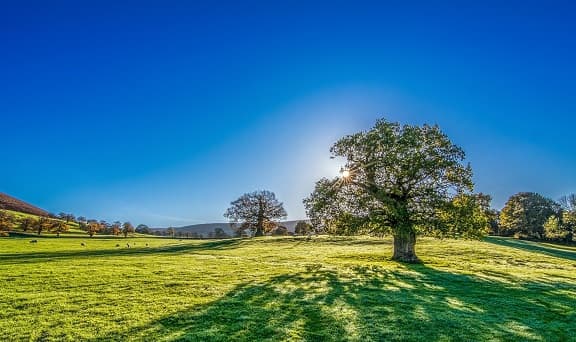
While much of the world struggles with air pollution linked to wildfires, industrial activity, and vehicle emissions, the Caribbean’s relatively clean air is being credited to low levels of industrialization, consistent trade winds, and strict vehicle emission policies in some nations.
Still, experts warn that the region’s air quality could be threatened by climate-related events such as Saharan dust storms and increasing wildfire activity, underscoring the need for continued monitoring and environmental protection.
Despite significant gaps in data collection across the Caribbean — and Latin America more broadly — the inclusion of countries like Barbados, Grenada, and the Bahamas signals strong performance where air quality is being measured.