SVG seeks share of revenue from T&T-controlled airspace
Key Points(5)
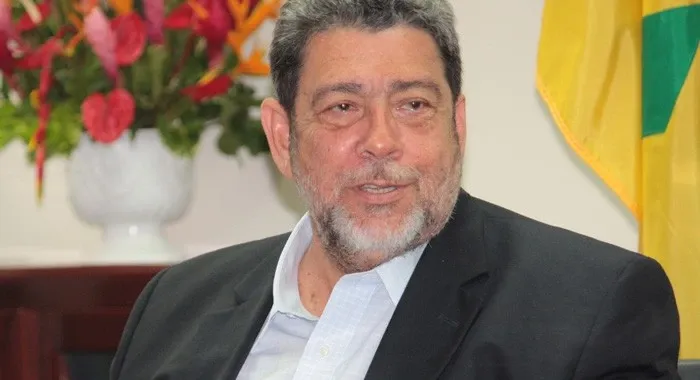
- Ralph Gonsalves of Saint Vincent and the Grenadines is calling for formal discussions on sharing the financial benefits generated from the Piarco Flight Information Region (FIR) — a vast stretch of Eastern Caribbean airspace currently managed solely by Trinidad and Tobago.
- At a press conference on Friday, Prime Minister Gonsalves described the current arrangement as outdated and unjust, arguing that Trinidad and Tobago reaps all the revenue from a region of airspace that spans multiple sovereign states.
- “They make the money from the space that’s part of our property,” Gonsalves said, adding that the situation raises serious concerns around transparency, accountability, and fairness.
- The Piarco FIR (TTZP) extends roughly from Antigua in the north to Trinidad in the south, and as far east as midway across the Atlantic toward Africa — encompassing airspace above several independent Eastern Caribbean nations.
- Although originally organized during the colonial period by British authorities and a private firm, the region has remained under Trinidad and Tobago’s control since independence, a setup established under the leadership of former Prime Minister Dr.
Prime Minister Dr. Ralph Gonsalves of Saint Vincent and the Grenadines is calling for formal discussions on sharing the financial benefits generated from the Piarco Flight Information Region (FIR) — a vast stretch of Eastern Caribbean airspace currently managed solely by Trinidad and Tobago.
At a press conference on Friday, Prime Minister Gonsalves described the current arrangement as outdated and unjust, arguing that Trinidad and Tobago reaps all the revenue from a region of airspace that spans multiple sovereign states.
“They make the money from the space that’s part of our property,” Gonsalves said, adding that the situation raises serious concerns around transparency, accountability, and fairness.
The Piarco FIR (TTZP) extends roughly from Antigua in the north to Trinidad in the south, and as far east as midway across the Atlantic toward Africa — encompassing airspace above several independent Eastern Caribbean nations. Although originally organized during the colonial period by British authorities and a private firm, the region has remained under Trinidad and Tobago’s control since independence, a setup established under the leadership of former Prime Minister Dr. Eric Williams.
According to Gonsalves, this has effectively excluded countries like Barbados and members of the Organisation of Eastern Caribbean States (OECS) from participating in or benefiting from the management of this airspace — despite it covering their sovereign territories.
“There is no transparency in the accounting, no visibility into how the funds generated are being distributed, and no involvement from the countries whose airspace is affected,” Gonsalves stated.
The Prime Minister acknowledged that airspace governance can seem technically complex but stressed that the core issue is straightforward: Caribbean nations are being denied a share of the revenue from the use of their own skies.
He also pointed out the contrast with French overseas territories like Martinique and Guadeloupe, which maintain a post-colonial airspace agreement with the UK that allows for a more equitable distribution of control and benefit.
While no timeline has been set, Gonsalves expressed hope that regional dialogue can be initiated soon to address what he sees as an imbalance in both authority and revenue sharing within the Piarco FIR.
The matter is likely to feature prominently in upcoming Caribbean Community (CARICOM) and OECS discussions, as regional governments seek greater inclusion in managing shared resources.